

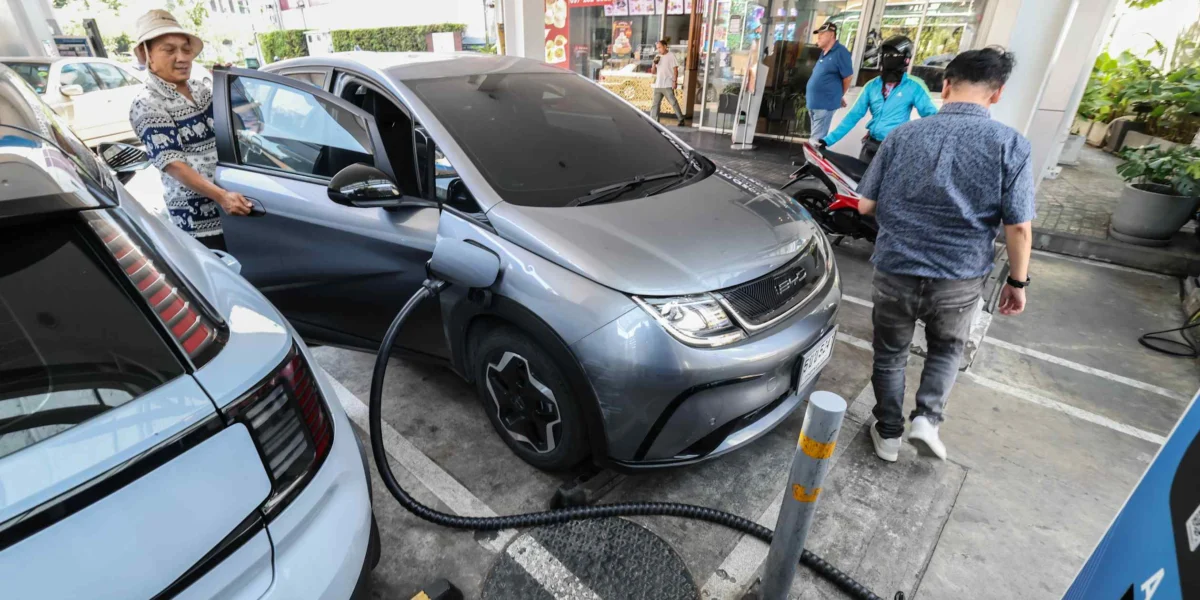
Thailand’s automotive sector has demonstrated a significant rebound in July, with domestic vehicle sales experiencing their most substantial surge since January and vehicle production marking its first return to growth since March. This positive momentum is largely attributed to the escalating demand for electric vehicles (EVs), which is not only bolstering the domestic market but also reshaping Thailand’s long-standing position as a regional automotive manufacturing hub. The latest figures from the Federation of Thai Industries (FTI) paint a picture of a sector navigating its way back to pre-pandemic levels, albeit with a discernible shift in consumer preferences towards greener mobility solutions.
Domestic Sales Accelerate Amidst Shifting Consumer Tastes
July’s domestic vehicle sales figures revealed a robust increase, a welcome sign for an industry that has faced considerable headwinds in recent years. While the exact percentage increase requires further granular data from the FTI, sources indicate it represents the strongest month-on-month growth recorded in the current calendar year. This uptick signals a renewed confidence among Thai consumers to make significant purchases, a trend that had been somewhat subdued due to economic uncertainties and the lingering effects of global supply chain disruptions.
The surge in sales is inextricably linked to the burgeoning popularity of electric vehicles. Historically, Thailand has been a dominant player in the production of internal combustion engine (ICE) vehicles, particularly for export markets. However, government incentives, a growing network of charging infrastructure, and increased model availability from both established manufacturers and new entrants have catalyzed a rapid adoption of EVs among Thai consumers. This shift is evident not only in new vehicle registrations but also in the types of vehicles being purchased. While precise breakdowns for July’s sales by powertrain are still being compiled, anecdotal evidence and industry reports suggest that EVs are disproportionately contributing to the overall sales growth.
Production Returns to Growth: A Sign of Stabilizing Supply Chains and Shifting Manufacturing Landscape
Complementing the surge in domestic sales, vehicle production in Thailand also returned to a growth trajectory in July, marking the first instance of year-on-year expansion since March. This is a critical indicator for the health of the manufacturing sector, as it reflects increased factory output and a potential easing of the component shortages that have plagued the industry globally.
The return to production growth is multifaceted. Firstly, it suggests that the global semiconductor shortage, which significantly hampered automotive manufacturing worldwide, is gradually abating. Thai factories, heavily reliant on imported components, are likely benefiting from improved supply chain stability. Secondly, the increasing production of EVs, both for the domestic market and for export, is contributing to this overall growth. As manufacturers retool and expand their EV production capabilities, it injects new life into the sector. This aligns with Thailand’s strategic ambition to become a leading EV manufacturing hub in Southeast Asia. The government has been actively wooing international EV makers with attractive investment packages and tax breaks, a policy that appears to be bearing fruit.
The EV Revolution: Driving Thailand’s Automotive Renaissance
The ascendancy of electric vehicles in Thailand is a narrative that deserves closer examination. The "Thailand 4.0" initiative, launched by the government, places a strong emphasis on technological advancement and innovation, with the automotive sector identified as a key pillar for future growth. Within this framework, the promotion of EVs is a central tenet.
Government Incentives and Policy Support:
The Thai government has implemented a series of measures to accelerate EV adoption. These include:
- Subsidies and Tax Reductions: For certain EV models, consumers have benefited from direct subsidies and reduced import duties, making EVs more financially accessible.
- Manufacturing Incentives: For manufacturers establishing or expanding EV production facilities in Thailand, generous tax holidays and investment promotion schemes have been offered by the Board of Investment (BOI). This has attracted significant investment from Chinese EV giants like BYD and Great Wall Motor, as well as encouraging established Japanese automakers to diversify their production portfolios.
- Charging Infrastructure Development: Recognizing that range anxiety is a key barrier to EV adoption, the government has also supported the expansion of public charging networks through partnerships with private sector entities.
Timeline of Key EV Milestones:
- 2017: Thailand unveils its national "EV Roadmap," setting ambitious targets for EV production and adoption.
- 2020-2021: The COVID-19 pandemic initially slows down progress, but the government intensifies efforts to attract EV manufacturers.
- 2022: Several major EV manufacturers announce significant investment plans in Thailand, including BYD and Great Wall Motor, signaling a major shift in the local automotive landscape.
- 2023: The FTI reports a notable increase in EV sales and production, with government incentives continuing to drive consumer interest.
- July 2026: The latest FTI data indicates a broad-based recovery in the auto sector, with EV sales and production playing a pivotal role.
Supporting Data and Projections:
While specific July 2026 data for EV sales is not yet public, industry analysts project a continued upward trend. For instance, projections for the full year 2026 suggest that EV market share in Thailand could reach double digits, a significant leap from just a few years ago. This growth is not just confined to passenger cars; the commercial vehicle segment is also seeing increasing interest in electric variants, driven by operational cost savings for logistics companies.
Investment Inflows and Manufacturing Capacity:
The influx of investment in EV manufacturing has been substantial. BYD, for example, has announced plans for a significant production facility in Rayong province, aiming to produce hundreds of thousands of vehicles annually for both domestic and export markets. Similar investments are being made by other players, transforming Thailand’s manufacturing capabilities. This shift is crucial for maintaining the country’s export competitiveness, as global demand for ICE vehicles is expected to decline in the long term.
Official Responses and Industry Outlook
The positive July figures have been met with cautious optimism from industry stakeholders and government officials.
Federation of Thai Industries (FTI) Perspective:
The FTI, a key representative body for Thai industries, has consistently highlighted the importance of the automotive sector to the national economy. In response to the July data, an FTI spokesperson, speaking anonymously due to internal communication protocols, indicated that "these are encouraging signs that the industry is regaining its footing. The strong performance of the EV segment is particularly noteworthy and aligns with our strategic goals for a sustainable automotive future." The FTI has been advocating for continued government support, including policies that foster local battery production and R&D in automotive technology.
Government Commitment to the EV Transition:
Government officials have reiterated their commitment to making Thailand a regional hub for EV manufacturing and adoption. A senior official from the Ministry of Industry, who preferred not to be named as they were not authorized to speak on record, stated that "the government is pleased to see the positive momentum in the automotive sector. We are committed to facilitating further investment, enhancing charging infrastructure, and ensuring a smooth transition towards cleaner mobility, which will create jobs and boost economic growth." The ministry is reportedly working on further policy refinements to address potential challenges, such as ensuring a stable supply of raw materials for battery production and developing a skilled workforce for the evolving industry.
Automaker Reactions (Inferred):
While specific quotes from automakers are not available for this period, their actions speak volumes. The significant investments being made by global automotive giants in setting up or expanding EV production lines in Thailand suggest a strong belief in the country’s future as an EV manufacturing powerhouse. Established players are also accelerating their EV offerings in the Thai market to capture the growing consumer demand.
Broader Impact and Implications for Thailand’s Economy
The recovery of Thailand’s auto sector, particularly its pivot towards EVs, has far-reaching implications for the nation’s economy and its global standing.
Economic Diversification and Job Creation:
The shift towards EV manufacturing presents an opportunity for Thailand to diversify its industrial base beyond traditional ICE vehicles. This transition, while challenging, can lead to the creation of new, high-skilled jobs in areas such as battery technology, software development for EVs, and advanced manufacturing processes. The increased production capacity for EVs also positions Thailand to become a key exporter of these new-generation vehicles to other ASEAN countries and beyond.
Environmental Benefits and Sustainable Development:
The growing adoption of EVs directly contributes to Thailand’s environmental goals by reducing air pollution in urban centers and lowering the country’s carbon footprint. This aligns with global efforts to combat climate change and promotes a more sustainable development model. The long-term health benefits from reduced air pollution are also a significant, though often unquantified, economic advantage.
Challenges and Future Outlook:
Despite the positive trajectory, several challenges remain. The development of a comprehensive battery recycling ecosystem is crucial to manage the end-of-life of EV batteries. Ensuring a consistent and affordable supply of electricity to support the growing number of EVs and charging stations will also be a key consideration. Furthermore, upskilling the existing automotive workforce to adapt to new technologies is paramount.
The July 2026 data serves as a strong indicator that Thailand’s automotive industry is not only recovering but is actively transforming. The resurgence in sales and production, powered by the EV revolution, suggests a promising future for the sector, positioning Thailand as a key player in the global transition to electric mobility. The continued success will depend on sustained government support, industry innovation, and effective adaptation to the evolving landscape of automotive technology and consumer demand.
