

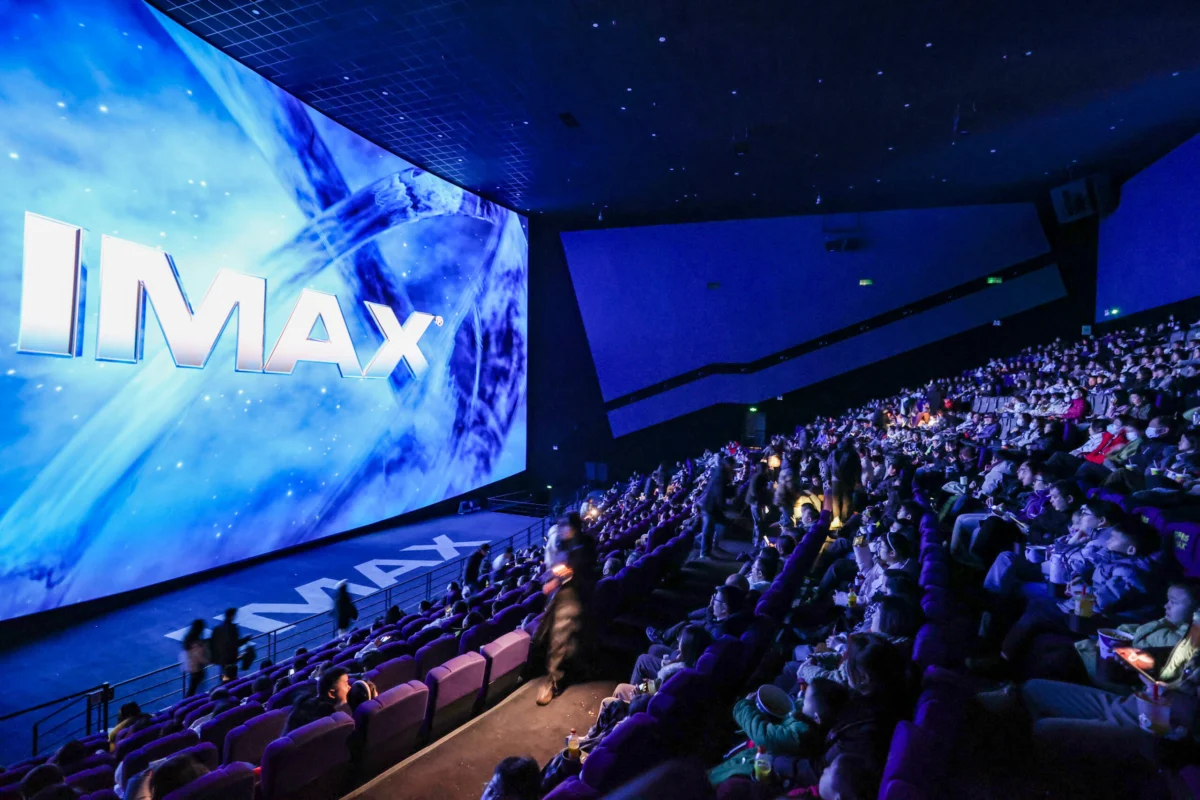
Despite achieving an all-time high in stock valuation, shattering global box office records, and solidifying its position as a paramount force in premium cinematic experiences, IMAX Corporation finds itself in a peculiar strategic crossroads: nearly nine months after CEO Rich Gelfond subtly opened the door to a potential sale, major suitors have yet to emerge. This paradox unfolds against a backdrop of intense dealmaking within the broader media and entertainment industry, prompting industry observers and Wall Street analysts to ponder the unique complexities of an IMAX acquisition.
The Unprecedented Ascent of a Cinematic Giant
IMAX’s current trajectory is nothing short of meteoric. In December of the previous year (2025), when CEO Rich Gelfond first hinted at the possibility of a sale, the company’s stock was trading around $36 per share, commanding a market capitalization of approximately $1.95 billion. Fast forward to the present, and the picture has dramatically transformed. The company’s shares recently surged to an all-time high of $54.79, reflecting an astounding nearly 80% gain over the past 12 months and pushing its market valuation to nearly $3 billion. This remarkable financial performance underscores a robust recovery and an accelerating growth trajectory that has defied broader industry trends.
The financial milestones extend beyond stock performance into the very heart of IMAX’s business: the box office. In 2025, IMAX posted a record-breaking $1.28 billion in global ticket sales, a figure that represented a more than 40% increase over 2024 and surpassed its previous record, set in pre-pandemic 2019, by 13%. Industry analysts are now projecting 2026 to set yet another new global box office record for the company, riding a wave of critically acclaimed and commercially successful films optimized for the IMAX format.
A prime example of this success is Universal and Christopher Nolan’s epic "The Odyssey." Over a recent weekend, global IMAX ticket sales for the film surpassed an unprecedented $400 million, marking the first time a single film has achieved this benchmark in the company’s history. What makes this figure particularly striking is that this haul represents nearly 30% of the film’s total global sales, despite IMAX screens constituting less than 1% of movie screens worldwide. This disproportionate contribution highlights the immense pulling power and premium value associated with the IMAX brand. Further bolstering this momentum are the extraordinary pre-sales for Warner Bros. and Denis Villeneuve’s highly anticipated "Dune: Part Three," scheduled for a December release, with specialized IMAX screenings already sold out into January 2027.
Contributing significantly to IMAX’s strong performance is its premium pricing model, which, rather than deterring audiences, has become a key differentiator. Data from EntTelligence for 2026 reveals that the average adult IMAX ticket in the U.S. costs $20.57. This is more than 60% higher than the average standard ticket price of $12.75 and nearly 18% above rival premium large format (PLF) offerings, which average around $17.46. Audiences consistently demonstrate a willingness to pay a premium for the immersive sound, unparalleled visual clarity, and expansive screen real estate that define the IMAX experience, particularly for blockbuster features and spectacle-driven cinema.
Beyond its strong box office numbers, IMAX is actively expanding its footprint and content diversification. The company’s slate of "filmed for IMAX" content, which involves using specialized cameras and post-production techniques optimized for its screens, is rapidly accelerating and is projected to grow materially through 2028. Furthermore, IMAX is strategically diversifying beyond traditional Hollywood fare, forging partnerships in key international markets like China, Japan, and South Korea to screen local-language content. This global strategy is coupled with an aggressive expansion plan, with approximately 160 to 175 new IMAX systems expected to be installed in 2026, building on contracts to deploy hundreds more already in place from the previous year.
The Enigma of the Unclaimed Asset
Given IMAX’s current market dominance and financial vitality, the absence of concrete acquisition bids has become a topic of considerable discussion among financial analysts and media executives. When CEO Rich Gelfond initially broached the subject of a sale in December 2025, it was perceived by some as a strategic exploration rather than a signal of distress. The company was emerging strongly from the pandemic, and perhaps the timing was opportune to evaluate its strategic options in a consolidating industry.
Earlier in 2026, IMAX reportedly engaged in preliminary discussions with various potential buyers. However, as of May, the company had not received any formal pitches. According to an anonymous source familiar with the company’s internal matters, IMAX has not retained new investment bankers nor has it developed a formalized pitch book, suggesting a more passive stance towards a sale rather than an active pursuit. This indicates that while the company is open to offers, it is not actively marketing itself.
A Hotbed of Media M&A Activity
The broader media landscape is currently experiencing a flurry of merger and acquisition activity, which makes IMAX’s situation even more intriguing. Paramount Skydance is deeply embroiled in a contested $110 billion merger with Warner Bros. Discovery, a deal that is reshaping the competitive dynamics of the streaming and studio ecosystem. Concurrently, Fox agreed to acquire Roku in a substantial $22 billion deal, signaling the convergence of traditional media and streaming technology platforms. Not to be outdone, Comcast is proceeding with a significant corporate restructuring, including the upcoming spinoff of NBCUniversal, a move widely anticipated to grant both resulting entities greater financial flexibility to pursue strategic deals.
In this environment of colossal transactions, IMAX, with its nearly $3 billion market capitalization, stands out as a relatively inexpensive yet high-value asset. Its established global presence, cutting-edge technology, and strong brand equity make it an attractive target for companies looking to expand their footprint in the entertainment sector or gain a strategic advantage in the evolving content distribution ecosystem.
Navigating the Complexities of a Potential Acquisition: The Suitor Spectrum
The challenge for any potential suitor lies in balancing IMAX’s intricate web of studio relationships and cinema partnerships. As Eric Handler, managing director and senior research analyst at Roth, aptly noted to CNBC, a buyer would need to navigate these delicate dynamics, much as IMAX has done for years. The company’s business model involves installing its specialized screens in existing theaters and meticulously negotiating release windows for top-tier films across all major studios.
The Studio Dilemma: A Conflict of Interest
Major Hollywood studios, including Disney, Universal, Paramount, and Warner Bros., are widely considered the least likely suitors due to inherent conflicts of interest. Eric Wold, executive director of equity research at Texas Capital Securities, explained that IMAX operates as "studio agnostic," charging every studio the same rates and allocating prime release slots impartially. If any single studio were to acquire IMAX, there would be an immediate and pervasive concern among rival studios about potential favoritism in terms of screen allocation, marketing support, and technology integration, particularly for highly coveted holiday and summer release windows. Such a scenario could lead to a significant backlash and potentially disrupt IMAX’s long-standing, mutually beneficial relationships across Hollywood.
Moreover, a single studio would face the immense challenge of filling a 52-week theatrical calendar exclusively with its own films that meet the "blockbuster" criteria suitable for premium large format screens. PLF experiences are designed for spectacle-driven cinema, where audiences are willing to pay a higher price. Smaller-budget or less visually grand films from a single studio might struggle to attract the same crowds at IMAX’s premium price point, undermining the value proposition.
Adding to this complexity is the historical reluctance of studios to own cinema chains. Even after the U.S. Department of Justice rescinded the 1948 Paramount Consent Decrees in 2020, which had previously prohibited studios from owning theaters (with formal sunsetting in 2022), few studios have ventured into significant cinema acquisitions. Sony Pictures’ 2024 acquisition of all 35 Alamo Drafthouse locations stands as a rare exception, underscoring a general industry preference for maintaining separation between content creation and exhibition.
Tech Giants and Streaming Services: A More Plausible Fit?
Analysts have frequently highlighted tech behemoths and streaming services as potentially more suitable buyers. Companies like Netflix, Apple, Amazon, and Sony possess the financial might and strategic motivation to integrate IMAX into their expanding entertainment ecosystems.
Netflix, traditionally known for its "build, don’t buy" philosophy, has recently shown a growing appetite for M&A. Its significant bid to acquire Warner Bros. Discovery’s studio and streaming businesses, before being outbid by Paramount Skydance, signaled a shift in its strategic outlook. While Netflix has historically demonstrated limited interest in the traditional theatrical model, primarily using short cinema runs for awards eligibility, an IMAX acquisition could fundamentally alter its approach. Owning IMAX would provide Netflix with an unparalleled opportunity to offer premium theatrical runs for filmmakers who partner with the streamer, adding a prestigious distribution channel without directly conflicting with its core streaming business. This could be a powerful tool for attracting top talent and elevating the perception of Netflix’s original films.
Apple, Amazon, and Sony, all possessing robust technology businesses alongside their theatrical and streaming content arms (AppleTV+, Amazon Prime Video, and Sony Pictures, respectively), could find compelling synergies with IMAX’s tech-heavy operations. Integrating IMAX’s proprietary projection and sound technology, as well as its global distribution network, could offer these companies a potent new avenue for content distribution and an enhanced entertainment offering. Sony, in particular, with its existing cinema acquisition of Alamo Drafthouse and its partnership with Netflix for content distribution, could strategically leverage IMAX to bolster its position across the entire entertainment value chain.
Furthermore, a private equity buyer could also emerge as a strong contender. A PE firm would be unburdened by the studio-related conflicts of interest and could focus purely on leveraging IMAX’s strong brand, growth momentum, and healthy cash flow generation as a financial play, potentially preparing it for a future IPO or sale at an even higher valuation.
IMAX’s Strength as a Standalone Entity: The Power of Being Choosy
Despite the market chatter, IMAX’s current financial strength provides it with the luxury of being highly selective about any potential offer. Alicia Reese, senior vice president of equity research at Wedbush, emphasized this point, stating that IMAX is "perfectly fine as a standalone company" and therefore "not desperate in any way, shape or form." This strong negotiating position means the company is unlikely to accept anything less than a significant premium over its current, already elevated, share price.
The dramatic increase in IMAX’s valuation since Gelfond’s initial comments plays a critical role in deterring some suitors. The company is now "a lot more expensive than it has been for a long time," as Reese pointed out. This might cause some tech companies or private equity firms that were "kicking the tires" earlier to pause and observe market dynamics, hoping for a more favorable entry point. However, with the company’s growth showing no signs of abating, such a price dip may not materialize.
Wall Street analysts largely concur with this optimistic outlook. Several firms foresee continued stock growth, with some price targets reaching as high as $65 a share. Drew Crum of B. Riley Securities recently raised his price target on IMAX stock to $61, up from $52, underscoring confidence in its future performance. He noted, "Taken together, we continue to forecast record financials in 2026, with share gains, higher margins, and healthy cash flow generation, as reflected in our above-consensus estimates."
While IMAX is often grouped with the broader theatrical exhibition space, which has historically been characterized by slow growth and dividend-paying models, its premium large format specialization sets it apart. The company’s ability to command higher ticket prices and drive disproportionate box office returns positions it uniquely within the industry.
Ultimately, the narrative around IMAX is one of robust health and strategic optionality. Its executives can afford to be highly discerning, seeking an offer that truly reflects the company’s intrinsic value and future potential. In an industry grappling with transformation, IMAX stands as a beacon of cinematic innovation and financial resilience, proving that sometimes, the most attractive assets are those that are "perfectly fine" going it alone.
