

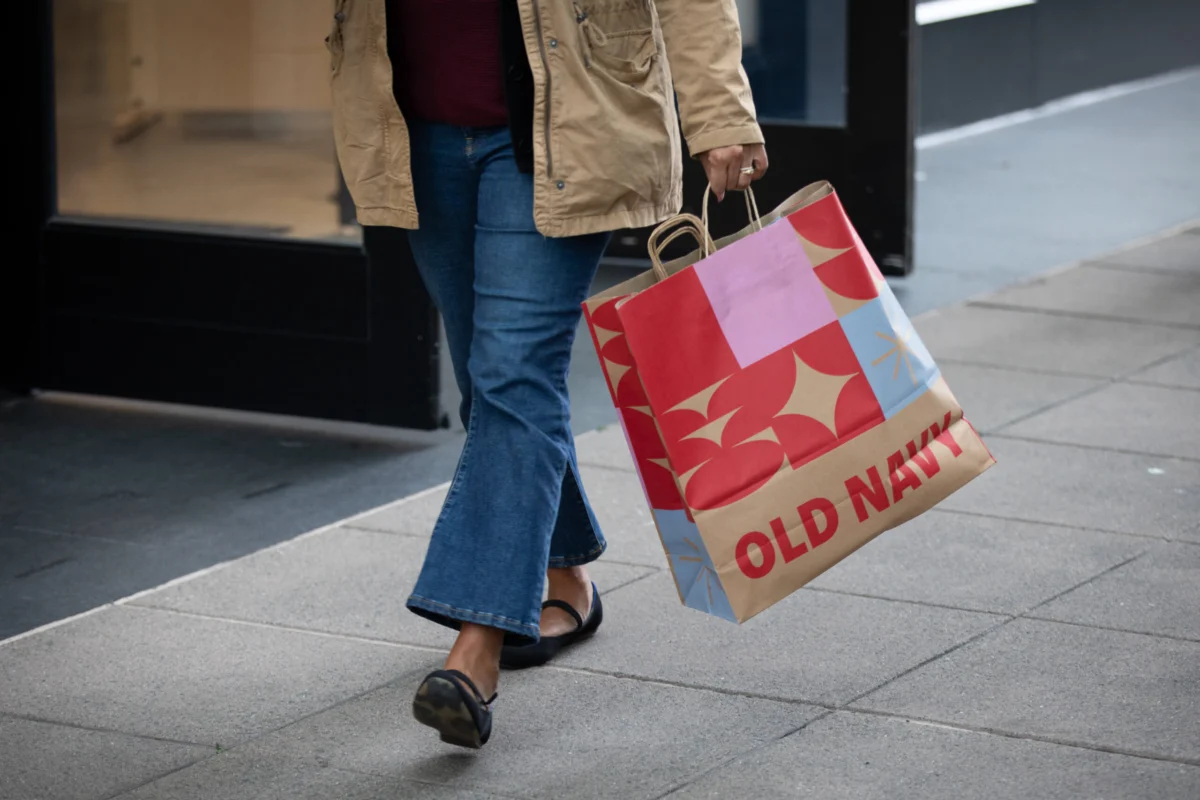
Gap Inc. on Thursday announced a significant leadership transition for its pivotal Old Navy banner, naming Michael Francis as its new Chief Executive Officer, effective November 2. The appointment comes as the retail giant seeks to revitalize sluggish sales performance at the brand, which is a cornerstone of Gap Inc.’s overall revenue. The news was met positively by investors, with shares of Gap jumping 12% in extended trading Thursday, signaling market confidence in the strategic shift.
A Critical Leadership Change for Old Navy
Michael Francis, who joined Old Navy as Chief Customer Officer in May, will succeed Haio Barbeito, who has led the brand since 2022 and will now transition into an advisory role for the company. This leadership change is positioned by Gap Inc. CEO Richard Dickson as a deliberate and carefully planned move designed to better equip Old Navy for its next phase of growth and evolution. Dickson emphasized in an interview that the transition does not signify a change in overall strategy but rather a renewed focus on enhanced execution and continuous improvement within the brand’s core business, alongside efforts to accelerate growth initiatives.
"We’ve been working — from fixing fundamentals to building momentum and ultimately looking to accelerate growth, and so there’s not a change in strategy," Dickson stated. "We’re just going to continue to execute better, continuously improve our core business, while we drive some accelerators that we’re really excited about." This statement underscores a commitment to the existing strategic framework, suggesting that the change is more about leadership style, operational intensity, and customer engagement expertise.
Old Navy’s Strategic Importance and Recent Challenges
Old Navy, founded in 1994, has long been Gap Inc.’s powerhouse, consistently contributing the largest share of the company’s revenue, nearly 60%. Its accessible pricing and broad appeal across demographics have made it a critical driver of the parent company’s financial health. However, recent performance figures have highlighted growing challenges. In the company’s fiscal second-quarter earnings report, Old Navy posted net sales of $2.1 billion, representing a 4% year-over-year decline. Comparable sales also fell by 4%, a stark contrast to the 2% growth observed during the same period last year and significantly underperforming Wall Street analysts’ expectations of a 2.4% decline, according to StreetAccount.
This marked Old Navy’s first negative same-store sales figure since the second quarter of 2023, raising concerns about its trajectory. The company attributed this downturn, in part, to an "unanticipated slowdown in traffic," suggesting a decrease in customer footfall both in physical stores and potentially online. Furthermore, Richard Dickson specifically pointed to disappointing results from Old Navy’s summer marketing campaigns, noting they "lacked a direct product message." This indicates a disconnect between marketing efforts and core product offerings, failing to resonate effectively with consumers during a crucial seasonal period. Despite these challenges, Dickson also provided a glimmer of optimism, reporting "significant improvement" in traffic and sales for the brand in the most recent month, indicating that corrective measures might already be taking effect.
Michael Francis: A Seasoned Retail Veteran at the Helm
The appointment of Michael Francis brings a wealth of experience to Old Navy. Francis is a highly respected figure in the retail industry, known for his deep expertise in marketing, brand building, and customer experience. His extensive career includes pivotal roles at some of America’s most recognizable brands. Prior to joining Old Navy as Chief Customer Officer in May, Francis served as President at J.C. Penney, where he was tasked with a significant turnaround effort. Before that, he was the Chief Marketing Officer at Target, where he played a crucial role in shaping the brand’s fashionable yet affordable image. His resume also boasts leadership positions at Starbucks, where he served as President of Starbucks Coffee U.S. and Americas, and DreamWorks Animation, where he was Chief Marketing Officer. This diverse background, spanning value-oriented retail, premium brands, and entertainment, equips him with a comprehensive understanding of consumer psychology and market dynamics crucial for navigating the competitive apparel landscape.
In his statement, Francis outlined his immediate priorities, affirming his commitment to "continue to sharpen our customer focus, strengthen the brand’s cultural relevance, enhance the customer experience across every touchpoint and build on the momentum already underway." This strategic roadmap aligns with Gap Inc.’s broader objectives under Richard Dickson, emphasizing customer-centricity, brand narrative, and seamless retail experiences across both digital and physical channels. His prior experience in customer-facing roles and brand strategy development positions him well to tackle Old Navy’s current challenges, particularly in refining its product messaging and reconnecting with its core demographic.
Haio Barbeito’s Tenure and the Transition Context
Haio Barbeito, who took the helm at Old Navy in 2022, navigated the brand through a complex period marked by post-pandemic shifts in consumer spending, persistent inflationary pressures, and intensified competition in the value apparel segment. During his tenure, Old Navy faced various operational and market headwinds. While the specific details of his performance were not fully elaborated in the announcement beyond the recent sales figures, the transition suggests a strategic decision to bring in new leadership to inject fresh perspectives and accelerate growth, aligning with the "planned and thoughtful transition" narrative from CEO Richard Dickson. Barbeito’s shift to an advisory role is a common corporate practice, allowing for a smooth handover and leveraging his institutional knowledge during the transition phase.
The timing of this announcement, coinciding with the release of the fiscal second-quarter earnings and just ahead of the crucial holiday shopping season, highlights the urgency and strategic importance Gap Inc. places on Old Navy’s performance. The holiday period traditionally accounts for a significant portion of annual retail sales, and having a new leader in place with a clear mandate for revitalization is a proactive move to capitalize on this critical selling window.
Gap Inc.’s Mixed Q2 Performance and Strategic Playbook
Overall, Gap Inc. reported mixed results for its fiscal second quarter, which ended August 1. The company managed to surpass analysts’ estimates for earnings per share but fell short of revenue expectations. Total Gap Inc. comparable sales were down 1% for the period, with in-store sales experiencing a 3% year-over-year decline. Richard Dickson directly attributed the slight miss on total company revenue to Old Navy’s seasonal product assortment. "Ultimately, our slight miss on total company was really due to Old Navy’s seasonal product assortment," Dickson explained. "We know we didn’t execute well on our seasonal product, but if there’s good news in this, seasonal is behind us." This candid assessment underscores the interconnectedness of the brands within the Gap Inc. portfolio and Old Navy’s outsized influence on the company’s overall financial health.
Despite the revenue challenges, Gap Inc. demonstrated strong profitability management. For the full fiscal year, the company narrowed its net sales growth outlook from a range of between 1% and 2% to a range of between 1% to 1.5% due to the lag at Old Navy. However, in a notable display of financial discipline, the company simultaneously hiked its expectations for adjusted earnings per share, raising the forecast from a range of $2.30 to $2.40 to a new range of $2.35 to $2.45. This revised outlook suggests that while sales remain a challenge, the company is making progress in cost control, inventory management, and operational efficiency, factors that significantly contribute to the bottom line.
For the quarter, Gap Inc. reported net income of $501 million, or $1.38 per share, a substantial increase compared to $216 million, or 57 cents per share, in the prior year. Sales, however, saw a slight dip to $3.65 billion from $3.73 billion in the year-ago period. A key factor in the reported earnings was the impact of tariff refunds. Adjusting for one-time items, particularly tariff refunds totaling approximately $512 million, Gap reported adjusted earnings per share of 52 cents. The company stated it received $95 million of tariff refunds during the quarter and utilized these funds to lower the costs of some of its products, with the remainder of the tariff refund expected in the third quarter. This recovery of tariffs provided a significant boost to the gross margin, contributing an 11.4-percentage-point benefit. Absent this tariff impact, Gap’s gross margin still improved by a modest 0.2% year over year, indicating underlying operational improvements.
Richard Dickson’s "Playbook" and Brand-Specific Performance
Richard Dickson, who took the helm as Gap Inc. CEO earlier this year, is widely credited with the successful turnaround of Mattel’s Barbie brand. His "playbook" for revitalization focuses on strong brand identity, product relevance, and operational excellence. He emphasized that this disciplined approach is working across the organization. "On balance, we’re running a very disciplined organization with a playbook that is working," Dickson asserted. "These things take time. I think, pointing to Gap as the lead success story of our playbook, you can see the ability for us to actually deliver relevance and revenue, and we’re well on our way."
Indeed, the namesake Gap brand delivered impressive results, serving as a beacon of the company’s potential. Comparable sales for the Gap brand soared 10% for the quarter, significantly outpacing Wall Street expectations of 8.6% growth. Net sales for the brand jumped 9% to $844 million. The company attributed these gains to "culturally relevant storytelling" in key categories such as denim, fleece, and kids and baby apparel. This suggests a successful strategy of tapping into nostalgic brand appeal while innovating with current trends and effective marketing campaigns.
Banana Republic, another key brand in the portfolio, also showed positive momentum. Its comparable sales were up 3% for the quarter, with net sales reaching $478 million, slightly exceeding analysts’ expectations of 2% growth. Gap Inc. noted that Banana Republic "continued to make progress" in its assortment during the quarter, signaling improvements in product offerings that resonate with its target demographic seeking sophisticated, versatile apparel.
Athleta, however, continued to face headwinds. Its comparable sales sank 12% for the quarter, resulting in net sales of just $264 million. Gap Inc. acknowledged the ongoing challenges, stating that Athleta "remains focused on disciplined execution to rebuild the brand profitably." Athleta, which competes in the highly competitive activewear market, has been grappling with brand identity issues, increased competition from both established players and new direct-to-consumer brands, and shifts in consumer preferences. The focus on "disciplined execution" implies a concerted effort to streamline operations, optimize inventory, and refine its product strategy to regain market share and profitability.
Broader Market Implications and Future Outlook
The leadership change at Old Navy and the mixed but strategically focused Q2 earnings report carry significant implications for Gap Inc. and the broader retail sector. The market’s positive reaction to the CEO appointment underscores the importance of strong leadership in navigating complex retail environments. Analysts will be closely watching Michael Francis’s ability to execute on his mandate to improve Old Navy’s traffic, product relevance, and overall customer experience, especially as the brand heads into the critical holiday selling season.
Gap Inc.’s insights into consumer behavior, with Dickson describing the consumer as "resilient but discerning," with sales growth across all income cohorts, paint a nuanced picture. While consumers are still spending, they are doing so more selectively, prioritizing value and clear brand messaging. This trend underscores the challenges faced by Old Navy’s recent marketing efforts and highlights the need for precise product communication and value proposition.
The company’s ability to hike its adjusted EPS outlook despite narrowing its sales forecast demonstrates a strong focus on profitability through operational efficiencies and disciplined financial management. This strategy, under Richard Dickson’s leadership, suggests a prioritization of healthy margins and sustainable growth over purely top-line expansion.
For the future, the success of Michael Francis at Old Navy will be crucial for Gap Inc.’s overall trajectory. His ability to revitalize the brand’s core offerings, enhance its digital presence, and strengthen its emotional connection with consumers will determine whether Old Navy can reclaim its position as a consistent growth driver. The collective performance of Gap, Banana Republic, and Athleta, each at different stages of their strategic evolution, will continue to shape Gap Inc.’s narrative in a dynamic retail landscape characterized by evolving consumer demands and intense competition. The coming quarters will be a critical test of Gap Inc.’s "playbook" and its new leadership’s capacity to deliver sustained relevance and revenue across its diverse portfolio of brands.
