

HAMBURG, Germany — The intensifying scrutiny of South Korean electric vehicle battery manufacturer Samsung SDI, currently embroiled in four criminal investigations within Hungary concerning alleged environmental and safety violations, is casting a significant shadow over Prime Minister Viktor Orban’s political future as the nation approaches critical parliamentary elections. The unfolding crisis, which has triggered widespread public concern and amplified calls for stricter regulatory oversight, threatens to erode public trust in Orban’s administration, which has long championed foreign investment as a cornerstone of its economic policy.
A Growing Environmental and Regulatory Conundrum
The investigations into Samsung SDI’s operations in Hungary, primarily centered around its sprawling manufacturing facilities, have been initiated by Hungarian authorities following a series of documented incidents and citizen complaints. While specific details of each of the four investigations remain under wraps due to ongoing legal proceedings, preliminary reports and leaked information suggest a pattern of alleged breaches related to hazardous waste disposal, emissions control, and workplace safety protocols. These allegations, if proven, could represent a significant departure from the stringent environmental and safety standards expected of multinational corporations operating within the European Union.
Samsung SDI, a global leader in battery technology and a key supplier to major automotive manufacturers, has maintained a significant presence in Hungary for over a decade. The company’s investment in the country, particularly its battery production plants, has been lauded by the Orban government as a testament to Hungary’s attractiveness for foreign direct investment and a crucial component of its strategy to become a central hub for the European automotive industry. However, the current investigations have put this narrative under severe strain, raising questions about the adequacy of regulatory oversight and the government’s commitment to environmental protection.
Timeline of Escalating Concerns
The origins of the current crisis can be traced back to a series of escalating environmental and safety concerns that have been building over several years. While pinpointing an exact start date for all four investigations is challenging due to their distinct legal pathways, public awareness of issues surrounding Samsung SDI’s operations began to crystallize around late 2023 and early 2024.
Late 2023 – Early 2024: Reports begin to surface from local communities and environmental watchdog groups detailing unusual odors, potential groundwater contamination, and alleged improper handling of industrial waste at or near Samsung SDI facilities. Initial complaints, often dismissed or inadequately addressed, start to gain traction.
Mid-2024: As anecdotal evidence accumulates and more organized environmental activism emerges, Hungarian regulatory bodies, including the National Directorate General for Environmental Protection and Nature Conservation (OKTF), reportedly initiate preliminary inquiries. These inquiries are believed to have been triggered by a combination of citizen petitions, reports from local authorities, and potentially independent environmental monitoring data.
Late 2024: The situation escalates significantly as the scope of the alleged violations becomes clearer. Sources close to the investigations suggest that evidence gathered points to systemic issues rather than isolated incidents. This leads to the formalization of multiple criminal investigations, each focusing on specific alleged offenses. The number of active investigations, reaching four, underscores the breadth and seriousness of the concerns.
Early 2025: News of the criminal probes becomes public, generating widespread media attention both domestically and internationally. Environmental groups seize upon the investigations as vindication for their long-standing concerns, while opposition parties in Hungary call for greater transparency and accountability from the government.
March 2026 (Current Reporting Period): The investigations are ongoing, with legal proceedings expected to continue for an extended period. The proximity of these developments to upcoming parliamentary elections amplifies their political significance, placing immense pressure on Prime Minister Orban’s government to demonstrate decisive action and reassure the electorate about its environmental stewardship.
Supporting Data and Context
The significance of Samsung SDI’s operations in Hungary cannot be understated. The company is a major employer, with its plants in cities like Göd and others contributing substantially to the local economies. Its investments, often bolstered by government incentives, have been a key pillar of Hungary’s industrial policy, particularly in the burgeoning EV sector. According to data from the Hungarian Investment Promotion Agency (HIPA), foreign direct investment in Hungary reached record levels in recent years, with the automotive sector, including battery manufacturing, playing a dominant role.
However, the environmental footprint of large-scale industrial operations, especially those involving complex chemical processes and significant energy consumption, is a growing concern globally. The production of lithium-ion batteries, while crucial for the transition to cleaner transportation, involves the use of potentially hazardous materials and generates byproducts that require careful management.
Key Environmental Considerations in Battery Manufacturing:
- Hazardous Waste: The manufacturing process can produce hazardous waste, including spent solvents, chemical residues, and contaminated materials, which require specialized disposal to prevent soil and water contamination.
- Air Emissions: Volatile organic compounds (VOCs) and other airborne pollutants can be released during various stages of production, necessitating robust emission control systems.
- Water Usage and Discharge: Battery production can be water-intensive, and wastewater discharge must be treated to remove contaminants before release to prevent harm to aquatic ecosystems.
- Energy Consumption: The manufacturing process is energy-intensive, and the source of this energy (renewable vs. fossil fuels) has a direct impact on the overall carbon footprint.
The allegations against Samsung SDI suggest potential failures in these critical areas. While the company has not publicly detailed the specific accusations, the initiation of criminal investigations by Hungarian authorities implies a level of evidence that goes beyond minor administrative infractions. This is particularly concerning given Hungary’s status as a member of the European Union, which has some of the world’s most stringent environmental regulations.
Official Responses and Reactions
The Hungarian government, under Prime Minister Orban, has been cautious in its public statements regarding the Samsung SDI investigations. Recognizing the potential economic ramifications of a protracted legal battle and the negative publicity associated with environmental violations, officials have generally emphasized the importance of due process and the rule of law.
Government Stance: A spokesperson for the Ministry of Innovation and Technology, responsible for overseeing industrial policy and foreign investment, stated that "Hungary is committed to upholding the highest environmental standards and ensuring the safety of its citizens. All investigations are being conducted in accordance with the law, and the government will take appropriate action based on the findings." This measured response aims to balance the need for regulatory enforcement with the desire to maintain investor confidence.
Samsung SDI’s Position: Samsung SDI, in its official communications, has expressed its commitment to cooperating with Hungarian authorities and has stated that it takes environmental and safety regulations very seriously. A company representative commented, "We are working closely with the relevant authorities to address any concerns and ensure our operations in Hungary fully comply with all applicable laws and regulations. We are dedicated to being a responsible corporate citizen." However, the company has provided limited specific details about the nature of the alleged violations or the steps being taken to rectify them.
Environmental Groups and Opposition Parties: Environmental advocacy groups in Hungary have welcomed the investigations, viewing them as a crucial step towards greater corporate accountability. They have also criticized the government for what they perceive as a historically lax approach to environmental enforcement, particularly when it comes to large foreign investors. Opposition political parties have seized upon the issue, demanding greater transparency from the government and calling for stricter environmental protection measures. They argue that the scandal highlights a potential conflict of interest, where economic development priorities may have overshadowed environmental concerns.
Broader Implications and Analysis
The Samsung SDI investigations arrive at a critical juncture for Viktor Orban’s government, with parliamentary elections looming. The scandal has the potential to significantly impact the electoral landscape in several ways:
Erosion of Public Trust: The allegations of environmental and safety violations, particularly if they are perceived to have been ignored or inadequately addressed by the government, could erode public trust in Orban’s leadership. This is especially true for voters who prioritize environmental protection and sustainable development.
Economic Policy Scrutiny: The government’s long-standing emphasis on attracting foreign investment as a driver of economic growth is now facing increased scrutiny. Voters may question whether the pursuit of investment has come at the expense of environmental safeguards and public health.
International Reputation: Hungary’s reputation as a reliable and responsible member of the European Union could be tarnished if the investigations reveal systemic failures in environmental regulation and enforcement. This could have implications for future investment and diplomatic relations.
Rise of Environmentalism: The scandal may further galvanize environmental movements within Hungary, potentially leading to increased political pressure for greener policies and stricter regulations. This could provide a new platform for opposition parties to gain traction.
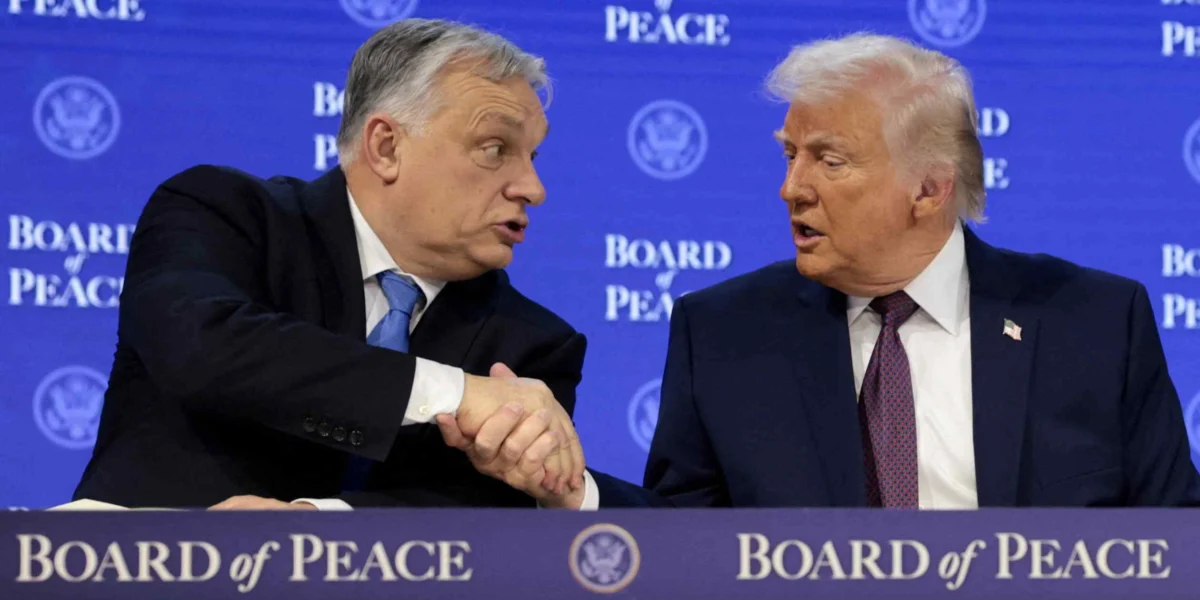
Geopolitical Context: The close ties between Prime Minister Orban and former U.S. President Donald Trump, as alluded to in the accompanying image caption, add another layer of complexity. While not directly related to the Samsung SDI case, this association places Orban on a political spectrum often perceived as less inclined towards stringent environmental regulations. The contrast between such alliances and the demands for environmental responsibility within the EU framework could become a focal point in public discourse.
The outcome of the Samsung SDI investigations will likely have far-reaching consequences, not only for the company itself but also for Hungary’s environmental policy, its economic trajectory, and the political future of Prime Minister Viktor Orban. The coming months will reveal whether the government can effectively navigate this crisis and restore public confidence in its commitment to both economic prosperity and environmental integrity.
