

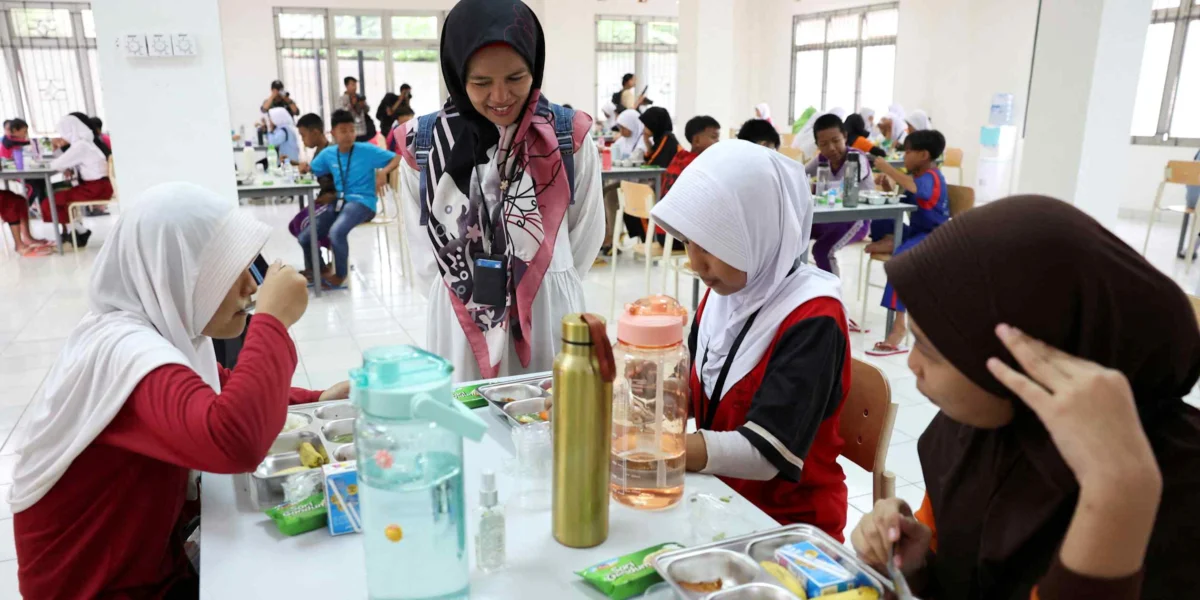
JAKARTA – The Indonesian government is poised to significantly curtail President Prabowo Subianto’s flagship free school meals program, a move necessitated by mounting fiscal pressures and a need for budgetary “efficiencies.” This adjustment, which will see the program’s scope reduced, comes as the Southeast Asian nation grapples with the economic repercussions of ongoing geopolitical instability, particularly the protracted conflict in the Middle East, which has strained national finances. The scaling back also signals a broader re-evaluation of the administration’s ambitious spending commitments.
The decision to pare back the highly anticipated " Makan Bergizi Gratis" (Free Nutritious Meals) initiative, a cornerstone of President Prabowo’s campaign promises aimed at combating malnutrition and enhancing educational outcomes, was signaled by the discontinuation of free meals on Saturdays. This initial reduction, though seemingly minor, represents a significant pivot from the program’s initial expansive vision and raises questions about its long-term sustainability and the government’s capacity to fund its grandest social welfare pledges.
Background of the Ambitious Initiative
President Prabowo Subianto, who assumed office in October 2024, championed the free school meals program as a critical policy to address stunting and improve the cognitive development of Indonesian children. The program’s ambition was to provide nutritious meals to all students from elementary to junior high school levels, a undertaking projected to cost trillions of rupiah annually. The initial rollout aimed to integrate locally sourced ingredients and support local farmers, creating a virtuous cycle of economic benefit alongside improved public health.
The program was designed to be implemented in phases, with the first phase targeting schools in areas with high rates of malnutrition. The promise of nutritious meals was intended to not only improve children’s health and concentration in the classroom but also to alleviate financial burdens on low-income families. The vision was to create a healthier, more educated future generation, thereby bolstering Indonesia’s long-term economic competitiveness.
Escalating Fiscal Pressures
The rationale behind the program’s curtailment is rooted in a complex interplay of domestic and international economic factors. Indonesia, like many nations, has been impacted by the prolonged conflict in the Middle East, which has disrupted global supply chains and driven up commodity prices. While Indonesia is a significant exporter of commodities, including coal and nickel, these sectors have also faced their own challenges, including fluctuating global demand and increasing environmental scrutiny.
The government’s budget has come under considerable strain due to increased expenditures in areas such as defense and disaster relief, alongside the ongoing need to manage the national debt. The war in the Middle East, with its ripple effects on global energy markets and trade routes, has exacerbated these existing pressures. This has forced the administration to seek avenues for fiscal consolidation and to prioritize spending.
Re-evaluation of Export Duties
In a related move to bolster government revenue, Jakarta is also reportedly considering an increase in export duties on key commodities such as coal and nickel. This decision reflects a strategy to capitalize on Indonesia’s natural resource wealth during a period of heightened global demand, while simultaneously seeking to offset the costs associated with social programs and other government expenditures.
Indonesia is one of the world’s largest exporters of thermal coal and a major producer of nickel, a critical component in electric vehicle batteries. While higher export duties could generate significant revenue, they also risk impacting the competitiveness of these sectors on the international market and potentially drawing criticism from trading partners. The timing of such increases will be crucial, balancing the immediate need for funds against potential long-term economic consequences.
Timeline of the Program’s Evolution
The free school meals program was a central promise of President Prabowo’s campaign leading up to the 2024 presidential election. Following his victory, the administration began laying the groundwork for its implementation. Initial reports indicated a phased rollout starting in mid-2025, with a comprehensive national implementation by 2029. The program’s initial design included provisions for breakfast and lunch for students attending school on weekdays.
The decision to stop free school meals on Saturdays, as reported, represents an immediate adjustment to this timeline and scope. This implies that the program, in its current form, is unlikely to reach the expansive coverage initially envisioned within the planned timeframe. The government’s stated need for "efficiencies" suggests that resource allocation is being critically reassessed.
Supporting Data and Projections
The economic implications of the Middle East conflict have been widely documented. Global oil prices, while fluctuating, have generally remained elevated, impacting transportation costs and inflation. This has a direct bearing on Indonesia’s import bill and its overall economic stability. Furthermore, geopolitical uncertainty can deter foreign investment and disrupt trade flows, both vital for a developing economy like Indonesia.
The projected cost of the full free school meals program was estimated to be in the range of Rp 30 trillion to Rp 50 trillion per year (approximately $2 billion to $3.3 billion USD), depending on the exact scope and implementation details. This represents a significant portion of the national budget, and any adjustments will have a material impact on fiscal planning.
For instance, data from the World Bank has consistently highlighted the issue of stunting in Indonesia, with rates remaining a concern in several regions. The free school meals program was seen as a direct intervention to combat this. According to the Indonesian Ministry of Health, stunting rates in children under five years old were around 21.6 percent in 2023, a figure that, while showing improvement, still indicates a substantial challenge. Malnutrition also affects cognitive development, impacting educational attainment and future productivity.
Official Responses and Statements
While direct official statements confirming the scaling back of the program beyond the Saturday cessation have not been extensively detailed, the government has acknowledged the need for fiscal prudence. Ministers have spoken about the importance of "responsible budgeting" and ensuring the sustainability of social programs.
A spokesperson for the Ministry of Finance, speaking on condition of anonymity, indicated that the government is "exploring all avenues to optimize resource allocation" in light of evolving economic conditions. The focus, they stated, is on ensuring that "essential programs are delivered effectively and efficiently, without compromising fiscal stability."
The Ministry of Education has also been engaged in discussions regarding the implementation of the program, with officials emphasizing the need for a pragmatic approach that balances ambitious goals with available resources. There is an understanding that while the intent of the program is laudable, its execution must be grounded in economic reality.
Broader Impact and Implications
The scaling back of the free school meals program, even in its initial stages, carries significant implications. Firstly, it raises concerns among parents and advocacy groups who had pinned their hopes on this initiative to alleviate household food insecurity and improve their children’s well-being. The discontinuation of Saturday meals, for example, means that children from disadvantaged backgrounds may lose a crucial source of nutrition on weekends.
Secondly, it signals a potential recalibration of President Prabowo’s administration’s spending priorities. While the president has committed to social welfare, the economic realities of governing may necessitate a more conservative approach than initially promised. This could lead to a broader debate about the feasibility of large-scale welfare programs in Indonesia’s current economic climate.
Furthermore, the potential increase in export duties on coal and nickel, while aimed at boosting revenue, could have an impact on Indonesia’s standing as a reliable supplier in the global market. It may also invite scrutiny from international bodies and trading partners concerned about fair competition and trade practices. The long-term effects on foreign investment and the attractiveness of Indonesia as an investment destination will need to be carefully monitored.
The government’s challenge is to navigate these complex fiscal pressures without undermining its commitment to improving the lives of its citizens. The adjustments to the free school meals program, while perhaps unavoidable, underscore the delicate balancing act required to foster economic growth while ensuring social equity and well-being for all Indonesians. The coming months will likely see further pronouncements on the government’s fiscal strategy as it seeks to adapt to a challenging global economic landscape. The effectiveness of these adjustments will ultimately be judged by their impact on the Indonesian economy and the welfare of its population.
