

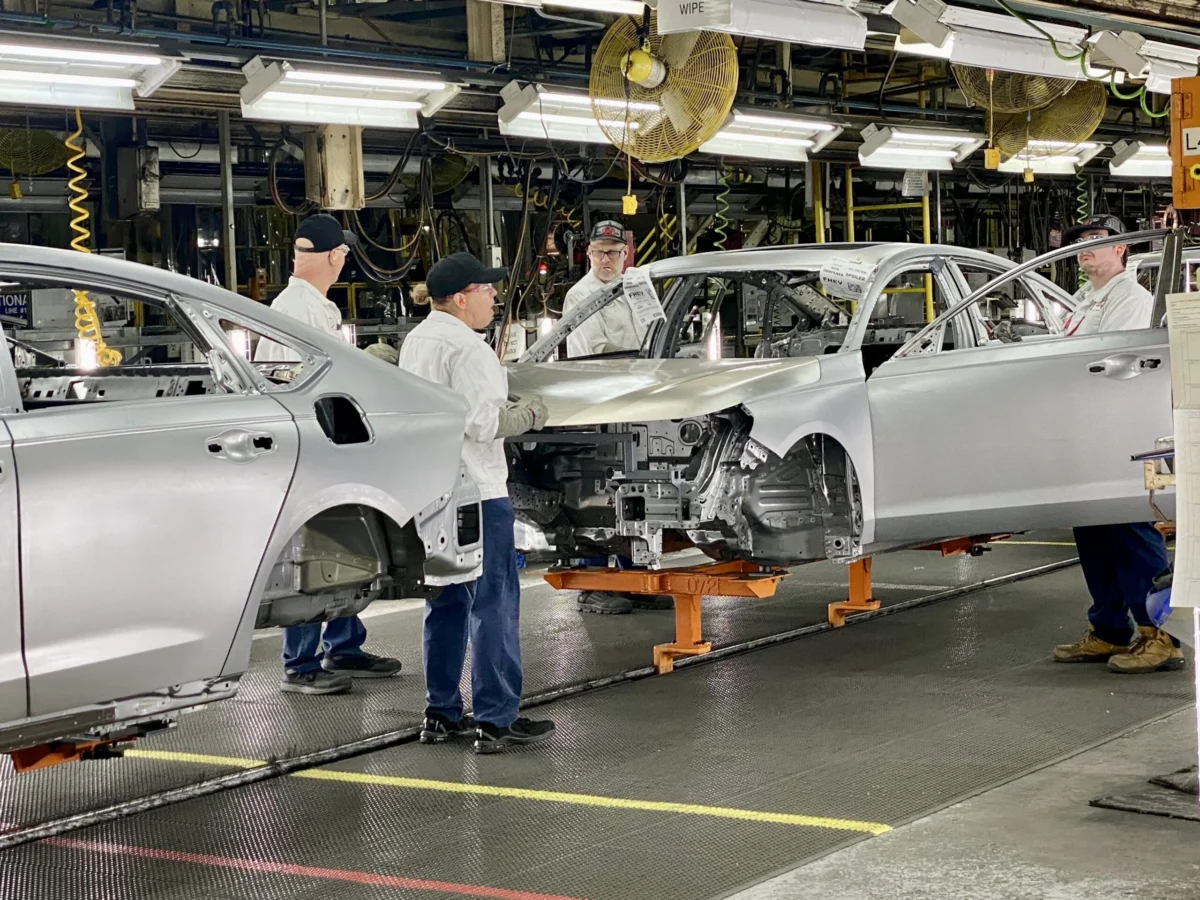
MARYSVILLE, Ohio – Honda Motor Company announced on Monday a monumental investment of $3 billion to construct a new vehicle assembly plant in Ohio, marking a significant expansion of its North American manufacturing footprint and a strategic re-evaluation of its future production priorities. The ambitious project, slated to commence production in 2029, will be situated near Honda’s existing facilities in Marysville, Ohio, and is projected to add over 2,000 new jobs to the region, boosting the automaker’s already substantial presence in the state.
This new facility is designed with remarkable versatility, capable of producing traditional internal combustion engine (ICE) vehicles, all-electric vehicles (EVs), and hybrid models. This multi-powertrain capability is a critical element of Honda’s strategy, particularly as hybrid vehicles experience a resurgence in popularity across the U.S. market, providing a flexible response to evolving consumer preferences and the dynamic pace of EV adoption. Once operational, the plant is expected to contribute an additional 240,000 units annually to Honda’s production capacity, elevating the company’s total light-duty vehicle output in the U.S. to an impressive 1.3 million units per year.
The investment underscores a broader trend of localization within the automotive industry, driven by a complex interplay of geopolitical pressures, supply chain vulnerabilities, and escalating logistical costs. This marks Honda’s first new mass production U.S. vehicle assembly plant since its Indiana facility opened in 2008, signifying a renewed commitment to domestic manufacturing at a pivotal moment for the global auto sector.
A Deepening Commitment to Ohio and U.S. Manufacturing
Honda’s decision to deepen its roots in Ohio is not an isolated one but rather a continuation of a long-standing relationship with the state. Ohio has been a cornerstone of Honda’s North American operations for over four decades, ever since the company began motorcycle production there in 1979, followed by automobile manufacturing in 1982. Over the years, Honda has invested billions in its Ohio facilities, which currently include vehicle assembly plants, engine plants, and research and development centers. This latest investment builds upon recent expansions, including a $70 million performance vehicle facility opened in 2016 and a multibillion-dollar joint venture battery plant established earlier this year, both also located in Ohio.
Bob Nelson, executive vice president of American Honda Motor, articulated the profound significance of this venture during the announcement at the company’s U.S. heritage center in Ohio. "This is not simply an investment in another plant," Nelson stated, "It is an investment in the future of Honda manufacturing in America." His remarks emphasize the strategic, long-term vision behind the project, positioning it as a foundational element for Honda’s sustained competitiveness in the North American market.
Honda currently operates 12 manufacturing plants across the United States, eight of which are dedicated to producing engines or light-duty vehicles. Since its inception of U.S. auto production in 1982, the Japanese automaker has manufactured over 33 million vehicles and more than 39 million engines in the country, employing over 30,000 individuals directly. This extensive historical footprint provides a robust foundation for the new plant, leveraging existing expertise, supply chains, and a skilled workforce within the region.
Strategic Pivot Amidst Evolving Market Dynamics and Trade Tensions
The announcement comes roughly two weeks after luxury brand Audi, owned by Volkswagen, revealed plans to invest over $4 billion in its first U.S. manufacturing facility in Georgia. This follows similar commitments from other major automakers, including Detroit giants General Motors and Ford Motor, as well as international players like Toyota Motor and Hyundai Motor, all of whom have recently pledged billions of dollars towards new or upgraded U.S. facilities. This collective movement underscores a concerted industry-wide effort to localize production, mitigate risks associated with global supply chains, and potentially circumvent trade tariffs.
Significantly, Honda’s latest U.S. investment follows a notable strategic adjustment regarding its electrification plans in North America. In May, the automaker indefinitely suspended an $11 billion investment plan to establish an all-electric vehicle hub, including battery production, in Canada. Concurrently, Honda also canceled plans for three specific EV models intended for the U.S. market. This pivot suggests a recalibration of Honda’s electrification timeline and strategy, favoring a more diversified production approach that can adapt to the evolving pace of EV adoption and the sustained demand for hybrid and efficient ICE vehicles. The multi-powertrain capability of the new Ohio plant directly reflects this revised outlook, offering greater flexibility and risk mitigation in a rapidly changing market landscape.
The decision to build a plant capable of producing a mix of powertrains is particularly insightful given recent market trends. While the long-term shift towards EVs remains undeniable, the pace of adoption has shown signs of moderation, leading to increased interest in hybrid models as a bridge technology. Consumers are increasingly seeking fuel efficiency and reduced emissions without the higher upfront cost or range anxiety often associated with pure EVs. Honda’s ability to produce all three types of vehicles under one roof in Ohio positions it to capture demand across this spectrum, maximizing market penetration and profitability.
The Shadow of Tariffs and the Call for Localization
A significant backdrop to this wave of domestic automotive investment is the persistent threat of trade tariffs and the broader push for localizing production. Former President Donald Trump’s administration initiated a series of tariffs on imported goods, including automotive components and finished vehicles, which significantly increased costs for automakers relying on international supply chains. These tariffs, and the potential for their re-imposition or escalation, have served as a powerful incentive for companies to shift manufacturing closer to their sales markets.
Jennifer Thomas, senior vice president of corporate affairs for American Honda Motor Co., has been vocal about the strategic imperative for localization. Speaking in Detroit on October 27, she emphasized, "In order to be competitive in this market, you’re going to need to build products here." Thomas highlighted that Honda is currently operating at maximum capacity in its existing facilities and is "exploring all options" to expand. This new Ohio plant directly addresses that critical need for additional capacity.
Thomas also issued a stark warning regarding the potential for trade disputes between the U.S. and Canada. She described a "catastrophic" scenario for the automotive industry if the two countries fail to reach a new trade deal by the end of the year. Trump has threatened to double tariffs on Canadian vehicles and parts from 25% to 50% on January 1 if a deal is not secured. Such an escalation would have profound implications for automakers with integrated North American supply chains, including Honda, which produces a significant portion of its North American-sold vehicles in Canada. While Honda has stated that nearly all its vehicles sold in the U.S., including its Acura luxury brand, are produced in North America—with over 60% specifically in the U.S.—the intricate web of cross-border parts and vehicle flows means that increased tariffs could still lead to higher production costs and potentially higher consumer prices. The Ohio investment can be seen, in part, as a strategic hedge against such geopolitical and trade uncertainties.
Broader Economic and Industry Implications
The $3 billion investment by Honda in Ohio will have far-reaching economic implications. Beyond the direct creation of over 2,000 jobs, there will be significant ripple effects throughout the local and regional economies. The construction phase alone will generate substantial employment opportunities in building trades. Once operational, the plant will boost demand for local suppliers, logistics providers, and various support services, creating an ecosystem of indirect employment. The increased tax revenue for the state and local governments will also provide funds for public services and infrastructure development.
For the automotive industry as a whole, Honda’s move reinforces the trend of "reshoring" manufacturing, driven by lessons learned from recent supply chain disruptions, geopolitical risks, and evolving trade policies. Companies are increasingly prioritizing resilience and proximity to market over purely lowest-cost production models. This shift could lead to a more robust and self-reliant North American automotive sector, potentially reducing vulnerability to external shocks.
Furthermore, Honda’s flexible approach to powertrain production in its new facility provides a valuable case study for other automakers navigating the transition to electrification. By investing in a plant capable of manufacturing ICE, hybrid, and EV models, Honda demonstrates a pragmatic strategy that acknowledges the complexities and uncertainties of market adoption rates for new technologies. This adaptability allows the company to respond swiftly to shifts in consumer demand without being locked into a single technological pathway, minimizing investment risk while maximizing market opportunity.
In conclusion, Honda’s $3 billion investment in a new Ohio assembly plant is more than just an expansion; it represents a strategic declaration. It underscores a profound commitment to U.S. manufacturing, a flexible response to the evolving automotive market, and a pragmatic adaptation to the realities of global trade and supply chain dynamics. As the industry continues its transformative journey, Honda’s latest move positions it for sustained competitiveness and growth in the crucial North American market, solidifying its legacy as a key player in the "Made in America" automotive landscape.
