

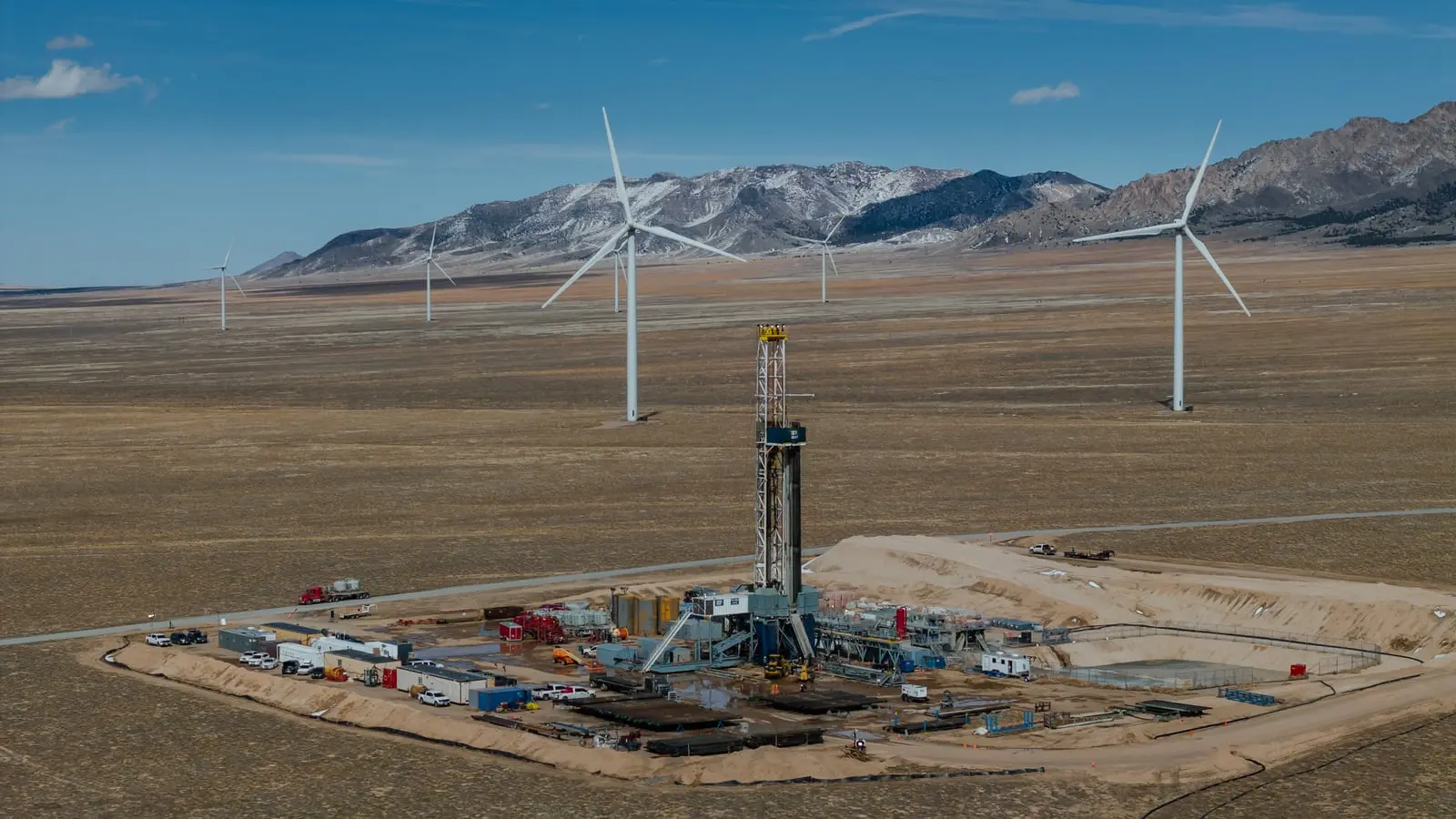
The Houston-based geothermal innovator Fervo Energy has successfully closed a $421 million non-recourse debt financing package, marking a pivotal moment for the commercialization of Enhanced Geothermal Systems (EGS) in the United States. This substantial capital injection is earmarked for the first phase of Cape Station, Fervo’s flagship project located in Beaver County, Utah. The financing represents one of the largest debt raises for a "first-of-a-kind" renewable energy technology, signaling a shift in how the financial sector views the bankability of advanced geothermal energy. As the global energy landscape grapples with the dual challenges of decarbonization and surging electricity demand from artificial intelligence and domestic manufacturing, Fervo’s progress at Cape Station offers a blueprint for scalable, carbon-free, firm power.
Structural Breakdown of the Financing Package
The $421 million financing facility is meticulously structured to transition Cape Station from its early-stage development phase to a long-term, sustainable capital structure. The package includes a $309 million construction-to-term loan, which provides the necessary runway for the completion of the project’s initial phase. Additionally, a $61 million tax credit bridge loan has been secured, leveraging the incentives provided under the Inflation Reduction Act (IRA) to optimize the project’s internal rate of return. A $51 million letter of credit facility completes the package, providing the necessary counterparty credit support required by utility partners and grid operators.
The financing was notably oversubscribed, reflecting high investor appetite for "firm" clean energy—power that is available 24/7, unlike intermittent sources such as wind and solar. RBC Capital Markets acted as the financial advisor and coordinating lead arranger. The lending syndicate featured a robust roster of Tier 1 global financial institutions, including Barclays, BBVA, HSBC, MUFG, and Société Générale. Other participants in the credit facility included J.P. Morgan, Bank of America, and Sumitomo Mitsui Trust Bank. This level of participation from major commercial banks suggests that geothermal energy is moving out of the realm of venture capital and into the mainstream infrastructure asset class.
The Cape Station Project: Timeline and Scale
Located in the geothermal-rich corridor of southwestern Utah, Cape Station is designed to be a massive contributor to the Western U.S. power grid. The project is expected to deliver its first power to the grid by the end of 2024. According to Fervo’s development timeline, the facility will reach an operating capacity of approximately 100 MW by early 2027. However, the 100 MW phase is merely the beginning; Fervo has outlined a clear trajectory to scale the site to 500 MW of total capacity.
The project’s commercial viability is underpinned by long-term power purchase agreements (PPAs). These include contracts with Southern California Edison (SCE) and Shell Energy. These agreements ensure that the electricity generated at Cape Station has a guaranteed buyer at a predictable price, which was a critical prerequisite for securing non-recourse debt. For utilities like SCE, geothermal provides a vital "baseload" component to their portfolios, helping to balance the volatility of solar and wind generation while meeting California’s aggressive 100% clean energy mandates.
Technological Innovation: From Oil and Gas to Geothermal
Fervo Energy’s approach is a "narrative disruptor" because it applies proven techniques from the oil and gas industry to the renewable energy sector. Traditional geothermal energy is limited to rare geographic locations where heat, water, and rock permeability coexist naturally. In contrast, Enhanced Geothermal Systems (EGS) create artificial reservoirs by injecting fluid into hot, dry rock.
Fervo utilizes horizontal drilling and multi-stage hydraulic fracturing—technologies perfected during the American shale revolution—to create these reservoirs at depths where temperatures are high enough to generate steam for electricity. By adding AI-enabled drilling software and advanced fiber-optic sensing, Fervo has significantly reduced the time and cost associated with drilling geothermal wells.
Just last month, Fervo announced a major technical milestone at its nearby Project Blanford site in Millard County, Utah. The company successfully drilled its hottest well to date, reaching temperatures exceeding 555°F at a depth of approximately 11,200 feet. Remarkably, this vertical appraisal well was completed in under 11 days, demonstrating a level of operational efficiency that rivals traditional hydrocarbon extraction. This consistency in drilling performance is what Fervo’s leadership credits for the successful "bankability" of the Cape Station project.
Addressing the Surge in Power Demand
The timing of Cape Station’s development coincides with an unprecedented rise in electricity demand across North America. The primary drivers are the rapid expansion of data centers required for generative AI, a resurgence in domestic manufacturing spurred by federal industrial policy, and the broader electrification of the transportation and heating sectors.

Data center operators, in particular, require "five-nines" reliability—99.999% uptime. While solar and wind are cost-effective, their intermittency requires expensive battery storage or natural gas backup to meet the needs of a 24/7 data center. Geothermal energy provides a carbon-free alternative that operates at high capacity factors around the clock. Fervo’s ability to provide firm, clean power at scale makes it a strategic partner for tech giants and industrial manufacturers looking to meet ESG goals without compromising on reliability.
Strategic Significance and Financial Analysis
The transition to non-recourse financing is perhaps the most significant aspect of this announcement for the broader energy industry. Non-recourse debt is a type of commercial loan that is secured only by the project’s assets and cash flows, rather than the parent company’s balance sheet. Historically, such financing has been reserved for mature technologies like combined-cycle gas turbines or established solar farms.
"Non-recourse financing has historically been considered out of reach for first-of-a-kind projects," noted David Ulrey, Chief Financial Officer at Fervo Energy. By securing this funding, Fervo has effectively de-risked EGS as a technology. It proves that lenders are now comfortable with the technical performance of these systems and the reliability of the underlying geology. This sets a precedent that will likely lower the cost of capital for future geothermal developments, accelerating the transition away from fossil fuels.
The Global Context: Geothermal Momentum in Europe
The momentum behind geothermal is not confined to the United States. In the United Kingdom, Geothermal Engineering Ltd (GEL) recently achieved a historic milestone at its United Downs plant in Cornwall. By drilling to depths of over 5 kilometers to access temperatures of 190°C, GEL became the first company to start commercial geothermal power generation in the UK.
Like Fervo, GEL has secured commercial offtake agreements, including a 3MW PPA with Octopus Energy to power approximately 10,000 homes. Dr. Ryan Law, CEO of Geothermal Engineering, emphasized that the success of these systems provides a "milestone broader than the UK," proving that baseload power can be extracted from deep heat in diverse geological settings.
Furthermore, the ongoing energy security crisis in Europe has intensified the focus on domestic geothermal resources. Dr. Charlotte Adams, Chief Executive of the UK National Geothermal Centre, noted that geothermal energy serves as a hedge against market volatility. Unlike natural gas, which is subject to geopolitical fluctuations and import dependencies, geothermal energy is a localized resource that offers long-term price stability.
Implications for American Energy Security
For the United States, the success of Cape Station is a vital component of a broader energy security strategy. By leveraging domestic expertise in drilling and geophysics, the U.S. can lead the world in a new category of renewable energy exports. The project also provides high-paying jobs for workers transitioning from the traditional fossil fuel sector, as the skill sets required for EGS—drilling, reservoir engineering, and power plant operations—are nearly identical to those used in oil and gas.
As Cape Station moves toward its 100 MW goal in 2027 and its ultimate 500 MW target, it will serve as a laboratory for the future of the grid. The integration of AI in drilling and exploration will continue to drive down costs, potentially making geothermal competitive with natural gas on a levelized cost of energy (LCOE) basis in many regions.
The $421 million financing deal marks the end of the "demonstration" era for Fervo Energy and the beginning of the "industrialization" era. With the support of global banking giants and the commitment of major utilities, geothermal energy is no longer a niche renewable alternative; it is becoming a cornerstone of the modern, decarbonized power grid. The success of Cape Station will likely trigger a wave of similar investments, positioning geothermal energy as a critical asset class for the 21st-century energy transition.
