

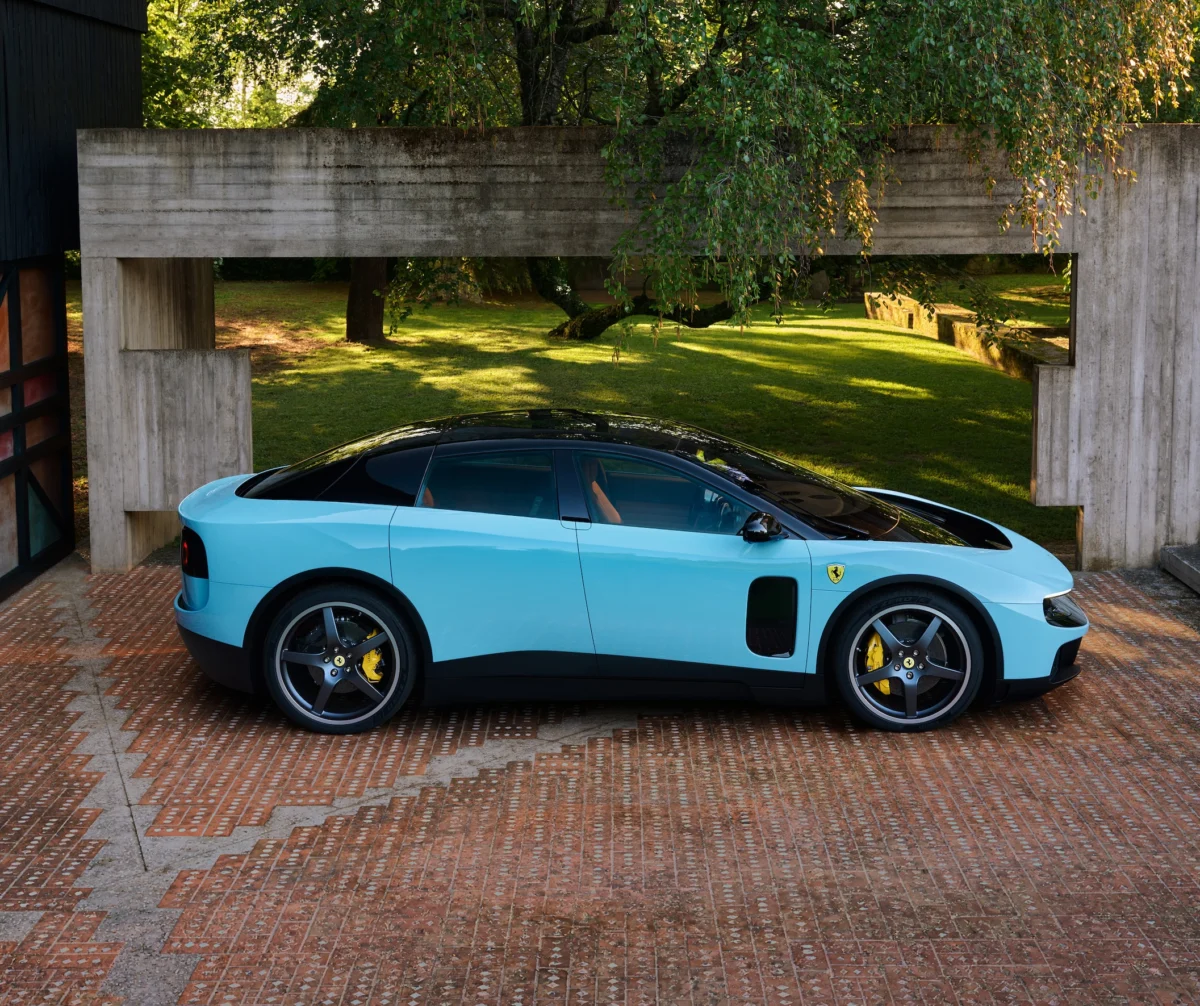
When Ferrari, the iconic Italian marque synonymous with roaring V12 engines and aggressive, sculpted designs, unveiled the Luce—its inaugural all-electric vehicle—to the global public in May, the revelation ignited a firestorm of online criticism. The internet, often quick to form a collective opinion, reacted with an overwhelmingly negative sentiment, comparing the wedge-shaped Luce to vehicles far removed from Ferrari’s luxurious pedigree, notably likening it to a humble Nissan Leaf. Critics also predicted that emerging Chinese electric vehicles would not only surpass the Luce in performance but also dramatically undercut its opulent price point. Even Luca Cordero di Montezemolo, a former chairman and a staunch custodian of Ferrari’s traditional values, reportedly joined the chorus of detractors. The market’s immediate judgment was swift and punitive: Ferrari’s stock tumbled by 8% the day following the reveal, leading many to conclude that the Luce would be an unequivocal failure.
However, just two months post-unveiling, it appears the collective "wisdom" of the armchair auto executives and online pundits was profoundly mistaken. Contrary to widespread expectations, the five-seater Luce, a vehicle largely shaped by the minimalist and influential design sensibilities of Jony Ive and his firm, LoveFrom, has achieved remarkable commercial success, exceeding its initial sales targets with unexpected speed.
The Unexpected Triumph: Luce’s Rapid Sales Success
According to a comprehensive report by the Financial Times, Ferrari managed to hit its sales target for the Luce for the entire year within an astonishingly brief two-month period. The automaker had initially aimed to sell just under 500 units of the groundbreaking EV, which commands a princely sum of €555,000 (approximately $630,000 USD). This rapid uptake underscores a significant disconnect between initial public perception and the purchasing decisions of Ferrari’s discerning, affluent customer base.
Further solidifying its market position, previous reports indicated that a substantial portion, at least 20%, of the initial Luce production run is destined for the lucrative Chinese market. This allocation is strategically sound, given China’s burgeoning appetite for high-end electric vehicles and its distinct preference for fast, sleek, and often four-door luxury EVs. A separate report from CarNewsChina.com highlighted an instance where 88 units of the Luce allocated for the Chinese market sold out immediately upon launch, priced at $586,600 USD. This robust performance in a critical global market further validates Ferrari’s strategic gamble. While TechCrunch has reached out to Ferrari for official confirmation of these figures, the initial data points strongly to a resounding commercial success for the Luce.
A Storm of Controversy: The Unveiling and Public Reaction
Ferrari’s journey into full electrification has been a delicate balancing act, navigating the demands of environmental regulations, evolving consumer preferences, and the deeply ingrained heritage of its brand. For decades, Ferrari has been defined by its internal combustion engines—the symphonic growl of a V12, the visceral thrust of a V8—and an uncompromising commitment to driver engagement. The decision to produce a fully electric vehicle, especially one designed to be more practical with five seats, represented a significant philosophical shift.
The unveiling in May was therefore met with intense scrutiny, not just from the usual automotive press but from a vocal online community. The design, spearheaded by Jony Ive, renowned for his work with Apple, and his studio LoveFrom, was a particular flashpoint. Described as "wedge-shaped," the Luce diverged in certain aspects from traditional Ferrari aesthetics, while retaining some foundational elements. This blend of familiarity and novelty proved polarizing.
Online forums, social media platforms, and comment sections erupted with criticism. The most prominent and widely circulated critique involved unflattering comparisons to the Nissan Leaf, a mass-market electric hatchback known for its practicality rather than its exotic appeal. This comparison, often accompanied by side-by-side images, quickly became a meme, amplifying the perceived design misstep. Beyond aesthetics, critics speculated about the Luce’s performance capabilities, suggesting that advanced Chinese EVs might outperform it while offering a fraction of the price. These claims, often made without comprehensive performance data, reflected a broader skepticism about Ferrari’s ability to transition into the electric era without compromising its core identity.
The dissent wasn’t confined to anonymous internet users. Luca Cordero di Montezemolo, who led Ferrari for over two decades and is widely credited with modernizing the brand while preserving its exclusivity, reportedly expressed his reservations. His voice added significant weight to the traditionalist viewpoint, signaling that even within Ferrari’s inner circle, the Luce represented a contentious departure. The immediate 8% drop in Ferrari’s stock price, wiping out billions in market value, served as a stark indicator of investor concern, reflecting fears of brand dilution, misjudgment of market trends, or a failed entry into the highly competitive luxury EV segment.
The Prancing Horse’s Resilience: Unpacking the Sales Phenomenon
The Luce’s rapid sales success, despite the initial onslaught of criticism, can be attributed to several critical factors unique to Ferrari’s position in the automotive world. Foremost among these is the unparalleled power of the Ferrari brand itself. Ferrari commands an intensely loyal and, crucially, price-insensitive customer base. These individuals often own multiple Ferrari models, valuing the brand’s heritage, performance prowess, and exclusivity above all else. For them, a €555,000 price tag, while astronomical to the average consumer, represents a worthwhile investment in a piece of automotive art and engineering.
The "prancing horse on the hood" acts as a powerful differentiator, transcending mere specifications or aesthetic critiques. Early reviews, published by reputable automotive outlets like Top Gear and MotorTrend after test drives of prototype models, consistently highlighted that the Luce, despite its electric powertrain and distinctive design, "drives like a Ferrari should." This validation of its core performance and dynamic capabilities—the very essence of a Ferrari—likely reassured potential buyers who prioritize the driving experience above all else. The brand’s engineers evidently succeeded in imbuing the EV with the responsiveness, handling, and exhilaration expected from Maranello.
The strategic focus on the Chinese market also played a pivotal role in the Luce’s early success. China has emerged as the world’s largest and most rapidly growing market for luxury vehicles, particularly for high-end EVs. Chinese consumers frequently favor larger, technologically advanced, and often four-door luxury cars that offer both prestige and practicality. The Luce, with its five-seater configuration, sleek lines, and advanced electric powertrain, appears tailor-made to meet these specific preferences. The reported immediate sell-out of allocated units in China is a testament to this market alignment and underscores the importance of regional market understanding for global luxury brands.
Furthermore, the concept of a "practical Ferrari" resonates with existing collectors. Many Ferrari owners, already possessing a garage full of uncompromising sports cars, may welcome a high-performance vehicle that offers enhanced usability for daily driving or family outings, without sacrificing the brand’s inherent prestige and driving thrill. This caters to a niche within an already niche market, fulfilling a previously unmet demand among Ferrari’s most dedicated clientele.
Jony Ive’s Influence and Ferrari’s Evolving Design Philosophy
The involvement of Jony Ive and LoveFrom in the design of the Luce is a significant aspect of its story. Ive, famously the design guru behind many of Apple’s iconic products, is known for his minimalist, user-centric, and often controversial aesthetic choices. His firm, LoveFrom, embodies a philosophy that prioritizes purity of form and function. Applying this approach to a brand like Ferrari, traditionally associated with flamboyant, emotionally charged designs, was bound to generate debate.
The "wedge-shaped" design of the Luce, while drawing parallels to some classic Ferrari and Pininfarina concepts of the past (like the Modulo or even the Testarossa’s aggressive profile), also incorporated modern, perhaps more understated, elements that might have been perceived as less "dramatic" or "Ferrari-like" by some purists. However, design is inherently subjective, and the translation of a vehicle’s appearance from digital renders or photographs to its physical presence can be transformative. Many automotive enthusiasts understand that certain designs "don’t translate well on screen" but gain presence and allure when viewed in person. It is plausible that seeing the Luce in the metal, experiencing its proportions and details firsthand, may have tipped buyers into placing an order, overriding initial online impressions.
The success of the Luce under Ive’s design influence also signals a potential evolution in Ferrari’s broader design philosophy. As the automotive world shifts towards electrification, aerodynamic efficiency and new packaging constraints often dictate new forms. Ferrari, by embracing a design partner known for innovation and modernity, demonstrates its willingness to adapt and redefine what a "modern Ferrari" can look like, even if it challenges established norms. This bold step could pave the way for future Ferrari EVs to explore new aesthetic territories while maintaining brand integrity.
Broader Implications for Ferrari and the Luxury EV Market
The rapid sales success of the Ferrari Luce carries profound implications for both the Italian automaker and the wider luxury electric vehicle market. For Ferrari, it serves as a powerful validation of its strategic decision to embrace electrification, demonstrating that its brand power and commitment to performance can successfully translate into the EV era, even with a controversial design. It suggests that Ferrari can innovate and expand its product portfolio without diluting its core appeal, reassuring investors and enthusiasts alike. This success may embolden Ferrari to accelerate its EV roadmap, potentially leading to more electric models, including SUVs or grand tourers, in the coming years.
For the luxury EV market, the Luce’s performance offers crucial insights. It underscores that for ultra-high-net-worth individuals, brand heritage, exclusivity, and the promise of an authentic driving experience often outweigh initial aesthetic criticisms or direct performance comparisons with more affordable alternatives. Brands like Porsche (with the Taycan), Lucid (with the Air), and Mercedes-Benz (with the EQS) have already shown strong demand for high-performance luxury EVs, but Ferrari’s entry and immediate success at an even higher price point further solidifies the viability and growth potential of this exclusive segment. It also highlights that the purchasing decisions in this rarefied market are driven by a complex interplay of status, performance, rarity, and emotional connection, rather than purely rational metrics often discussed by the general public.
Finally, the Luce’s journey from internet pariah to sales triumph offers a compelling case study on the disconnect between online sentiment and market reality, particularly in niche luxury sectors. The initial "crowd wisdom," heavily influenced by visual comparisons and speculative critiques, proved to be an inaccurate predictor of actual consumer behavior. This phenomenon reminds us that while online discourse can shape perceptions, the ultimate arbiter of success in a market defined by exclusivity and deep pockets remains the discerning buyer.
In conclusion, the Ferrari Luce stands as a testament to the enduring power of the Ferrari brand. It has not only navigated a turbulent entry into the electric vehicle market but has done so with remarkable commercial success, silencing its early critics. By blending innovative design, maintaining its legendary driving dynamics, and strategically targeting key global markets, Ferrari has proven that its prancing horse can gallop confidently into an electrified future, demonstrating that sometimes, all a Ferrari needs to succeed is to be a Ferrari.
