

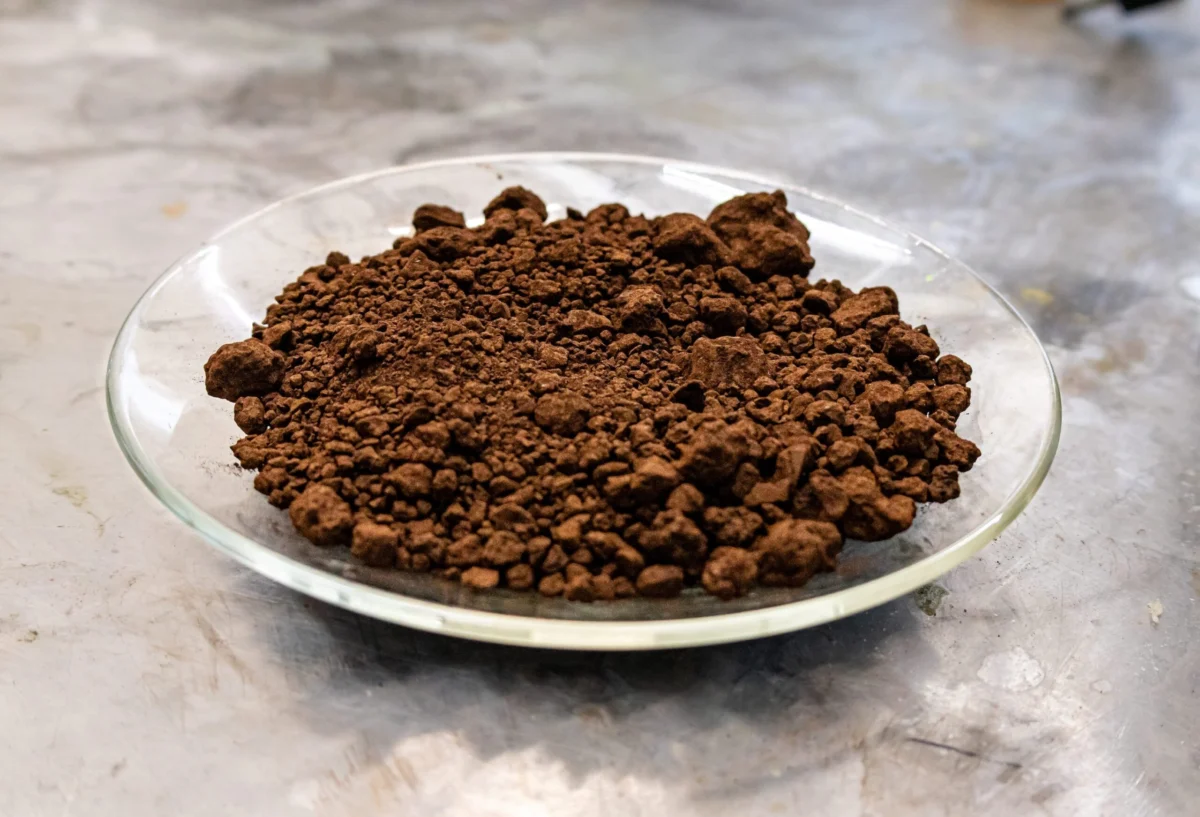
In a significant development poised to revolutionize industrial waste management and critical mineral supply chains, Fast Metals, an innovative startup co-founded by CEO Sumedh Gostu, has successfully closed a $4.3 million pre-seed funding round. This substantial investment, led by New Climate Ventures with key participation from Azolla Ventures, Astor Swiss, and Rio Tinto’s accelerator Founders Factory, aims to scale Fast Metals’ proprietary technology designed to extract high-value critical minerals from red mud, the notoriously hazardous byproduct of alumina refining. With an estimated 3 billion tons of this caustic waste currently stockpiled in open-air ponds and mounds globally, the company’s breakthrough offers a dual promise: environmental remediation and the creation of new, vital resource streams.
The Global Scourge of Red Mud: A Lingering Environmental Challenge
Aluminum, a cornerstone of modern industry from aerospace to packaging, is produced through a process that, while essential, generates an immense and problematic waste product known as red mud, or bauxite residue. The Bayer process, invented in 1887 by Carl Josef Bayer, revolutionized aluminum production by efficiently extracting alumina from bauxite ore. However, for every ton of alumina produced, between one and two tons of red mud are generated, depending on the bauxite’s composition. This waste, characterized by its distinctive vermillion hue, is a highly alkaline (pH typically above 10, sometimes as high as 13) slurry rich in iron oxides, but also containing a complex mixture of other elements, including titanium, silicon, calcium, and trace amounts of valuable rare earth elements and residual aluminum.
Historically, red mud has been stored in vast, often unlined, impoundments, posing significant environmental risks. These include the potential for alkaline leachate to contaminate groundwater and soil, the emission of caustic dust into surrounding communities, and, in catastrophic instances, dam failures leading to widespread environmental devastation, such as the 2010 Ajka alumina plant accident in Hungary. The sheer volume of red mud—projected to exceed 4 billion tons by 2025—exacerbates the challenge, consuming vast tracts of land and representing a perpetual liability for the aluminum industry. Despite decades of research into its valorization, economically viable and scalable solutions for processing red mud have remained elusive, largely due to the complex chemical composition and the high cost associated with separating its valuable constituents from the predominant iron oxide matrix.
A New Alchemy: Fast Metals’ Innovative Approach to Waste Valorization
Sumedh Gostu, the visionary behind Fast Metals, believes the answer lies in sophisticated chemistry. "It is a very rich resource," Gostu shared with TechCrunch. "If you attack with the right chemistry, it can be very profitable." His conviction stems from years of dedicated research during his doctoral studies at the Colorado School of Mines, where he meticulously designed the foundational processes for red mud valorization. The critical breakthrough for Fast Metals, however, emerged from a serendipitous conversation between Gostu and his co-founder, Anthony Staley. They realized that another waste stream, also generated by alumina refineries, could be integrated into their process, dramatically improving its economic viability. This synergistic approach, leveraging existing industrial byproducts, represents a paradigm shift in waste management.
Fast Metals’ proprietary method involves a multi-step chemical extraction process, typically spanning six distinct stages. This carefully orchestrated sequence applies a combination of proprietary chemicals, including the aforementioned secondary refinery waste stream, to the red mud. Each step is designed to selectively precipitate or dissolve different mineral compounds, effectively separating them from the bulk material. Gostu emphasizes the economic model underpinning their innovation: "Iron pays for the opex, and the other stuff is profit." While iron oxide constitutes the largest proportion of red mud and can be sold as a lower-value commodity, its recovery is crucial for offsetting operational expenses. The true profitability, however, lies in the extraction of critical minerals.
Unlocking Critical Riches: The Value Proposition
The "other stuff" Gostu refers to encompasses a suite of high-demand critical minerals, including titanium, rare earth elements (REEs) such as scandium, and residual aluminum. These minerals are indispensable components in a wide array of advanced technologies crucial for the global transition to a green economy and national security.
- Titanium Dioxide: Found in red mud, titanium dioxide is primarily used as a white pigment in paints, plastics, and paper, but also has applications in advanced materials and aerospace. Its market value typically ranges from $2.50 to $3 per kilogram.
- Rare Earth Elements (REEs): While present in smaller concentrations, REEs like scandium are exceedingly valuable. Scandium oxide, for instance, can command prices of approximately $750 per kilogram. REEs are vital for electric vehicle motors, wind turbines, consumer electronics, and defense applications. The global supply chain for REEs is currently highly concentrated, making new domestic or diversified sources strategically important.
- Aluminum: While the primary goal of the original refining process is to extract aluminum, some residual aluminum remains locked within the red mud matrix, which Fast Metals’ process can also recover.
The historical impediment to extracting these valuable minerals from red mud has consistently been the prohibitively high cost associated with separating them from the abundant iron oxide. Traditional methods often involved energy-intensive pyrometallurgical processes or complex hydrometallurgical routes with high reagent consumption. Gostu asserts, "We are removing that impediment," highlighting Fast Metals’ ability to achieve this separation economically. This economic viability is not just a commercial advantage but a critical factor in making large-scale red mud valorization a reality, moving beyond academic curiosities to industrial application.
Strategic Investment Fuels Scaling: The Pre-Seed Round
The successful closure of the $4.3 million pre-seed funding round underscores investor confidence in Fast Metals’ technology and its potential to address pressing environmental and economic challenges. The lead investor, New Climate Ventures, specializes in early-stage companies developing solutions for climate change mitigation and adaptation, making Fast Metals a natural fit within their portfolio. Their investment signals a belief in the company’s ability to create a sustainable, circular economy model within the industrial sector.
Participation from Azolla Ventures, another firm focused on climate tech and sustainable solutions, further validates Fast Metals’ mission. Astor Swiss’s involvement suggests an interest from broader financial markets in innovative materials and waste-to-resource technologies. Crucially, the inclusion of Rio Tinto’s accelerator, Founders Factory, provides Fast Metals with not only capital but also strategic access to the expertise, resources, and network of one of the world’s largest mining and metals companies. This partnership could prove invaluable for navigating the complexities of industrial-scale deployment, regulatory compliance, and market penetration.
The investment reflects a growing trend in venture capital towards technologies that offer both environmental benefits and significant economic returns, particularly in the critical minerals sector. As geopolitical tensions highlight vulnerabilities in global supply chains, and environmental regulations tighten, solutions that can turn industrial waste into valuable resources are becoming increasingly attractive.
From Lab to Commercial Scale: The Path Forward
With the fresh infusion of capital, Fast Metals is poised to transition from pilot-scale validation to commercial-scale deployment. The immediate strategic objective is to scale up its innovative process. A significant milestone already secured is a commercial contract with Metalox, a mineral processor, to treat one ton of red mud and refinery waste per week later this year. This contract represents a crucial step in demonstrating the technology’s operational feasibility and economic performance at a relevant industrial scale.
The ramp-up with Metalox will provide Fast Metals with invaluable data on process optimization, material handling, and product quality. This phase will be critical for de-risking the technology and preparing for larger, potentially multi-ton per day, operations. The ultimate vision for Fast Metals extends beyond a single facility; the company aims to establish a scalable, modular solution that can be deployed at or near existing alumina refineries worldwide, transforming their liabilities into assets.
Broader Implications: Environmental, Economic, and Geopolitical
Fast Metals’ technology holds profound implications across multiple dimensions:
- Environmental Impact: The most immediate and tangible benefit is the potential for significant waste reduction and environmental remediation. By extracting valuable materials, Fast Metals not only reduces the volume of red mud requiring long-term storage but also mitigates the environmental hazards associated with current disposal practices. This contributes directly to the circular economy by converting a linear waste stream into a valuable resource loop. Imagine billions of tons of waste not just managed, but eliminated over time, freeing up land and reducing pollution.
- Economic Impact: The valorization of red mud opens up entirely new revenue streams for the aluminum industry, transforming a costly waste disposal problem into a profitable enterprise. Furthermore, the production of critical minerals domestically or within diversified supply chains can reduce reliance on imports, stabilize prices, and foster economic growth through new industries and job creation. The high market values of products like scandium oxide underscore the substantial economic upside.
- Geopolitical Impact: The secure and diversified supply of critical minerals is a matter of national security and economic stability for many nations. Rare earth elements, in particular, are subject to significant geopolitical influence due to concentrated production. By unlocking new sources of these minerals from existing industrial waste, Fast Metals can contribute to strengthening supply chain resilience, reducing vulnerabilities, and fostering greater self-sufficiency for countries that host alumina refineries. This shift can empower nations to control their own resource destinies rather than being beholden to external suppliers.
- Technological Advancement: Fast Metals’ success demonstrates the power of innovative chemistry and engineering to solve complex industrial challenges. It paves the way for further research and development in waste valorization across other industrial sectors, encouraging a broader mindset that views waste as a potential feedstock for new materials.
The Future of Waste Valorization
Fast Metals is at the forefront of a global movement to redefine waste. Their approach—transforming an environmental liability into a strategic asset—exemplifies the principles of industrial ecology and the circular economy. As the world grapples with resource scarcity, environmental degradation, and the imperative to decarbonize, technologies that can efficiently and economically recover valuable materials from existing waste streams will become increasingly vital.
The journey from a doctoral thesis to a venture-backed startup with commercial contracts is a testament to the ingenuity and perseverance of Sumedh Gostu and his team. As Fast Metals moves forward with scaling its operations, its progress will be closely watched by the aluminum industry, environmental advocates, and governments keen on securing critical mineral supplies. The prospect of turning billions of tons of hazardous red mud into a profitable source of essential elements represents not just a business opportunity, but a hopeful vision for a more sustainable and resource-secure future.
