

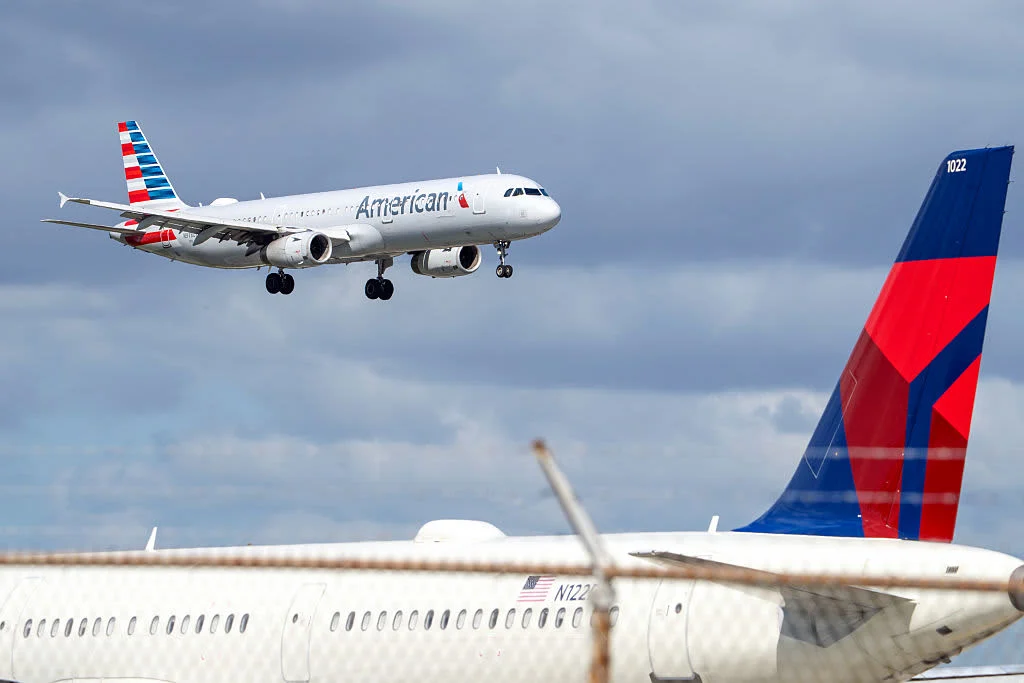
In a significant display of resilience within the dynamic aviation sector, major carriers Delta Air Lines and American Airlines have both raised their revenue expectations for the first quarter, signaling a robust recovery in passenger demand that is currently offsetting the substantial financial pressures imposed by escalating jet fuel prices. This optimistic revision, announced on Tuesday, underscores the industry’s ability to adapt to challenging economic headwinds, even as geopolitical events and supply chain disruptions continue to ripple through global markets, particularly impacting the cost of critical operational inputs.
Revised Financial Outlook and Market Reaction
Delta Air Lines, a bellwether for the industry, informed investors that it anticipates higher revenue growth than initially guided. This positive adjustment comes despite the airline having absorbed an estimated $400 million hit so far for the quarter due to the sharp increase in jet fuel expenses. Ed Bastian, CEO of Delta, conveyed this sentiment during an interview with CNBC, emphasizing the extraordinary strength of current travel demand. "Demand has been really, really great," Bastian stated, highlighting how the surge in bookings and passenger volumes is effectively counteracting not only the elevated fuel costs but also the financial impact of a particularly severe winter season marked by numerous storms and operational disruptions. Consequently, Delta projects its adjusted earnings per share (EPS) to fall within its original guidance range of 50 to 90 cents for the first quarter, a testament to its strong revenue generation. Previously, Delta had forecast a sales increase of up to 7% for the first three months of the year.
Concurrently, American Airlines echoed this positive sentiment, filing a securities report that indicated an expectation for total revenue to increase by more than 10% in the first quarter. This marks an upward revision from its prior guidance of 7% to 10% growth, directly attributed to "stronger-than-expected demand." Robert Isom, CEO of American Airlines, speaking at a JPMorgan conference, articulated the airline’s confidence, noting, "The revenue growth for American in the first quarter is incredibly strong, and we see that progressing as we move throughout the year." Like Delta, American is also bracing for a significant financial impact from fuel prices, with Isom estimating a roughly $400 million hit to its first-quarter expenses. He affirmed American’s commitment to adaptability, stating, "As we take a look at all the turbulence that’s in the industry right now, we’re making sure that we’re set to deliver, no matter what comes our way."
The market responded favorably to these announcements, with shares of both Delta and American experiencing an approximate 5% rise in premarket trading. This immediate investor reaction underscores a renewed confidence in the airline sector’s recovery trajectory and its capacity to manage external cost pressures through robust pricing power and sustained consumer interest.
The Jet Fuel Conundrum: A Deep Dive into Rising Costs
Jet fuel stands as the second-largest operational expense for airlines, typically accounting for a fifth or more of total costs, a figure that can fluctuate significantly based on crude oil prices and specific carrier hedging strategies. The recent surge in fuel prices has been primarily driven by global geopolitical tensions, supply chain disruptions, and a tightening global oil market. While the original source mentions "the war in Iran," a more generalized and accurate context for recent fuel price spikes includes the ongoing war in Ukraine, which has reshaped global energy markets, as well as broader instability in key oil-producing regions and a post-pandemic rebound in demand that has outstripped supply.
Historical data from the International Air Transport Association (IATA) shows that jet fuel prices have seen significant volatility over the past few years. Following a dip during the initial phases of the COVID-19 pandemic due to a dramatic drop in demand, prices began a steady climb in late 2020 and accelerated sharply in early 2022 following the full-scale invasion of Ukraine by Russia. This conflict led to sanctions on Russian oil, a major global supplier, creating a supply shock and pushing crude oil benchmarks like Brent and WTI to multi-year highs. Though prices have seen some moderation since their peak, they remain elevated compared to pre-pandemic levels and continue to pose a substantial challenge to airline profitability.
Scott Kirby, CEO of United Airlines, a competitor, had previously warned in early March that higher airfares were an inevitable consequence of airlines needing to cover these rising fuel costs. This industry-wide perspective highlights a critical balancing act: airlines must pass on at least some of these increased expenses to consumers through higher ticket prices to maintain profitability, risking potential demand elasticity. However, the current environment suggests that demand is sufficiently inelastic, allowing for such price adjustments without significantly deterring travelers.
Unprecedented Demand: The Driving Force Behind Revenue Growth

The ability of Delta and American to absorb massive fuel cost increases and still upgrade their revenue guidance is largely attributable to an exceptionally strong and sustained resurgence in travel demand. This demand is multifaceted, spanning across various segments of the travel market:
- Leisure Travel Boom: Pent-up demand from years of pandemic-induced restrictions continues to fuel a robust leisure travel market. Consumers, prioritizing experiences, are showing a willingness to spend on vacations, visiting friends and family, and exploring new destinations. This segment has been particularly resilient, with travelers often booking premium seats or opting for additional services, further boosting ancillary revenues.
- Return of Corporate Travel: While slower to recover than leisure travel, corporate travel has shown significant momentum. As businesses resume in-person meetings, conferences, and client engagements, the demand for business flights has steadily increased. Delta’s CEO, Ed Bastian, specifically noted that a substantial portion of their revenue growth is coming from higher-spending customers and, crucially, from corporate clients. This indicates a strong rebound in a high-yield segment for airlines.
- Premium Cabin Strength: Both airlines have reported robust performance in their premium cabins (First Class, Business Class, Premium Economy). This suggests that a segment of travelers, whether leisure or corporate, is opting for more comfortable and amenity-rich travel experiences, which translates into higher revenue per passenger. Delta, in its 8-K filing, explicitly cited "strength across the main cabin, premium, loyalty and more," indicating broad-based demand.
- Loyalty Programs: Airline loyalty programs, often involving co-branded credit cards and partnerships, are proving to be significant revenue drivers. These programs not only foster customer retention but also generate substantial income through credit card fees and partner commissions. The mention of "loyalty" as a strong area for Delta underscores its importance.
- Domestic and International Recovery: Delta reported that both its domestic and international unit revenues are growing in the mid-single digits year over year. This indicates a balanced recovery across its network, with international travel, which faced longer and more stringent restrictions, now contributing meaningfully to overall revenue growth.
Bastian’s revelation that Delta experienced "eight of the top 10 sales days in our history this quarter, and five of those just within the last two weeks, within just the last week of March," offers a tangible measure of this extraordinary demand. He further added that "even with the war going on [referring to broader geopolitical conflicts impacting fuel], our revenues, our bookings are up 25% year over year." While part of this increase is a comparison to a softer period last year when airlines were grappling with "tariff concerns" and lingering pandemic effects, the sheer volume and velocity of current bookings are undeniably powerful.
Beyond Fuel: Other Operational Headwinds
While jet fuel prices dominate the cost narrative, airlines have also contended with a myriad of other operational challenges that impact profitability and efficiency. The "tough winter season in terms of storms," as mentioned by Bastian, highlights the vulnerability of airline operations to adverse weather conditions. Severe winter weather can lead to widespread flight cancellations, delays, re-routing, and significant operational costs related to de-icing, crew repositioning, and passenger compensation. These disruptions not only incur direct costs but also lead to lost revenue from cancelled flights and potential customer dissatisfaction.
Furthermore, the industry has faced persistent staffing shortages across various functions. While the original article specifically mentions "TSA staffing shortage" as a concern, the broader aviation ecosystem has grappled with shortages of pilots, flight attendants, ground staff, and air traffic controllers. These shortages can constrain capacity, limit operational flexibility, and exacerbate delays, particularly during peak travel periods. A shortage of TSA personnel, for instance, can lead to longer security lines, causing stress for passengers and potentially impacting their willingness to travel, though the current demand surge suggests this impact has been mitigated.
Industry-Wide Context and Future Implications
The positive revisions from Delta and American are not isolated incidents but reflect broader trends observed across the airline industry. While not all carriers have yet issued updated guidance, the underlying drivers – strong demand and elevated costs – are universal. The ability of these major players to navigate these challenges successfully sends a strong signal to the market about the sector’s post-pandemic resilience.
From an investor’s perspective, the news provides a compelling argument for the sustained recovery and potential for profitability in the airline industry. Despite the inherent volatility of fuel prices and other operational risks, the robust demand environment offers a powerful counterweight. Analysts will be closely watching for further indications of sustained demand and how airlines manage capacity and pricing strategies in the coming quarters.
For consumers, the outlook is mixed. While the strong demand ensures a wide array of flight options, it also suggests that airfares are likely to remain elevated, especially during peak seasons. Airlines are clearly demonstrating pricing power, indicating that travelers are willing to pay more for the convenience and experience of air travel. This trend is likely to continue as long as demand outstrips the pace of capacity expansion or significant cost reductions.
Looking ahead, airlines will continue to focus on optimizing their networks, investing in fuel-efficient aircraft, and potentially exploring more robust fuel hedging strategies to mitigate future price volatility. Building strong loyalty programs and enhancing the premium travel experience will also remain key strategies to capture higher-yield customers. Delta’s assertion of having its "strongest balance sheet in the company’s history" suggests a solid financial foundation to navigate future challenges and invest in growth.
In conclusion, the updated revenue guidance from Delta Air Lines and American Airlines paints a picture of an airline industry that is not only recovering but thriving amidst complex operational and economic challenges. The extraordinary surge in travel demand is proving to be a potent force, capable of offsetting significant cost pressures like soaring jet fuel prices and operational disruptions. While the skies ahead may still hold turbulence, the current trajectory suggests a resilient sector poised for continued growth, albeit with a watchful eye on global economic stability and geopolitical developments.
