

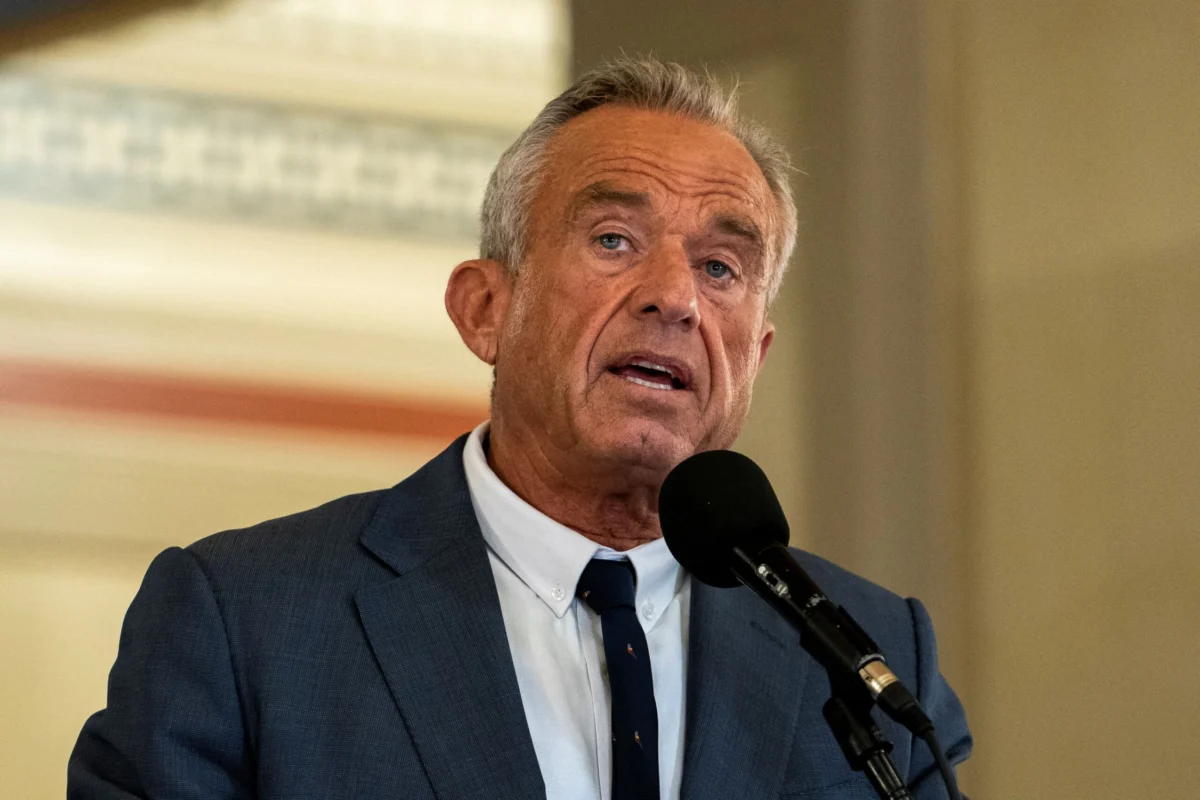
Robert F. Kennedy Jr., US Secretary of Health and Human Services (HHS), is facing a formidable challenge as the nation grapples with a burgeoning outbreak of foodborne illness, specifically cyclosporiasis. Having assumed leadership of the U.S. Department of Health and Human Services last year with a stated commitment to overhauling the national food system and restoring public confidence in its oversight agencies, Kennedy’s tenure is now defined by a crisis that experts argue underscores deep-seated fragilities exacerbated by recent budget cuts and policy delays.
Escalating Public Health Crisis: The Cyclosporiasis Outbreak
The current crisis, unfolding over the past two months, has seen thousands of individuals fall ill across multiple states, primarily Michigan and Ohio. While the Centers for Disease Control and Prevention (CDC) officially reports nearly 4,200 laboratory-confirmed cases, state tallies, which often precede federal confirmation, suggest the true scope is far greater, with at least 7,000 cases reported in Michigan alone and over 7,400 additional unconfirmed cases known to the CDC. Cyclosporiasis, caused by the parasite Cyclospora cayetanensis, manifests with symptoms ranging from explosive diarrhea, abdominal cramps, nausea, and fatigue to weight loss, and can persist for weeks or months if untreated. The severity and widespread nature of the outbreak are testing the limits of an already strained public health infrastructure. Adding to the urgency, the Food and Drug Administration (FDA) recently reported a new, distinct outbreak affecting dozens of people, linked to an as-yet-unidentified product, signaling a potentially broader and more complex public health emergency.
A Timeline of Response and Mounting Controversy
The response to the outbreak has been marked by a critical timeline and a notable misstep that further eroded public trust. Illnesses were first reported as early as May 17, yet a public notice from the FDA was not issued until July 16, a delay that former FDA Deputy Commissioner for Food Policy and Response, Frank Yiannas, and other food safety experts have highlighted as slower than expected.
A significant point of contention arose when the FDA, in its efforts to identify the source, initially pointed to shredded iceberg lettuce from Taylor Farms, a major produce supplier. The agency announced over a weekend in mid-July that tests on the company’s lettuce had yielded positive results for Cyclospora. However, the FDA later retracted this statement, declaring it a "false positive." Donald Schaffner, chair of food science at Rutgers University, described this reversal as unprecedented and a "pretty big screw up," casting a shadow over the investigation’s credibility.
Despite the retraction, a former senior FDA food official defended the agency’s initial decision to publicize the positive test, arguing that had it been a true positive, delaying the announcement could have led to more widespread illness. Regardless of the test result, both the FDA and CDC continue to consider Taylor Farms lettuce a likely culprit in the ongoing investigation. The incident, and the confusion it generated regarding the suspected source, underscored the immense difficulty Kennedy faces in his stated mission to restore public confidence in federal health agencies. HHS spokesperson Emily Hilliard, in a statement to CNBC, maintained that the FDA has been transparent with Taylor Farms throughout the investigation and that the corrected lab result does not alter the agency’s overarching findings.
Robert F. Kennedy Jr.’s Leadership Under Scrutiny
Secretary Kennedy, pictured during a celebration at HHS headquarters on January 8, 2026, assumed his role with a mandate to rebuild trust in the CDC post-Covid-19 and re-center its focus on infectious diseases. This cyclosporiasis outbreak presents a direct test of those promises. Kennedy has publicly defended his administration’s handling of the crisis, declaring the cyclosporiasis outbreak "under control" and dismissing criticisms that agency cuts have hampered the investigation as "invalid."
HHS spokesperson Emily Hilliard echoed this sentiment, asserting that regulators have "mounted a robust, science-based response to this outbreak, working closely with health departments in all 50 states, rapidly identifying known sources, and ensuring Americans have the information they need to protect themselves." She further emphasized that "FDA and CDC continue working together to use every available public health tool to identify additional sources of the outbreak and inform swift public health action." However, the contrasting views from independent food safety experts and former federal officials paint a different picture, suggesting that the response is merely reflecting the long-standing challenges of an underfunded and overstrained system.
Systemic Vulnerabilities: The Shadow of Budget Cuts

Experts have consistently warned that the U.S. is inadequately prepared to contain foodborne outbreaks, a situation exacerbated by budget cuts and personnel turnover, particularly those implemented during the previous administration. Craig Hedberg, co-director of the Minnesota Integrated Food Safety Center of Excellence, stated, "It is difficult to quantify precisely, but it is clear that the cuts to federal funding over the past year or so have reduced our capacity to respond to outbreaks like this."
Specific examples highlight the depth of these cuts:
- CDC’s Division of Parasitic Diseases and Malaria: Dr. Daniel Jernigan, former director of the CDC’s National Center for Emerging and Zoonotic Infectious Diseases, revealed that this division lost $40 million in funds from the U.S. Agency for International Development (USAID) after the Trump administration dismantled the organization. While some funds are anticipated to be recovered, it would represent only a quarter of its previous USAID allocation. Jernigan estimates a 25% reduction in staff within this group, including personnel typically deployed to emergency situations like the current outbreak. He noted that while the CDC is strategically moving some parasitic diseases groups to the Division of Foodborne, Water and Environmental Diseases—a positive step for optimizing investigations—the initial impact of the cuts was a diminished capacity to respond swiftly. HHS spokesperson Hilliard clarified that these specific funds were designated for international activities and did not support the CDC’s domestic foodborne disease response, adding that the proposed fiscal year 2027 budget includes a $33 million increase for food safety activities.
- Chronic Underfunding of Food Safety: An analysis by George Washington University’s Institute for Food Safety and Nutrition Security indicates that CDC funding for food safety has not seen a meaningful increase since 2014. This fiscal year, the CDC’s budget for food safety stands at $74 million, a modest $2 million increase from last year, representing only about 10% of the funds allocated for the CDC’s broader emerging and zoonotic infectious diseases work.
- FoodNet Program Degradation: The CDC’s Foodborne Diseases Active Surveillance Network (FoodNet), crucial for tracking foodborne illness trends, has ceased mandatory reporting for six of eight pathogens it previously monitored, including Cyclospora, due to insufficient funding. Kennedy, addressing this, characterized these cuts as eliminating "redundant surveillance," a claim disputed by experts who view it as a direct consequence of chronic underfunding.
- FDA Resource Disparities: The FDA’s food center budget of $1.17 billion this year represents a mere 17% of the agency’s total program level spending of approximately $7 billion. This disparity arises because food safety funding relies disproportionately on congressional appropriations, unlike other centers (e.g., drugs, tobacco) which receive substantial industry fees. While personnel directly involved in foodborne illness outbreak investigations were largely spared from last year’s federal layoffs, the FDA’s main press office was "gutted," leading to a significant loss of outbreak communications expertise. This void is particularly concerning, as the agency’s messaging around the false positive was widely criticized for sowing confusion.
The Elusive Pathogen: Why Cyclospora is Difficult to Track
Beyond the systemic funding issues, Cyclospora itself presents unique challenges for public health investigators. As a parasite, it does not grow outside the human body, complicating efforts to test for its presence in food and to link individual cases to a common source. Cyclospora tests are also notoriously prone to false positives, as the testing process can sometimes mimic the appearance of the parasite in samples, as noted by Donald Schaffner.
One measure that could have significantly accelerated the outbreak response, according to Frank Yiannas, was the FDA’s Food Traceability Rule. Designed to enable the FDA to rapidly identify the origin of contaminated food products, this critical policy, slated to go into effect this year, was regrettably delayed by two-and-a-half years. This delay means a vital tool for swift investigation remains inaccessible during a critical public health emergency.
Broader Implications for Public Health and Food Safety Policy
The ramifications of these challenges extend beyond the immediate outbreak. State and local health departments, frontline responders in any public health crisis, are also feeling the pinch. A May analysis by the Congressional Research Service revealed that the previous administration terminated $5.78 billion in CDC grants to states. Sarah Sorscher, director of regulatory affairs at the Center for Science in the Public Interest, highlighted that these block grants are essential for funding epidemiologists and other specialists who conduct crucial outbreak investigations.
In Kentucky, the group primarily responsible for conducting case interviews for foodborne illnesses has experienced a 30% to 50% decrease in staffing due to reduced federal grant funds, with further reductions anticipated next year. This illustrates a domino effect where federal cuts cascade down to hamstring local response capabilities. While Ohio, a state severely impacted by the outbreak, did receive federal assistance, hosting CDC Epidemic Intelligence Service officers, this highlights the reactive nature of current support rather than a robust, proactive system.
Ellen Shumaker, director of outreach for Safe Plates at North Carolina State University, emphasized the urgent need for modernization in the FDA’s recall communications, advocating for clear, plain-language guidance to consumers on concrete protective steps and more rapid classification of recall severity. The current outbreak serves as a stark reminder of the globalized nature of the food supply chain and the constant vigilance required to safeguard public health against evolving threats.
Looking Ahead
As investigations continue into both the established cyclosporiasis outbreak and the newly identified cluster of illnesses, the situation remains a critical test for Secretary Kennedy’s leadership and his commitment to strengthening the nation’s public health infrastructure. The confluence of a challenging pathogen, a protracted outbreak, and systemic vulnerabilities rooted in underfunding and personnel cuts has brought the U.S. food safety system to a precarious juncture. The ability of HHS, under Kennedy’s guidance, to effectively contain these outbreaks, restore public trust, and advocate for the necessary resources will undoubtedly shape the future trajectory of food safety and public health in the United States.
