

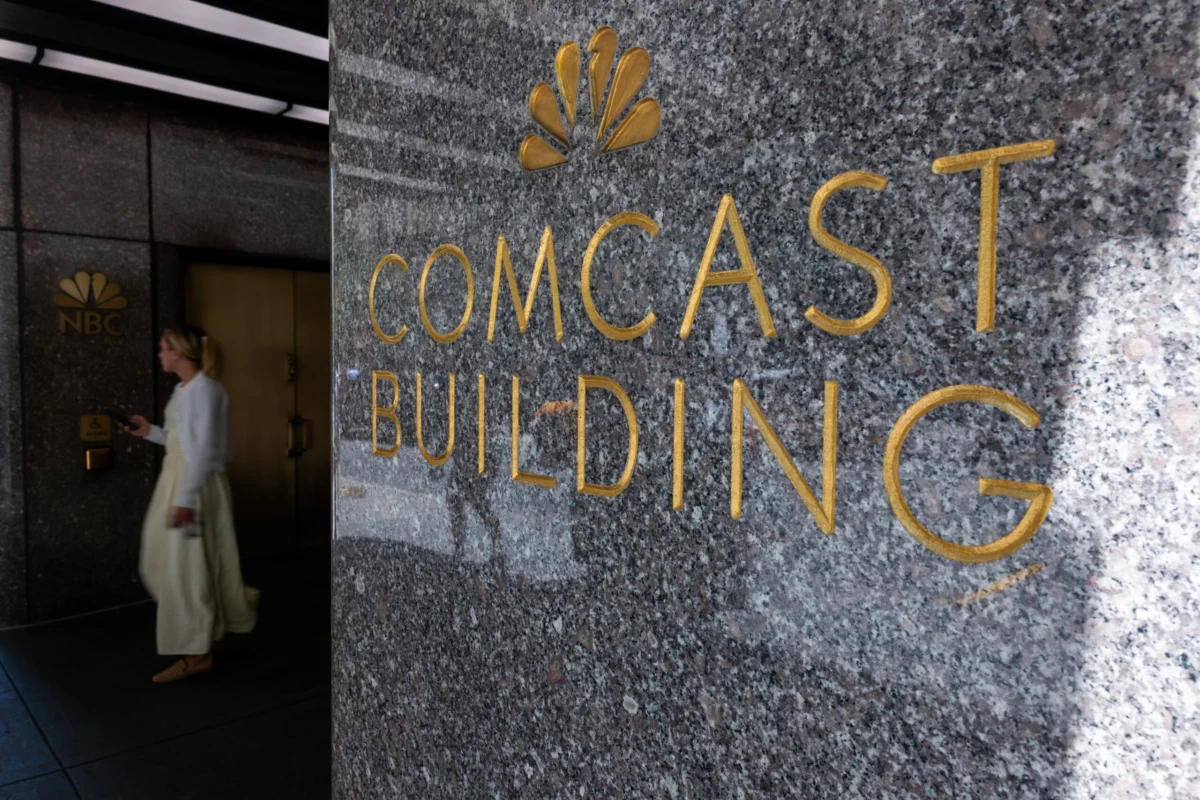
New York City, NY – Comcast Corporation (NASDAQ: CMCSA) today unveiled its second-quarter 2026 financial results, revealing a stark divergence in performance between its robust media operations, primarily driven by NBCUniversal, and its embattled traditional cable and broadband division. The earnings report comes at a pivotal juncture for the company, mere weeks after its landmark announcement to spin off its media and connectivity segments into two distinct, publicly traded entities. While the content and experiences division, housing the revitalized NBCUniversal, celebrated significant growth and a historic profitability milestone for its streaming service Peacock, the connectivity and platforms segment continued to grapple with subscriber losses amid an increasingly competitive landscape.
Overall, Comcast reported a slight dip in total revenue for the second quarter, down 1.2% year-over-year to $29.94 billion. However, on a pro-forma basis, which accounts for the impact of the Versant spin-off completed earlier in the year, quarterly revenue demonstrated a healthier 4.7% increase. Adjusted earnings per share (EPS) stood at an impressive $1.04, comfortably surpassing Wall Street’s consensus estimate of 97 cents, according to LSEG data. This beat was largely attributed to the strong performance of its media assets, underscoring the strategic rationale behind the impending separation.
NBCUniversal’s Ascendance: A Media Resurgence
The brightest spot in Comcast’s Q2 narrative was undoubtedly NBCUniversal. The content and experiences division, encompassing NBCUniversal’s television networks, film studio, and theme parks, reported a substantial revenue increase of nearly 23% year-over-year, reaching $10.73 billion. This remarkable growth was fueled by several key factors, most notably the unprecedented success of its streaming service, Peacock, and a strong showing from its traditional television and film units.
Peacock Soars to Profitability: A Milestone Achieved
For the first time since its inception, Peacock achieved profitability during the second quarter, a significant milestone that has been keenly watched by investors and industry analysts alike. This turnaround was largely attributed to a strategic blend of compelling live sports content and a growing subscriber base. The FIFA World Cup, which commenced in mid-June and was exclusively aired in Spanish in the U.S. on Comcast’s Telemundo network, proved to be a major catalyst, attracting a surge of new subscribers and boosting advertising revenue. Additionally, the NBA postseason continued to drive strong engagement, demonstrating the power of premium live sports in the fiercely competitive streaming arena. Industry experts noted that achieving profitability, even with the tailwind of major sporting events, signals a maturing strategy for Peacock, which has aggressively invested in content and marketing since its launch. Analysts from firms like Wedbush Securities highlighted that this pivot from subscriber acquisition at all costs to sustainable growth marks a crucial step for Comcast’s media valuation.
Strength Across TV and Film
Beyond Peacock, the broader TV media unit within NBCUniversal also saw robust performance. Revenue for this segment benefited from increased advertising spend, reflecting a resilient market for premium broadcast and cable content, particularly around tentpole events and news programming. The film studio division also experienced a significant boost, with revenue rising an impressive 25%. This was likely propelled by a strong theatrical slate that resonated with audiences, indicating a continued post-pandemic recovery for the box office and a return to consistent production schedules. Major releases during the quarter or those setting up future successes contributed substantially to this rebound, showcasing the enduring appeal of cinematic experiences.
Theme Parks: Navigating Global Dynamics
Comcast’s theme parks, a key component of the content and experiences division, reported a nearly 3% increase in revenue. While Universal Orlando in Florida continued its strong performance, benefiting from domestic tourism and popular new attractions, this growth was partially offset by softness observed at international parks. Geopolitical factors, varying paces of economic recovery, and regional travel patterns likely contributed to the more subdued performance in global markets. However, the overall positive trajectory for the parks segment underscores its importance as a diversified revenue stream and a critical touchpoint for intellectual property extension.
Connectivity’s Conundrum: Broadband Challenges Persist
In stark contrast to the media segment’s triumphs, Comcast’s connectivity and platforms division, which houses its traditional cable, Xfinity-branded broadband, and mobile offerings, faced continued headwinds. This segment saw its revenue decline by 3% to $19.8 billion, with earnings before interest, taxes, depreciation, and amortization (EBITDA) dropping nearly 6% to $7.96 billion. The primary challenge remains the persistent loss of broadband customers, a trend that has plagued the company for several years. During the quarter, Comcast reported losing 167,000 total residential broadband customers and a further 280,000 cable TV subscribers, highlighting the ongoing "cord-cutting" phenomenon.
Strategic Shift and Market Pressures
Comcast executives reiterated that their shifted strategy for the broadband business is "gaining traction" despite the subscriber losses. This strategy involves a greater emphasis on mobile bundling, service quality, and targeted promotional offers rather than aggressive new customer acquisition at all costs. However, the market realities remain formidable. The traditional broadband business is under intense pressure from a rapidly evolving competitive landscape. Alternative providers, particularly 5G fixed wireless access (FWA) services from major wireless carriers like T-Mobile and Verizon, have emerged as significant threats, offering competitive pricing and simpler installation. Furthermore, aggressive fiber build-outs by AT&T and regional providers continue to chip away at Comcast’s market share in various regions, forcing the company to invest heavily in its own network upgrades to maintain competitiveness.
Pricing Strategies and Revenue Impact
The decline in revenue for the connectivity and platforms segment was directly linked to these market dynamics. Lower pricing plans and promotional offers, implemented to retain existing customers and attract new ones in a crowded market, took hold during the quarter, impacting the average revenue per user (ARPU) and consequently the overall revenue. While these strategies are crucial for maintaining market presence, they inevitably compress margins in the short term.
Mobile as a Silver Lining
Amidst the broadband challenges, Comcast’s mobile segment continued to be a notable bright spot. The company reported record additions for the quarter, bringing its total mobile lines to an impressive 10.2 million. Xfinity Mobile, operating as a mobile virtual network operator (MVNO) on Verizon’s network, has become a crucial component of Comcast’s strategy, serving as a powerful bundling tool to attract and retain broadband customers. The ability to offer competitive mobile services bundled with broadband provides a compelling value proposition that helps mitigate some of the churn in the core internet business. This strategic integration is seen by many analysts as a necessary defensive move in an environment where consumers increasingly seek converged communication solutions.
The Grand Unbundling: Rationale Behind the Split
The diverging performance between Comcast’s media and connectivity assets provides compelling context for the company’s monumental decision, announced on June 29, 2026, to separate into two independent, publicly traded companies. This strategic unbundling aims to unlock shareholder value by allowing each entity to pursue focused growth strategies tailored to its specific market dynamics.
During Thursday’s investor call, co-CEOs Brian Roberts and Mike Cavanagh immediately addressed the separation, emphasizing the positive reception since the announcement. Roberts expressed renewed enthusiasm, stating, "I feel more positive and energized today than I was on the day we announced." He highlighted constructive discussions with "key constituencies, employees at every level, and most of our key partners," indicating broad internal and external support for the transformative move. The leadership views the split as "an important step toward creating two focused companies with the financial strength and flexibility to pursue their respective growth strategies."
This move aligns with broader industry trends where conglomerates are increasingly breaking up to enhance agility and unlock valuations. For years, analysts have speculated that Comcast’s diverse portfolio masked the true value of its individual parts, particularly its media assets, which often traded at a discount due to the drag of its slower-growth cable business. The separation is anticipated to provide greater transparency, allowing investors to evaluate each company based on its distinct fundamentals and growth prospects.
Implications and Future Trajectories
The proposed split carries profound implications for both the future "New MediaCo" and "New BroadbandCo."
For the "New MediaCo" (NBCUniversal): This entity will be liberated to fully embrace the evolving media landscape. Its focus will sharpen on content creation, direct-to-consumer streaming strategies, and global expansion. With Peacock’s newfound profitability and a robust pipeline from its TV and film studios, the new media company will be better positioned to compete in the global streaming wars against giants like Netflix, Disney+, and Warner Bros. Discovery’s Max. It will also be free to pursue strategic partnerships and acquisitions that might have been complicated by its former broadband ties. The escalating cost of sports rights, a critical driver for streaming and linear TV, will remain a key strategic battleground, where the focused media company can make more aggressive plays.
For the "New BroadbandCo" (Xfinity & Connectivity): This entity will be able to dedicate its resources and capital expenditures entirely to bolstering its core connectivity business. This includes accelerating fiber build-outs to combat rival offerings, enhancing network speeds and reliability, and further integrating its successful mobile segment. The focus will shift to maximizing customer lifetime value, exploring new revenue streams from smart home services, and potentially expanding its enterprise solutions. While facing significant competitive pressure, a dedicated broadband company can innovate more rapidly in network technology and customer service, aiming to differentiate itself beyond price. It will also need to navigate regulatory environments that are increasingly scrutinizing broadband access and competition.
Market Reaction and Outlook
Following the earnings release and the reiterated commitment to the split, initial market reactions are expected to reflect a cautious optimism. While the overall revenue dip might concern some, the strong performance of NBCUniversal and the strategic clarity provided by the impending separation are likely to be viewed positively. Analysts will be closely watching for further details on the execution of the spin-off, including timelines, leadership structures for the new entities, and specific capital allocation strategies. The long-term outlook for both the media and connectivity businesses, once decoupled, suggests potential for enhanced shareholder value as each can pursue its distinct growth narrative without being constrained by the other’s challenges.
Comcast’s Q2 2026 results not only underscore the dynamic shifts within the entertainment and telecommunications industries but also mark a defining moment in the company’s nearly 60-year history, setting the stage for a transformative future as two specialized market players.
