

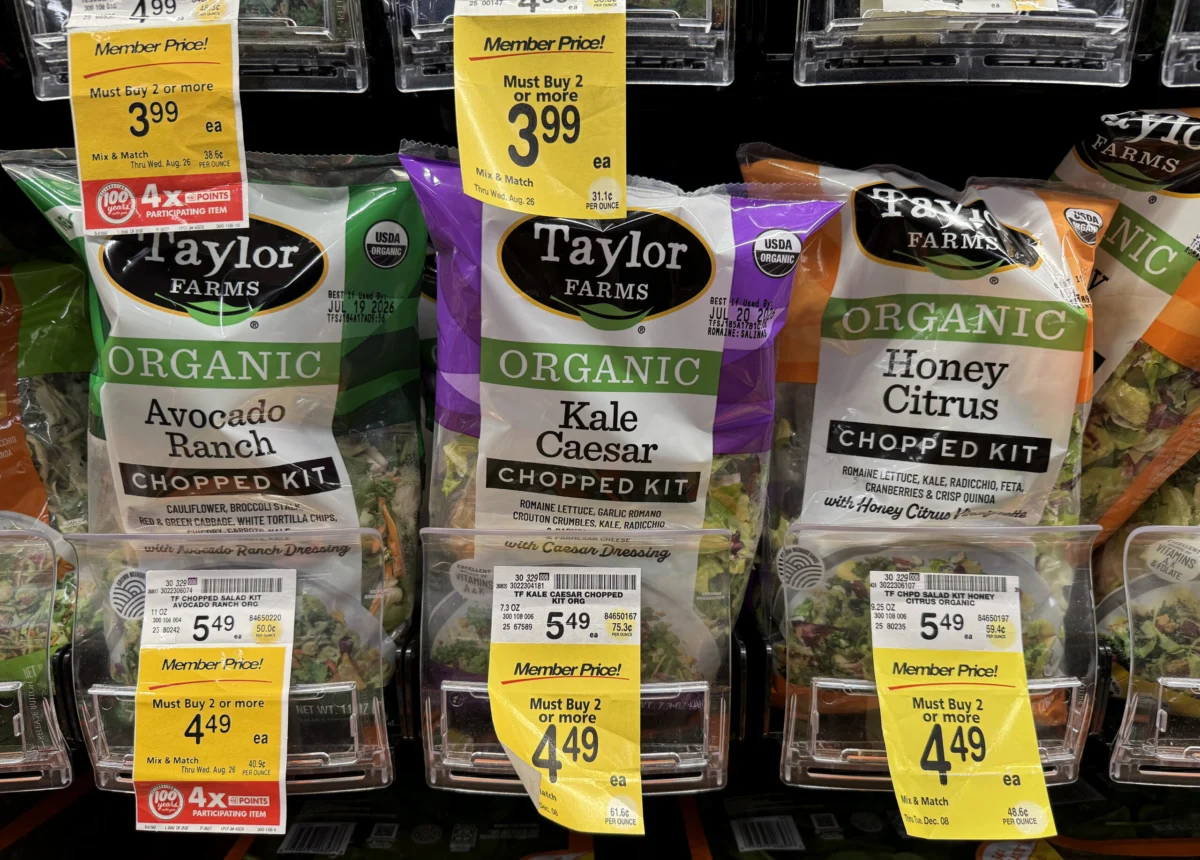
The Food and Drug Administration (FDA) has moved to clarify its investigative findings regarding a widespread cyclosporiasis outbreak, after a recent test result indicating the presence of the Cyclospora cayetanensis parasite in a sample of Taylor Farms de Mexico iceberg lettuce was deemed a false positive. This development, announced Sunday, initially sowed confusion among consumers and industry stakeholders, prompting the agency to issue a robust clarification on Monday, July 20, 2026, reaffirming its core conclusions about the source of the multi-state illness.
Despite the singular false positive, the FDA maintains its primary investigative focus, asserting that the outbreak remains linked to shredded iceberg lettuce sourced from Taylor Farms locations in central Mexico. This implicated lettuce has also been served at various Taco Bell establishments across the U.S., exacerbating the public health challenge. The agency continues to advise Americans against consuming recalled iceberg lettuce products, underscoring the ongoing severity of an outbreak that has already sickened over 1,600 individuals across more than 30 states, with potentially thousands more affected.
"FDA’s traceback investigation and outbreak data continue to converge on shredded iceberg lettuce from Taylor Farms locations in central Mexico," the agency stated Monday, emphasizing its unwavering commitment to public safety. The FDA pledged to collaborate closely with federal and state partners to thoroughly investigate the multistate outbreak and ensure that all implicated products are effectively removed from the market. This incident highlights the intricate challenges inherent in foodborne illness investigations, particularly when dealing with complex supply chains and the nuances of laboratory testing.
The Outbreak Unfolds: A Chronology of Cyclosporiasis Concerns
The current cyclosporiasis outbreak began to register on public health radar screens several weeks prior to these latest developments, with a surge in reported cases of severe gastrointestinal illness across various states. Cyclosporiasis, caused by the microscopic parasite Cyclospora cayetanensis, typically manifests with symptoms akin to a severe stomach bug, including watery diarrhea, loss of appetite, weight loss, abdominal cramps, bloating, nausea, and fatigue. These symptoms can persist for days or even weeks if left untreated, posing a significant public health burden. The parasite is transmitted through the consumption of food or water contaminated with feces containing Cyclospora oocysts. Fresh produce, particularly leafy greens, has historically been a common vehicle for such outbreaks due to agricultural practices and irrigation methods.
As early reports of illness accumulated, state and federal public health agencies initiated epidemiological investigations, meticulously interviewing affected patients to identify common exposures. This painstaking process, often involving thousands of patient interviews, began to point toward a common denominator: the consumption of fresh produce, specifically lettuce.
By early July 2026, the investigation began to narrow its focus. Traceback efforts, which involve meticulously following the path of food products from consumer to farm, increasingly implicated shredded iceberg lettuce. The FDA’s initial findings, corroborated by extensive patient interviews, established a strong epidemiological link to shredded iceberg lettuce supplied by Taylor Farms from central Mexico. This conclusion led to public health advisories and voluntary recalls by implicated companies, including Taylor Farms and Taco Bell, as they moved to remove the suspected product from their supply chains.
The identification of a specific sample from Taylor Farms de Mexico that tested positive for Cyclospora was initially hailed as a significant breakthrough, a "smoking gun" in an investigation often reliant on statistical associations rather than direct pathogen detection in food samples. However, this promising lead took an unexpected turn over the weekend, setting the stage for the FDA’s subsequent clarification.
The "False Positive" Explained and Clarified
The announcement on Sunday, July 19, 2026, that a specific test indicating Cyclospora in a Taylor Farms de Mexico iceberg lettuce sample was a false positive, created considerable confusion. This particular sample was from a shipment that the agency did not believe was the primary vehicle responsible for sickening the vast majority of the 1,600+ individuals. The FDA’s Monday clarification was crucial in distinguishing this single, isolated testing error from the broader epidemiological evidence.
In foodborne outbreak investigations, a false positive can occur when an initial screening test yields a positive signal that is not subsequently confirmed by more definitive, often more laborious, confirmation testing. Donald Schaffner, chair of food science at Rutgers University, explained that Cyclospora tests are particularly prone to false positives. The intricate process for conducting these tests can sometimes produce signals that mimic the presence of the parasite, even when it is absent. Schaffner noted that the FDA’s own protocols typically recommend conducting confirmatory tests to validate initial positive results, a standard practice designed to prevent erroneous conclusions. While Schaffner described the reversal as "a pretty big screw up" in terms of public communication and initial reporting, he underscored that it had not fundamentally altered the public health officials’ overarching view of the outbreak’s root cause.
The FDA’s Monday statement explicitly stated that the false positive applied only to one specific shipment of lettuce and did not invalidate their previous conclusion. The agency’s confidence in its original assessment stems from the overwhelming convergence of traceback data and epidemiological evidence. Patient interviews, which continue to be a cornerstone of the investigation, consistently point to shredded iceberg lettuce from Taylor Farms’ central Mexico operations as the common exposure. This type of epidemiological evidence, gathered from hundreds or thousands of individuals, is often the most robust indicator of an outbreak’s source, particularly when direct pathogen isolation from food samples proves elusive or unreliable.
Taylor Farms and Taco Bell: At the Center of the Storm
At the heart of the current public health crisis are Taylor Farms and Taco Bell, companies that have found themselves navigating the challenging waters of a widespread foodborne illness outbreak. Taylor Farms, a major supplier of fresh produce, initiated a voluntary recall of implicated iceberg lettuce from central Mexico even before the FDA’s latest clarification. This proactive measure reflects the gravity of the situation and the company’s commitment to cooperate with public health authorities.
Similarly, Taco Bell, a subsidiary of Yum Brands, acted swiftly to remove the suspected lettuce from its restaurants in affected states. The fast-food giant confirmed on Saturday, July 18, 2026, that it had voluntarily removed all suspected lettuce from its locations within 72 hours of commencing the process and had adjusted its supply chain accordingly. Taco Bell expressed confidence in the safety of its food, stating, "Clearly, this is a nationwide industry-wide issue, not a Taco Bell-specific issue. We hope that other members of the industry are taking the same degree of immediate action and accountability for the consumer as we have." This statement underscores the company’s efforts to manage both the operational and reputational fallout.
The ripple effects of the outbreak extend beyond these primary companies. Walmart, for instance, proactively removed four bagged salad kit products under its Marketside brand, which are supplied by Taylor Farms, from stores across 27 states. This action was taken as a precautionary measure, even though Walmart stated there was no indication that its specific products were part of the confirmed outbreak. "There have been no confirmed illnesses associated with these products at this time," Walmart affirmed, highlighting the broad industry vigilance in the face of such public health threats.
Former FDA Commissioner Dr. Scott Gottlieb weighed in on the situation, suggesting that the false positive test result does not exonerate Taylor Farms from its link to the broader outbreak. Gottlieb pointed out that the initial recall on Friday, July 17, was for a product imported several weeks prior and was distinct from the specific lettuce sample that yielded the false positive. He emphasized the critical importance of testing multiple shipments, even from the same farm, given that Cyclospora has an incubation period of up to two weeks and lettuce has a relatively short shelf life. This complexity necessitates a comprehensive and multi-pronged approach to investigation.
Dr. Norman Beatty, an associate professor of medicine at the University of Florida College of Medicine, further cautioned that while the outbreak might currently be sourced to a single vendor, the contamination could have already spread more widely. "We may find that this current outbreak may have led to additional outbreaks because of the nature of this parasite," Beatty told CNBC, noting the presence of cases in over 30 states and the potential for smaller, localized outbreaks to emerge in other regions.
Broader Industry Reactions and Consumer Impact
The developing investigation and the FDA’s clarification have created a climate of uncertainty for both consumers and the broader food industry. While the FDA has specifically advised against eating iceberg lettuce from Taylor Farms, some diners have understandably opted to avoid salads altogether, leading to a temporary shift in consumer behavior. Frank Yiannas, former deputy commissioner of food policy and response at the FDA, acknowledged the public’s predicament, stating, "Unfortunately, this latest development may add further confusion to what has already been a complex situation for consumers."
The economic repercussions are already being observed. Foot traffic data from research firm Placer.ai indicated a significant dip in business for implicated restaurants. On Friday, July 17, 2026, foot traffic at Taco Bell locations sank by approximately 30% compared to the day-of-the-week average for the year. This decline was not isolated to Taco Bell; other restaurant chains that feature lettuce prominently on their menus, such as Chopt, Panera Bread, and Chipotle, also experienced declines in traffic on the same day. This data underscores how quickly consumer confidence can erode in the face of food safety concerns, even if specific establishments are not directly implicated.
Despite these immediate impacts, industry analysts do not anticipate a long-term financial hit for major restaurant chains like Taco Bell or its parent company, Yum Brands. Previous analyses suggested that while there could be a temporary one-to-two quarter impact on sales for companies directly linked, the long-term effects on brand reputation and financial performance are typically limited for well-established brands. Nevertheless, shares of Yum Brands were down nearly 9% in the five days following the intense media scrutiny of the outbreak.
The National Restaurant Association, the industry’s top advocacy group, has reiterated its commitment to food safety amidst the swirling headlines. CEO Michelle Korsmo emphasized the importance of established protocols, stating in a LinkedIn post, "The Food Code requires that every restaurant must have a manager that is food safety certified on every shift." Korsmo affirmed the association’s dedication to supporting public health officials and ensuring that its members have access to the necessary information to make informed food safety decisions. This collective response from the industry highlights a concerted effort to reassure consumers and maintain standards.
The Science of Cyclosporiasis and Foodborne Investigations
Understanding Cyclospora cayetanensis is crucial to appreciating the complexities of this outbreak. This protozoan parasite is unique in that it requires a period outside a host to become infectious. This means that fresh fecal contamination on produce or in water, followed by environmental exposure, can lead to infectious oocysts. Unlike some bacterial contaminants, Cyclospora is not killed by standard disinfection methods like chlorine washes commonly used for produce, making its eradication challenging once contamination occurs.
The incubation period for cyclosporiasis, typically around seven days but ranging from 2 to 14 days or more, complicates traceback investigations. By the time symptoms appear and a diagnosis is made, the contaminated food item may have long been consumed, discarded, or moved through the supply chain. Lettuce, with its short shelf life, exemplifies this challenge. This latency period is precisely why epidemiological evidence—identifying common exposures among sick individuals—often serves as the primary investigative tool, rather than solely relying on direct pathogen detection in food samples, which can be difficult to obtain and confirm.
Foodborne illness investigations are inherently challenging, involving a multidisciplinary approach that combines epidemiology, microbiology, and environmental health. Investigators work backward from patient illness, using detailed questionnaires to identify common foods, restaurants, and grocery stores. This data is then cross-referenced with food distribution records to pinpoint potential sources. The process is painstaking, often resembling detective work, and requires close collaboration among local, state, and federal agencies. The "smoking gun" of a positive food test, while impactful, is often rare, making the reliance on strong epidemiological links paramount.
Regulatory Scrutiny and Future Outlook
The current cyclosporiasis outbreak and the subsequent confusion surrounding the false positive test underscore the ongoing need for robust food safety regulations and vigilant oversight. The FDA’s role is not only to investigate outbreaks but also to establish preventive controls to minimize future occurrences. This includes scrutinizing agricultural practices, water quality used for irrigation, and handling procedures throughout the supply chain, particularly for high-risk fresh produce.
The incident may prompt further review of testing protocols for Cyclospora and communication strategies during ongoing investigations. Transparency and clear messaging from regulatory bodies are vital to maintaining public trust and ensuring that consumers can make informed decisions about their food safety.
Investigators are continuing to examine what exactly caused the outbreak, with CNBC having reached out to the FDA for details on the next phase of the investigation, including whether additional ingredients or suppliers are under scrutiny and whether the agency expects to issue further guidance. The agency had not yet responded to these specific inquiries as of Monday, July 20, 2026, indicating that the investigation remains active and comprehensive.
The long-term implications for food safety standards, particularly concerning imported produce and the traceability of leafy greens, could be significant. This outbreak serves as a stark reminder of the global nature of our food supply and the interconnectedness of food safety from farm to fork. It emphasizes the critical need for continuous improvement in agricultural practices, processing controls, and rapid response mechanisms to mitigate the impact of such widespread public health threats. Ultimately, the goal is to enhance consumer confidence in the safety and integrity of the food supply, ensuring that incidents like this become rarer and their impact less severe.
