

The Cuban national electrical grid suffered a catastrophic and total failure on Monday, plunging the island’s 11 million residents into darkness and marking a critical turning point in a deepening humanitarian and economic emergency. Officials from the Ministry of Energy and Mines confirmed a "complete disconnection" of the country’s electrical system, an event that underscores the systemic fragility of a nation grappling with aging infrastructure, severe fuel shortages, and an intensifying diplomatic standoff with the United States. The collapse occurred despite no reported mechanical failures in the units that were operational at the time, suggesting a systemic imbalance so severe that the entire network could no longer sustain its load.
Lázaro Guerra, the Ministry’s electricity director, addressed the nation via state media late Monday, providing a sobering assessment of the recovery efforts. He noted that specialized crews were working to restart several key thermoelectric plants, which serve as the backbone of the island’s power generation. However, Guerra warned that the restoration process would be painstakingly slow. "It must be done gradually to avoid setbacks," he explained, noting that the extreme weakness of the current system makes it highly susceptible to secondary failures during the synchronization process. As of late Monday night, only an estimated 5% of Havana—roughly 42,000 customers—and a handful of critical hospitals had seen power restored.
The Human Cost of a Crumbling Infrastructure
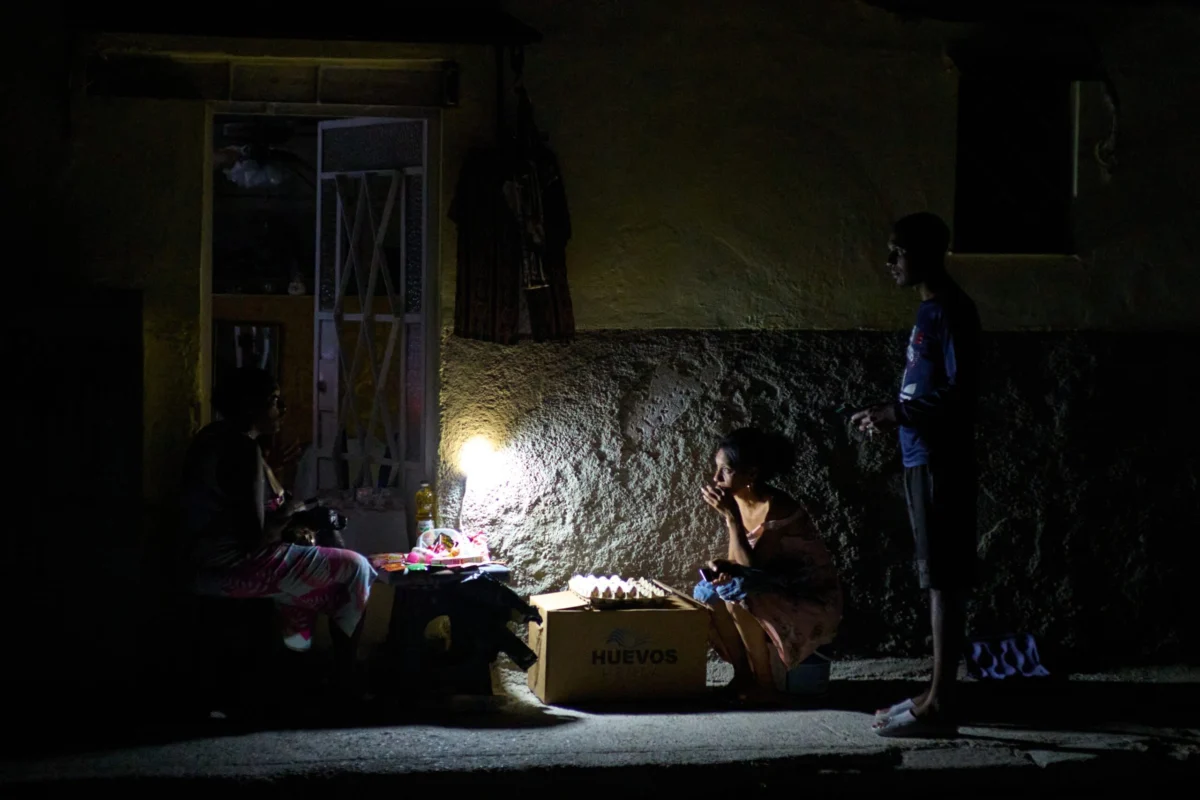
As the sun set over Havana on Monday, the capital was transformed into a landscape of flickering candlelight and shadows. For the residents of Cuba, this latest blackout is not an isolated incident but the third major grid failure in just four months. The psychological and physical toll on the population is reaching a breaking point. In the darkened streets, the sounds of everyday life have been replaced by the quiet struggle of families trying to preserve what little they have.
Yuneici Cecilia Riviaux, a mother in Havana, described the desperate measures required to cope with the heat and the dark. "We have to prepare a mattress for the girls here so that they can sleep here because we have no choice," she said, pointing toward an open doorway in hopes of catching a breeze. Without a generator or even a rechargeable fan, her family, like millions of others, is left at the mercy of the tropical climate and the failing state.
The economic impact is equally devastating at the household level. Tomás David Velázquez Felipe, 61, voiced a sentiment increasingly heard across the island: that the only remaining solution for many is to flee. "What little we have to eat spoils," he lamented. "Our people are too old to keep suffering." This sentiment is echoed by Yaimisel Sánchez Peña, 48, who noted that the money sent by her son in the United States—a vital lifeline for many Cubans—is effectively wasted when the food it buys rots in powerless refrigerators.
A Chronology of Systemic Decline
The current crisis is the culmination of years of deferred maintenance and a lack of capital investment. To understand the gravity of Monday’s collapse, it is necessary to look at the timeline of the grid’s deterioration over the past several months:
- December 2025: A major blackout strikes western Cuba, leaving millions without power for several days. The government cites a lack of fuel and technical failures at the Antonio Guiteras plant, the island’s most important power station.
- January 2026: The Trump administration in the United States announces a series of aggressive measures, including a warning of tariffs on any nation providing oil to Cuba. This effectively creates an "energy blockade."
- Early January 2026: The arrest of Nicolás Maduro in Venezuela and subsequent U.S. actions in the South American country halt critical oil shipments to Havana. Cuba, which relies heavily on subsidized Venezuelan crude, sees its reserves plummet.
- February 2026: Daily scheduled blackouts, known as "alumbrones," become the norm, often lasting 12 to 18 hours in provinces outside of Havana.
- March 8, 2026: A massive outage affects the western half of the island, signaling that the grid’s stability is reaching a point of no return.
- March 16, 2026: The total islandwide collapse occurs, leaving 100% of the population without power.
William LeoGrande, a professor at American University and a leading expert on Cuban affairs, describes the situation as a "perfect storm of collapse." He points out that the island’s thermoelectric plants are operating "way past their normal useful life." Built largely with Soviet-era technology or aging Western components from the mid-20th century, these plants are being forced to burn heavy Cuban crude oil. The high sulfur content of this domestic oil is highly corrosive, further damaging the already fragile machinery and creating a vicious cycle of breakdowns and temporary repairs.
Geopolitical Tensions and the U.S. Blockade
The internal failure of the grid is inseparable from the external pressures being applied by Washington. U.S. President Donald Trump has linked the lifting of sanctions to drastic political changes, including the release of political prisoners and a transition toward a market economy. The Trump administration has explicitly called for the ouster of Cuban President Miguel Díaz-Canel.

In recent statements, President Trump has adopted a hardline stance, suggesting that the U.S. may take a more direct role in the island’s future. "I think I could do anything I want with it," Trump said, referring to Cuba as a "very weakened nation." This rhetoric accompanies a strategy of maximum pressure intended to force a change in leadership. Anonymous sources within the administration have confirmed that negotiations between Washington and Havana are ongoing, but the U.S. remains firm on its demand for Díaz-Canel’s departure.
For his part, President Díaz-Canel recently admitted that the island had not received a significant oil shipment in three months. The government has been forced to prioritize natural gas, limited solar power, and the struggling thermoelectric plants. The energy deficit has become so severe that tens of thousands of elective surgeries have been postponed, and industrial production has ground to a near-halt.
Economic Pivot: Desperation or Reform?
In response to the "perfect storm," the Cuban government is signaling a rare openness to foreign investment, even from its ideological rivals. Óscar Pérez-Oliva Fraga, the deputy prime minister of the Ministry of Foreign Trade and Foreign Investment, announced several new measures on Monday aimed at injecting hard currency into the economy.
The most notable shift is the invitation for Cubans residing abroad—many of whom live in the United States—to become partners or owners of private companies on the island. This includes the possibility of investing in large-scale infrastructure projects, a sector previously reserved almost exclusively for the state. Key components of this new economic policy include:
- Direct Investment: Allowing the Cuban diaspora to establish ties with both state-owned and private entities.
- Banking Access: Cubans living abroad will be permitted to open foreign currency bank accounts in Cuban banks to facilitate business transactions.
- Land Use: The government will grant land under usufruct for the development of specific projects, particularly those related to food production and energy.
- Renewable Energy Push: A desperate attempt to expand solar power to reduce reliance on imported oil.
However, analysts like LeoGrande suggest that these measures may be too little, too late. To transition to a renewable-based economy quickly enough to prevent total collapse, Cuba would need a massive influx of equipment and expertise, likely from China. Without a significant shift in the global geopolitical landscape or a softening of U.S. sanctions, the island faces the prospect of "constant misery" and potential social chaos.
Implications for Regional Stability
The total collapse of the Cuban grid carries implications that extend far beyond the island’s shores. History has shown that deep economic distress in Cuba often leads to mass migration events. During the "Special Period" in the 1990s and the more recent 2022-2023 migration surge, hundreds of thousands of Cubans sought to reach the United States. A sustained and total loss of power would likely trigger a humanitarian crisis of unprecedented proportions, potentially destabilizing regional migration patterns and putting further strain on U.S. border resources.
Furthermore, the "friendly takeover" rhetoric from the Trump administration introduces a level of uncertainty not seen since the Cold War. While the U.S. official stance focuses on "political and economic liberalization," the reality on the ground is a population struggling to meet basic needs. The communications sector is currently being prioritized for power restoration to maintain some semblance of order and state control, but officials have warned that even these small restored circuits are unstable and prone to failure.
As crews work through the night to bring the thermoelectric plants back online, the people of Cuba remain in a state of anxious waiting. The immediate goal is to restore light and refrigeration, but the underlying issues—a bankrupt economy, a decaying grid, and a hostile diplomatic environment—ensure that even if the lights come back on this week, the darkness is never far away. The events of Monday, March 16, 2026, will likely be remembered as the day the "perfect storm" finally made landfall, leaving an entire nation to navigate an uncertain future in the dark.
