

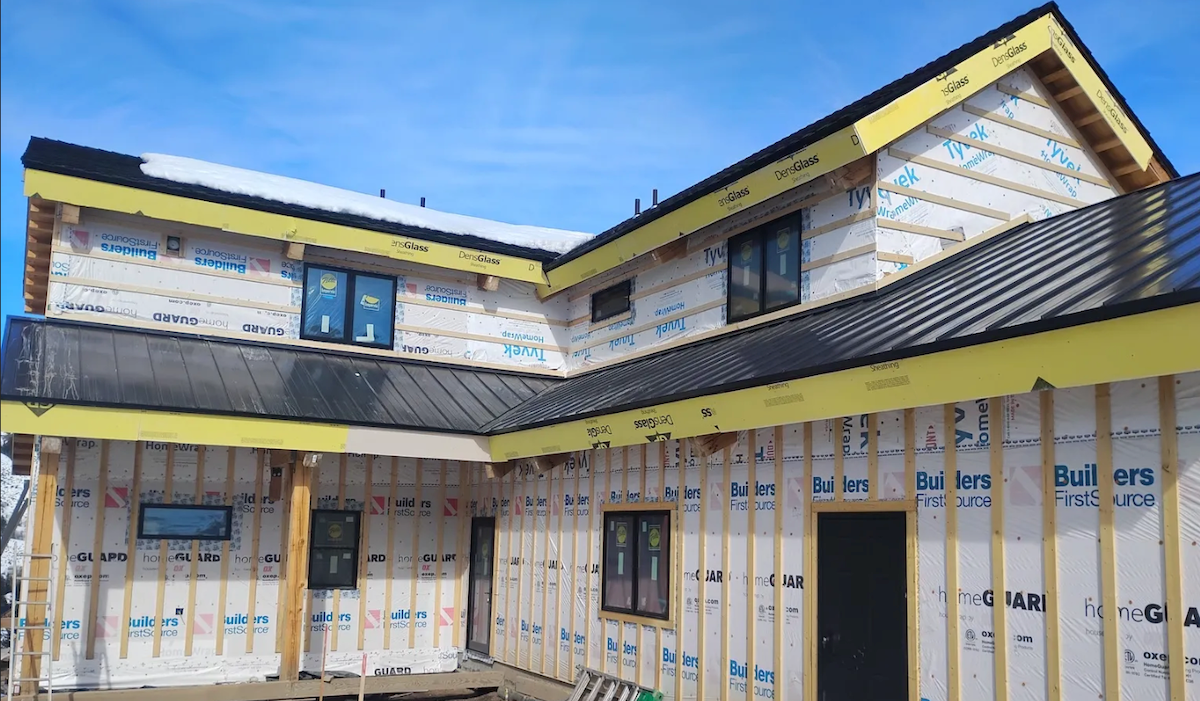
Teton County, Wyoming, officials have agreed to a settlement that includes the refund of a $24,325 affordable workforce housing fee previously mandated for a single-family home permit, marking a significant legal milestone in the ongoing national debate over the constitutionality of municipal impact fees. The settlement, finalized last week, concludes a lawsuit filed in 2023 in a Wyoming federal court by homeowners Trey and Shelby Scharp. Represented by the Pacific Legal Foundation (PLF), a public-interest law firm specializing in property rights, the plaintiffs argued that the county’s imposition of "affordable housing" fees on individual residential construction projects constitutes an unconstitutional taking of private property.
The case has drawn national attention as a "baby step" in a broader legal strategy to challenge how local governments fund affordable housing initiatives. For decades, municipalities across the United States have increasingly relied on impact fees—one-time charges levied against developers and homeowners—to mitigate the perceived social costs of new construction. However, the Teton County settlement highlights a growing legal consensus that these fees must maintain a direct "nexus" and "proportionality" to the specific impact of the development, a standard established by the U.S. Supreme Court in cases such as Nollan v. California Coastal Commission and Dolan v. City of Tigard.
The Scharp Case: A Chronology of Regulatory Hurdles
The legal battle began when Trey and Shelby Scharp, longtime residents of Jackson, Wyoming, sought to build a permanent family home on a five-acre parcel they purchased in 2021. The property already contained a small, 1,000-square-foot cabin, which the couple intended to utilize as a rental unit to provide supplemental income and assist with their mortgage. Their plans were immediately met with a series of complex zoning and regulatory challenges.
Initially, Teton County officials determined that the existing cabin was too large to qualify as an accessory dwelling unit (ADU) under local codes. The discrepancy arose from an unfinished, windowless basement that effectively doubled the structure’s calculated square footage. To bypass this restriction, the Scharps successfully registered the cabin as a "historically significant" structure, which granted them an exemption from standard ADU size limitations.
The second hurdle appeared during the construction of their primary residence. Due to the property’s sloped terrain, building codes required a foundation depth of 10 feet. Recognizing an opportunity to maximize the utility of the required excavation, the Scharps proposed adding windows and a kitchenette to the basement area to create a second rental unit. Local officials rejected this proposal, citing violations of single-family zoning regulations.
Ultimately, the couple abandoned the second rental unit plan, yet they were still hit with a $24,325 "workforce housing" fee as a condition for their building permit. The county’s justification for the fee was based on a commission study suggesting that new residential construction creates a demand for low-wage service jobs, and since those workers cannot afford to live in Teton County, the homeowner must subsidize the local housing fund. The PLF lawsuit countered this logic, stating that increasing the housing supply inherently mitigates, rather than aggravates, the affordability crisis.
Economic Disparities in the Nation’s Wealthiest County
The context of the Teton County lawsuit is inseparable from the region’s extreme economic environment. Teton County has earned the distinction of being the wealthiest county in the United States on a per-capita basis. According to federal data analyzed by Jackson Councilman Jonathan Schechter, the county’s per-capita income stands at a staggering $532,903—more than six times the national average.
The wealth in Teton County is notably distinct from traditional labor-based economies. In 2024, approximately 77% of the residents’ income was derived from investments, dividends, and interest, a figure that leads the nation. This concentration of wealth has transformed Jackson into a "Gilded Age" enclave, where the median list price for a home currently sits at $6.39 million, according to HousingWire Intelligence. Even new listings, which may include smaller condos or townhomes, maintain a median price of $3.57 million.
A comprehensive housing needs study for the Teton region revealed a grim reality for the local workforce. Median-priced homes are statistically unaffordable for average wage earners in every major industry, including high-paying sectors like professional services and finance. The rental market offers no reprieve; a one-bedroom apartment in Jackson averages nearly $2,900 per month, roughly 77% higher than the national average. This "Teton Effect" has forced much of the county’s essential workforce—teachers, firefighters, and service staff—to commute from neighboring counties or states, further fueling the local government’s desperation to generate affordable housing revenue through fees.
Comparative Litigation and the Role of the Pacific Legal Foundation
The Teton County settlement is not an isolated incident but part of a coordinated effort by the Pacific Legal Foundation to challenge inclusionary zoning and impact fees across the country. The firm recently filed a similar lawsuit in San Luis Obispo, California, where a small developer was required to pay $100,000 in fees for a four-unit project. In that instance, the developer was given a choice: place a deed restriction on one of the units and sell it for $450,000, or pay the six-figure fee. Given that the construction cost for a single unit in that market was estimated at $1.325 million, the deed-restricted option was financially ruinous.
While the PLF has seen success in Wyoming and parts of California, the legal landscape remains inconsistent. In San Diego, a developer recently lost a federal challenge against fees associated with a massive 1,642-unit apartment complex. A federal judge ruled in favor of the City of San Diego in January 2024, despite an earlier inclination toward the developer’s position.
Legal analysts note that the San Diego case differed in strategy; the developer challenged the city’s broader ordinance using a combination of federal and state laws. In contrast, the PLF tends to utilize a "narrow takings claim" under the U.S. Constitution, focusing on the specific financial burden placed on an individual property owner after the project is completed or the fee is paid. This tactical difference highlights the importance of how these cases are framed within the context of the Fifth Amendment’s Takings Clause.
Legislative Responses and Regional Trends
As the courts grapple with the constitutionality of impact fees, state legislatures in the Mountain West are taking diverse approaches to the housing crisis. Montana has emerged as a leader in regulatory reform. In 2023, the Montana State Legislature passed a package of bills, often referred to as the "Montana Miracle," which legalized duplexes in most residential zones, mandated that cities allow ADUs, and opened commercial zones to multi-family housing.
Colorado has followed a similar path, enacting reforms to streamline the development process and limit the ability of local governments to block high-density projects. Wyoming, however, has struggled to find a legislative consensus. While various bills have been introduced to address affordability, many have stalled due to the state’s strong tradition of local control and concerns over the changing character of rural communities.
The lack of state-level reform in Wyoming has left local municipalities like Teton County to rely on controversial tools like the workforce housing fee. However, the Scharp settlement suggests that these local solutions may be on shaky legal ground if they cannot prove a direct link between a specific new home and the need for new affordable housing units.
Implications for the Future of Housing Development
The refund in Teton County sends a clear message to municipal planning departments nationwide: impact fees are not a blank check. If local governments continue to use residential building permits as a mechanism for social engineering or to fund general affordable housing pools, they must be prepared for rigorous legal scrutiny.
The broader implication for the housing market is twofold. On one hand, developers and property rights advocates argue that removing these "hidden taxes" will lower the cost of entry for new construction, potentially increasing supply and lowering prices. On the other hand, local officials argue that without these fees, they have no viable way to house the workers who sustain their economies, particularly in regions where land prices have been driven to astronomical levels by global wealth.
As the Pacific Legal Foundation continues to pursue similar cases, the legal threshold for "unconstitutional takings" will likely be further refined. For now, the Scharp case serves as a precedent for individual homeowners who find themselves caught between the desire to build a home and the mounting costs of municipal social mandates. The $24,325 refund may be a small sum in the context of Jackson Hole real estate, but the legal ripples it creates could eventually reshape how American cities fund the housing of their workforce.
