

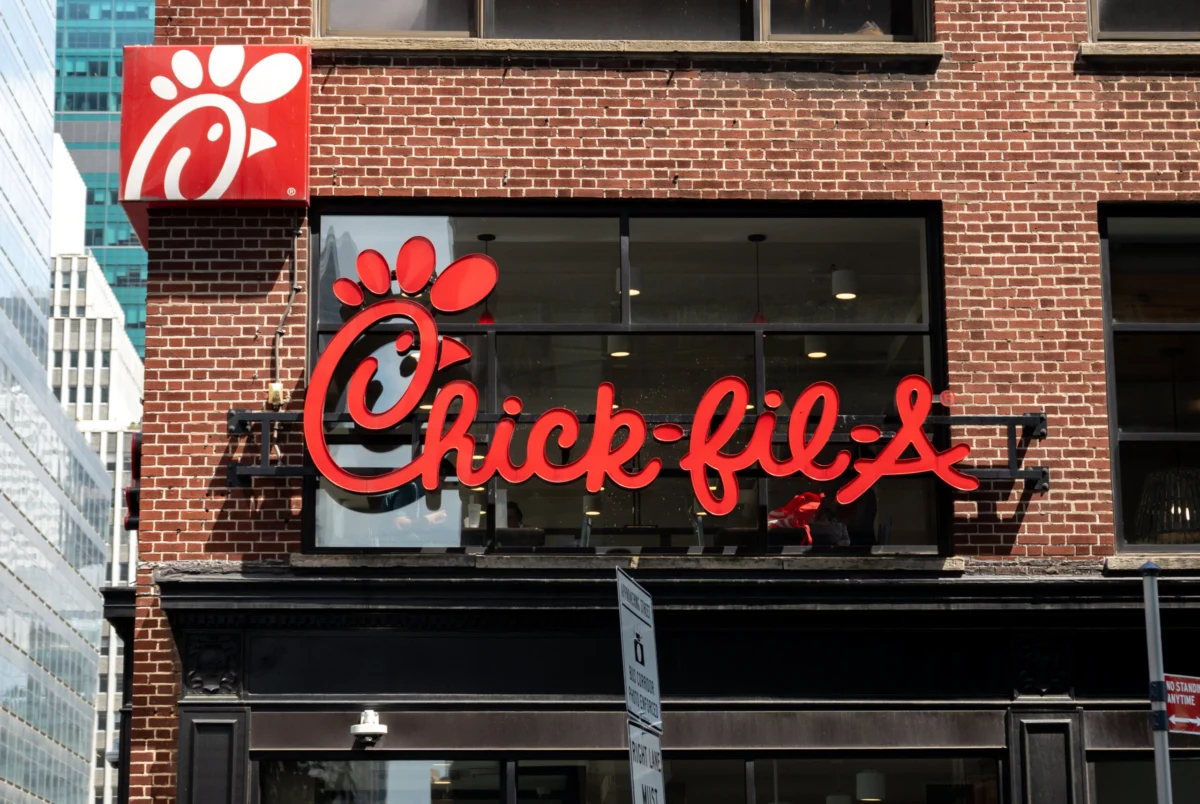
New York City, NY – Amidst a turbulent restaurant industry marked by persistent inflation and shifting consumer habits, Chick-fil-A, the Atlanta-based chicken chain, continues to defy broader market slowdowns, reporting a robust year of growth and maintaining its unique operational philosophy. CEO Andrew Cathy, nearly five years into his tenure, emphasized the company’s commitment to its founding principles while strategically pursuing measured expansion and innovation. His remarks came during a recent visit to downtown Manhattan, coinciding with an activation event for the company’s "Shared Table" hunger relief program.
While many publicly traded restaurant giants grapple with stagnant traffic and disappointing financial outcomes, Chick-fil-A stands out as an anomaly. Competitors such as McDonald’s, Popeyes, and KFC have publicly acknowledged challenges, including a more discerning consumer base tightening its discretionary spending. However, Cathy stated that Chick-fil-A’s restaurants have not experienced the same downturn, attributing their resilience to strong operational execution and an unwavering focus on hospitality. "This has been a good year," Cathy affirmed, highlighting the dedication of the chain’s independent owner-operators.
As a privately held entity, Chick-fil-A is not obligated to release quarterly financial reports, offering a distinct advantage in navigating short-term market pressures. Nevertheless, public franchise disclosures offer a glimpse into its formidable performance. In 2025, the company’s revenue surged by 14% to $10.3 billion, with net income ticking up a modest 1% to $1.05 billion. Its approximately 3,000 locations collectively generated an impressive $23.92 billion in system sales last year, solidifying its position as the third-largest U.S. restaurant chain by sales, trailing only McDonald’s and Starbucks. This financial strength underscores the brand’s enduring appeal and operational efficiency in a highly competitive sector.
A Legacy of Calculated Growth and Enduring Principles
Chick-fil-A’s journey began in Hapeville, Georgia, in 1946, when S. Truett Cathy opened his first diner, The Dwarf Grill. His vision, rooted in quality food and exceptional service, laid the groundwork for the modern Chick-fil-A. The company’s famous chicken sandwich was perfected in 1964, and the first Chick-fil-A restaurant in a mall food court opened in 1967. From these humble beginnings, the chain has steadily grown, maintaining its family ownership and distinctive operational ethos, including its well-known policy of remaining closed on Sundays.
Andrew Cathy, who succeeded his father, Dan Cathy, as CEO, is the third generation to lead the family business. He inherited a company deeply ingrained with a culture of long-term vision, a luxury afforded by its private status. "We’re able to plan for the quarter century, and we don’t have to plan for the quarter," Cathy explained, contrasting Chick-fil-A’s approach with that of publicly traded companies beholden to quarterly earnings reports and shareholder expectations. This strategic insulation allows for "calculated" and "conservative" growth, even as the company’s recent expansion belies the modest description. In the past year alone, Chick-fil-A opened 179 new restaurants, extending its footprint internationally to markets like Canada, Singapore, and the United Kingdom.
The advantages of remaining private are particularly evident in the current market, where restaurant stocks have broadly underperformed. For instance, Jersey Mike’s shares have plummeted nearly 28% since its initial public offering in July, while the anticipated IPO of Dunkin’ owner Inspire Brands reportedly faces delays due to the sector’s struggles. Chick-fil-A’s private ownership shields it from such market volatility, enabling it to prioritize sustainable growth and employee welfare over short-term stock performance.
Balancing Tradition with Future-Forward Innovation
Under Andrew Cathy’s leadership, Chick-fil-A has demonstrated a willingness to embrace bold ideas for future growth, exemplified by its ambitious $1 billion international expansion plan and the development of new restaurant concepts through its venture arm. Yet, these forward-looking strategies are carefully balanced with the preservation of core traditions. Cathy likens leading the business to driving a race car: "There’s a reason that the windshield’s bigger than the rearview mirror. It’s important for the rearview to be grounded on where you are, and there are things that we think about our purpose, our mission, that won’t change, but everything else we have to be able to evolve and change."
Certain tenets, such as the Sunday closure policy, remain sacrosanct, reflecting the company’s commitment to its foundational values and providing employees a day of rest. Other aspects, like the signature Southern hospitality, are evolving to meet changing consumer preferences for ordering and dining. This adaptive approach is critical as the industry increasingly turns to technology.
Chick-fil-A adopts a "human plus" philosophy toward technology, aiming to augment, rather than replace, human interaction. Cathy articulated the company’s active exploration of future food delivery mechanisms, including drone delivery and other innovations, recognizing the exciting possibilities within the industry. However, a stark divergence from many rivals is Chick-fil-A’s decision against implementing AI voice ordering in its drive-thru lanes. While McDonald’s, for example, announced plans to test "Archy," its voice AI technology for orders in both English and Spanish, Chick-fil-A prioritizes human-to-human interaction. "From our experience, we really want that hospitality to be human to human," Cathy stated. "We’re not gonna substitute that interaction with technology, because we feel like that hospitality is so important to create that warm environment for consumers."
This commitment to personal service resonates deeply with customers. For over a decade, Chick-fil-A has consistently led the fast-food segment in customer satisfaction, according to the annual American Customer Satisfaction Index (ACSI). This reputation for exceptional service provides a significant competitive advantage, especially as consumers become more selective with their dining choices. While Jersey Mike’s recently surpassed Chick-fil-A in the 2026 ACSI study, Chick-fil-A’s score remained strong, indicating sustained customer loyalty. This focus on the human element contrasts with a broader industry trend towards automation in an effort to cut labor costs and improve efficiency, often at the expense of personalized service.
Recognizing the potency of hospitality, other restaurant chains are now actively re-emphasizing customer service. Starbucks, for instance, invested in 200,000 Sharpie markers to encourage baristas to write friendly messages on coffee cups, aiming to rekindle a personal touch. Burger King has reimagined its restaurant manager role into a "Your Way Champion," focusing on guest interaction and problem-solving. McDonald’s also initiated its "Make It Golden" training program for franchisees and employees, highlighting hospitality alongside food quality. These initiatives underscore Chick-fil-A’s long-standing leadership in an area that competitors are now scrambling to replicate.
Strategic Menu Evolution and the "Chicken Sandwich Wars"
Another enduring characteristic of Chick-fil-A is its famously focused menu. However, even here, the chain employs a careful strategy of expansion, primarily through seasonal limited-time offerings. Items like chicken and waffles or the Honey Pepper Pimento Chicken Sandwich allow Chick-fil-A to test new flavors and profiles without overhauling its core offerings. Only "home run" items, as Cathy describes them, such as the Pineapple Dragonfruit drink line, earn a permanent spot on the menu. This cautious approach ensures that new additions align with the brand’s identity and maintain its unique appeal. "We’re very careful about what we want to do, because we want to keep it really focused on unique Chick-fil-A items that they can only get at Chick-fil-A," Cathy affirmed.
The competitive landscape in the chicken segment has intensified significantly, largely ignited by the "chicken sandwich wars" sparked by Restaurant Brands International’s Popeyes in 2019. Despite the influx of new entrants, Chick-fil-A remains the dominant player in the U.S. chicken market, holding approximately a 43% market share as of 2024, according to Barclays. Popeyes’ chicken sandwich, however, was a game-changer, propelling the brand to the number two spot with about 11% market share. McDonald’s is also poised to reignite the battle, reportedly preparing to test hand-breaded chicken strips and sandwiches, signaling a continued focus on this lucrative category.
Far from being daunted, Andrew Cathy welcomes the competition. "I’m grateful that there’s competition in the chicken space, because that means we’re in a good space to be," he remarked. "Competition just makes us better… What little details can we do to make that environment even more welcoming for customers?" This perspective highlights Chick-fil-A’s confidence in its product and service, viewing competition as a catalyst for continuous improvement rather than a threat.
Beyond the Chicken Sandwich: Red Wagon Ventures
Chick-fil-A’s innovative spirit extends beyond its core restaurant operations through Red Wagon Ventures, an initiative launched in 2017. Named after the vehicle S. Truett Cathy used to sell Coca-Cola bottles at age six, Red Wagon Ventures embodies the founder’s entrepreneurial drive. This subsidiary serves as an incubator for new ideas and a platform for strategic diversification, allowing Chick-fil-A to explore growth opportunities outside its traditional quick-service model.
"The lion’s share of our time and effort is continuing to make sure that we’re getting better and better at Chick-fil-A," Andrew Cathy explained, "but we do have a small team that’s working and incubating some of these new ideas and thinking about what could be some things that could help us grow into the future."
Some of these ventures remain within the restaurant industry. The experimental "Little Blue Menu" concept, which offered traditional Chick-fil-A items alongside burgers, pizza, and onion rings, is being phased out, with its final location converting to a standard Chick-fil-A next year. More recently, Red Wagon Ventures launched "Daybright," a beverage-focused concept offering coffees, smoothies, juices, and doughnuts, notably without chicken sandwiches or waffle fries. This exploration into new food and beverage categories demonstrates a willingness to test new market segments.
Perhaps even more intriguing is Red Wagon Ventures’ foray into entirely new industries. Last year, it launched Acrew Home Professionals, a home repair and maintenance business that explicitly leverages the Chick-fil-A ethos by promoting "service with a smile" on its website. This move into professional services signals a broader ambition to apply Chick-fil-A’s core competencies—customer service, operational excellence, and brand trust—to diverse sectors.
Cathy views this diversification as essential for the long-term sustainability of a family business. "I think from a family business standpoint, we’ve got to build off of our core competencies and look at other types of things that we can get into, so we can continue to serve customers in unique ways," he noted. He emphasized the importance of innovation and foresight for businesses aiming to endure for over a century, citing his grandfather’s lifelong entrepreneurial spirit, who opened a new business at 92.
In addition to incubating new brands, Red Wagon Ventures is also exploring acquisitions of other family businesses, particularly those without a clear succession plan or those seeking to sell. This strategy positions Chick-fil-A as a potential steward for other legacy enterprises, further diversifying its portfolio and extending its influence while staying true to its family-owned roots.
As Chick-fil-A approaches its 80th anniversary, its trajectory under Andrew Cathy suggests a careful balance between honoring its rich heritage and boldly innovating for the future. The company’s private ownership, unwavering commitment to hospitality, strategic menu evolution, and diversified ventures position it uniquely to navigate the complexities of the modern economy and continue its impressive growth story for decades to come.
