

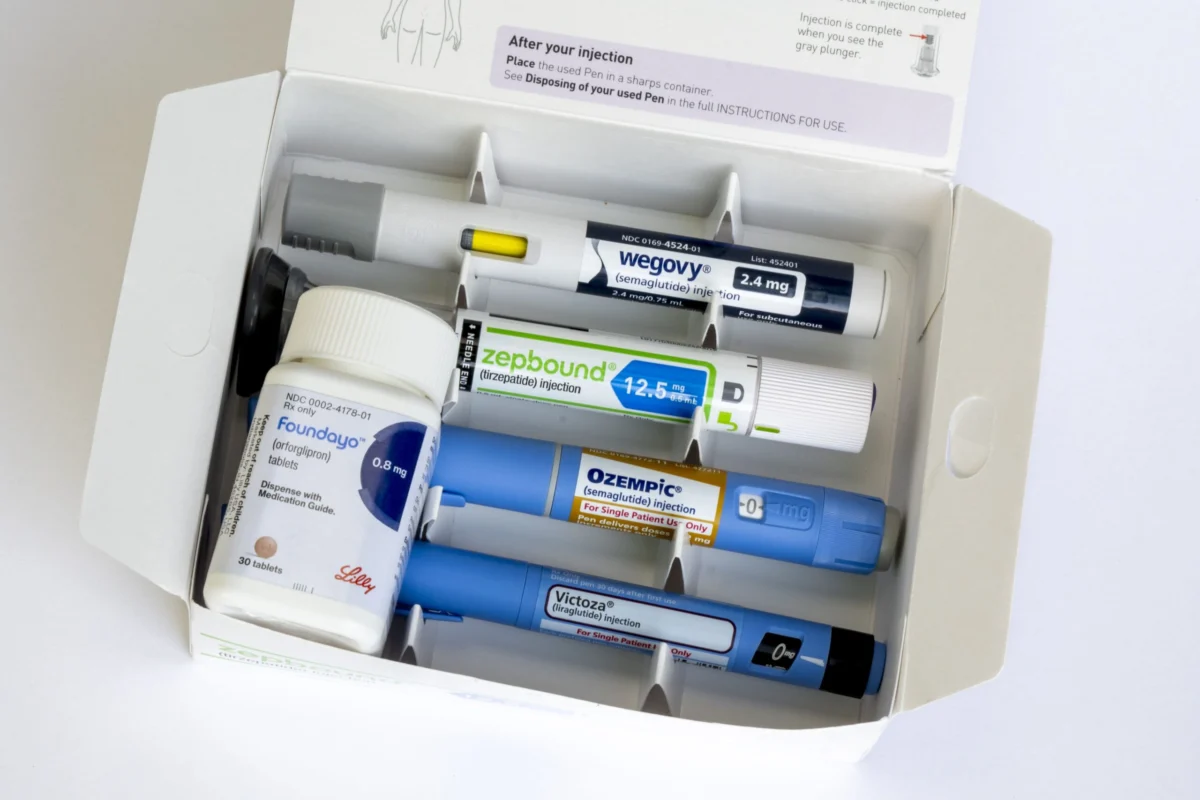
The pharmaceutical industry is embarking on a transformative journey in the battle against obesity and Type 2 diabetes, moving beyond the current generation of GLP-1 receptor agonists to explore novel biological pathways. At the forefront of this evolution is the amylin pathway, a distinct biological target that is showing immense promise, not as a replacement for existing blockbuster drugs like Eli Lilly’s Zepbound (tirzepatide) or Novo Nordisk’s Wegovy (semaglutide), but as a powerful complement or a standalone alternative for millions of patients. This strategic shift aims to push weight loss further, offer solutions for those who don’t adequately respond to GLP-1s, and provide a wider array of personalized treatment options.
Eli Lilly’s Promising Glimpse with Eloralintide
A significant development emerged this week from Eli Lilly, a dominant player in the metabolic health space. The company’s experimental amylin-targeting drug, eloralintide, delivered encouraging results in a Phase 2 trial. When combined with tirzepatide – the active ingredient in its highly successful Zepbound and Mounjaro shots – eloralintide demonstrated substantially greater weight loss in patients grappling with obesity and Type 2 diabetes.
Specifically, after 48 weeks of treatment, participants receiving the highest-dose combination of eloralintide and tirzepatide achieved an average body weight reduction of 23.3%. This figure stands in stark contrast to the 14.8% average weight loss observed in those who received only a high dose of tirzepatide. These compelling statistics are based on an efficacy analysis that assumes patients remained on treatment throughout the trial, providing a clear indication of the drug’s potential under optimal conditions.
Benjamin Bikman, a distinguished professor at Brigham Young University and a leading expert in metabolic health and insulin resistance, lauded these findings, remarking, "These are encouraging results. Adults with type 2 diabetes typically lose less weight on these therapies than those without diabetes." This highlights the particular significance of these outcomes for a patient population often more resistant to weight loss interventions.
Eli Lilly is pursuing a dual development strategy for eloralintide, envisioning it as both a standalone treatment and a critical component of a combination therapy. This two-pronged approach is seen by analysts as laying the groundwork for a major future franchise for the pharmaceutical giant. David Risinger, an analyst at Leerink Partners, projects an impressive $23.2 billion in annual sales for Lilly’s eloralintide products by the close of 2035. He anticipates the standalone drug will hit the market first in 2029, followed by the combination therapy in 2030.
Risinger underscored the vast unmet need that eloralintide could address. "There are millions of individuals, potentially over 10 million people, who have tried GLP-1s and failed due to efficacy reasons, tolerability issues, or genetic issues where they simply do not respond to one," Risinger told CNBC. "We think this novel mechanism, this amylin analog… will offer a major new treatment alternative for patients, both as a monotherapy and as a combination therapy." He sees particular potential for standalone eloralintide, given this "huge independent patient pool" that has not found success with existing GLP-1 therapies. Despite this, Lilly remains confident in the clear opportunity for pairing these medications. Ken Custer, president of Lilly Cardiometabolic Health, articulated this synergy, stating, "Patients may not get what they need from a drug like tirzepatide. They may not get what they need from a drug like a eloralintide on its own." Bikman further echoed this sentiment, viewing the combo as a vital option for patients who experience a plateau in weight loss after initially starting on tirzepatide alone.
Navigating the Path Forward: Challenges and Next Steps
Despite the excitement, Lilly acknowledges that significant hurdles remain. The current data originates from a relatively small Phase 2 study, necessitating robust confirmation in larger, more comprehensive Phase 3 trials, which are slated to commence later this year.
A critical aspect for future development will be enhancing patient tolerability of the combination regimen. The Phase 2 trial revealed higher discontinuation rates due to side effects among patients taking both drugs, ranging from 10.8% to 27% depending on the dose, compared to just 2.9% for those on tirzepatide alone. "A therapy is only effective if patients can remain on it, so tolerability in Phase 3 will be as important as efficacy," Bikman emphasized. Dr. Caroline Apovian, co-director of the Center for Weight Management and Wellness at Brigham and Women’s Hospital, frankly stated that "27% is not a good number," underscoring the need for further refinement. Lilly has indicated its commitment to improving the tolerability profile of the combination therapy in subsequent studies.
Novo Nordisk’s Parallel Innovation in Amylin
Eli Lilly is not alone in recognizing the potential of amylin. Novo Nordisk, another pharmaceutical powerhouse in metabolic disease, has been diligently pursuing a similar strategy for years. Their experimental amylin-based drug, cagrilintide, has already demonstrated meaningful weight loss as a standalone treatment in late-stage trials. The synergy truly shines when cagrilintide is combined with semaglutide – the active ingredient in Novo’s Wegovy and Ozempic – a combination marketed as CagriSema. Clinical studies have shown that CagriSema can produce even greater weight loss. This promising combination therapy is anticipated to launch early next year, with standalone cagrilintide and a higher-dose version of CagriSema projected for release in 2028.
Novo Nordisk is also pioneering a more advanced approach with amycretin, also known as zenagamtide. This innovative molecule is designed as a single agent that simultaneously targets both the GLP-1 and amylin pathways. Currently undergoing testing as a once-weekly injection and a daily oral tablet, amycretin has already yielded promising Phase 2 results earlier this year, showcasing significant A1C reductions and up to 14.6% weight loss in adults with Type 2 diabetes. The development of both injectable and oral forms of amycretin underscores the industry’s drive to offer diverse administration routes to meet patient preferences and enhance adherence.
Beyond weight loss, new data from Novo Nordisk this week suggests that amylin’s benefits could extend to cognitive and psychological well-being. A year-long functional magnetic resonance imaging (fMRI) study on CagriSema revealed a reduction in "food noise" – the persistent, intrusive thoughts about food that many individuals with obesity experience. The study also indicated improvements in organ and bone health. Martin Holst Lange, Novo’s chief scientific officer, noted that CagriSema altered how the brain reacted to tempting, high-calorie foods in regions associated with cravings, pleasure, and self-control in overweight or obese individuals. "The signal in the brain changes in a way that actually is associated with improved quality of life," Lange stated, highlighting the potential for a more holistic impact on patients’ lives.
The Broader Amylin Landscape and Mechanism of Action
The burgeoning interest in amylin extends beyond Lilly and Novo Nordisk. Several other prominent pharmaceutical companies, including Pfizer, AstraZeneca, and Viking Therapeutics, are actively developing their own amylin-based products. This widespread investment underscores a collective industry belief in amylin’s potential as a cornerstone for future obesity and diabetes treatments.
The concept of amylin as a therapeutic target is not entirely new. The first – and, until now, only – amylin therapy, pramlintide (Symlin), was approved in the U.S. over two decades ago. It served as an add-on mealtime injection for insulin-dependent diabetes patients. However, its adoption was limited, primarily due to the requirement for multiple daily injections, which presented a significant burden for patients already managing complex insulin regimens. The current generation of amylin therapies in development overcomes this limitation by being long-acting, designed to mimic the hormone in a sustained manner, allowing for convenient once-weekly administration.
Amylin, a hormone co-secreted with insulin by pancreatic beta cells, plays a crucial role in glucose homeostasis and appetite regulation. It works by signaling fullness, suppressing appetite, and slowing the movement of food through the stomach – actions that, while similar in outcome to GLP-1s, are achieved through an entirely different biological pathway. "It’s the same outcome, but a different approach," Bikman explained, emphasizing the distinct biological leverage amylin provides. By targeting multiple, independent pathways, drugmakers aim to produce more significant weight loss and broader metabolic benefits than any single pathway could achieve on its own, potentially without relying solely on escalating doses of a single drug, which can often lead to increased side effects.
The Era of Multi-Pathway Therapies: A Paradigm Shift
The integration of amylin into treatment strategies is part of a larger paradigm shift in the obesity drug development race: the move towards multi-pathway therapies. This approach acknowledges the complex, multifactorial nature of obesity and metabolic dysregulation, recognizing that targeting multiple hormonal systems simultaneously can yield superior results.
Tirzepatide itself, Eli Lilly’s current blockbuster, exemplifies this by pairing GLP-1 with GIP (glucose-dependent insulinotropic polypeptide) agonism. Lilly’s experimental drug retatrutide takes this a step further by adding glucagon agonism to the mix, making it a triple agonist (GLP-1/GIP/Glucagon). Retatrutide has already produced some of the most substantial weight loss results reported in obesity drug trials to date, with published data also demonstrating significant reductions in liver fat, triglycerides, and fasting insulin – indicating comprehensive metabolic improvements beyond just weight.
While it remains premature to definitively declare whether combination amylin drugs will be superior to tirzepatide or other next-generation multi-agonists like retatrutide, the underlying principle is clear: attacking obesity from multiple biological angles offers a powerful advantage. These innovative medicines will need to successfully navigate rigorous clinical trials and stringent regulatory reviews before reaching patients.
Broader Impact and Future Implications
The emergence of amylin-based therapies heralds a new era of possibilities for obesity and Type 2 diabetes management. The potential implications are profound:
- Expanded Treatment Landscape: For millions of individuals who have found existing GLP-1 therapies insufficient due to efficacy, tolerability, or genetic factors, amylin offers a completely new mechanism of action. This dramatically expands the pool of viable treatment options.
- Enhanced Efficacy: The synergistic effects of combining amylin with GLP-1s or other incretins promise unprecedented levels of weight loss, moving closer to outcomes previously only achievable through bariatric surgery.
- Personalized Medicine: The growing diversity of drug mechanisms (GLP-1, GIP, glucagon, amylin) and their various combinations will enable healthcare providers to tailor treatments more precisely to individual patient needs and responses, ushering in an era of more personalized obesity medicine.
- Metabolic Health Beyond Weight Loss: Evidence suggesting benefits beyond mere weight reduction, such as improvements in "food noise," brain activity related to cravings, and organ health, points towards a more holistic approach to metabolic well-being and quality of life.
- Market Dynamics: The introduction of these highly effective multi-pathway drugs will intensify competition in the rapidly growing obesity drug market, potentially driving further innovation and potentially influencing pricing strategies in the long term, though initial costs are likely to remain high.
- Access and Affordability: As with any new generation of highly effective drugs, questions of access, insurance coverage, and affordability will be paramount. Ensuring these transformative therapies are available to all who need them will be a critical challenge for healthcare systems and policymakers.
Ultimately, all the medicines currently in development, including the exciting new amylin-based therapies, are working towards a shared, overarching goal among pharmaceutical innovators: to provide patients with a comprehensive and diverse array of effective treatment options to meet their individualized needs in the ongoing global health crisis of obesity and Type 2 diabetes. The future of metabolic health treatment appears increasingly sophisticated, multi-faceted, and profoundly hopeful.
