

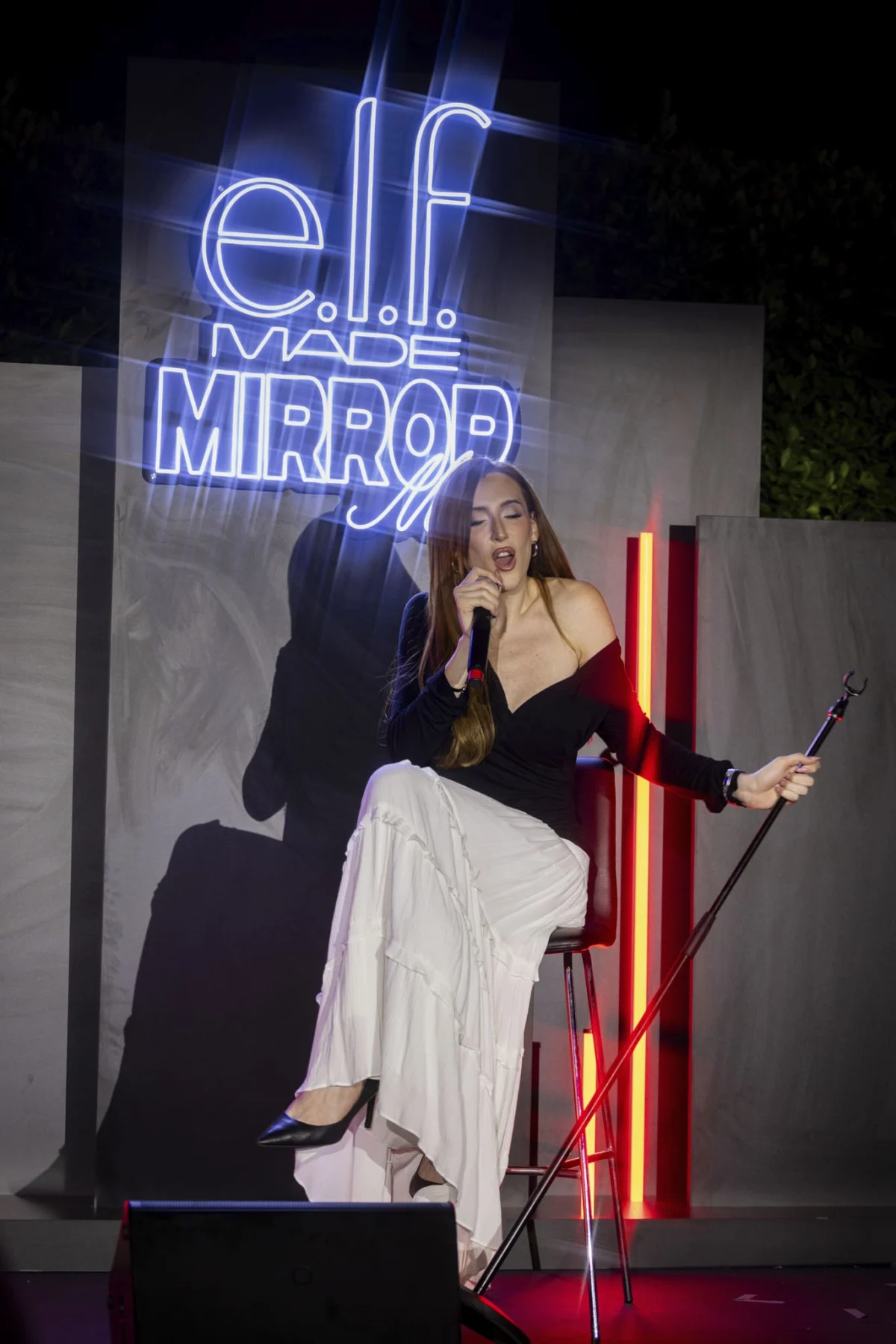
In a move that underscores the rapidly evolving landscape of consumer engagement, E.l.f. Beauty, a prominent name in the cosmetics industry, has ventured further into the music realm with the release of its second original album, "Mirror Mix." This strategic foray, announced late last month, features a diverse roster of seven rising artists and positions the beauty giant not merely as a purveyor of lip gloss and eyeshadow, but as a burgeoning entertainment entity vying for consumer attention alongside traditional media powerhouses. The initiative highlights a growing trend among retailers to blend shopping with entertainment, a phenomenon often dubbed "retailtainment," in a concerted effort to forge deeper, more authentic connections with their target demographics, particularly the elusive Gen Z.
E.l.f.’s Deep Dive into Disruptive Marketing
E.l.f. Beauty’s pivot towards music is not an isolated experiment but a calculated evolution of its "disruptive marketing" strategy, a philosophy aimed at creating memorable moments that genuinely capture consumer attention. The company’s journey into sonic branding began notably in 2019 with the launch of "eyes.lips.face.," a catchy original song designed to encapsulate the brand’s identity. This track unexpectedly went viral on TikTok, propelling E.l.f. into new dimensions of brand recognition and cultural relevance. Patrick O’Keefe, E.l.f.’s Chief Integrated Marketing Officer, reflected on this foundational moment, stating, "We were one of the first movers on TikTok, and we created an original song around eyes, lips, face, and it went viral. It propelled the brand into new dimensions. People didn’t know what eyes, lips, face — what E.l.f. — stood for, and we created the song to embrace what it stands for and what it means for us as a brand." This early success demonstrated the potent synergy between music, social media, and brand identity, setting the stage for more ambitious projects.
Following the success of "eyes.lips.face.," E.l.f. continued to innovate its marketing playbook. In 2020, the company launched a TikTok reality show, further cementing its presence on platforms where younger audiences congregate. It also became one of the first brands to establish a channel on Twitch and pioneer live shopping experiences on the platform, leveraging interactive digital environments to engage consumers directly. These ventures, alongside the 2024 release of "Get Ready With Music, The Album," underscore a consistent strategy to integrate the brand into the daily lives and digital spaces of its community. CEO Tarang Amin encapsulated this audacious vision at the Deutsche Bank dbAccess Global Consumer Conference in early June, half-jokingly remarking, "We’re an entertainment company that happens to sell beauty products." This sentiment, while delivered with humor, reveals a serious strategic intent: to transcend traditional retail boundaries and establish E.l.f. as a cultural touchstone.
"Mirror Mix": Amplifying Voices and Building Community
The recently released "Mirror Mix" album represents E.l.f.’s latest and most comprehensive musical offering. It features a diverse lineup of talent, including a WNBA player and a Grammy Award-winning singer-songwriter, signaling a commitment to both artistic quality and broad appeal. The album is available for streaming across major platforms such as Spotify, Apple Music, Amazon Music, and even the immersive digital world of Roblox, ensuring wide accessibility for its target audience. This multi-platform distribution strategy reflects a keen understanding of modern consumption habits, where content must be available wherever and whenever consumers choose to engage.
Beyond simply creating music, E.l.f.’s objective with "Mirror Mix" is two-fold: to elevate the voices of independent artists and to deepen its connection with its customer base. O’Keefe elaborated on this community-centric approach, emphasizing the emotional power of music. "When you put community at the center of everything – programs and campaigns and building music, which evokes emotion – when you do that, it changes the conversation. And we want to be top of mind with our community," he stated. This strategy aims to foster brand loyalty not through overt advertising, but through shared experiences and emotional resonance, aligning E.l.f. with values that resonate deeply with younger consumers who prioritize authenticity and purpose-driven brands.
The Broader Landscape of "Retailtainment"
E.l.f. is by no means an anomaly in this burgeoning "retailtainment" arena. Across diverse sectors, companies are recognizing the diminishing returns of traditional advertising and are exploring innovative ways to capture consumer imagination. Days before E.l.f.’s album debut, clothing retailer Gap Inc. unveiled a multiyear partnership with the rising boy band Just Your Type (JYT). This ambitious collaboration, the first under Gap’s newly minted "fashiontainment" platform, will encompass a multi-episode docuseries, a national mall tour, and a co-branded clothing collection. This initiative marks a significant strategic pivot for Gap, which has been undergoing a multiyear revival effort following a challenging period between 2001 and 2021, during which annual sales plummeted by $3.5 billion and approximately 2,000 stores were closed.
Pam Kaufman, Gap’s Chief Entertainment Officer – a role specifically created in January 2026 to spearhead such ventures – will oversee the JYT project. Kaufman articulated the vision behind "fashiontainment," stating, "Gap has always lived at the intersection of style, music and culture, and our Fashiontainment platform builds on that legacy by putting our brands at the center of the stories and cultural moments people care about." Her sentiment was echoed by Gap CEO Richard Dickson earlier in 2026, who posited that "Fashion is entertainment, and today’s customers aren’t just buying apparel, they’re buying into brands that tell compelling stories and drive cultural conversations." This highlights a fundamental shift in retail: the product itself is increasingly a vehicle for a broader cultural narrative and an immersive brand experience.
Even the fast-food sector is embracing the trend, albeit with a distinct, humorous flair. In recent weeks, Wendy’s surprised consumers with the debut of an emo album titled "Songs to Listen to in a Wendy’s Parking Lot." Unlike the earnest artistic endeavors of E.l.f. and Gap, Wendy’s opted for self-aware, comedic renditions with titles like "She Said She Didn’t Want Fries" and "The Best Combo Meal on the Worst Night of My Life." Despite its lighthearted approach, the album has achieved considerable success, with its lead song garnering over 450,000 streams on Spotify and the announcement generating hundreds of thousands of likes on Instagram. Wendy’s CEO Bob Wright, during a recent earnings call, underscored marketing as a key area of focus, emphasizing the need for "messaging, media and creative [to] drive a meaningful connection with our customers and drive traffic to our restaurants." These diverse examples from beauty, fashion, and fast food illustrate the pervasive nature of the "retailtainment" movement and its adaptability across industries.
The Driving Force: Connecting with Gen Z
The impetus behind this widespread adoption of "retailtainment" is largely rooted in the changing demographics of consumer spending power, particularly the rise of Gen Z. Born roughly between the mid-1990s and early 2010s, this generation represents a formidable economic force that demands different forms of engagement. A report released in June by United Talent Agency (UTA) titled "The Culture Canon" vividly illustrates this imperative. It asserts that "Cultural relevance moves the entire purchase funnel — especially for Gen Z." The data is compelling: 90% of Gen Z consumers are more likely to notice a brand perceived as culturally relevant, 87% think favorably of it, 81% consider it, and critically, 68% are more likely to ultimately buy from it. This data unequivocally demonstrates that cultural significance extends far beyond mere brand perception, directly impacting return on investment.
Gen Z, as digital natives, has grown up in an environment saturated with content and advertising. They are highly adept at filtering out traditional marketing messages and possess a keen radar for inauthenticity. For these consumers, brands that genuinely participate in cultural conversations, support emerging artists, or create engaging, shareable content are more likely to earn their trust and loyalty. This generation values experiences, community, and social impact, making the blend of retail and entertainment a powerful vehicle for engagement. It’s not just about selling a product; it’s about selling an experience, a lifestyle, or a connection to something larger. The attention economy means brands must be more than just transactional; they must be engaging, memorable, and, above all, relevant.
E.l.f.’s Marketing Spend and Strategic Reinvestment
E.l.f. Beauty’s aggressive pursuit of innovative marketing strategies has demonstrably paid dividends. The company measures the success of its marketing through metrics like unaided awareness – a consumer’s ability to recall a brand without prompts. Patrick O’Keefe proudly reported that E.l.f. Beauty’s unaided awareness has tripled over the past five years, soaring from 13% to an impressive 45%. This surge in brand recognition directly correlates with the company’s robust financial performance. In its most recently reported quarter, E.l.f. announced that profits had doubled, marking its 30th consecutive quarter of growth – an extraordinary streak in the competitive beauty industry.
To sustain this momentum and further amplify its disruptive marketing efforts, E.l.f. has prioritized significant investment in its campaigns. In the fiscal first quarter, more than 20% of net sales were reinvested into marketing and digital initiatives, a percentage the company anticipates will rise throughout the remainder of the year. This substantial marketing push is partly bolstered by an unexpected financial boon: a $50 million tariff refund received in the three months ending June 30. This refund came after the Supreme Court struck down "liberation day" tariffs, initially imposed during the Trump administration, and a subsequent federal judge’s order for the money to be returned.
CEO Tarang Amin outlined the company’s plan for this windfall in an August interview, stating, "Our plan is to fully reinvest that money in both pricing, to have a superior value proposition, as well as increased marketing across our entire portfolio of brands." He further emphasized the company’s belief that the tariffs should never have been imposed, making the reinvestment a strategic move to "drive the strength that we see" in their brands. This financial injection provides E.l.f. with a significant competitive advantage, enabling it to double down on its innovative marketing strategies and continue to differentiate itself in a crowded marketplace, reinforcing its commitment to value and brand visibility.
Implications and Future Outlook
The ascent of "retailtainment" signals a fundamental shift in how brands interact with consumers. For retailers, it presents both immense opportunities and significant challenges. The opportunity lies in creating deeper, more resonant connections that transcend mere transactional relationships, fostering brand loyalty that is emotionally driven. By offering unique content and experiences, brands can cut through the digital noise, differentiate themselves from competitors, and tap into the powerful influence of cultural trends. For E.l.f., Gap, and Wendy’s, these initiatives are not just about selling products; they are about cultivating communities, inspiring conversations, and ultimately becoming an indispensable part of their consumers’ cultural landscape.
However, this trend is not without its complexities. Authenticity is paramount; consumers, especially Gen Z, are quick to detect inauthentic attempts at engagement. Brands must ensure that their entertainment ventures genuinely align with their core values and resonate organically with their target audience. The measurement of return on investment (ROI) also becomes more nuanced, extending beyond immediate sales figures to encompass brand sentiment, cultural relevance, and long-term loyalty. As one marketing analyst recently noted, "The real challenge for brands entering the entertainment space is maintaining a consistent, authentic voice while navigating the complexities of content creation and distribution. It’s a high-reward, but also high-risk, strategy."
Looking ahead, the lines between retail, entertainment, and technology will likely continue to blur. We can expect to see more brands investing in original content, virtual experiences, and immersive digital platforms. The success of pioneers like E.l.f. Beauty, Gap, and Wendy’s will undoubtedly inspire others to explore creative avenues for consumer engagement. In this new era, brands that master the art of storytelling and provide genuine value beyond their products will be best positioned to capture the hearts, minds, and wallets of the next generation of consumers.
