

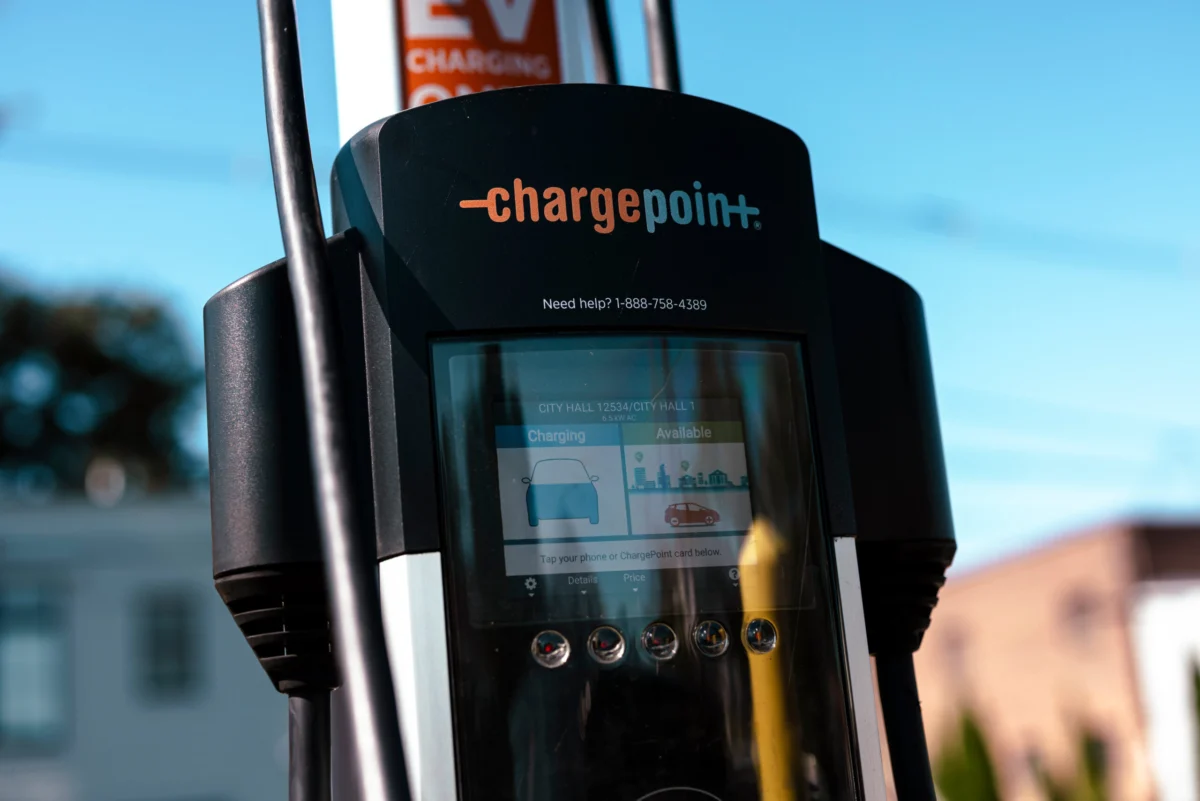
Shares of ChargePoint Holdings experienced an extraordinary surge of over 70% during afternoon trading on Thursday, September 3, 2024, following the electric vehicle (EV) charging company’s announcement of second-quarter fiscal year 2027 results that significantly surpassed Wall Street expectations. The impressive financial performance and an optimistic outlook from CEO Rick Wilmer have reinvigorated investor confidence, with Wilmer declaring to CNBC that this rebound marks "the beginning of the momentum" for the company. This dramatic uptick represents the most significant increase for ChargePoint since it undertook a reverse stock split last year, an action typically viewed as a measure of last resort to boost share price and maintain compliance with the New York Stock Exchange’s minimum trading price requirement of $1 per share.
The remarkable turnaround comes amidst a period of mixed signals within the broader electric vehicle market, where a slowdown in all-electric vehicle sales has prompted concerns among some investors and analysts. However, ChargePoint’s leadership remains steadfast, emphasizing the foundational importance of robust charging infrastructure for sustained EV adoption. Wilmer attributed the accelerating growth to the company’s strategic focus on new products and cutting-edge technology being introduced into the market, positioning ChargePoint at the forefront of the evolving charging landscape.
ChargePoint’s Differentiated Business Model and Q2 Financial Triumph
Unlike many of its counterparts in the EV charging sector, ChargePoint operates with a distinct business model: it does not own or directly operate its vast network of charging stations. Instead, the company specializes in providing the essential hardware, sophisticated software, and comprehensive services to a diverse clientele, including businesses, fleet operators, and property owners who wish to offer EV charging solutions to their employees, customers, or residents. This asset-light approach allows ChargePoint to scale rapidly and focus on innovation without the heavy capital expenditure associated with site acquisition and maintenance.
The financial results reported after markets closed on Wednesday underscored the efficacy of this strategy. For the second quarter of fiscal year 2027, ChargePoint reported revenue of $116.1 million, comfortably exceeding the average analyst estimate of $105.2 million compiled by LSEG. Furthermore, the company posted a loss per share of 35 cents, a significant improvement over the anticipated loss of 85 cents per share. This substantial beat on both top and bottom lines signals a positive trajectory for a company that has, like many high-growth technology firms, grappled with profitability in its earlier stages.
It is worth noting that the quarter’s performance was bolstered by a one-time tariff refund of approximately $4.2 million. However, ChargePoint was quick to clarify that even without this benefit, its normalized gross margin would have established a new record, indicating underlying operational improvements and increased efficiency. This achievement marks the fourth consecutive quarter of year-over-year growth, a consistent pattern that lends credibility to management’s claims of accelerating momentum. Wilmer further articulated expectations for this growth to intensify, particularly as the company transitions into the next fiscal year.
Strategic Product Development and Technological Innovation
A cornerstone of ChargePoint’s growth strategy revolves around continuous innovation and the introduction of advanced charging solutions. The company has been actively expanding its product portfolio, particularly in high-performance charging technologies. In Europe, ChargePoint is rolling out faster "Level 3" direct current (DC) fast chargers, which are crucial for long-distance travel and rapid top-ups. Concurrently, it is introducing next-generation products for the U.S. market, encompassing both Level 2 (AC) chargers, ideal for workplace and residential charging, and Level 3 DC fast chargers, catering to diverse charging needs.
Level 2 chargers, typically found in homes, workplaces, and public destinations, offer charging speeds of 20-30 miles of range per hour, suitable for overnight or multi-hour parking. Level 3 DC fast chargers, by contrast, can deliver hundreds of miles of range in under an hour, making them indispensable for highway corridors and high-traffic commercial locations. ChargePoint’s multi-pronged approach ensures it can address the varied requirements of its customer base and the broader EV ecosystem, supporting everything from daily commuting to cross-country road trips.
Beyond hardware, ChargePoint is leveraging cutting-edge software and artificial intelligence (AI) to enhance its offerings. Wilmer highlighted the company’s deployment of AI to optimize charging times for customers, streamlining the user experience and reducing wait times. AI is also being utilized internally to accelerate software development cycles and improve overall business efficiency, from inventory management to customer support. This integration of AI positions ChargePoint not just as a hardware provider but as a technology-driven solutions company, capable of delivering smarter, more efficient charging infrastructure.
Navigating a Complex EV Market Landscape
Wilmer’s palpable optimism comes despite a discernible slowdown in all-electric vehicle sales over the past year. This deceleration has been partly attributed to the phasing out or expiration of certain federal incentives in the U.S., including a significant consumer benefit of up to $7,500 for purchasing an EV. The initial surge in EV adoption, fueled by these incentives and growing environmental awareness, has faced headwinds from factors such as higher vehicle prices, concerns about charging availability, and persistent range anxiety among potential buyers.
However, Wilmer presented a more nuanced perspective on the market challenges, stating, "I think, altogether, the down cycle, or the doom and gloom, has been a bit overstated. I think there’s a lot more positivity at the ground level." He firmly believes that "better products can win," implying that as EVs become more affordable, offer longer ranges, and, critically, are supported by a seamless and reliable charging infrastructure, consumer demand will naturally rebound and accelerate. This sentiment is supported by the continued commitment of major U.S. automakers to EV production and the robust demand observed in the used EV market, particularly amid persistently high gasoline prices. While the transition to non-gas-powered vehicles has been slower than many initial projections, the long-term trend remains firmly in favor of electrification.
Chronology of ChargePoint’s Journey and the Path to Profitability
ChargePoint’s journey to becoming a leading EV charging network has been marked by significant milestones and challenges. Founded in 2007, the company was an early pioneer in the nascent EV charging industry. It went public in 2021 through a special purpose acquisition company (SPAC) merger, riding the wave of investor enthusiasm for EV-related companies. However, like many SPAC-backed firms, ChargePoint faced intense scrutiny regarding its path to profitability and sustained growth in a highly competitive and evolving market.
The reverse stock split in late 2023 served as a stark reminder of the financial pressures and investor skepticism the company had faced. A reverse split, while technically increasing the share price, often signals underlying financial distress and can be viewed negatively by the market. For ChargePoint, it was a necessary step to meet the NYSE’s minimum listing requirements and avoid delisting, which could have severely impacted its ability to raise capital and attract institutional investors. The current surge, therefore, is not merely a quarterly earnings reaction but a potential validation of the strategic shifts and operational improvements implemented since that critical juncture.
Under Wilmer’s leadership, ChargePoint has embarked on a rigorous three-year business plan, primarily focused on curtailing cash burn and accelerating its journey towards profitability. This plan has yielded tangible results, notably a substantial reduction in net losses, which have shrunk from $125.3 million three years ago to $35.6 million in the most recent quarter. While the company has not yet disclosed a specific timeline for achieving full net profitability, Wilmer confidently stated that ChargePoint is rapidly approaching profitability on an earnings before interest, taxes, depreciation, and amortization (EBITDA) basis. "We’re approaching that quickly, and we want to get there ASAP," he affirmed. EBITDA profitability is a crucial metric for growth companies, as it indicates the operational efficiency and core earning power of the business before accounting for non-operating expenses and capital structure choices.
Broader Implications and Future Outlook
The robust performance by ChargePoint and the subsequent market reaction carry significant implications for the broader EV charging industry and the trajectory of electric vehicle adoption. For ChargePoint itself, this surge in stock value and renewed investor confidence could provide a much-needed boost for future capital raising, strategic partnerships, and talent acquisition. A stronger financial position allows the company to further invest in R&D, expand its global footprint, and solidify its market leadership in the hardware, software, and services segments.
For the wider EV charging sector, ChargePoint’s success could signal a maturation of the industry. As companies like ChargePoint demonstrate a clearer path to profitability and sustainable growth, it could attract more investment, foster innovation, and potentially lead to consolidation within the fragmented market. Reliable and ubiquitous charging infrastructure is universally recognized as a critical enabler for mass EV adoption. Therefore, the improved financial health and strategic advancements of a key player like ChargePoint bode well for the overall EV ecosystem, potentially mitigating range anxiety and making electric vehicles a more viable option for a broader consumer base.
ChargePoint’s third-quarter guidance for fiscal year 2027 projects revenue between $105 million and $115 million. The midpoint of this guidance, approximately $110 million, would represent a respectable year-over-year increase of roughly 4%. While this growth rate is more conservative than the Q2 beat, it reflects a disciplined approach to managing expectations while continuing a steady growth trajectory. The emphasis on high-performance chargers, AI integration, and a focus on operational efficiency positions ChargePoint to capitalize on the long-term megatrend of electrification.
As the global transition to sustainable transportation continues, the role of companies providing critical infrastructure like EV charging will only grow in importance. ChargePoint’s recent performance offers a compelling narrative of resilience, strategic adaptation, and a renewed promise for a greener future, demonstrating that even amidst market fluctuations, innovation and disciplined execution can pave the way for significant financial and strategic success.
