

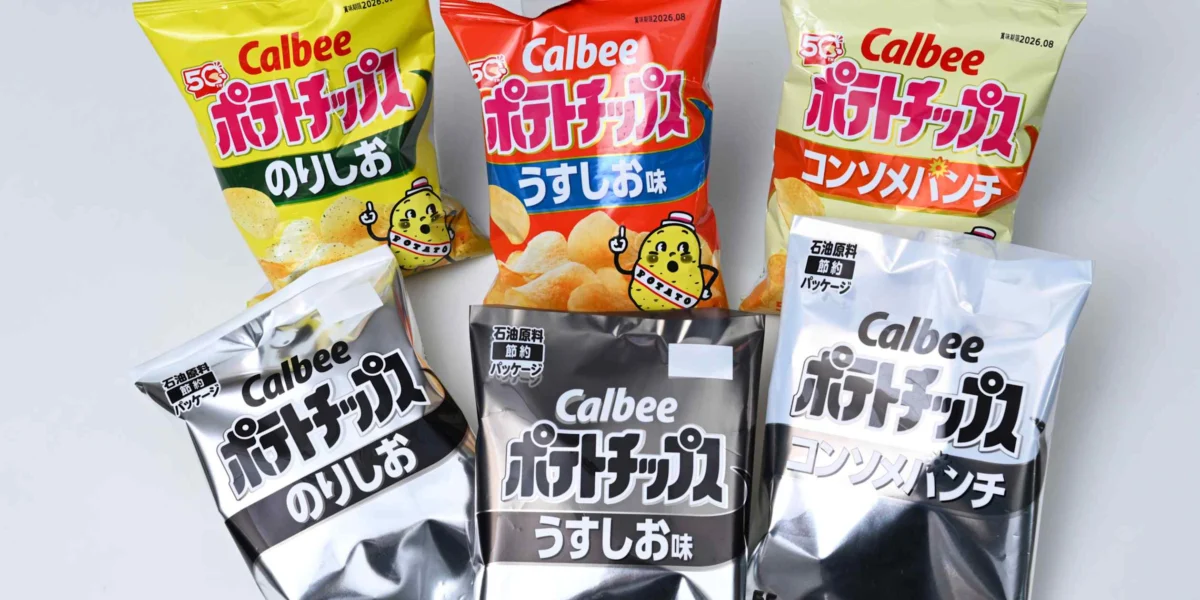
TOKYO – In a move poised to reshape the visual landscape of supermarket aisles, Japanese snack giant Calbee Inc. has announced a significant overhaul of its iconic packaging, transitioning its popular potato chip lines to a striking black-and-white design. This bold departure from the vibrant, multi-hued packaging that has long characterized its products is not merely an aesthetic change; it represents a strategic pivot towards enhanced sustainability, with a primary objective of dramatically reducing ink consumption. Industry analysts suggest this initiative by one of Japan’s most recognizable food brands could herald a broader trend across the fast-moving consumer goods (FMCG) sector, prompting competitors to re-evaluate their own environmental footprints and packaging strategies.
The decision, slated for implementation in the coming months, will see the familiar, cheerful colors that have adorned Calbee chip bags for decades replaced by a sophisticated monochrome palette. This visual transformation is a direct response to escalating global concerns about environmental impact and the increasing consumer demand for more sustainable products. For Calbee, a company deeply ingrained in Japanese consumer culture, this move signifies a commitment to aligning its brand identity with evolving societal values and regulatory pressures.

A Shift Towards Sustainability: The Rationale Behind the Monochrome Design
The core driver behind Calbee’s packaging redesign is the significant reduction in the use of printing inks. Traditional snack packaging often employs a complex array of colors to attract consumer attention, convey flavor profiles, and differentiate products on crowded shelves. However, the production and disposal of these inks carry environmental implications, from the manufacturing processes that can release volatile organic compounds (VOCs) to the challenges of recycling multi-colored plastics.
By adopting a black-and-white scheme, Calbee aims to streamline its printing operations. This simplification is expected to lead to a quantifiable decrease in ink usage, thereby reducing associated manufacturing emissions and waste. Furthermore, the move is anticipated to improve the recyclability of the packaging materials. Many recycling facilities find it easier and more efficient to process mono-toned plastics, as complex color mixtures can sometimes contaminate recycled materials or necessitate additional sorting steps.

While specific figures on the projected ink reduction have not been publicly disclosed by Calbee, industry experts estimate that a comprehensive shift to monochrome could lead to savings of 10% to 30% in ink consumption for a product line of Calbee’s scale. This reduction, when multiplied across millions of units produced annually, translates into a substantial environmental benefit. Beyond ink, the move may also simplify the printing process itself, potentially leading to energy savings in manufacturing facilities.
Background and Chronology: A Growing Environmental Consciousness
Calbee’s decision does not emerge in a vacuum. It is the latest development in a broader, intensifying global movement towards corporate environmental responsibility. For years, consumers have been growing more aware of the environmental impact of their purchasing decisions, exerting pressure on brands to adopt more sustainable practices. This pressure is amplified by governmental regulations and international accords aimed at curbing pollution and promoting circular economy principles.

In Japan, environmental consciousness has been steadily rising. The country has set ambitious targets for carbon neutrality and waste reduction. Companies are increasingly recognizing that sustainability is no longer just a matter of corporate social responsibility but a crucial element of long-term business strategy and competitive advantage.
While the exact timeline for Calbee’s decision-making process is proprietary, the trend towards simpler, more sustainable packaging has been evident in various sectors for several years. Major global brands in food, beverage, and personal care have been experimenting with reduced packaging, recycled materials, and minimalist designs. Calbee’s move, therefore, can be seen as a timely and strategic response to these evolving market dynamics.
The announcement itself, made on May 14, 2026, by Nikkei staff writers, marks a significant public declaration of intent. It is likely that the internal planning and design phases have been underway for an extended period, involving extensive research into consumer perception, material science, and operational feasibility. The visual impact of the new packaging will likely be unveiled to the public closer to the product launch date, which is anticipated to be within the next fiscal quarter.

Supporting Data and Industry Trends
The global snack food market is a multi-billion dollar industry, with packaging playing a critical role in product presentation, preservation, and consumer appeal. However, the environmental cost of this packaging has become a growing concern. According to recent market research reports, the demand for sustainable packaging solutions in the FMCG sector is projected to grow at a compound annual growth rate (CAGR) of over 5% in the coming years.
This growth is fueled by several factors:

- Consumer Preference: A significant percentage of consumers, particularly younger demographics, actively seek out brands that demonstrate a commitment to environmental sustainability. Studies indicate that consumers are willing to pay a premium for eco-friendly products.
- Regulatory Environment: Governments worldwide are implementing stricter regulations on plastic waste, single-use packaging, and carbon emissions. This includes initiatives like extended producer responsibility (EPR) schemes, which hold manufacturers accountable for the end-of-life management of their products.
- Corporate Commitments: Many multinational corporations have set ambitious sustainability goals, including reducing their carbon footprint, increasing the use of recycled content in packaging, and minimizing waste. These commitments often cascade down to their supply chains and influence their brand partnerships.
Calbee’s move aligns perfectly with these overarching trends. The company’s choice of monochrome design is a visually distinct and easily communicable signal of its commitment to sustainability. While some may initially perceive the change as a departure from the brand’s established cheerful image, it could also be interpreted as a sophisticated and mature evolution, reflecting a brand that is adapting to the modern world’s priorities.
Broader Impact and Implications for the Industry
Calbee’s bold decision to embrace monochrome packaging is likely to send ripples throughout the competitive snack food industry, both domestically in Japan and internationally.

- Competitive Pressure: Competitors of Calbee, including other major Japanese snack manufacturers and global players operating in the Japanese market, will undoubtedly be watching this development closely. The potential for Calbee to gain a competitive edge through enhanced brand perception and consumer loyalty among environmentally conscious shoppers could prompt them to explore similar packaging strategies. This could lead to a gradual shift in the visual aesthetic of snack aisles globally, moving away from an overwhelming spectrum of colors towards more muted, sophisticated, and sustainable designs.
- Supply Chain Adjustments: The widespread adoption of simpler packaging designs could necessitate adjustments in the supply chains for printing inks and packaging materials. Manufacturers of inks might need to diversify their product offerings to cater to the demand for monochrome printing, while packaging converters could see increased efficiency in their operations.
- Consumer Perception and Education: Calbee will need to effectively communicate the rationale behind its packaging change to its consumer base. While the move is environmentally driven, a significant shift in visual identity requires clear messaging to ensure consumers understand and appreciate the underlying sustainability efforts. This presents an opportunity for Calbee to educate its customers about the environmental benefits of reduced ink usage and improved recyclability, further solidifying its brand image as a responsible corporate citizen.
- Innovation in Packaging Materials: While this specific change focuses on ink reduction, it could also spur further innovation in the development of more sustainable packaging materials. As companies prioritize environmental impact, the demand for biodegradable, compostable, or easily recyclable alternatives to traditional plastics is likely to increase.
Official Responses and Future Outlook
While specific statements from Calbee’s leadership regarding this packaging transition have not yet been extensively detailed beyond the initial announcement, the strategic nature of the move suggests a well-considered plan. It is probable that the company will elaborate on its sustainability objectives and the anticipated environmental benefits in upcoming investor relations briefings and marketing campaigns.
Industry analysts anticipate that Calbee’s decision will be viewed positively by ESG (Environmental, Social, and Governance) investors, who are increasingly scrutinizing companies’ environmental performance. A demonstrable commitment to reducing waste and improving sustainability can enhance a company’s valuation and attractiveness to a broader investor base.

The long-term outlook for this initiative will depend on several factors, including consumer reception, the actual quantifiable environmental benefits achieved, and the willingness of competitors to follow suit. However, if successful, Calbee’s monochrome packaging could serve as a blueprint for other food and beverage companies looking to balance product appeal with environmental stewardship. This strategic shift underscores a critical evolution in the FMCG industry, where sustainability is no longer a peripheral concern but a core component of brand identity and future growth. The colorful world of snack packaging may be about to embrace a more sober, yet potentially more impactful, future.
