

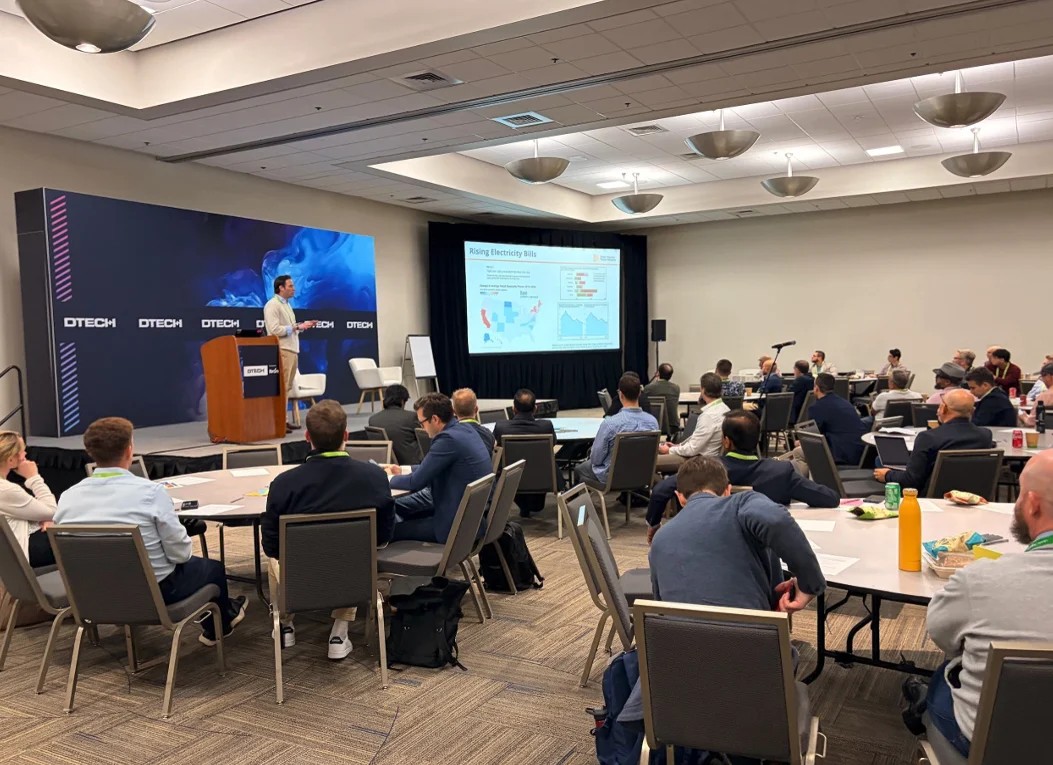
The American electric power sector is currently grappling with a fundamental paradox: the necessity for rapid expansion to meet surging demand and the simultaneous requirement to maintain affordability for a consumer base already strained by rising costs. As the Smart Electric Power Alliance (SEPA) convened its third Bridging Innovation workshop on February 2, 2026, in San Diego, the dialogue among utilities, technology providers, and policymakers signaled a definitive shift in industry strategy. The consensus emerging from the halls of the DistribuTECH (DTECH) conference suggests that the future of the grid will not be defined solely by the volume of steel in the ground, but by the operational intelligence of the assets already in place.
The Economic and Environmental Impetus for Change
The urgency of this shift is underscored by a recent study from the Lawrence Berkeley National Laboratory (LBNL), which revealed that retail electricity prices across the United States surged by approximately 23% between 2019 and 2024. This inflationary trend is largely driven by massive capital expenditures in transmission and distribution infrastructure. For decades, the utility business model relied on long-term load forecasts and incremental adjustments. However, the current era of "acceleration"—characterized by the rapid adoption of electric vehicles (EVs), the proliferation of data centers, and the electrification of home heating—has rendered traditional planning cycles obsolete.
Climate risk further complicates this landscape. As weather patterns become more volatile and wildfire risks intensify, the distribution grid is being tasked with performance levels it was never originally designed to sustain. Utilities find themselves at a crossroads where the traditional response to demand—building more substations, upgrading conductors, and reinforcing feeders—is becoming prohibitively expensive and time-consuming. The SEPA workshop focused on a critical alternative: building operational capability to maximize grid utilization, thereby deferring or even eliminating the need for some capital-intensive expansions.

Chronology of Innovation: From the Home to the High-Voltage Line
The Bridging Innovation workshop followed a logical progression, starting at the "edge" of the grid—the residential consumer—and moving toward system-wide resource management. The day began with a practical exploration of how residential electrification is straining local infrastructure. James Frasher of the Sacramento Municipal Utility District (SMUD) and Alex Pratt of SPAN presented a compelling case study on the "sequence" of investment.
As homeowners transition to all-electric appliances and install EV chargers, the traditional service panel often becomes a bottleneck. In many jurisdictions, upgrading a home’s electrical service to accommodate these loads can cost upwards of $15,000. When multiple homes on a single circuit upgrade simultaneously, it triggers a "transformer cascade," requiring the utility to replace upstream infrastructure.
Instead of defaulting to these costly upgrades, SMUD has begun deploying smart panels capable of dynamically managing household loads within existing limits. By prioritizing certain circuits—such as temporarily pausing an EV charger while a water heater is running—these technologies allow for full electrification without immediate infrastructure intervention. This "start at the home" approach demonstrates how smarter utilization of existing capacity can provide a buffer for the utility, allowing for more strategic, long-term planning rather than reactive, emergency upgrades.
Industrial Scale and AI-Driven Flexibility
The mid-day sessions shifted focus to the macro-level challenges of load growth, particularly the massive demand generated by new data center interconnections. A breakout discussion highlighted a partnership between Portland General Electric (PGE) and GridCARE in Oregon. This collaboration utilized an AI-enabled platform to identify and coordinate flexible resources, including onsite battery storage and demand management systems.

The results of this initiative provided a data-driven rebuttal to the "build-first" mentality. By coordinating these flexible resources, PGE was able to free up more than 80 MW of capacity for 2026, with the potential to unlock hundreds of additional megawatts by 2029. The significance of this achievement lies in the timeline; traditional grid upgrades of this magnitude typically require years of permitting and construction. The PGE example suggests that "buying time" through flexibility is a viable economic strategy that puts downward pressure on rates by delaying capital outlays.
The Evolution of Virtual Power Plants (VPPs)
One of the most significant themes of the 2026 workshop was the maturation of Virtual Power Plants (VPPs) from experimental pilots to reliable system resources. Paul Hines of EnergyHub and Kerri Carnes of Arizona Public Service (APS) detailed the scale at which VPPs are now operating. APS currently manages an aggregated capacity of over 200 MW, derived from a network of more than 100,000 customer-owned devices, including smart thermostats, residential batteries, and EVs.
A pivotal moment for the APS program occurred during a recent extreme weather event, when the utility dispatched 2,600 thermostats in real-time to maintain grid reliability. This action provided a service comparable to a traditional peaker plant but with significantly lower capital risk and environmental impact.
However, the workshop participants were quick to note that reaching "megawatt scale" is only half the battle. The next phase of VPP evolution involves building "operational trust." This requires:

- Enhanced Telemetry: Real-time visibility into the performance of distributed assets.
- Dispatch Alignment: Clear rules that allow grid operators to treat distributed resources with the same confidence as a gas-fired turbine.
- Regulatory Support: Frameworks that reward utilities for utilization and performance rather than just capital investment.
According to research from SEPA and the North Carolina Clean Energy Technology Center (NCCETC), 35 states and the District of Columbia have already begun advancing policies related to VPPs and distributed energy resource (DER) aggregation as of early 2025. This regulatory momentum is essential for moving VPPs from "interesting programs" to "reliable system resources."
Integrated Risk Management and Wildfire Mitigation
As the workshop progressed, the focus turned to the intersection of technology and safety, specifically regarding wildfire mitigation. SEPA’s research indicates that technology only delivers maximum value when it is integrated into enterprise-wide operations rather than treated as a standalone tool.
Xcel Energy’s partnership with Schneider Electric was cited as a benchmark for this integrated approach. By creating "digital twins" of grid assets and combining them with vegetation intelligence and weather analytics, Xcel has moved from reactive outage response to proactive risk management. This allows the utility to adjust protection settings in real-time as fire weather conditions escalate. The ability to make "defensible decisions" based on real-time data is becoming a requirement for utilities operating in high-risk environments, and it represents a shift in discipline from asset management to enterprise-level risk mitigation.
Global Lessons and Imperfect Visibility
The final sessions of the workshop provided an international perspective, examining how European distribution system operators (DSOs) handle high levels of DER penetration. In countries like Denmark and the Netherlands, operators are successfully managing the grid despite having "imperfect visibility" at the edge.

Companies like Sensewaves are bridging this gap by using basic meter data and AI to infer grid conditions where advanced sensors may be lacking. This "operating with what you have" philosophy resonated with U.S. utility attendees, many of whom are struggling to balance the need for more data with the cost of deploying new sensors across vast service territories.
Analysis of Institutional Barriers and the Path Forward
The overarching conclusion of the SEPA Bridging Innovation workshop was that the primary barrier to a modern, resilient grid is no longer technological. The tools—ranging from smart panels to AI-driven forecasting—are available and proven. The remaining hurdles are institutional and cultural.
For a century, the utility industry has been incentivized to build. Shifting to a model that rewards "operating smarter" requires a total realignment of utility planning, operations, and regulatory governance. It requires earning customer trust, as consumers must feel "protected, not controlled" when they allow utilities to manage their thermostats or EV chargers.
The differentiator for successful utilities in the late 2020s will be operational capability. This includes the ability to integrate disparate data sets into a single operational view, the agility to align DER programs with daily grid planning, and the transparency to build confidence with regulators.

SEPA has announced that the Bridging Innovation series will continue at RE+ in Las Vegas on November 18, 2026. Furthermore, an executive fact-finding mission to Norway is scheduled for 2026 to study international best practices in clean energy transition. These initiatives reflect a growing recognition that the U.S. power sector must look beyond its borders and its traditional comfort zones to solve the challenges of the modern era.
In an environment defined by accelerating load growth and climate volatility, the most prudent investment is often the one that maximizes the efficiency of existing infrastructure. The transition from a "build-more" to a "utilize-better" strategy is not merely a technical adjustment; it is the defining evolution of the 21st-century electric grid. As utilities move forward, their success will be measured not by the size of their rate base, but by their ability to provide affordable, resilient power through the intelligent orchestration of a distributed and dynamic energy ecosystem.
