

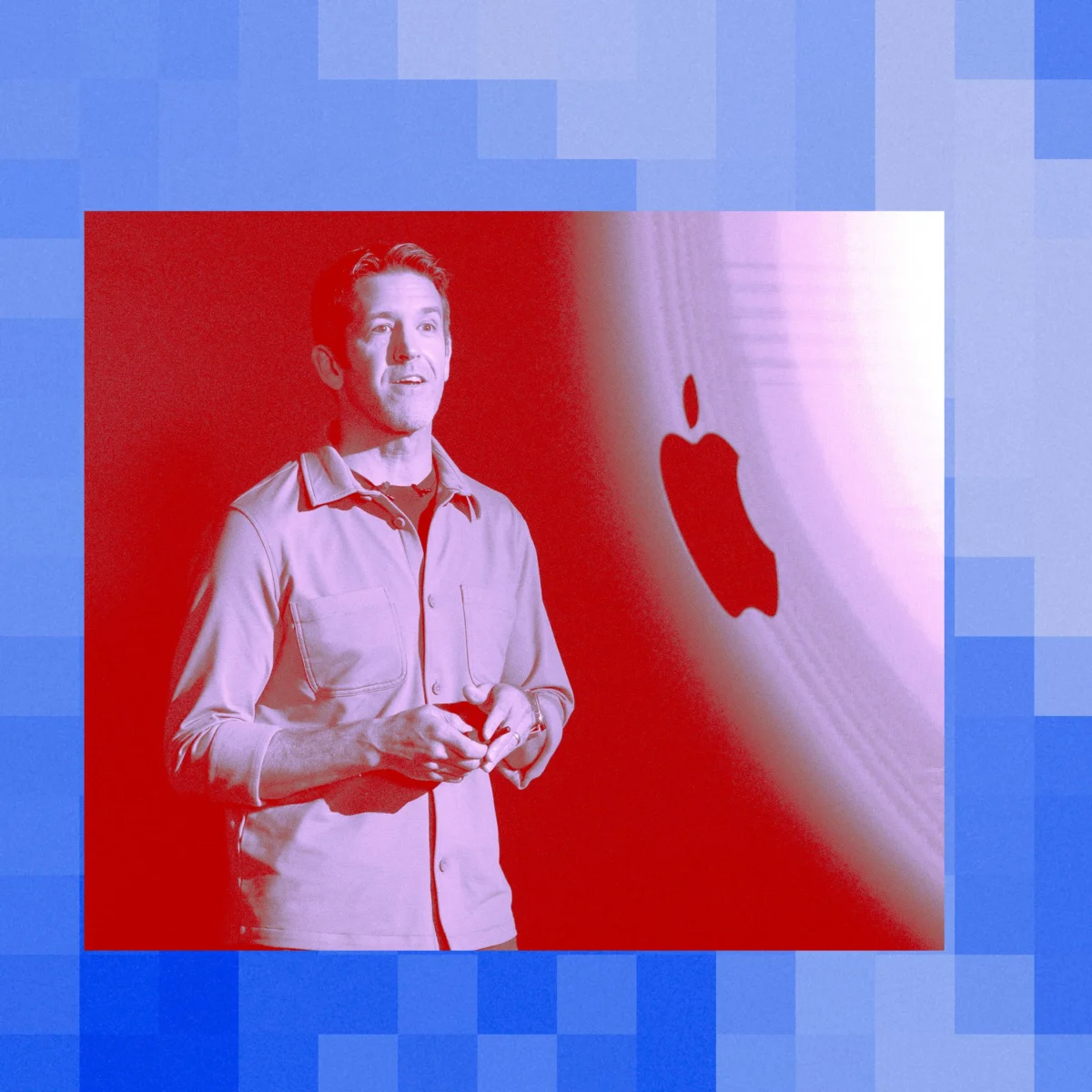
In the coming one to two years, the tech world will likely witness a pivotal moment for Apple. Under the leadership of its incoming CEO, John Ternus, the company is expected to unveil a product that aims to democratize the immense power of artificial intelligence, placing it directly into the hands of everyday consumers. While this initiative may not represent a groundbreaking leap in AI research, nor immediately empower users to automate complex tasks beyond current capabilities, its significance lies in Apple’s potential to do what it has historically done best: transform a nascent, often intimidating technology into an intuitive, indispensable part of daily life. This is not merely an ambitious endeavor; it is a strategic imperative for Apple, as the company seeks to maintain its market dominance in an era increasingly defined by intelligent systems.
The transition in leadership from Tim Cook to John Ternus, announced this past week, places a unique burden and opportunity on the current SVP of hardware engineering. Cook, who will transition to the role of executive chairman of the board in September, has been lauded for his steady stewardship of Apple following the visionary era of Steve Jobs. However, the critical challenge of making AI accessible and seamlessly integrated into the Apple ecosystem remains a significant, "unchecked" box. Apple’s previous foray into AI, "Apple Intelligence," launched with considerable fanfare in 2024, has been widely perceived as underwhelming and incomplete, failing to capture the public’s imagination or address the growing user apprehension surrounding advanced AI technologies like Claude Code and OpenClaw. These platforms, while powerful, remain too complex or perceived as too risky for mainstream adoption, creating a vacuum that Apple is now poised to fill.
John Ternus, a figure who has largely operated outside the public spotlight for much of his career, has recently stepped into a more visible role as he emerged as the frontrunner to succeed Cook. While he is often characterized as a methodical operator, akin to Cook, rather than a flamboyant visionary like Jobs, this perception may be largely due to his reserved demeanor. The hope among industry observers is that the mantle of CEO will empower Ternus to embrace a bolder, more forward-thinking approach, much like the transformative product launches that have defined Apple’s history.
Early interactions with Ternus suggest a deep engagement with the technical intricacies of product development. A decade ago, during a visit to Apple’s Input Design Lab, Ternus demonstrated a profound understanding of material science and display technology, delving into subjects like quantum dots, the environmental impact of cadmium, and the nuanced differences in white light. His introduction, stating he had "had the good fortune of working on many of our products throughout the years," underscored his long-standing commitment to Apple’s product lifecycle. This period also revealed a personable and collaborative leadership style, marked by good-natured banter with his team.
More recently, discussions with Ternus and Greg Joswiak, Apple’s global marketing head, offered insights into the company’s strategic thinking regarding the AI revolution. Ternus acknowledged AI as an "immense kind of inflection point," but framed it within Apple’s historical trajectory of innovation. He articulated Apple’s product philosophy: "We never think about shipping a technology. We want to ship amazing products, features, and experiences, and we don’t want our customers to think about what [underlying] technology makes it possible. That’s the way we think about AI." This approach suggests that Apple’s forthcoming AI product will prioritize user experience and seamless integration over the technical underpinnings, aiming to make AI feel as natural and unobtrusive as the iPhone itself.
The significance of this strategic pivot cannot be overstated. The smartphone landscape, as exemplified by the iPhone’s transformative debut in 2007, redefined personal computing and communication. Today, the very ecosystem of the iPhone is under potential disruption from advanced AI agents. The ubiquitous "There’s an app for that" paradigm may soon be superseded by a more intuitive, agent-driven interaction model. Imagine simply telling your personal AI agent to arrange transportation home, or having it proactively anticipate your needs and dispatch a car without explicit instruction. This shift necessitates a fundamental rethinking of how users interact with their devices and the services they access.
Apple’s response to this impending transformation has been a subject of intense speculation. When pressed about the development of an AI-centric device, potentially mirroring efforts by former Apple design chief Jony Ive in collaboration with OpenAI, Ternus and Joswiak remained characteristically tight-lipped. However, Joswiak asserted that the iPhone, which already incorporates various AI models, "is not going anywhere" and could remain relevant for another half-century. This statement, while perhaps intended to reassure stakeholders, also hints at an evolutionary approach to the iPhone’s role in the AI era, rather than an outright replacement.
The Strategic Significance of Silicon and Leadership
A closer examination of Apple’s recent executive reshuffling provides a crucial clue to its AI strategy. The appointment of Johny Srouji, the architect of Apple’s groundbreaking custom silicon, to fill Ternus’s former role as SVP of hardware engineering, is particularly noteworthy. Srouji’s leadership has been instrumental in Apple’s shift from design-centric hardware to a strategy centered on bespoke chips. This focus on custom silicon has been the bedrock of Apple’s innovation over the past decade, enabling the creation of more powerful and energy-efficient products. Srouji commands a level of respect within Apple that rivals that of Jony Ive, underscoring the strategic importance of hardware and its underlying technology.
Ternus himself has previously emphasized the efficacy of having custom chips at the core of the design process. Apple’s current product line already features custom AI processors, known as neural engines. It is highly probable that Apple’s significant move into AI will involve the development of even more potent neural engines, capable of delivering on-device AI processing power comparable to that of industry leaders like Nvidia. Reports suggest Apple has already entered into an agreement with Broadcom for AI chips slated for delivery within the next year, which are expected to be integrated into Macs, iPhones, and potentially entirely new devices designed to support personal agents while safeguarding user privacy.
This strategic direction sets the stage for another significant technological confrontation in Silicon Valley. While Apple does not directly compete with Nvidia in the consumer GPU market, its pursuit of AI chip dominance positions Ternus as a potential rival to Nvidia CEO Jensen Huang for industry leadership and recognition in AI primacy. The relationship between Apple and Nvidia has historically been complex and, at times, strained, reportedly dating back to Steve Jobs’s belief that Nvidia had appropriated Pixar technology for its GPU designs.
The Defining Product of the AI Age
The ultimate test for John Ternus will be to shepherd a product that can redefine the AI landscape, much as the Macintosh did for desktop computing, the iPhone did for mobile technology, and the AirTag did for lost item tracking. Apple may be well advanced in its development of such a product, but it will fall to Ternus to refine it to Apple’s exacting standards and authorize its public release. His extensive tenure at Apple, spanning over two decades, has imbued him with a profound understanding of what constitutes an "Apple quality" product.
"There’s this thing that happens," Ternus remarked recently, attempting to articulate the intangible essence of Apple’s design philosophy. "I’ve never been able to quite put my finger on it, but at some point you just get this intuitive sense of what meets the Apple quality bar. You can look at something and you say, yep, that’s good enough for us, that’s something that we’d be proud of. I could never describe it. It’s this incredible, organic kind of transfer of Apple’s values." This deep-seated understanding of the company’s ethos will be crucial as Ternus navigates the complexities of integrating AI into Apple’s product portfolio.
While Tim Cook’s tenure as CEO was marked by exceptional financial success and brand expansion, the challenge of establishing Apple’s definitive presence in the AI era remains. The responsibility now falls squarely on John Ternus’s shoulders. With the rapid advancements in AI and the growing user demand for intuitive intelligent systems, the clock is undoubtedly ticking. Apple’s ability to translate its renowned design prowess and hardware engineering expertise into a truly revolutionary AI product will determine its leadership in the next major technological paradigm shift. The industry will be watching closely to see if Ternus can replicate the transformative impact of his predecessors and define the AI experience for the masses.
This article is an expanded edition of Steven Levy’s Backchannel newsletter. Previous editions can be found at wired.com/tag/backchannel-nl.
