

Xi Jinping’s Strategic Showcase in Shenzhen
The APEC forum commenced with a CEO Summit, bringing together business leaders to discuss the future of regional economic integration and innovation. This was followed by the crucial Economic Leaders’ Meeting, where heads of state engaged in high-stakes discussions. For President Xi, Shenzhen, a city that has transformed from a fishing village into a global technology powerhouse, provides a powerful backdrop to showcase China’s economic model and its vision for a multipolar world. The presence of leaders from major global economies, particularly Trump and Putin, offers Xi a platform to project China’s influence and assert its position on the international stage, countering narratives of isolation or economic slowdown.
The summit’s agenda is heavily weighted by the ongoing war in Ukraine and persistent tensions in the Middle East, particularly concerning Iran. Against this backdrop, a highly anticipated trilateral summit involving Xi, Trump, and Putin has drawn significant attention, with some analysts drawing parallels to the pivotal Yalta Conference of 1945, which reshaped the post-World War II global order. This comparison underscores the perceived significance of the Shenzhen meeting in potentially defining the contours of future international relations.
Adding another layer of intrigue, President Trump indicated prior to his departure for Asia a potential meeting with North Korean leader Kim Jong Un in China. This surprise announcement, if realized, could become another focal point of his visit, potentially reopening channels of communication between Washington and Pyongyang, albeit on Chinese soil.
A Day of High-Stakes Diplomacy: November 19th
The final day of the APEC summit in Shenzhen was marked by intense diplomatic engagements, with a series of bilateral and multilateral meetings shaping the immediate geopolitical landscape.
The Xi-Trump Bilateral: Navigating Superpower Tensions
The bilateral meeting between Chinese President Xi Jinping and U.S. President Donald Trump, the third such encounter this year, aimed to manage the complex and often fraught relationship between the two global powers. According to the Chinese government’s readout, President Xi described the China-U.S. relationship as "stable and trending positively," expressing a desire to continue steering bilateral ties on the "right trajectory." He emphasized the necessity of continuous communication and the expansion of areas for cooperation while concurrently narrowing down areas of contention.
A significant point of discussion, as reported by Xinhua, was Taiwan. Xi urged the U.S. to "do the right thing to avoid major setbacks" in the bilateral relationship, reiterating Beijing’s long-standing position on the island’s sovereignty. The two leaders also touched upon the burgeoning field of Artificial Intelligence (AI), with Xi asserting that AI should remain under human control and calling for enhanced communication and coordination to address AI security risks. The U.S. and China reportedly agreed to develop an "action plan" for the relationship, focusing on "constructive strategic stability." Notably absent from the Chinese readout were any specific details regarding an extension of the trade truce, which is scheduled to expire in January 2027, leaving a degree of uncertainty over the future of trade relations.
Earlier in the day, at the commencement of his bilateral meeting with Xi, President Trump characterized the U.S.-China Board of Trade as having brought "balance" to the relationship, asserting that tariffs had been applied in a "fair way." He also highlighted a shared concern with Xi regarding the free flow of oil through the Strait of Hormuz, a critical maritime chokepoint currently experiencing disruptions due to regional tensions. Trump also indicated his intention to press China to increase its support for American farmers, a key constituency for the Republican party.
The Xi-Putin-Trump Trilateral: A New Global Order in the Making?
The much-anticipated trilateral summit involving Xi Jinping, Donald Trump, and Vladimir Putin finally convened, albeit with a slight delay. The Kremlin, through Russia’s Tass news agency, reported that the issue of Ukraine was a primary topic of discussion during the bilateral meeting between Trump and Putin that preceded the trilateral session. This aligns with Trump’s stated intention to discuss ending the Ukraine war with both Xi and Putin. The prospect of these three leaders dictating terms on global security issues has inevitably drawn historical comparisons to the Yalta Conference, raising questions about the potential redrawing of global power dynamics.
Other Key Engagements and Developments on November 19th:
- Agricultural Cooperation: China’s Ministry of Commerce announced plans for an agricultural working group meeting with the U.S. in the "near future," a development that could address some of Trump’s earlier stated concerns about American farmers.
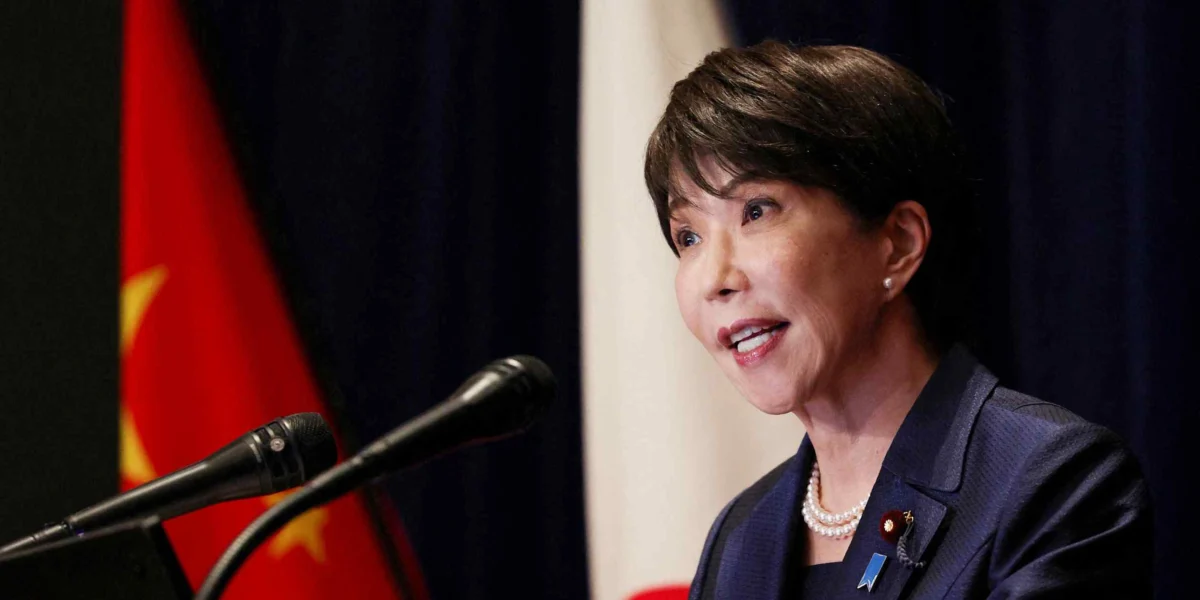
- Japanese Prime Minister Takaichi’s Diplomacy: Japanese Prime Minister Sanae Takaichi engaged in diplomatic outreach, meeting with Chinese President Xi Jinping for the first time since a period of frosty relations following her comments on Taiwan. Takaichi affirmed Japan’s consistent stance on Taiwan and expressed confidence that Japanese interests would be safeguarded amidst the U.S.-China bilateral meeting. She also indicated her country’s commitment to communicating with China on shared challenges.
- Taiwan’s Defense Posture: Taiwan’s defense ministry reported that two Russian military Tu-95 aircraft flew to the island’s east, approaching from the south before exiting to the northeast, a move that heightened regional security awareness.
- Economic Discussions: During the APEC Plenary Session, President Trump spoke about the U.S. economy, asserting his administration’s success in taming inflation and anticipating forthcoming trade deals. He emphasized the U.S. role as a historical Pacific power committed to promoting regional growth, stability, sovereignty, prosperity, and peace. Trump also voiced his opinion on AI regulation, advocating for measures that would not "stifle" the industry.
- Russian Energy Security: President Putin addressed his APEC counterparts, highlighting Russia’s contribution to regional energy security and inviting partners to utilize Russian logistics infrastructure.
- Xi’s Vision for the Asia-Pacific: In his opening address to the leaders’ summit, President Xi called for enhanced cooperation on AI and supply chains, proposing "four key pillars" for development: economy and trade, connectivity, innovation, and development. China pledged $20 million to support cooperation in digital technology and clean energy.
- CEO Summit Insights: Elon Musk, CEO of Tesla and SpaceX, expressed his admiration for China, stating his "super fan" status and confirming Tesla’s commitment to increasing production in the country. BYD Chairman and President Wang Chuanfu highlighted the job creation and local economic contributions of BYD’s international plants, particularly in Thailand and Indonesia, as the company navigates global trade tensions.
A Timeline of Key Events and Developments
The APEC summit in Shenzhen unfolded over several days, marked by a series of crucial meetings and announcements.
Wednesday, November 18th: Preparations and Initial Engagements
The second day of the APEC proceedings began with leaders gathering for the customary "family photo" before commencing the plenary session. President Xi, in his opening remarks, urged attendees to pursue "concrete results" that promote economic openness and innovation. The afternoon’s focus shifted towards the high-profile U.S.-China bilateral meeting and the anticipated trilateral summit involving Xi, Trump, and Putin, with reports also surfacing about a potential one-on-one meeting between Trump and Putin.
- 9:30 a.m.: U.S. stocks experienced a significant decline, mirroring a broader market nervousness amplified by new U.S. restrictions on China’s access to advanced AI chips and concerns over Nvidia’s earnings. Shenzhen’s tech-heavy ChiNext Index also hit a near 16-month low.
- 9:00 a.m.: Foreign leaders, including Canadian Prime Minister Mark Carney, Mexican President Claudia Sheinbaum, and Papua New Guinea Prime Minister James Marape, arrived in Shenzhen, with bilateral meetings with President Xi anticipated.
- 10:10 a.m.: President Xi addressed the APEC CEO Summit, positioning China as a defender of free and open trade and advocating for dialogue to resolve differences. He highlighted the contemporary dilemmas faced by economies regarding openness versus isolation and cooperation versus division.
- 11:10 a.m.: Stan Shih, Taiwan’s representative and founder of Acer, expressed his commitment to active engagement within the summit, emphasizing Taiwan’s role as a reliable partner in the global technology and AI sectors.
- 11:15 a.m.: Russian President Vladimir Putin delivered remarks criticizing "former dominant powers" for attempting to suppress the development of other nations, advocating for a more "fair, democratic and equal world order," and expressing optimism about the upcoming trilateral meeting.
- 11:30 a.m.: Malaysian Prime Minister Anwar Ibrahim, while praising China, offered subtle criticism of protectionist trade practices, emphasizing the importance of free and open business activity.
- 12:00 p.m.: South Korean President Lee Jae Myung met with Xi, discussing cooperation on the Korean Peninsula and stable industrial supply chains. Speculation about a potential meeting between Trump and Kim Jong Un intensified.
- 12:30 p.m.: Canadian Prime Minister Mark Carney met with Xi, signaling a recalibration of Canada-China relations and an agreement to extend and expand a preliminary trade agreement.
- 2:00 p.m.: Papua New Guinea Prime Minister James Marape assured Xi that Taiwan no longer operates in his country, a move aimed at assisting China’s reunification efforts.
- 3:30 p.m.: BYD Chairman and President Wang Chuanfu discussed the company’s commitment to local job creation and mutually beneficial cooperation through its international manufacturing plants.
- 4:30 p.m.: Speculation regarding a potential meeting between Kim Jong Un and Trump, and possibly Putin, gained traction.
- 5:30 p.m.: President Xi held separate meetings with leaders from Mexico, Peru, and Chile, discussing various aspects of bilateral cooperation.
- 6:00 p.m.: South Korean President Lee Jae Myung met with Xi, discussing peace and stability on the Korean Peninsula and the importance of multilateralism and free trade.
- 7:00 p.m.: APEC leaders attended a banquet hosted by President Xi and his wife, Peng Liyuan.
- 9:00 p.m.: Footage from the banquet showed interactions between Trump, Putin, and Xi, as well as Xi and Japanese Prime Minister Takaichi, signaling diplomatic breakthroughs amidst strained relations.
- 9:20 p.m.: In his welcome speech, Xi urged APEC leaders to work towards "concrete results" in their discussions on economic openness and innovation.
Thursday, November 19th: The Climax of Diplomatic Engagements
The final day saw the culmination of high-level meetings, with the trilateral summit taking center stage.
- 12:10 a.m.: Japanese Prime Minister Sanae Takaichi held a meeting with Russian President Vladimir Putin, their first face-to-face encounter since Russia’s invasion of Ukraine. Takaichi pressed for the release of a detained Japanese journalist and reversal of measures affecting Japan Tobacco’s Russian subsidiaries.
- 8:00 a.m.: Anticipation built for the day’s events, with Trump’s schedule including the APEC Leaders’ Plenary Session, a bilateral with Xi, and the trilateral with Xi and Putin.
- 9:30 a.m.: APEC leaders began gathering for the main event, with a photo opportunity preceding the plenary session.
- 9:40 a.m.: In an interview, Trump mentioned discussing artificial intelligence with Xi, with former Nvidia chief Jensen Huang’s name coming up "briefly."
- 10:30 a.m.: Putin highlighted Russia’s commitment to regional energy security and invited partners to utilize Russian logistics infrastructure.
- 10:39 a.m.: Trump discussed the U.S. economy, inflation, and forthcoming trade deals, emphasizing the U.S. role as a Pacific power. He also commented on AI regulation, opposing measures that would stifle the industry.
- 10:58 a.m.: Putin reiterated Russia’s contribution to regional energy security.
- 12:06 p.m.: The APEC plenary session concluded.
- 12:35 p.m.: Elon Musk praised China’s progress and confirmed Tesla’s continued investment and production growth in the country.
- 1:30 p.m.: President Trump arrived at the venue for his bilateral and trilateral meetings.
- 1:40 p.m.: Trump and Xi posed for photographs.
- 1:58 p.m.: Trump spoke at the start of his bilateral meeting with Xi, discussing trade balance, tariffs, and the flow of oil through the Strait of Hormuz.
- 2:06 p.m.: Xi described China-U.S. relations as stable and improving and expressed his commitment to working with Trump.
- 2:10 p.m.: The Kremlin stated that Ukraine was the main topic at the Trump-Putin bilateral meeting.
- 2:49 p.m.: Taiwan’s defense ministry reported the presence of Russian military aircraft near its airspace.
- 2:57 p.m.: The Trump-Xi bilateral summit concluded.
- 3:03 p.m.: Japanese Prime Minister Takaichi addressed reporters, confirming her country’s stance on Taiwan and her confidence in protecting Japanese interests.
- 3:42 p.m.: China’s Ministry of Commerce announced plans for an agricultural working group meeting with the U.S.
- 4:16 p.m.: The Xi-Putin-Trump trilateral summit commenced.
- 4:21 p.m.: The Chinese government’s readout of the Xi-Trump bilateral meeting detailed discussions on bilateral stability, Taiwan, and AI security.
Broader Implications and Analysis
The APEC summit in Shenzhen, set against a backdrop of escalating global uncertainties, served as a critical juncture for major powers to engage in dialogue and, potentially, de-escalate tensions.
U.S.-China Dynamics: The repeated bilateral meetings between Xi and Trump underscore a strategic imperative for both leaders to maintain a degree of stability in their relationship, despite deep-seated economic and geopolitical rivalries. While rhetoric often highlights competition, the ongoing engagement suggests a mutual recognition of the need to manage potential conflicts and preserve crucial economic ties. However, underlying issues such as trade imbalances, technological competition, and the status of Taiwan remain significant points of contention, with any "action plan" for "constructive strategic stability" likely to be tested by future events.
The Russia Factor: The trilateral summit with Putin is particularly significant given the ongoing war in Ukraine and Russia’s increasing isolation from Western economies. For China, engaging with Russia on this level signals a continued alignment of interests, challenging the existing global order. For Trump, the inclusion of Putin in discussions, especially concerning Ukraine, aligns with his stated desire for rapid conflict resolution and could be perceived as a move towards a more transactional foreign policy. The comparison to Yalta highlights the potential for a shift in global power dynamics, where outcomes are decided by a select few leaders.
Technological Competition and AI Governance: The summit’s location in Shenzhen, a beacon of technological innovation, naturally brought the issue of AI to the forefront. Discussions on AI governance and security risks reflect a growing global awareness of the transformative, and potentially disruptive, power of this technology. The U.S. and China, as leading AI developers, are at the center of this discussion, with their approaches likely to shape international norms and regulations. The U.S. administration’s recent moves to restrict China’s access to advanced AI chips add another layer of complexity to these discussions, indicating a broader strategic competition in the technological realm.
Regional Stability and Economic Integration: Beyond the superpower dynamics, APEC remains a crucial forum for fostering regional economic integration. Discussions on supply chains, digital technology, and clean energy reflect the ongoing efforts to strengthen economic ties within the Asia-Pacific. However, the summit also highlighted the challenges posed by protectionist tendencies and geopolitical frictions, which can impede genuine cooperation. The emphasis on free trade by some leaders, contrasted with unilateral trade actions by others, underscores the ongoing debate about the future of global trade liberalization.
The APEC summit in Shenzhen has undoubtedly been a pivotal event, offering a glimpse into the evolving geopolitical landscape. The outcomes of the high-level meetings, particularly the trilateral summit, will be closely scrutinized for their long-term implications on global security, economic stability, and the future of international relations.
