

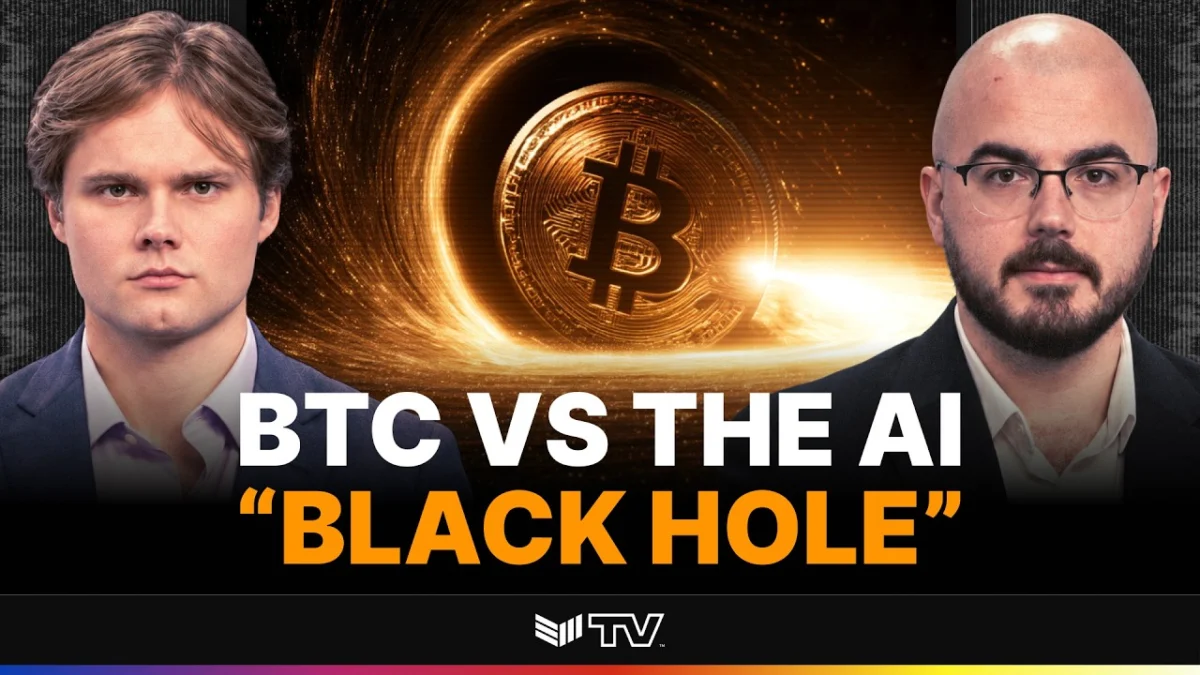
AnchorWatch CEO Rob Hamilton has reiterated his optimistic long-term outlook for Bitcoin, despite acknowledging a current market dynamic where liquidity is being significantly drawn towards the burgeoning artificial intelligence (AI) sector, particularly with the anticipated Anthropic IPO. Hamilton likens this AI-driven demand for capital to a "black hole," suggesting it temporarily overshadows other asset classes. However, he views this phenomenon as a sign of Bitcoin’s ongoing maturation, asserting that its fundamental value proposition remains intact. Addressing concerns about quantum computing’s potential threat to cryptography, Hamilton expressed confidence, citing a strong sense of urgency and innovation among cryptographers he encountered at a recent event in Amsterdam, who are actively working to mitigate such risks.
The Shifting Sands of Capital Allocation
The cryptocurrency market, and indeed the broader financial landscape, is experiencing a pronounced shift in investor focus. The allure of artificial intelligence, driven by groundbreaking advancements and the prospect of substantial returns, has created a powerful gravitational pull on capital. Companies like Anthropic, a leading AI safety and research firm, are at the forefront of this trend, with their impending Initial Public Offering (IPO) being a focal point for investors eager to gain exposure to the AI revolution.
This concentration of investment in the AI sector has, predictably, impacted the flow of capital into other markets, including digital assets like Bitcoin. Rob Hamilton, CEO of AnchorWatch, a firm that monitors and analyzes digital asset markets, observed this trend firsthand. "We’re seeing liquidity get pulled toward the Anthropic IPO and the AI trade," Hamilton stated, articulating a sentiment shared by many market observers. He employed the vivid metaphor of a "black hole" to describe the immense draw of capital into the AI space, suggesting a temporary, albeit powerful, redirection of investment energy.
Bitcoin’s Maturation Amidst Market Volatility
Despite this short-term liquidity drain, Hamilton remains steadfastly bullish on Bitcoin’s long-term prospects. He interprets the current market dynamics not as a sign of weakness in Bitcoin, but rather as an indicator of its evolving maturity. As newer, high-growth sectors emerge and capture market attention, established assets like Bitcoin often experience periods of relative consolidation or redirection of capital. This, in Hamilton’s view, is a natural part of the market cycle for any significant asset class.
The core value proposition of Bitcoin, often cited as its decentralized nature, finite supply, and potential as a store of value and medium of exchange, continues to underpin Hamilton’s conviction. He believes that these fundamental strengths remain unaffected by the current AI-driven investment fervor. The ongoing development and adoption of Bitcoin, coupled with its increasing recognition as a digital gold, contribute to this long-term optimism.
The Quantum Computing Conundrum and Cryptographic Resilience
A significant concern for the future of digital assets, including Bitcoin, is the potential impact of quantum computing. These advanced computing systems, once fully realized, could possess the power to break the cryptographic algorithms that currently secure blockchain networks. Hamilton acknowledged this as a tangible risk, estimating its potential emergence within the next five to six years.
However, his recent experiences at an event in Amsterdam provided a source of reassurance. He reported that cryptographers are actively and rapidly developing solutions to counter the threat posed by quantum computing. "I came away from Amsterdam believing cryptographers are sprinting to meet the challenge," Hamilton remarked, suggesting a proactive and determined response from the scientific community. This race to develop quantum-resistant cryptography is crucial for the long-term security and viability of Bitcoin and other blockchain-based technologies. The development of new cryptographic primitives and algorithms designed to withstand quantum attacks is a critical area of research and development within the broader cybersecurity and cryptography fields.
Bitcoin Amsterdam: A Snapshot of the Ecosystem
The event in Amsterdam, mentioned by Hamilton, likely served as a significant gathering for individuals and entities within the Bitcoin ecosystem. Such conferences often provide insights into the latest technological developments, community sentiment, and future directions of the industry. The "High Energy at Bitcoin Amsterdam" chapter in the provided context suggests a vibrant and engaged community, underscoring the persistent interest and belief in Bitcoin’s potential, even amidst broader market fluctuations.
Discussions at such events often delve into critical aspects of Bitcoin’s development and security. The mention of "Bitcoin Core Speeds Up Its Security Policy" indicates a focus on the ongoing efforts to enhance the robustness and security of the Bitcoin protocol itself. Similarly, topics like "Cryptography FUD and a Double-Edged Sword" and "Proving Bitcoin’s Rules With Bitcoin Lean" highlight the community’s engagement with both the challenges and innovative solutions related to Bitcoin’s underlying technology. The "Binance Hack and Who Can Touch the Keys" chapter points to ongoing discussions around security breaches and the importance of decentralized control over digital assets.
Analyzing the "Compute Vacuum"
Hamilton’s comparison of the AI trade to a "black hole" can be further elaborated by considering the concept of a "compute vacuum." The development and deployment of advanced AI models, particularly those requiring deep learning and massive datasets, necessitate enormous computational power. Companies at the forefront of AI research and development, such as NVIDIA, which produces the Graphics Processing Units (GPUs) essential for AI training, have seen their market valuations soar.
The intense demand for specialized hardware and the significant investment in AI research and development create a scenario where capital and talent are heavily concentrated in this sector. This "compute vacuum" draws resources away from other areas, leading to the observed liquidity shift. The chapter "NVIDIA, Scrutiny, and a Compute Vacuum" directly addresses this phenomenon, suggesting that the immense demand for computing power in the AI space is a defining characteristic of the current market environment. This intense demand also brings scrutiny, as the environmental impact and ethical considerations of large-scale AI development come under increasing examination.
Market Instability and Bitcoin’s Resilience
Hamilton’s projection that "AI Makes the Next 18 to 24 Months Unstable" is a significant statement. This instability can stem from several factors:
- Valuation Bubbles: The rapid ascent of AI-related stocks and investments could lead to overvaluation, making them susceptible to sharp corrections.
- Regulatory Uncertainty: Governments worldwide are grappling with how to regulate AI, and potential future regulations could significantly impact the industry.
- Technological Hurdles: While progress is rapid, fundamental breakthroughs or unforeseen challenges in AI development could slow down progress and dampen investor enthusiasm.
- Shifting Investor Sentiment: As with any high-growth sector, investor sentiment can be fickle. A perceived slowdown or a major setback in AI could trigger a swift reallocation of capital.
In contrast, Bitcoin’s established network, decentralized governance, and finite supply offer a degree of resilience against such sector-specific instabilities. While Bitcoin is not immune to broader market downturns, its intrinsic characteristics position it differently from highly speculative, rapidly evolving technological sectors. The chapter "More Chop Ahead, but Bullish in the Long Run" directly reflects this sentiment – acknowledging short-term volatility while maintaining a strong conviction in Bitcoin’s enduring value.
The Enduring Value Proposition of Bitcoin
Hamilton’s assertion that "Bitcoin’s Core Value Premises Are Still Intact" is a crucial point. These premises typically include:
- Decentralization: No single entity controls Bitcoin, making it resistant to censorship and manipulation.
- Scarcity: With a hard cap of 21 million coins, Bitcoin is inherently deflationary, unlike fiat currencies which can be printed at will.
- Immutability: Once a transaction is recorded on the blockchain, it cannot be altered or reversed.
- Transparency: All transactions are publicly visible on the blockchain, though the identities of participants are pseudonymous.
- Portability and Divisibility: Bitcoin can be easily transferred globally and is divisible into smaller units.
These foundational attributes are what attract investors seeking an alternative to traditional financial systems and a hedge against inflation. The current market conditions, while challenging in the short term, do not negate these fundamental strengths.
Conclusion: A Long-Term Perspective
Rob Hamilton’s commentary provides a nuanced perspective on the current market landscape. He acknowledges the powerful draw of the AI sector and the temporary redirection of liquidity it entails, likening it to a "black hole." However, his core belief in Bitcoin’s long-term value remains unshaken. He sees this period as a sign of Bitcoin’s maturation, where its fundamental strengths continue to hold true amidst evolving technological trends. Furthermore, his confidence in the cryptographic community’s ability to address the quantum computing threat offers a crucial layer of reassurance for the future security of digital assets. While acknowledging potential market instability in the near to medium term, driven by the rapid advancements and investment in AI, Hamilton’s outlook for Bitcoin remains decidedly bullish over the long horizon, underscoring a strategic approach focused on fundamental value and technological resilience.
Disclaimer: The views and opinions expressed in this article are based on information provided and do not necessarily reflect the official policy or position of BTC Inc., Bitcoin Magazine, or any affiliated entities. This content is provided for informational and educational purposes only and should not be construed as investment, legal, tax, or accounting advice. Nothing contained in this article constitutes a solicitation, recommendation, endorsement, or offer to buy or sell any securities or financial instruments. Readers should consult their own advisors before making financial or business decisions.
