

Mere hours after U.S. President Donald Trump announced what he termed the "greatest oil deal in world history" with Venezuela, Venezuelan President Delcy Rodríguez appeared on Venezuelan state television Saturday evening. Her address aimed to clarify the terms and allay potential misinterpretations. "One thing must be absolutely clear: Venezuela retains ownership and sovereignty over its resources," she stated in a recorded message.
Trump’s announcement had been widely interpreted in Venezuela and across international media as the United States effectively claiming a fifth of Venezuela’s oil reserves. Rodríguez sought to frame the agreement differently, emphasizing its potential to benefit the Venezuelan populace. "This agreement is intended to ensure that the immense reserves of our country, located underground, are no longer just a lifeless, cold number, but rather contribute to social and economic prosperity for the Venezuelan people," she explained.

The Venezuelan president then proceeded to delineate the precise scope of the accord. Contrary to initial reports suggesting a U.S. company would have sole control over production in 17 oil fields for a total of 100 years, Rodríguez clarified that the duration of this control would be a maximum of 25 years. The deal is projected to increase daily oil production by 1.5 million barrels (bpd), adding to the current output of approximately 1.2 million barrels per day. This production level is currently achieved by private corporations in conjunction with the state-owned oil company, Petróleos de Venezuela, S.A. (PdVSA).
The Economic Lifeline for Venezuela
The agreement comes at a critical juncture for Venezuela, a nation grappling with severe economic sanctions imposed by the United States and internal mismanagement that has crippled its once-thriving oil industry. The country holds the world’s largest proven oil reserves, estimated at over 300 billion barrels, but its production capacity has plummeted dramatically over the past decade. Before the sanctions and the economic crisis, Venezuela was a major global oil producer, but output has dwindled to a fraction of its former glory. In 2013, Venezuela was producing around 2.8 million barrels per day. By 2023, this figure had fallen to just over 800,000 barrels per day, according to the U.S. Energy Information Administration (EIA).

The deal with the U.S. signifies a potential lifeline for the Venezuelan economy, which has been heavily reliant on oil exports. The required investment to revitalize the country’s oil fields is substantial. Industry experts estimate that at least $100 billion in investments are necessary to bring the oil production back to its former levels across the 17 identified oil fields. This injection of capital is crucial for upgrading aging infrastructure, acquiring new technology, and overcoming the operational challenges that have plagued PdVSA.
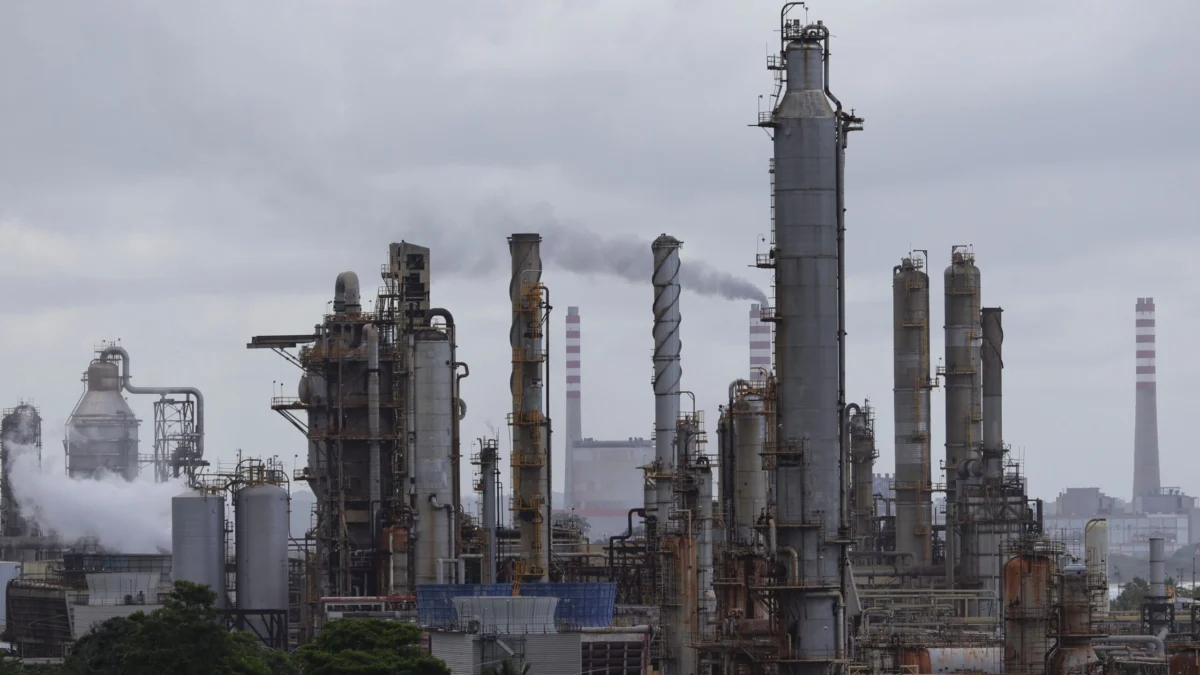
The refinery pictured in Puerto Cabello, Venezuela, represents a critical component of the nation’s oil infrastructure. The image serves as a visual reminder of the industrial capacity that Venezuela possesses, but which has been severely underutilized due to a lack of investment and maintenance. The successful execution of this oil deal could lead to a significant revitalization of such facilities, potentially boosting not only production but also refining capabilities.
Background: A Decade of Decline and Sanctions
Venezuela’s oil industry has been in a state of protracted decline for over a decade, exacerbated by political instability, corruption, and a brain drain of skilled workers. The U.S. sanctions, intensified under the Trump administration, further squeezed the industry by restricting access to international markets and financing. These sanctions were initially imposed in response to allegations of electoral fraud and human rights abuses, and their impact on the oil sector has been profound.
The Maduro government has consistently blamed external forces for the country’s economic woes, while critics point to a legacy of socialist policies, mismanagement, and rampant corruption. The re-engagement with U.S. oil companies, even under these revised terms, suggests a pragmatic shift, potentially driven by the urgent need to generate revenue and stabilize the economy.

A Political Masterstroke for Rodríguez?
For President Delcy Rodríguez, this agreement appears to be a significant political maneuver, potentially solidifying her position within the Venezuelan government. As a key figure in President Nicolás Maduro’s administration, Rodríguez has been instrumental in navigating complex international relations and economic challenges. Her confident pronouncements and careful framing of the deal suggest an effort to present it as a victory for Venezuelan sovereignty, rather than a concession to foreign interests.
The "heikle Geschäft" (delicate business), as described by the original report, is indeed a tightrope walk for Rodríguez. She must balance the immediate economic benefits of increased oil production and investment with the political imperative of appearing to safeguard national interests. The prolonged control of oil fields by foreign entities, even for a limited period, is a sensitive issue for a nation that has historically championed its resource independence.

Implications for Global Oil Markets and Geopolitics
The potential increase in Venezuelan oil production could have ripple effects on global oil markets. At a time when global energy security is a paramount concern, a significant boost in supply from a major reserve holder could help stabilize prices and alleviate supply chain pressures. However, the actual impact will depend on the speed and scale of production ramp-up, as well as broader geopolitical factors influencing global energy demand.
From a geopolitical standpoint, this deal signals a complex recalibration of U.S.-Venezuela relations. While the sanctions regime has not been entirely dismantled, this agreement suggests a willingness from both sides to engage on issues of mutual economic interest. This could pave the way for further dialogue and potential de-escalation of tensions, although significant political hurdles remain.

The role of private U.S. companies in this endeavor is also noteworthy. Their involvement signals a renewed confidence in Venezuela’s oil sector, despite the inherent risks. The terms of their engagement, including profit-sharing and operational control, will be closely scrutinized by both governments and the international community.
Next Steps and Future Outlook
The immediate next steps will involve the formalization of contracts and the commencement of investment and operational activities. The Venezuelan government will need to demonstrate its capacity to manage this complex arrangement effectively, ensuring transparency and accountability in the utilization of oil revenues.

The success of this oil deal will ultimately be measured by its ability to bring about tangible economic improvements for the Venezuelan people, stabilize the nation’s energy sector, and contribute to global energy market stability. It represents a critical juncture for Venezuela, offering a potential path toward economic recovery, but one fraught with political and operational challenges that will require careful navigation. The delicate balance between securing much-needed investment and maintaining national sovereignty will be key to the long-term success of this ambitious undertaking.
