

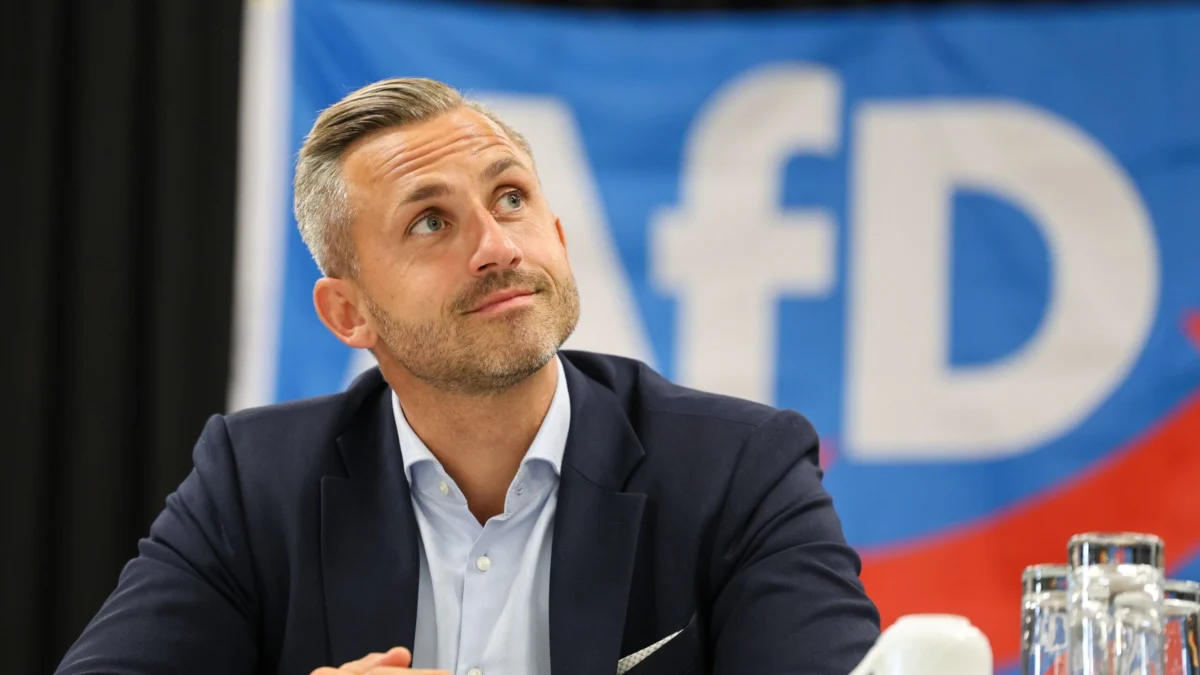
The last-minute cancellation of AfD top candidate Ulrich Siegmund from an important entrepreneur forum in the run-up to the state election in Saxony-Anhalt has ignited significant frustration within the region’s business community. Thomas Brockmeier, the chief executive of the Halle-Dessau Chamber of Industry and Commerce (IHK), voiced his displeasure at the outset of the event, highlighting that Siegmund’s absence was compounded by the no-show of his initially designated replacement. This double cancellation has left economic stakeholders questioning the AfD’s commitment to engaging with their concerns.
A Pattern of Absence and Disappointment
Brockmeier revealed that Siegmund had formally withdrawn from the event "some time ago" due to personal reasons. The IHK had then arranged for state parliament member Hans-Thomas Tillschneider to stand in for Siegmund. However, according to the IHK, Tillschneider also cancelled at short notice on the evening of the event itself, which was held on Tuesday. Brockmeier described this development as "to our disappointment," adding, "and I would personally add: also to a certain extent, annoyance, at least for me. I don’t want to hide that."
The AfD, through its parliamentary group manager Patrick Harr, attributed the dual cancellations to scheduling conflicts. Harr stated that Siegmund’s inability to attend stemmed from an overlap with previously planned engagements. The same reason was cited for Tillschneider’s absence.

Economic Priorities Under Scrutiny
The IHK forum is a crucial platform for businesses to directly address political candidates on issues vital to their operations and the regional economy. The fact that Siegmund, the leading candidate for a party currently polling at 41-43 percent and potentially on the verge of a significant electoral victory, was not present, and his substitute also failed to appear, has drawn sharp criticism. The IHK noted that a disproportionate number of the 22 questions submitted in advance by businesses were directed at Siegmund and the AfD. Specifically, ten questions were intended for the AfD’s top candidate, while nine were for the incumbent CDU Minister-President, Sven Schulze. This imbalance underscores the significant interest and concern businesses have regarding the AfD’s economic policies.
This incident marks at least the third occasion where Siegmund has sent a representative rather than attending an economic event hosted by the IHK. Brockmeier lamented to the "Bild" newspaper, "Of course, the economy has many questions, and it is very regrettable when an exchange does not take place."

AfD’s Economic Platform: A Closer Look
Despite the controversy surrounding Siegmund’s absence, the AfD was ultimately represented by Jan Scharfenort, the economic policy spokesperson for the AfD’s state parliamentary group. Brockmeier acknowledged Scharfenort’s last-minute intervention, stating that the AfD had "made a virtue out of necessity" by sending him. Scharfenort’s participation provided an opportunity to discuss the AfD’s proposed solutions to pressing economic challenges, particularly the looming skills shortage.
The AfD’s manifesto proposes a "return program for emigrated skilled workers from Saxony-Anhalt," offering assistance with housing searches. The party also aims to retain young talent by providing subsidies for driving licenses to apprentices who commit to staying in the state. This approach emphasizes domestic solutions over increased immigration for workforce development.
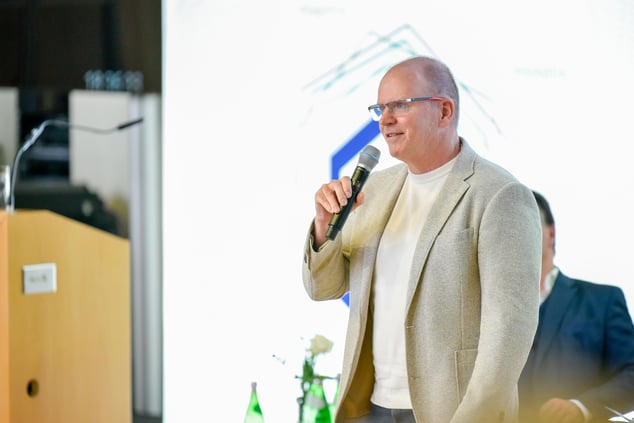
However, Scharfenort’s statements during the forum revealed nuances and potential areas of divergence from broader economic consensus. He clarified that the AfD does not fundamentally oppose foreign skilled workers. Instead, he drew a distinction between asylum procedures and regulated labor migration, expressing concern about "de facto immigration via asylum law." He cited positive experiences with workers from the Philippines entering Germany on work visas, particularly in the care sector, stating, "We have absolutely nothing against that." He also mentioned his own wife, who came to Germany from Africa as a skilled worker 14 years ago, as an example of successful regulated migration.
Divergent Views on Key Economic Issues
During a rapid-fire questioning session, it became clear that significant differences exist between the AfD and other parties on crucial economic policies. Scharfenort was the sole representative who disagreed with the idea of allowing asylum seekers to undertake vocational training and employment while their applications are still pending. This stance contrasts with the agreement reached by all seven participants, including Scharfenort, on the need for Saxony-Anhalt to attract qualified immigration from abroad.

Further disagreements emerged on other economic matters. Both the AfD and the FDP supported the establishment of special economic zones with reduced regulations and lower taxes. Conversely, the CDU, AfD, and FDP jointly opposed the further expansion of wind energy in Saxony-Anhalt, a position that may raise concerns among proponents of renewable energy development.
Addressing the Skills Shortage: An Urgent Challenge
The core of the discussions revolved around how Saxony-Anhalt plans to address its growing demand for skilled labor. The IHK estimates that approximately 100,000 workers will be lost from the labor market in the next decade due solely to demographic changes. This demographic challenge is a significant concern for the region’s economic future.

The chemical industry, in particular, has expressed apprehension about the election’s outcome, given its reliance on international talent and European collaboration. The AfD’s proposed focus on returning emigrants and incentivizing domestic apprenticeships suggests a strategy aimed at bolstering the local workforce through different means.
The Future of Public Broadcasting Remains Unanswered
Beyond economic policies, a critical question regarding the future of public broadcasting remained unresolved during the forum. FDP top candidate Lydia Schröder posed a direct question to Scharfenort about the implications of the AfD’s stated intention to terminate the state broadcasting treaty (Rundfunkstaatsvertrag). Schröder sought clarification on whether citizens would continue to pay their broadcasting fees while simultaneously funding a proposed "basic public broadcasting" service championed by the AfD.

Scharfenort sidestepped a concrete answer, stating instead, "Then you simply don’t pay. I’ve been doing that for 15 years." This response, while indicating a personal stance against paying broadcasting fees, did not offer a clear policy outline for how the AfD intends to manage the transition or fund its envisioned alternative broadcasting model, leaving a significant policy gap.
Political Landscape and Electoral Context
The incident occurs in the crucial weeks leading up to the state election on September 6th. The AfD currently holds a commanding lead in opinion polls, with projections placing them between 41% and 43% of the vote. The party’s significant lead is partly attributed to its ability to tap into voter dissatisfaction and present itself as a strong alternative to established parties.

The AfD’s electoral strategy in Saxony-Anhalt is particularly noteworthy. Facing a lack of willing coalition partners, the party is reportedly aiming to secure an absolute majority of seats in the state parliament, which would allow it to govern independently. This ambition is further contextualized by the fact that the AfD is classified by the state’s domestic intelligence agency as "securely far-right," adding a layer of political and societal scrutiny to its electoral prospects and potential governance.
Broader Implications for Saxony-Anhalt’s Economy
The absence of the AfD’s top candidate from this vital economic dialogue raises broader questions about the party’s engagement with key stakeholders and its readiness to address complex economic challenges. For businesses in Saxony-Anhalt, the lack of direct engagement from a leading political force on issues such as workforce development, regulatory frameworks, and the future of public services creates uncertainty.

The IHK’s role as a bridge between the business community and political decision-makers is critical. Their frustration highlights a potential disconnect that could have tangible consequences for investment decisions, economic planning, and the overall business climate in the state. As Saxony-Anhalt navigates the challenges of demographic change and the global economic landscape, the clarity and commitment of its political leaders to fostering a stable and predictable economic environment will be paramount. The AfD’s approach, while offering distinct policy proposals, faces scrutiny regarding its practical implementation and its ability to foster confidence among the economic actors it seeks to represent.
