

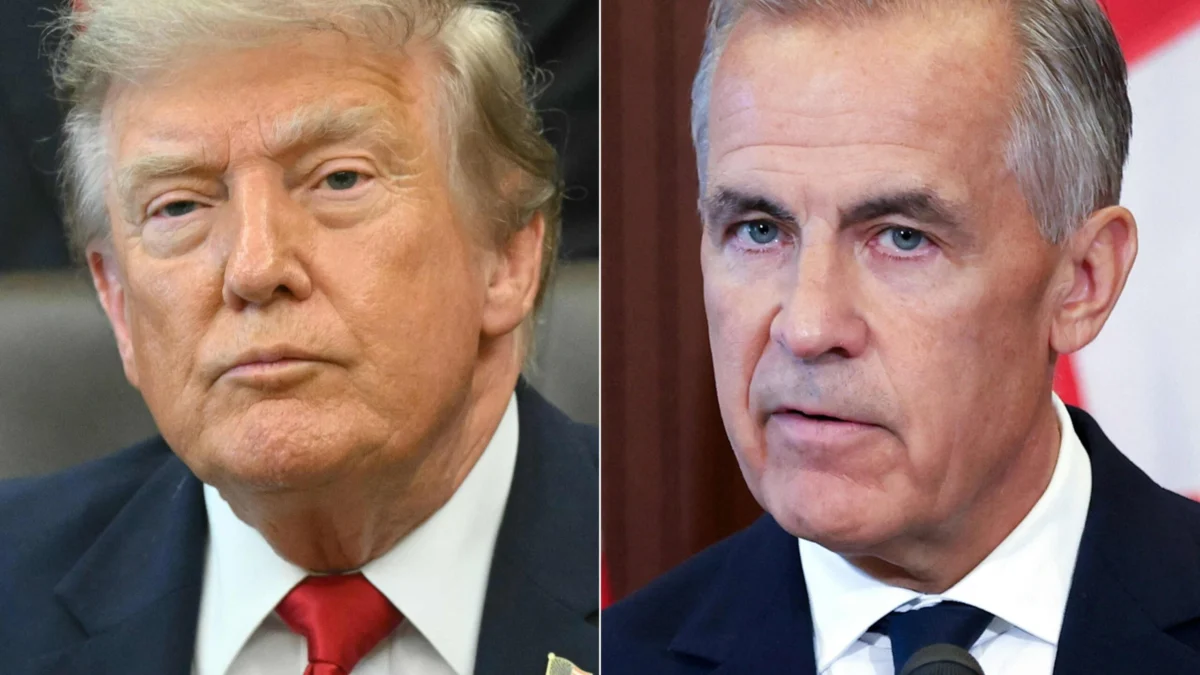
In a significant escalation of the ongoing trade dispute, Canada is reportedly poised to announce retaliatory tariffs against the United States as early as Tuesday. This move, confirmed by a government official familiar with the plans speaking to the Associated Press, signals a deepening rift between the two North American economic powerhouses following the breakdown of negotiations with the Trump administration.
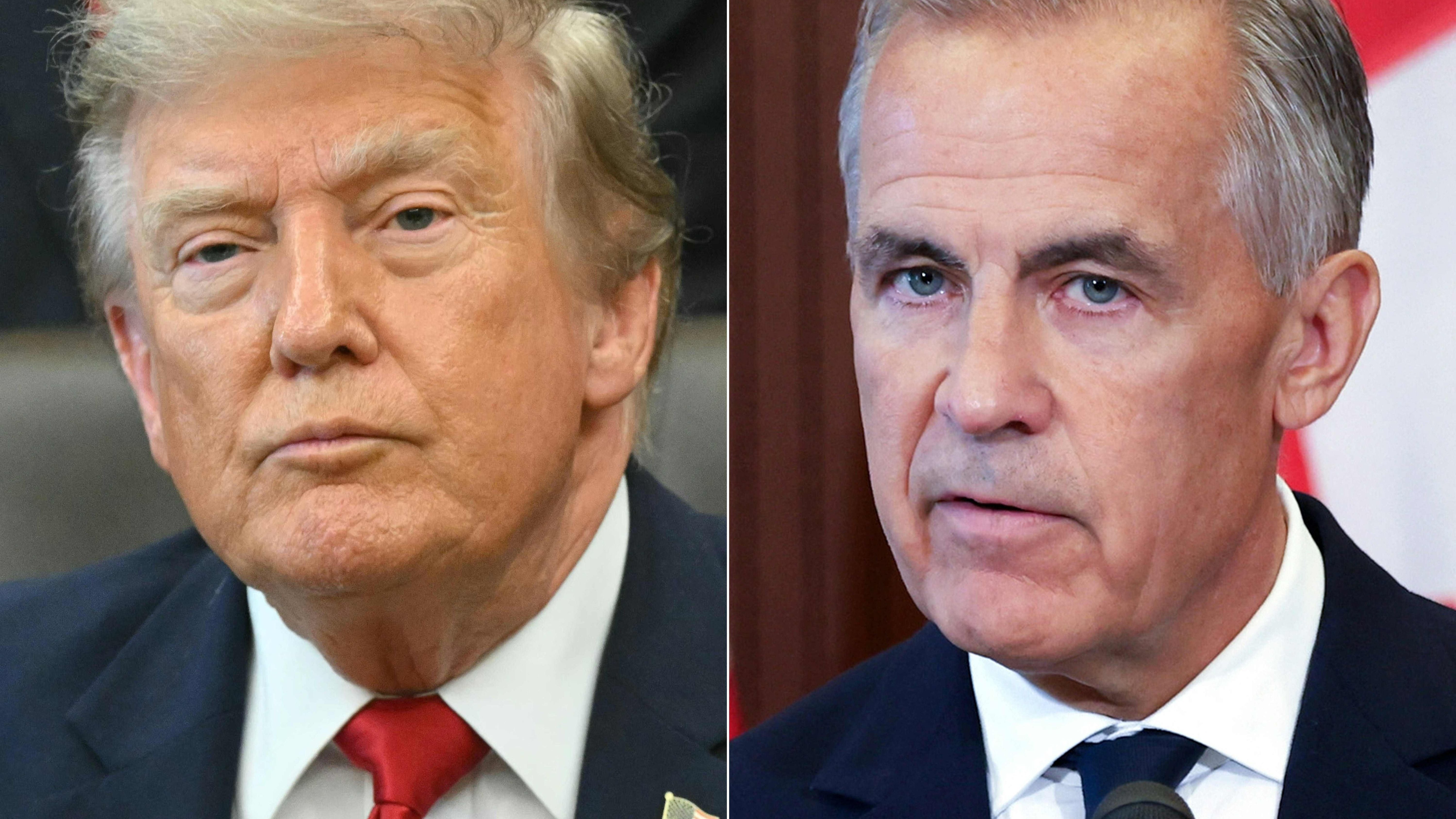
The impending tariffs represent a shift in Canada’s strategy, moving away from a dollar-for-dollar reciprocation of U.S. tariffs. Prime Minister Mark Carney indicated on Monday that Canada might need to adopt more targeted countermeasures to protect its workers and businesses. The government is reportedly exploring various options to safeguard its domestic industries from the impact of the escalating trade war.
The Escalation of a Trade Dispute
The tension between the United States and Canada has been simmering for months, primarily driven by the Trump administration’s aggressive trade policies. U.S. President Donald Trump has repeatedly accused Canada of engaging in unfair trade practices, particularly concerning agricultural products and automotive sectors. His administration has implemented a series of tariffs on goods from various countries, including its closest allies, citing national security concerns and a desire to rebalance trade deficits.

In a notable instance, President Trump announced a 50% tariff on vehicles, vehicle parts, and steel originating from Canada. This measure, slated to take effect on January 1st, was communicated via his social media platform, Truth Social. Trump expressed his dissatisfaction with what he termed "ridiculously high tariffs" imposed by Canada on U.S. agricultural products, suggesting that Canada should no longer be treated as a U.S. state. This statement underscored the personal nature of the trade disputes, often fueled by President Trump’s public pronouncements.
Prior to this, President Trump had already declared 50% tariffs on approximately $20 billion worth of Canadian goods. This initial volley was met with a swift response from Canadian Prime Minister Mark Carney, who announced retaliatory measures of equivalent value, scheduled to commence on September 8th. The tit-for-tat tariff imposition has created significant uncertainty and economic disruption for businesses in both countries.
Business Community Calls for De-escalation
The escalating trade tensions have prompted strong reactions from business communities on both sides of the border. Industry associations have issued urgent calls for renewed negotiations and a swift de-escalation of the conflict. Joshua Bolten, President of the Business Roundtable, a U.S. association of chief executive officers, warned that new tariffs could lead to increased costs for American companies and consumers, disrupt critical supply chains, and strain the robust economic ties between the U.S. and Canada. He urged both governments to return to the negotiating table and abolish "damaging tariffs."
Similarly, Dennis Darby, head of the Canadian Manufacturers & Exporters association, expressed a strong desire for a prompt return to negotiations. However, he acknowledged the current challenges, stating, "I don’t believe that will happen in the foreseeable future." The sentiment among businesses is one of growing concern about the long-term implications of a prolonged trade war, which could stifle investment and economic growth.

Canada’s Strategic Response: Targeted Countermeasures
The Canadian government’s recent statements suggest a strategic recalibration of its response. While acknowledging the need to protect its economic interests, Prime Minister Carney’s remarks hint at a move away from broad-based tariffs towards more precise actions. This approach aims to minimize collateral damage to Canadian consumers and businesses while maximizing pressure on specific U.S. industries.
The specific sectors targeted for retaliatory measures are still under consideration, but previous announcements by Canada have included steel, dairy products, agricultural equipment, and electrical appliances. The objective is to inflict economic pain on U.S. producers and exporters whose livelihoods are directly linked to the Canadian market.

Chronology of Escalating Tensions: A Timeline of Tariffs and Negotiations
The trade dispute between the U.S. and Canada has unfolded over a series of critical dates and announcements:
- Early 2020s (Inferred from context): The initial phase of the trade dispute likely involved heightened rhetoric and preliminary tariff announcements from the U.S. administration.
- Specific Dates (as per original article snippets):
- September 8th (Inferred): Canadian Prime Minister Mark Carney announced retaliatory measures of equivalent value to U.S. tariffs on approximately $20 billion worth of Canadian goods.
- August 19th (Inferred): Trump announced new additional tariffs of 50% on certain Canadian products, including hockey sticks, wine, and cement, set to take effect 30 days after signing.
- August (prior to the 19th): The U.S. and Canada were engaged in last-minute negotiations to avert new tariffs.
- Tuesday (prior to the 19th): President Trump declared a three-day suspension of planned 50% tariffs on Canadian imports, allowing for further negotiations.
- Mid-July (Inferred): Trump announced new tariffs of 50% on a range of Canadian products, scheduled to take effect on a Wednesday.
- July 24th (as per original article snippets): The Trump administration imposed tariffs of 10% and 12.5% on goods from 60 trading partners, including the European Union, citing inadequate enforcement of prohibitions on goods produced by forced labor.
- Early July (Inferred): The original article mentions negotiations over steel, aluminum, and dairy products.
- June (prior to the 8th): Discussions between the two countries regarding tariffs concluded without an agreement.
- September (prior to the 8th): Canada announced retaliatory measures on steel, dairy, agricultural equipment, and electrical appliances.
- Late July (as per original article snippets): Two U.S. small businesses filed lawsuits against President Trump’s latest tariffs on goods from 60 partner countries.
- Late July (as per original article snippets): A group of 25 Democrat-led U.S. states sued the Trump administration over recent tariffs.
- Early August (as per original article snippets): Canadian Prime Minister Mark Carney stated Canada was prepared to retaliate if Trump’s threatened 50% tariffs on Canadian goods were implemented.
- Mid-August (as per original article snippets): Switzerland rejected U.S. allegations concerning forced labor in the context of the trade dispute.
- Mid-August (as per original article snippets): Trump imposed new tariffs on goods from 60 countries.
- August 14th (inferred from original article): President Trump threatened the EU with consequences following a fine against Google.
- August 15th (inferred from original article): The EU Commission positively assessed new U.S. tariffs.
- August 16th (inferred from original article): German exporters criticized the U.S. "tariff jungle."
- August 17th (inferred from original article): The British government anticipated no negative repercussions from new tariffs.
- August 18th (inferred from original article): The EU Commission urged the U.S. to adhere to trade agreements.
- August 19th (inferred from original article): EU Foreign Policy Chief Kallas criticized U.S. tariffs as "not really justified."
- August 20th (inferred from original article): Carney stated Canada was prepared for countermeasures against new U.S. tariffs.
- August 21st (inferred from original article): Switzerland rejected U.S. claims about forced labor in the trade dispute.
- August 22nd (inferred from original article): Trump imposed new tariffs on 60 countries.
- August 23rd (inferred from original article): Trump threatened the EU with consequences after a fine against Google.
- August 24th (inferred from original article): The EU Commission viewed new U.S. tariffs positively.
- August 25th (inferred from original article): German exporters criticized the U.S. "tariff jungle."
- August 26th (inferred from original article): The British government expected no negative consequences from new tariffs.
- August 27th (inferred from original article): The EU Commission stated the U.S. should uphold trade agreements.
- August 28th (inferred from original article): EU Foreign Policy Chief Kallas criticized U.S. tariffs as "not really justified."
- August 29th (inferred from original article): Carney stated Canada was ready for countermeasures against new U.S. tariffs.
- August 30th (inferred from original article): Switzerland rejected U.S. claims regarding forced labor in the trade dispute.
- August 31st (inferred from original article): Trump imposed new tariffs on 60 countries.
Data and Economic Impact
The imposition of tariffs can have significant economic repercussions. For instance, a 50% tariff on vehicles would drastically increase the cost of imported cars, potentially impacting consumer demand and automotive industry supply chains. The value of the goods targeted by the initial round of U.S. tariffs was approximately $20 billion, representing a substantial portion of bilateral trade.

The automotive sector is particularly sensitive to trade policy shifts. Canada’s auto industry is deeply integrated with that of the United States, with many components crossing the border multiple times during the manufacturing process. Tariffs could disrupt these complex supply chains, leading to higher production costs and potentially reduced output.
Beyond the direct impact on affected goods, broader economic consequences can include:

- Increased Consumer Prices: Tariffs are often passed on to consumers in the form of higher prices.
- Reduced Trade Volumes: Higher costs can lead to a decrease in both imports and exports.
- Supply Chain Disruptions: Companies may need to reconfigure their supply chains, leading to inefficiencies and increased costs.
- Investment Uncertainty: Trade disputes create uncertainty, which can deter businesses from making long-term investments.
- Currency Fluctuations: Trade tensions can impact currency exchange rates, further affecting the cost of imports and exports.
Official Responses and Broader Implications
The rhetoric from both sides suggests a hardening of positions, although the door to negotiation remains open. The U.S. administration’s justification for tariffs often centers on rectifying trade imbalances and protecting domestic industries. Canada, on the other hand, emphasizes the importance of fair trade practices and the need to defend its own economic interests.
The current trade dispute has broader implications beyond the bilateral relationship between the U.S. and Canada. It is part of a larger trend of increasing protectionism globally, which could undermine the principles of free trade and international cooperation that have underpinned global economic growth for decades. The World Trade Organization (WTO) has expressed concerns about the rising tide of protectionism, urging countries to resolve trade disputes through dialogue and adherence to international trade rules.

The actions taken by the U.S. and Canada could also influence other trade negotiations and relationships. As a major trading partner for numerous countries, the U.S. stance on tariffs has a ripple effect across the global economy. Canada’s response, in turn, sets a precedent for how other nations might react to similar trade pressures.
The ongoing "live blog" format, as indicated in the original article’s metadata, suggests that this is a developing story with potential for further shifts and announcements. The coming days will be crucial in determining the trajectory of this trade conflict and its ultimate impact on the economies of both nations and the broader global trade landscape. The economic well-being of millions of workers and the stability of international trade hang in the balance as these two economic giants navigate this complex and increasingly contentious trade dispute.
