

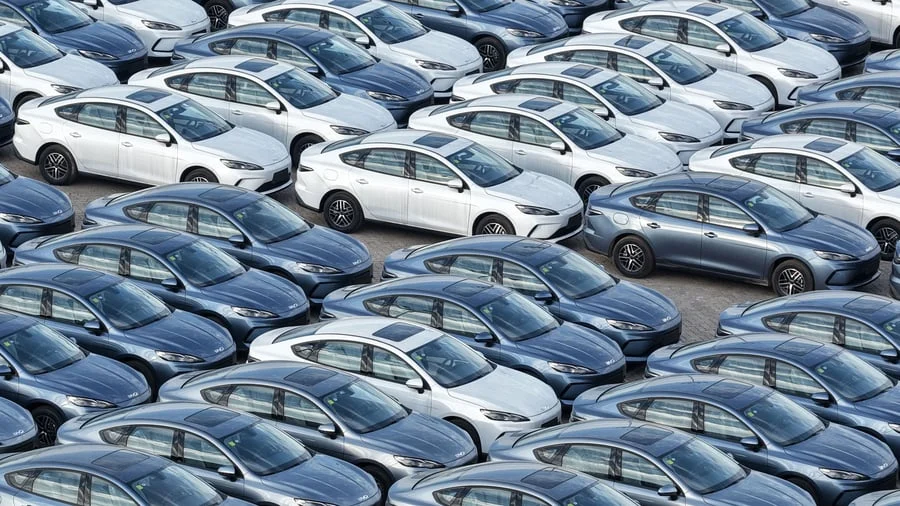
The European Union is grappling with a significant economic challenge as China’s substantial industrial overcapacity, fueled by massive state subsidies, poses a direct threat to the competitiveness of European industries. This situation, particularly evident in sectors like automotive manufacturing, industrial robotics, and heavy machinery, has prompted the EU to consider protective measures, including the imposition of tariffs, to safeguard its domestic market and prevent deindustrialization. The underlying issue is China’s aggressive industrial policy, which has allowed it to produce goods at prices significantly below those of market economies, thereby undercutting European manufacturers and potentially pushing them out of their own markets.
The Scale of China’s Industrial Overcapacity
China’s rapid economic ascent has been significantly propelled by a state-led industrial strategy. For years, the country has heavily invested in key sectors, often through substantial subsidies that, according to the OECD, can be up to eight times higher than those offered in Europe. This has led to the creation of vast production capacities that now far exceed domestic demand. Consequently, China is increasingly looking towards international markets to absorb this surplus, with Europe becoming a primary target.
The automotive sector, historically a stronghold for European nations, particularly Germany, is now at the forefront of this challenge. Chinese electric vehicle (EV) manufacturers, benefiting from these state incentives, are able to offer vehicles in the European market at prices that European counterparts find difficult to match. This is not merely a matter of competitive pricing; it represents a strategic effort by China to dominate global industries where Europe once held a clear leadership position. The implications extend beyond vehicles, encompassing sectors like industrial robots and even complex machinery such as tunnel boring machines, where China is now producing goods of comparable quality but at significantly lower price points.
A Shifting Global Trade Landscape
The current situation is a stark departure from previous assumptions within the EU that deindustrialization could be mitigated through deregulation and minor adjustments to climate protection policies. The reality is that without a level playing field, European industries are struggling to survive. The influx of heavily subsidized Chinese goods is not only impacting market share but also threatening the very foundation of Europe’s industrial base, which is crucial for innovation and future economic growth.
This phenomenon is not unique to Europe. Many other regions and countries have already implemented measures to protect their domestic industries from China’s export surge. The United States, South American nations, Canada, and even Turkey have imposed significant tariffs on Chinese goods. This has, in turn, redirected a larger volume of Chinese exports towards Europe, intensifying the pressure on the EU market. The interconnectedness of the global economy means that the actions taken by one major economic bloc have ripple effects on others.
The EU’s Response: Preparing for Protective Tariffs
In recognition of the escalating threat, the European Commission has begun preparations to implement protective tariffs. This move signals a significant shift in the EU’s trade policy, moving away from a purely free-market approach towards a more protectionist stance in specific sectors deemed critical for economic sovereignty. The decision to consider tariffs is a response to the perceived unfair trade practices, particularly the substantial state subsidies that distort competition.

The process of imposing tariffs involves thorough investigations to establish whether unfair trade practices are indeed causing or threatening to cause material injury to the EU industry. This investigation typically involves gathering evidence from both domestic producers and Chinese exporters, as well as engaging with stakeholders. If the investigation confirms the existence of injury and a causal link to subsidized imports, the Commission can propose the imposition of definitive anti-subsidy duties.
Historical Context and Precedents
The current trade tensions are not entirely unprecedented, but the scale and scope of China’s industrial overcapacity represent a new level of challenge. Historically, trade disputes have often revolved around specific industries or products. However, China’s current strategy appears to be a more systemic attempt to capture global market share across a broad spectrum of advanced manufacturing sectors.
The history of global trade is replete with examples of countries using industrial policy to foster domestic champions. However, the sheer scale of China’s state intervention and its ambition to displace established global players mark this situation as particularly significant. The EU’s response reflects a growing awareness that a purely laissez-faire approach may no longer be viable in the face of such a determined and state-backed competitor.
Data and Supporting Evidence
Supporting data underscores the magnitude of the issue. Reports from organizations like the OECD have highlighted the extensive nature of Chinese state subsidies, which create a significant cost advantage for Chinese manufacturers. In the automotive sector, for instance, Chinese EV brands are entering the European market with prices that are often 20-30% lower than comparable European models. This price differential is a direct consequence of government support, including direct subsidies, tax breaks, low-interest loans, and preferential access to raw materials and land.
The International Monetary Fund (IMF) has also raised concerns about the global economic implications of China’s overcapacity, warning that it could lead to trade tensions and protectionist measures worldwide. The sheer volume of production capacity in China, particularly in sectors like steel, solar panels, and electric vehicles, far outstrips domestic demand, necessitating an aggressive export strategy.
Analysis of Implications
The implications of China’s industrial overcapacity and the EU’s potential response are far-reaching:
- Deindustrialization Risk: If European industries cannot compete on a level playing field, there is a significant risk of job losses, factory closures, and a hollowing out of the industrial base. This would have profound economic and social consequences for the EU.
- Innovation and Future Technologies: A strong industrial base is crucial for fostering innovation and developing the technologies of the future. If European companies are driven out of key sectors, it could stifle innovation and leave the EU dependent on foreign technology.
- Geopolitical Realignment: The trade dispute could lead to further geopolitical realignments, as countries choose sides or attempt to navigate the complex relationship between China and the West. The EU’s move towards protectionism could also impact its relationships with other trading partners.
- Consumer Impact: While tariffs are intended to protect domestic industries, they can also lead to higher prices for consumers in the short to medium term, as imported goods become more expensive. However, the long-term goal is to ensure a stable and competitive domestic market.
- Impact on Global Trade Rules: The EU’s actions could set a precedent for how global trade rules are interpreted and enforced in the face of state-sponsored industrial policies. This could lead to a re-evaluation of existing trade agreements and dispute resolution mechanisms.
Related Party Reactions and Perspectives
While official statements from the European Commission emphasize the need to protect fair competition, there are diverse reactions and perspectives on the issue.

European automotive manufacturers, while publicly supporting the EU’s efforts to level the playing field, are also acutely aware of the complexities. Some may have established supply chains or production facilities in China and are concerned about retaliatory measures. Industry associations are urging for a balanced approach that protects European jobs and competitiveness without triggering a full-blown trade war.
Chinese officials have consistently defended their industrial policies, arguing that they are necessary for economic development and that their products are competitive due to innovation and efficiency. They often criticize protectionist measures as discriminatory and contrary to free trade principles. Beijing has also indicated that it would consider taking countermeasures if its interests are harmed.
Economists and trade experts offer a range of views. Some argue that tariffs are a necessary tool to counter unfair competition and prevent long-term economic damage. Others express concern that protectionism could lead to a fragmentation of global markets and hinder economic growth. There is also a debate about the effectiveness of tariffs versus other potential solutions, such as diplomatic negotiations or targeted subsidies for European industries.
Looking Ahead: A Strategic Balancing Act
The European Union is facing a delicate balancing act. It must find ways to protect its vital industries from unfair competition without resorting to measures that could ignite a trade war or harm its own economy. The imposition of tariffs is a significant step, and its ultimate impact will depend on the specific measures taken, China’s reaction, and the broader global economic context.
The situation highlights the evolving nature of global economic competition, where state-backed industrial strategies are playing an increasingly prominent role. For Europe, this challenge underscores the need for a robust and adaptable industrial policy that can foster innovation, promote competitiveness, and ensure a sustainable economic future in an increasingly complex global landscape. The EU’s response to China’s industrial overcapacity will likely shape its economic trajectory and its role in the global arena for years to come.
