

CHICAGO — The once-unquestioned perks of a business-class ticket – advanced seat selection, exclusive lounge access, and the invaluable flexibility of flight changes – are now subject to a new tier of pricing, prompting significant concern among corporate travel managers. Following a trend initiated by United Airlines, Delta Air Lines last month introduced its own version of stripped-down business class fares for select international flights, mirroring the segmentation strategy long applied to economy cabins. This move, designed to incentivize travelers to pay more for traditional premium amenities, presents a fresh challenge for companies managing their extensive travel budgets and ensuring their executives experience a seamless journey.
The Rise of "Basic Business Class"
The concept of unbundling, where core services are separated from the base fare and offered as add-ons, is not new to the airline industry. For over a decade, carriers have incrementally carved up the economy cabin, introducing "basic economy" fares that restrict seat selection, carry-on allowances, and change flexibility, often with the explicit aim of driving passengers to "buy up" to standard economy. This strategy has proven highly successful in boosting ancillary revenues and segmenting the market. Now, this approach is extending to the front of the plane, impacting the premium cabins traditionally reserved for business travelers and high-value leisure customers.
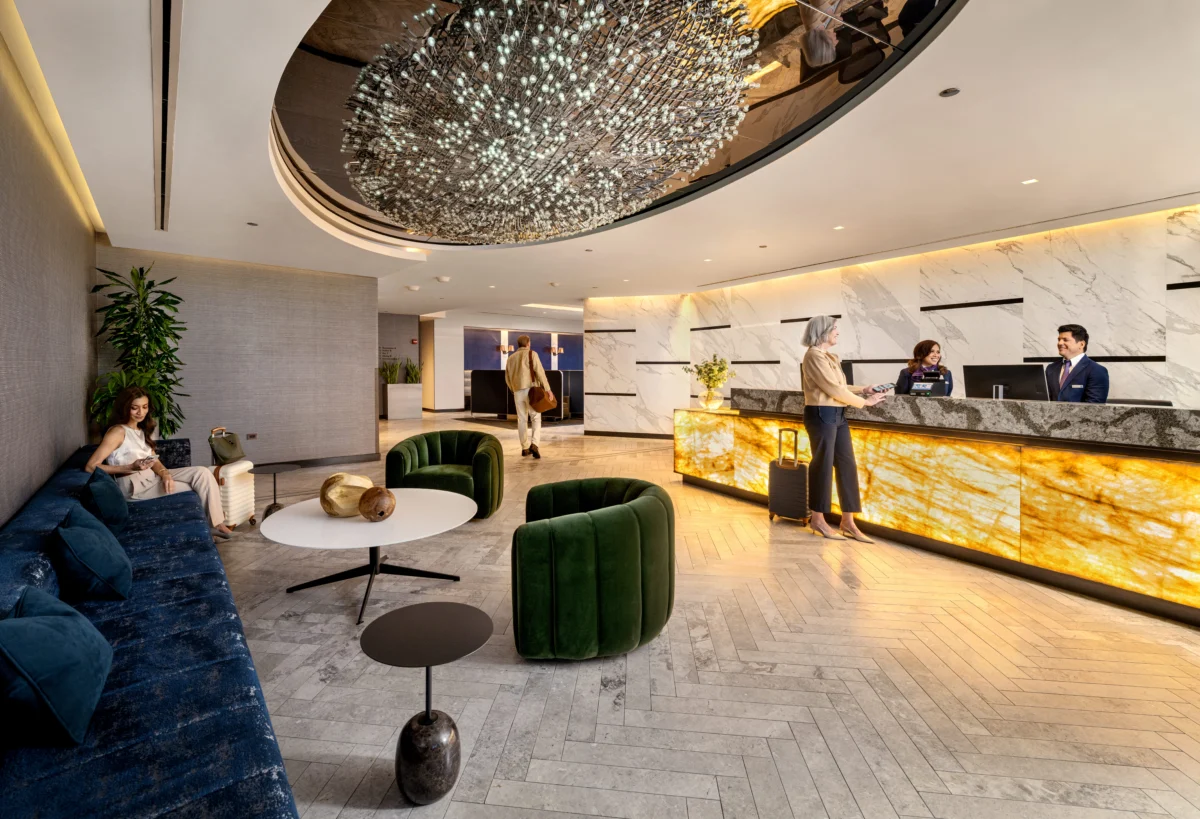
United Airlines was an early mover in this premium unbundling, launching its "Base Polaris" business class fares earlier this year for certain long-haul routes. Delta Air Lines followed suit last month, rolling out its own "Basic Business" option. These new fare classes fundamentally alter the value proposition of a business-class ticket. For the cheapest option, passengers flying long-haul international routes will find themselves without access to the airline’s coveted airport lounges – such as United’s Polaris lounge, renowned for its sit-down dining, full-service bar, and tranquil rest areas – or the ability to select their seat in advance without an additional charge. Crucially for corporate travelers, these tickets often come with severe restrictions on changes and cancellations, incurring substantial fees that can negate any initial savings.
Corporate Headaches: Flexibility vs. Cost Savings
For companies like AerSale, a Doral, Florida-based firm specializing in aircraft leasing, engine services, and maintenance, the implications are considerable. Jackie Carlon, the company’s senior vice president of marketing and communications, notes that while AerSale might not outright block these basic premium options for its hundreds of traveling employees, the practicalities make them largely impractical for many. "The real value is flexibility," Carlon emphasized. "Paying a bit more, it’s not necessarily a cost to us – it’s insurance."
This sentiment resonates deeply within the corporate travel sector. Business trips, by their very nature, are prone to last-minute changes, unexpected extensions, or sudden cancellations. A restrictive business-class ticket, while appearing cheaper upfront, can quickly become a significant financial liability if a traveler needs to alter their itinerary. Delta, for instance, has indicated that change fees for its basic business class could range from nothing to $400, depending on the route, with cancellation fees potentially soaring from $99 to $500. When a traveler is forced to buy a completely new flight due to an inflexible ticket, the "savings" evaporate, often resulting in a higher overall cost for the company. While only a small proportion of a corporation’s overall workforce typically flies in top-tier cabins, these higher fares and associated penalties could still contribute to a notable escalation in overall travel expenses. The price difference between a basic business fare and a standard, flexible business fare can easily range from several hundred dollars to upwards of $1,000, or even more, for a single round trip.
To illustrate, a hypothetical United flight from Newark, New Jersey, to London Heathrow departing on October 1 and returning on October 8 might show a "Base Polaris" ticket priced at $4,490. The standard Polaris fare, which includes the traditional perks, could be $4,890, while a fully flexible, refundable ticket might climb to $5,390. The $400-$900 difference, while seemingly substantial, often pales in comparison to the cost of a last-minute rebooking or the lost productivity of a stressed executive.
Airlines’ Rationale and Market Dynamics
Airlines, on their part, frame these new fare structures as offering customers more choice. Delta, in a statement, affirmed its commitment to corporate partners, stating, "We support our corporate travel partners by giving them full control over which fare products are available to their business travelers based on their own policies and business objectives. We continue to see strong demand for premium travel."
This strategy is rooted in the airlines’ desire to maximize revenue in a highly competitive and often volatile industry. By segmenting premium cabins, they can appeal to a broader range of price-sensitive customers who might desire the comfort of a lie-flat seat but are willing to forgo certain amenities to save money. At the same time, it encourages those who value the full suite of business class benefits – including flexibility and lounge access – to pay a premium. The strong demand for premium travel post-pandemic has further emboldened airlines to experiment with these new pricing models. As global travel rebounded, particularly in the business and high-end leisure segments, carriers have capitalized on travelers’ willingness to pay more for comfort and convenience, especially after years of restricted movement.

Industry Reactions and Policy Adaptations
The ripple effect of these new fares is already being felt across the corporate travel ecosystem. Dane Molter, senior vice president at Navan Group Travel Marketplace, which reported $9.1 billion in gross booking volume in the 12 months ending January 31, noted that clients using their platform are actively seeking more detailed policy controls. These controls would allow them to dictate precisely which fare types their employees can book for a given trip. "Travel managers are asking a sensible question: Does the lower upfront fare still represent good value if it lacks flexibility, seat selection, lounge access or other benefits their travelers expect?" Molter articulated, highlighting the core dilemma.
At the Global Business Travel Association’s annual convention in Chicago, the topic was a hot-button issue. Two travel managers from public companies, speaking anonymously due to restrictions on discussing their employers’ travel spending, indicated they would likely seek to block these basic premium fares entirely. This proactive stance underscores the significant operational and financial implications for large corporations.
The precedent for blocking restrictive fares is well-established. About a decade ago, companies began actively blocking their travelers from booking basic economy tickets. These fares, which have become increasingly restrictive over time – sometimes even reducing or eliminating frequent flyer miles accrual – were widely shunned by corporations. Airline executives often measured the success of basic economy not by how many bought it, but by how many travelers "paid up to avoid it," revealing the inherent "buy-up" strategy at play. It appears airlines are hoping for a similar outcome with basic business class.
John Bukowski, vice president of global marketplace experience, product and engineering at corporate travel and expense giant American Express Global Business Travel, which recorded $36.3 billion in bookings in 2025, observed that while he hasn’t seen a widespread client movement to block these new premium fares yet, similar to basic economy, this could change as the offerings become more prevalent and their implications clearer.
Broader Economic Context and Analyst Perspectives
The introduction of basic business fares coincides with a period of rising airfare across the board. Globally, airfare is projected to increase by close to 5% this year compared to last, reaching an average of $756 for a roundtrip flight. Premium fares are expected to see an even steeper rise, forecast to jump by 9.5% to an average of $4,488, according to the Global Business Travel Association’s projections released at its recent convention. This inflationary trend in travel costs further intensifies the scrutiny on every component of a business trip’s expense.
While major U.S. carriers are relatively new to this specific form of premium unbundling, airlines like Germany’s Lufthansa and the UAE’s Etihad Airways have already offered stripped-down basic business-class fares for some time, providing a glimpse into the potential future landscape.
Scott Laurence, a partner at Oliver Wyman’s transportation practice with previous experience at JetBlue Airways and American Airlines, offers a nuanced perspective. He suggests that while cheaper, basic business or other premium fares might appeal to more price-sensitive small or medium-sized companies, the proliferation of such options could lead to significant complexity. The absence of a uniform approach across airlines, with American Airlines notably not offering basic business or basic premium economy fares, could create confusion for travel managers trying to compare options. "The travel managers are going to value some level of simplicity and making sure things work with their expense system and their policy," Laurence stated, underscoring the operational challenges.
Laurence also anticipates a surge of feedback from corporate travelers, particularly those accustomed to the full suite of amenities. Executives who regularly rely on lounge access for pre-flight productivity or relaxation after a long-haul journey, or those who track every frequent flyer mile, will likely voice their dissatisfaction. However, he acknowledges the airlines’ underlying motivation: "There’s an interest in offering a lower price point. It also is… frankly, about driving buy up." This "buy-up" strategy is designed to entice travelers with a seemingly lower premium fare, only to encourage them to pay extra for the very amenities they once considered standard.
The Evolving Landscape of Business Travel
The advent of basic business class marks another significant shift in the dynamic between airlines and their corporate clients. As airlines continue to refine their revenue strategies through increasingly granular segmentation, corporate travel managers are faced with the complex task of balancing cost containment, traveler satisfaction, and operational efficiency. The decisions made regarding these new fare types will not only impact company budgets but also shape the expectations and experiences of business travelers for years to come. The industry will be watching closely to see how corporations adapt their policies and how airlines further evolve their premium offerings in this ever-changing environment.
