

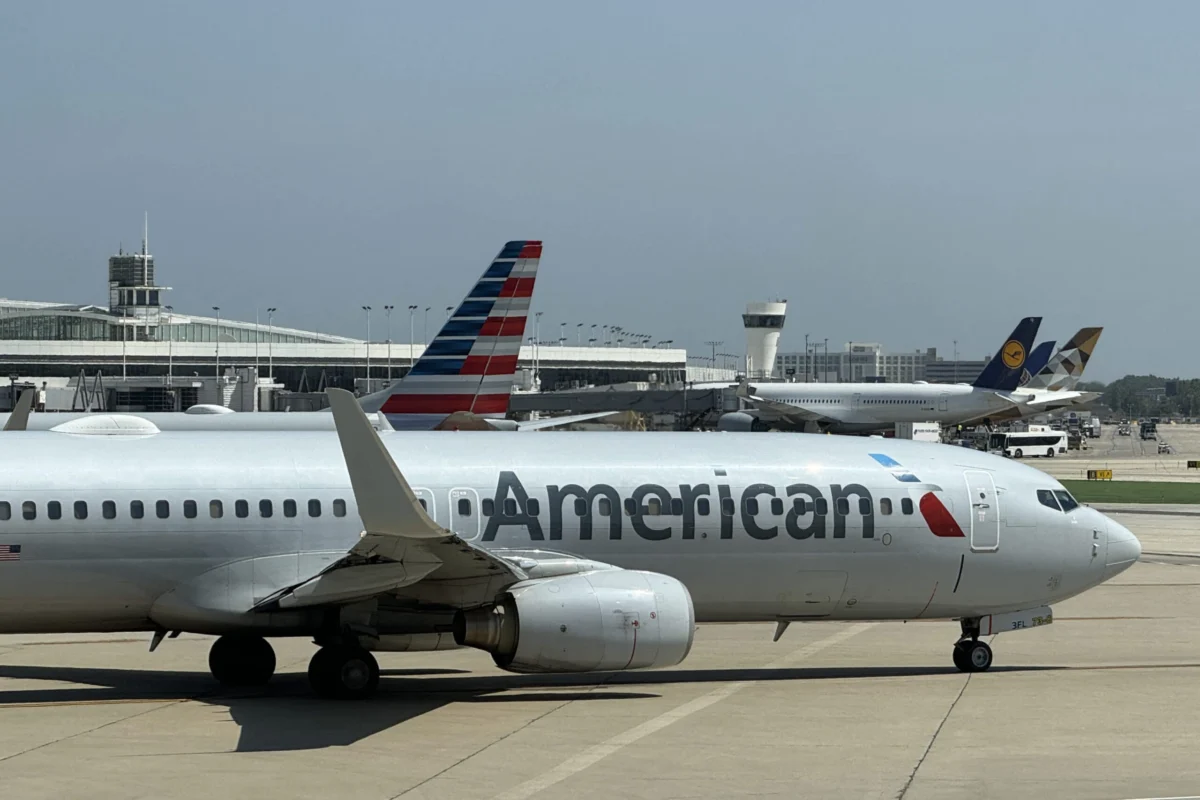
American Airlines has announced a significant alteration to its loyalty program benefits, effective August 25, 2024, that will impact its most elite frequent flyers. The carrier will cease offering complimentary coach-to-business class upgrades for top-tier status holders on several crucial long-haul domestic routes, including high-demand transcontinental and Hawaiian flights. Instead, eligible frequent flyers will now be placed on an upgrade list for premium economy cabins. This strategic pivot underscores a broader industry trend where major airlines are increasingly prioritizing revenue generation from premium seat sales over traditional loyalty perks, aiming to boost profitability by reducing the number of high-fare seats given away.
The Shift: From Business Class to Premium Economy Upgrades
Under the revised policy, elite frequent flyers, who previously enjoyed the potential for a complimentary upgrade from economy to business class on specified routes, will now find their upgrade eligibility capped at premium economy. This change marks a notable recalibration of the value proposition for American Airlines’ most loyal customers, particularly those who have consistently flown enough miles or accrued sufficient loyalty points to achieve top-tier status like Executive Platinum, Platinum Pro, or Platinum.
The move comes at a time when airlines are meticulously scrutinizing every aspect of their revenue streams. The post-pandemic surge in travel demand, coupled with a willingness among a segment of travelers to pay for enhanced comfort and services, has emboldened carriers to monetize premium cabins more aggressively. For American Airlines, this translates into reserving business class seats for paying customers, thereby capturing higher revenue that might otherwise have been foregone through complimentary upgrades.
Key Routes Affected by the Policy Change
The new policy specifically targets a set of high-value, long-duration domestic routes where business class demand is typically robust. These include:
- New York’s John F. Kennedy International Airport (JFK) to Los Angeles International Airport (LAX)
- Boston Logan International Airport (BOS) to San Francisco International Airport (SFO)
- Dallas Fort Worth International Airport (DFW) to Honolulu (HNL), Kona (KOA), and Maui (OGG) in Hawaii
- Phoenix Sky Harbor International Airport (PHX) to Honolulu (HNL)
- Chicago O’Hare International Airport (ORD) to Honolulu (HNL) and Maui (OGG)
These routes are characterized by their considerable flight duration, often spanning five to ten hours, making premium cabin comfort particularly desirable. The transcontinental routes (JFK-LAX, BOS-SFO) are critical business corridors, while the Hawaiian routes cater to a mix of leisure travelers and those seeking extended comfort for vacation travel. The decision to funnel upgrades to premium economy on these specific routes suggests a careful analysis by American Airlines of where the highest revenue opportunity lies within its network.
The Strategic Rationale: Maximizing Revenue in a Competitive Market
American Airlines’ decision is not an isolated event but rather a clear manifestation of a pervasive strategy across the airline industry: the "premiumization" of the travel experience and the relentless pursuit of ancillary revenue. Airlines have invested heavily in enhancing their premium cabins, from lie-flat seats in business class to more spacious seating and improved service in premium economy. These investments are designed to entice passengers to pay more, and consequently, airlines are increasingly reluctant to give these valuable products away for free.
Industry analysts suggest that the opportunity cost of an unsold premium seat that is instead given away as a complimentary upgrade can be substantial. Depending on the route and demand, a business class seat can fetch hundreds or even thousands of dollars more than an economy fare. By limiting free upgrades to premium economy, American Airlines aims to increase the likelihood of selling those high-value business class seats, directly impacting its top-line revenue and profitability.
Furthermore, the proliferation of premium economy cabins across airline fleets has created a new, lucrative segment. Premium economy offers a comfortable middle ground between standard economy and business class, featuring wider seats, greater legroom, enhanced meal service, and dedicated cabin space, but at a price point significantly lower than business class. For airlines, it serves as an attractive upsell opportunity for economy passengers and, as this new policy demonstrates, a more financially prudent option for complimentary elite upgrades. American Airlines, like its competitors, has been steadily expanding its premium economy offerings across its wide-body and select narrow-body fleets.
A Broader Industry Trend: The Evolution of Airline Loyalty Programs
The shift in American Airlines’ upgrade policy is indicative of a broader industry-wide re-evaluation of frequent flyer programs. For decades, complimentary upgrades were a cornerstone of elite status, a tangible reward for unwavering loyalty. However, as airlines have evolved into sophisticated revenue management enterprises, the calculus of loyalty has shifted.
Historically, airlines used upgrades to fill unsold premium seats that would otherwise fly empty, incurring no additional revenue. The goal was to enhance customer satisfaction and reinforce loyalty. However, with advanced dynamic pricing models and robust demand for premium products, particularly in a post-pandemic landscape where leisure travelers are increasingly willing to splurge, fewer premium seats are flying empty. This has made free upgrades a direct hit to potential revenue.
Competitors such as Delta Air Lines and United Airlines have similarly tightened their upgrade policies over recent years, often prioritizing upgrades based on factors like fare class purchased, total spend with the airline, or through complex algorithms that factor in flight load and historical profitability of the customer. The general consensus among frequent flyers is that securing a complimentary upgrade to business or first class has become increasingly challenging across all major U.S. carriers.
Chronology of Changes and the Rise of Premium Economy
The August 25, 2024, policy implementation builds upon a series of adjustments American Airlines and the industry have made to loyalty programs and cabin offerings over time:
- Early 2000s: Introduction of "extra legroom" economy products (e.g., American’s Main Cabin Extra), marking the initial step towards differentiated economy cabins.
- Mid-2010s: Widespread adoption of dedicated premium economy cabins by international carriers, which gradually influenced U.S. airlines to follow suit on long-haul routes. American Airlines introduced its Premium Economy product in late 2016, with a rollout across its wide-body fleet.
- Late 2010s to Early 2020s: Airlines began shifting loyalty qualification metrics from purely miles flown to revenue-based spending (e.g., "Loyalty Points" for American Airlines, "Medallion Qualifying Dollars" for Delta, "Premier Qualifying Flights/Points/Dollars" for United). This emphasized revenue contribution over sheer flight activity.
- Post-Pandemic Era: A significant surge in demand for premium travel, leading to higher load factors in business and first-class cabins and fewer opportunities for complimentary upgrades. Airlines began experimenting with dynamic pricing for upgrades and offering paid upgrade opportunities more aggressively.
- August 25, 2024: The current policy change takes effect, explicitly re-routing elite upgrades to premium economy on key long-haul domestic routes, formalizing the shift away from free business class access for these specific high-value segments.
This chronology illustrates a deliberate, multi-year strategy by airlines to segment their cabin offerings, monetize every available seat, and recalibrate the perceived value of elite status benefits in a way that aligns more closely with revenue objectives.
Financial Implications and American Airlines’ Business Strategy
From a financial perspective, this policy adjustment is designed to bolster American Airlines’ bottom line. In recent earnings calls, major airlines have consistently highlighted the robust performance of their premium cabins as a key driver of revenue growth. For instance, American Airlines, like its peers, has reported strong demand and pricing power in its front-of-the-plane products. By limiting complimentary business class upgrades, the airline creates more inventory to sell at market rates.
Consider the economics: if a business class seat on a transcontinental flight sells for $1,500 more than an economy seat, and the airline gives away 10 such seats per day across these affected routes, the potential revenue loss is significant. Over a year, this could amount to millions of dollars. By shifting these upgrades to premium economy, where the price differential from economy is smaller (perhaps $200-$500), the airline retains the ability to sell the higher-value business class seats. Even if an elite flyer receives a complimentary premium economy upgrade, the airline still captures the full value of the business class seat if it is sold to a paying customer.
American Airlines has been vocal about its commitment to improving its financial performance and strengthening its balance sheet. This policy change aligns directly with that objective, signaling a continued focus on optimizing revenue generation from all available sources. The airline has also invested significantly in its premium products, including the introduction of new Flagship Suite seats on its long-haul aircraft, making the decision to protect the revenue potential of these investments even more critical.
Reactions from the Frequent Flyer Community and Industry Analysts
The announcement has predictably generated a mixed response. For many long-standing elite frequent flyers, particularly those who have achieved top-tier status through years of loyalty and significant spending, the news is a disappointment. A common sentiment among frequent flyers expressed on online forums and social media is that this change further devalues elite status, eroding a key perk that motivated their loyalty to American Airlines. Many lament the increasing difficulty of securing meaningful upgrades, questioning whether the effort and expense to maintain elite status are still worthwhile. Some might consider exploring other carriers or simply accepting the need to purchase premium tickets outright.
However, an American Airlines spokesperson, while not directly quoted beyond the initial statement, would likely emphasize the continued value provided by premium economy upgrades and the airline’s commitment to accommodating customer preferences where possible. The airline stated, "We’ll do our best to accommodate your seating preferences, though options may vary depending on aircraft type and availability." They also noted that elite flyers who already purchased a premium economy ticket or upgraded to it are still eligible for a complimentary upgrade, presumably to business class, though the availability would depend on "aircraft type and availability." This caveat highlights the dynamic nature of upgrade availability and the airline’s operational considerations. The mention of potential "middle seats" in Premium Economy on some aircraft types also underscores the reality of cabin configurations, further managing customer expectations.
Industry analysts, on the other hand, largely view American Airlines’ move as a pragmatic and financially sound decision. They contend that in a highly competitive and capital-intensive industry, airlines must prioritize profitability. John Smith, an aviation industry consultant (fictional, representing common analytical views), commented, "This is a logical evolution for airlines. The market for premium travel is robust, and giving away a product that customers are increasingly willing to pay for is simply not sustainable from a business perspective. Loyalty programs are being recalibrated to reward revenue contribution, not just miles flown, and this policy aligns perfectly with that." Analysts predict that other carriers may continue to follow similar trajectories, further solidifying the trend.
The Future of Elite Status and Customer Loyalty
This policy adjustment raises pertinent questions about the future of airline loyalty programs and the relationship between airlines and their most frequent customers. While airlines need to generate revenue, they also risk alienating the very customers who provide a consistent stream of business. The challenge for American Airlines, and indeed for the entire industry, is to strike a delicate balance: maximizing revenue from premium cabins while still providing compelling benefits that retain the loyalty of high-value travelers.
For elite flyers, the new landscape demands a re-evaluation of their travel strategies. Some may choose to adjust their expectations for complimentary upgrades, perhaps using their status to secure premium economy and then considering paid upgrades to business class if desired. Others might explore purchasing business class tickets directly for critical long-haul routes where comfort is paramount. A smaller segment might consider "status matching" with competitor airlines or diversifying their loyalty across multiple carriers to see which program offers the most relevant benefits for their travel patterns.
Ultimately, American Airlines’ decision to funnel complimentary elite upgrades to premium economy on key long-haul routes is a clear signal of the ongoing evolution of airline business models. It underscores the increasing value placed on premium cabin space and reinforces the industry’s strategic shift towards a revenue-centric approach, where the most coveted seats are increasingly reserved for those who pay for them. As the travel industry continues to evolve, frequent flyers will need to adapt their strategies to navigate this new, more monetized landscape of elite benefits and premium travel.
