

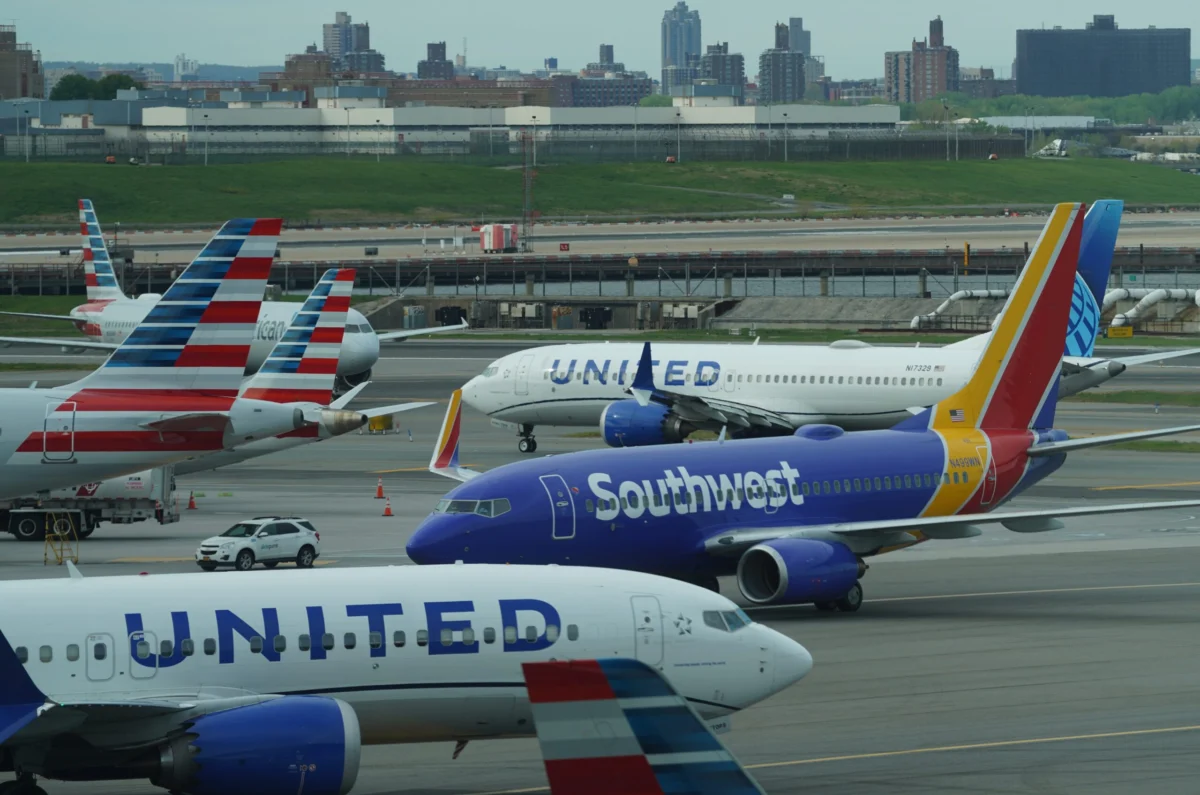
Despite the volatile trajectory of global fuel prices, American travelers should not anticipate a return to bargain flight costs in the foreseeable future. Data from the latest federal reports reveal a significant surge, with U.S. airfares in June climbing 26.5% compared to the previous year. This upward trend, driven by a complex interplay of macroeconomic forces, geopolitical events, and strategic airline decisions, is projected to persist through the end of the year and potentially beyond, according to industry leaders and market analysts.
The travel sector has witnessed an extraordinary period of recovery and recalibration following the global pandemic. While initial forecasts suggested a gradual normalization of prices as demand stabilized, a confluence of new pressures has cemented higher fare structures. Airlines have openly communicated to Wall Street analysts their confidence in maintaining this pricing power, citing resilient consumer demand that continues to absorb increased costs without significant abatement.
The Unyielding Ascent of Airfares
The dramatic increase in air travel costs is evident across the spectrum of carriers. For instance, Southwest Airlines reported an average one-way fare of $225.61 in the second quarter, a substantial rise from $186.65 during the corresponding period in 2025. Such figures underscore a broader industry-wide phenomenon, where carriers are successfully passing on escalating operational expenses to passengers. Travelers like Marjorie Aran, who paid a combined $800 for a New York-to-Chicago economy round trip on United Airlines, recall paying "a couple of hundred dollars" for the same route in the past. Yet, even in the face of these steeper prices, Aran, like many others, affirmed her continued willingness to travel, stating, "We can afford it." This sentiment is a cornerstone of the airlines’ current strategy, betting on the enduring desire for travel among millions of consumers.
This sustained demand, often dubbed "revenge travel" in the post-pandemic era, has empowered airlines to prioritize profitability over market share at any cost. With fewer available seats and a strong consumer appetite, the dynamic of supply and demand has firmly shifted in favor of the carriers.
Fueling the Price Surge: Geopolitical Tensions and Supply Chain Woes
At the heart of the current fare hikes lies the dramatic and unpredictable volatility of jet fuel prices. Fuel remains the largest operational expense for airlines, second only to payroll. United Airlines, for example, anticipates an additional $6 billion in fuel costs this year compared to its initial 2026 projections, representing an increase of over 50% from 2025. American Airlines forecasts a similar $6 billion increase in its fuel bill for the same period. These massive unexpected expenditures have directly translated into higher ticket prices.
The genesis of this fuel volatility can be traced back to significant geopolitical developments. The U.S. and Israeli strikes on Iran, which commenced in late February, initiated a monthslong military conflict that has severely impacted crucial shipping channels. This instability has choked off main routes, increasing the cost and complexity of transporting oil and refined products globally. According to S&P Global Energy Platts data, while jet fuel prices have eased from their four-year highs in April, they remain approximately 50% higher than levels observed on February 28.
Beyond the immediate conflict, the global oil market has been grappling with a confluence of factors. OPEC+ production policies, global economic recovery driving increased energy demand, and persistent underinvestment in refining capacity have all contributed to a tighter supply environment. The disruption in vital maritime chokepoints, such as the Strait of Hormuz and the Bab el-Mandeb strait, through which a significant portion of the world’s oil and liquefied natural gas passes, exacerbates these pressures. Airlines, traditionally employing hedging strategies to mitigate fuel price swings, have found these instruments less effective amidst such extreme and rapid market shifts. The unexpected surge even in the middle of a reporting quarter highlights this challenge; United noted a $575 million rise in fuel costs from early to mid-July, impacting its third-quarter adjusted earnings by $1.12.
In a proactive and telling move, Southwest Airlines, fearing a severe supply crunch on the import-reliant U.S. West Coast, undertook an unprecedented measure in May. The airline chartered a vessel carrying over 12 million gallons of jet fuel – roughly a week’s supply – through the Panama Canal from Houston to Los Angeles. This marked the first instance of the airline transporting fuel by sea from Texas to another U.S. destination, underscoring the severity of the supply chain challenges and the lengths airlines are willing to go to secure their most vital input.
Beyond the Tank: A Confluence of Rising Operating Costs
While fuel costs dominate headlines, they are not the sole drivers of elevated airfares. The entire operational cost structure for airlines has expanded significantly. Labor expenses, in particular, have escalated dramatically across the industry. Post-pandemic, airlines have faced intense pressure to attract and retain staff, particularly pilots, flight attendants, and maintenance technicians, leading to substantial wage increases and improved benefits packages negotiated through new union contracts. United CEO Scott Kirby highlighted this, stating, "Labor costs have escalated dramatically. Maintenance is off the charts in terms of escalation. And those are all costs that every single airline pays the same."
Maintenance costs have also soared, partly due to global supply chain disruptions affecting parts availability and the increasing complexity of modern aircraft systems. Furthermore, airport fees and other basic operating expenses have risen, reflecting broader inflationary pressures and ongoing infrastructure investments at airports nationwide. The grounding of numerous Airbus jets, particularly those operated by Spirit Airlines, due to a manufacturing defect in Pratt & Whitney engines, also illustrated the cascading financial impact of fleet-related issues, further squeezing capacity and adding to cost pressures. These multifaceted cost increases, unlike fuel, are less susceptible to short-term market fluctuations and represent a more permanent shift in airline economics.
Robust Demand Defies Price Hikes: The "Revenge Travel" Effect and Shifting Consumer Habits

Despite the significant price increases, consumer demand for air travel has remained remarkably strong. This resilience is often attributed to the "revenge travel" phenomenon, where individuals, constrained during the pandemic, are now eager to spend on experiences and travel. There has been a noticeable shift in consumer spending patterns, with a greater allocation towards services, including travel and leisure, rather than goods. A robust job market and accumulated savings for some demographics have also provided the financial wherewithal to absorb higher travel costs.
While leisure travel continues to lead the recovery, business travel has also seen a gradual return, contributing to the overall demand picture. United Chief Commercial Officer Andrew Nocella noted on a July 16 earnings call that the carrier "observed minimal to no negative impact on demand from higher price points, a trend we see continuing." This confidence is reflected in the expectation that unit revenue for the rest of 2026 will not only rise year-over-year but even surpass the increase seen in the second quarter. Travelers like Justin Wittekind, a podcast writer and researcher, who paid about $340 for a flight from New York to Ontario, California, acknowledged a personal limit of around $400 for a round trip but conceded, "if I have to go home… I’ll pay $400, but I wouldn’t like it." This illustrates a prevailing sentiment among consumers: travel is increasingly viewed as a necessity or a high-priority discretionary expense, even at elevated prices.
A Shrinking Sky: The Impact of Industry Consolidation and Reduced Competition
The landscape of the U.S. airline industry has undergone a significant transformation, marked by consolidation and reduced competition, which further contributes to the airlines’ pricing power. According to Cirium data, the four largest U.S. carriers—American Airlines, Delta Air Lines, United Airlines, and Southwest Airlines—now command an 82.1% share of the seats flown by U.S. airlines this year. This represents an increase from 80.7% last year and 79.7% in 2022, signaling a tightening grip on the domestic market.
A major factor in this increased concentration was the dramatic collapse of Spirit Airlines in May. The iconic U.S. discounter, known for its ultra-low-cost model, ceased operations overnight, removing tens of millions of seats from the market. Spirit’s demise was the culmination of years of mounting problems, including rising labor and operational costs, the grounding of a significant portion of its Airbus fleet due to the aforementioned Pratt & Whitney engine defects, and a struggle to adapt to an evolving travel market that increasingly favored upmarket experiences. The airline had filed for Chapter 11 bankruptcy protection twice in less than a year, ultimately failing to secure a deal with bondholders or a potential government bailout.
The disappearance of Spirit, a formidable competitor in the low-cost segment, has undoubtedly reduced pricing pressure across the industry. Without a major ultra-low-cost carrier (ULCC) consistently undercutting fares, other airlines have more latitude to maintain higher prices. While some smaller low-cost carriers like Avelo have moderated their growth or are shrinking, and the merged Allegiant and Sun Country are also adjusting capacity, other players are attempting to fill the void. JetBlue Airways, Frontier Airlines, and Breeze Airways, the startup founded by JetBlue founder David Neeleman, are planning to grow.
Frontier, now the largest U.S. discounter, is enjoying increased pricing power, with average fare revenue in the second quarter rising to $63.04 from $40.94 the previous year. The Denver-based airline plans to expand capacity by as much as 18% this quarter and forecasts unit revenue growth of 20%, aiming for profitability after years of losses. Similarly, JetBlue CEO Joanna Geraghty indicated a conservative capacity profile despite expected earnings improvements, citing fluid geopolitical conditions and volatile fuel prices. The airline forecasts a unit revenue increase of up to 16.5% in the current quarter. The move by Frontier, JetBlue, and Allegiant to introduce first-class seats in the coming months further illustrates a strategic shift towards capturing higher-yield passengers, catering to customers willing to pay a premium for more space and amenities.
Airlines’ Strategic Playbook: Capacity Discipline and Revenue Optimization
The current environment has allowed airlines to implement a disciplined capacity strategy, focusing on profitability rather than aggressive expansion. By pruning schedules and offering fewer flights on certain routes, carriers reduce the supply of seats, which naturally supports higher fares. This strategic restraint is a stark contrast to pre-pandemic times when airlines often engaged in fierce price wars to gain market share.
Beyond capacity management, airlines are refining their yield management strategies, using sophisticated algorithms to dynamically price tickets based on demand, booking patterns, and competitive offerings. Ancillary revenues, derived from fees for baggage, seat selection, Wi-Fi, and other services, continue to be a significant income stream, contributing substantially to overall profitability. The introduction of premium cabin options, even by historically budget-focused carriers, signals a broader industry trend to diversify revenue streams and cater to a wider range of traveler preferences at varying price points.
Industry analysts largely support the airlines’ current strategies, acknowledging the necessity to cover increased costs and rebuild financial strength after the pandemic. While consumer advocates might raise concerns about reduced affordability and choice, the prevailing view within the financial community is that airlines are operating efficiently within the current market realities.
Navigating the Future: Consumer Outlook and Industry Adaptations
The next few months, particularly as the traditional summer travel rush subsides, will serve as a crucial test for how much pricing power airlines can sustain. Historically, August marks a tapering off of peak demand, and airport checkpoint screenings have already shown slight declines compared to last year through late July. However, airlines note a growing trend of international travelers booking during traditionally off-peak periods in the fall, seeking to avoid crowds, extreme heat, and potentially higher summer prices. This shift could help smooth out seasonal demand fluctuations.
Looking ahead, the long-term trajectory of airfares will depend on a complex interplay of factors. Continued geopolitical stability, or lack thereof, will dictate fuel price movements. The global economic outlook, including the risk of recession, could impact consumer discretionary spending on travel. Furthermore, the pace of technological advancements in fuel efficiency and the development of sustainable aviation fuels (SAFs) could offer some relief from fuel cost pressures in the longer run, though widespread adoption remains years away.
For consumers, navigating this landscape of persistently high fares will require adaptability. Booking further in advance, being flexible with travel dates and destinations, utilizing loyalty programs and reward points, and carefully comparing all-inclusive costs (including ancillary fees) across different carriers will become even more critical. While the allure of travel remains strong, the era of consistently cheap flights appears to be receding, replaced by a new normal where air travel is a premium experience, reflecting the true and escalating costs of operation in a complex global environment.
