

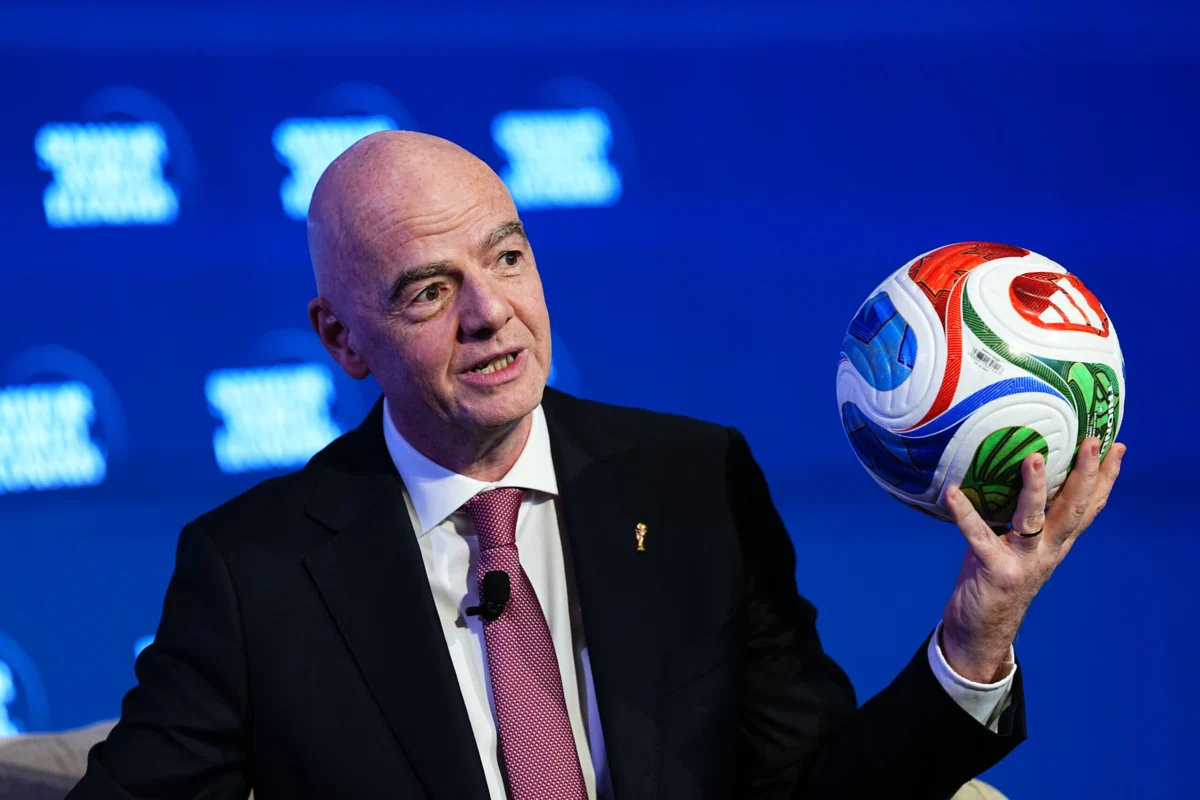
In an unprecedented move that sends shockwaves through the global football landscape, the Union of European Football Associations (UEFA) announced Thursday its unequivocal intent to boycott all FIFA competitions, including the prestigious World Cup, should the global governing body proceed with its contentious plan to sell a significant stake in its commercial operations to private investors. The declaration, following an emergency meeting of its 55 member associations, escalates a simmering conflict into a full-blown crisis, posing an existential threat to the unity and future of international football.
The Genesis of the Crisis: FIFA’s Forward Enterprise Proposal
The flashpoint arrived on Tuesday, April 13, 2026, when FIFA, under the leadership of President Gianni Infantino, unveiled an ambitious yet controversial proposal to establish a new commercial entity, provisionally named FIFA Forward Enterprise (FFE). This new venture would consolidate all commercial and event operations, with FIFA planning to divest a 20% stake to third-party private investors. The stated objective of this divestment, according to FIFA, is to raise up to $4.2 billion, capital that Infantino has championed as a "golden opportunity to turbocharge the development of the game globally." The move, however, was met with immediate and widespread skepticism, particularly from Europe’s powerful football confederation.
UEFA’s official statement minced no words, labelling FIFA’s proposal as "irresponsible and indefensible." The European body highlighted a severe lack of consultation, arguing that such a monumental shift in governance and commercial strategy should not be pursued without comprehensive feedback and consensus from the very countries and associations that constitute the bedrock of the organization. "Football’s future cannot be dictated by stakeholders seeking financial gain at the expense of its core values and democratic principles," the statement emphasized, drawing a clear line in the sand.
A Boycott of Unprecedented Scale
The implications of UEFA’s threat are staggering. Should the European boycott materialize, it would effectively cripple the World Cup, FIFA’s flagship tournament and its primary revenue generator. European national teams, including perennial powerhouses like Germany, France, Spain, Italy, England, and Portugal, represent not only the pinnacle of footballing talent but also a significant portion of the tournament’s global viewership, sponsorship appeal, and financial viability. Their absence would render the World Cup a significantly diminished spectacle, both sporting and commercial.
"As a result of today’s discussion, no UEFA national teams will participate in any FIFA competition for so long as these proposals remain alive," the UEFA statement declared, "unless this proposal has been abandoned in its entirety and binding assurances have been given that FIFA will never again open its governance or competitions to private ownership." This ultimatum signals a fundamental disagreement not just on the specifics of the FFE deal but on the very philosophy of football governance and the role of private capital within it.
The Political and Commercial Undercurrents: The Kushner Connection
Adding a layer of complex political intrigue to the unfolding drama is the revelation regarding the expected lead investor for the FIFA Forward Enterprise. FIFA’s announcement explicitly stated that Thrive Eternal, a private equity firm founded by Joshua Kushner, the brother of former President Donald Trump’s son-in-law Jared Kushner, is "expected to lead the proposed investor group for FFE." This connection has immediately drawn fresh scrutiny to FIFA President Gianni Infantino’s relationship with President Donald Trump, a relationship that has previously faced questions, particularly concerning financial disclosures and potential influence.
The involvement of a firm with such close ties to American political figures raises concerns about potential conflicts of interest, transparency, and the perceived politicization of a global sporting body. Critics argue that such a significant commercial undertaking, involving billions of dollars and the control of football’s most valuable assets, must be above reproach and free from any suggestion of undue external influence. The "backlash across the sport" noted in earlier reports is undoubtedly amplified by these revelations, fueling suspicions about the motivations behind the FFE proposal.
Concacaf Joins the Opposition Chorus
The European opposition is not isolated. In a significant show of solidarity and independent concern, Concacaf, the governing body for football in North America, Central America, and the Caribbean, also held an emergency meeting with its 41 member associations on Thursday and subsequently rejected FIFA’s proposal. Concacaf’s statement echoed UEFA’s sentiments, emphasizing "the need for greater transparency and proper governance" within FIFA’s decision-making processes.
The combined opposition of UEFA and Concacaf, representing 96 of FIFA’s 211 member associations, constitutes a formidable challenge to Infantino’s agenda. These two confederations collectively represent some of the most economically powerful and football-savvy regions globally, wielding significant influence through their clubs, leagues, and national teams. The coordinated pushback signals a deeper, structural dissatisfaction with FIFA’s governance model and its perceived lack of engagement with key stakeholders.
FIFA’s Reassurance Amidst the Storm
In response to the mounting criticism and boycott threats, FIFA President Gianni Infantino released a video statement on Wednesday, April 14, 2026, attempting to assuage fears and defend the FFE proposal. Infantino reassured fans that the "beautiful game, and sport they watch and love will not change." He reiterated his belief that the proposal represents a "golden opportunity to turbocharge the development of the game globally," implying that the generated funds would be reinvested into football infrastructure, youth development, and smaller associations worldwide.
Crucially, Infantino stressed that the proposal is "simply a choice for our members" and "not an obligation," attempting to frame the initiative as a flexible option rather than a mandated directive. However, the strong reactions from UEFA and Concacaf suggest that many member associations perceive it differently, viewing it as a top-down imposition that undermines their collective authority and the integrity of the sport’s governance.
Historical Context: A History of Tensions and Power Struggles
This latest standoff is not an isolated incident but rather the latest chapter in a long history of power struggles and ideological clashes between FIFA and its continental confederations, particularly UEFA. Past disputes have revolved around issues such as the expansion of the FIFA Club World Cup, the controversial proposal for a biennial World Cup, and revenue distribution models. These conflicts often highlight a fundamental tension between FIFA’s global mandate and the regional interests and significant financial power of confederations like UEFA.
UEFA, with its highly lucrative Champions League and European Championship, commands immense financial resources and influence over the world’s most prominent clubs and players. Its ability to organize and sanction competitions independently provides it with significant leverage in negotiations with FIFA. The current threat to boycott the World Cup is perhaps the most potent display of this leverage to date, directly targeting FIFA’s most valuable asset.
The Broader Implications for Global Football Governance
The implications of this crisis extend far beyond the immediate commercial deal. At its heart, the dispute raises fundamental questions about the future of football governance:
- Commercialization vs. Sport Integrity: How far can a global sporting body go in commercializing its assets before it compromises the integrity and independence of the sport? Critics argue that selling a stake in core commercial operations to private equity could introduce a profit-driven agenda that might conflict with the developmental goals and sporting principles of football.
- Centralization vs. Decentralization: The FFE proposal appears to be another step towards centralizing commercial power within FIFA. This clashes with the desire of powerful confederations like UEFA to maintain significant autonomy and influence over their respective regions and competitions.
- Transparency and Accountability: The outcry from UEFA and Concacaf underscores a demand for greater transparency in FIFA’s decision-making processes and enhanced accountability to its member associations. The perception of a deal being pushed through without adequate consultation erodes trust and fuels dissent.
- The Future of the World Cup: A European boycott of the World Cup would be catastrophic. It would not only decimate broadcast revenues, sponsorship deals, and ticket sales but also severely damage the tournament’s prestige and global appeal. This would have ripple effects across the entire football ecosystem, impacting national associations, clubs, and even grassroots development.
- Private Equity in Sports: This situation serves as a high-profile case study for the increasing involvement of private equity firms in sports. While such investments can bring capital and business acumen, they also raise concerns about potential shifts in control, short-term profit motives overriding long-term sporting interests, and a lack of understanding of the unique cultural and social role of sports.
The Road Ahead: A Critical Juncture
The coming days and weeks will be critical. Observers are now watching closely for responses from the other four continental confederations: the Confederation of African Football (CAF), the South American Football Confederation (CONMEBOL), the Asian Football Confederation (AFC), and the Oceania Football Confederation (OFC). Their stance could significantly alter the balance of power and determine the ultimate fate of the FFE proposal.
FIFA faces an immense challenge. To proceed with the FFE deal in the face of such unified and strong opposition from major confederations risks tearing the fabric of international football apart. To back down, however, would represent a significant blow to President Infantino’s authority and his vision for FIFA’s commercial future. The ball is now firmly in FIFA’s court, and its next move will undoubtedly shape the trajectory of global football for years to come. The integrity of the sport, its governance model, and its most iconic competition hang in the balance.
