

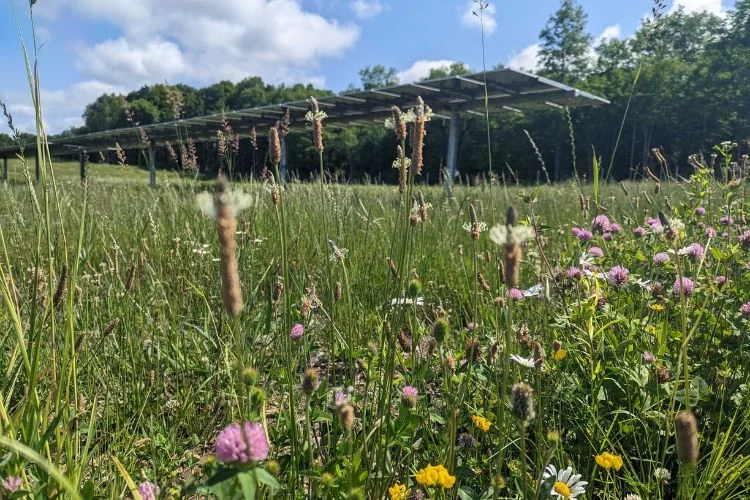
As the global transition toward renewable energy accelerates, the intersection of land use, agriculture, and solar power has emerged as a focal point for researchers and policymakers alike. Agrivoltaics, the practice of co-locating solar energy production with agricultural activities, is no longer a niche concept but a rapidly expanding sector of the clean energy economy. With solar installations in the United States projected to increase by 57% by 2030 compared to 2024 levels, the pressure to optimize land use is intensifying. A recent multi-site study conducted by HiveTracks and Skyview Ventures provides critical ground-truth data on whether these projects are delivering measurable ecological benefits alongside carbon-free electricity.

The study, which analyzed over 500 acres across seven diverse solar sites, addresses a fundamental gap in the industry: the lack of standardized methods for measuring biodiversity and ecosystem health over time. While the reduction of photovoltaic costs has made solar energy economically dominant, the environmental impact of these installations remains a subject of intense scrutiny. The findings suggest that the ecological success of a solar site is dictated less by the technology of the panels and more by the specific land management practices implemented by developers and landowners.
The Evolution of Land Use in Solar Development
Historically, ground-mounted solar projects have been viewed through a lens of environmental protection rather than ecological enhancement. In the United States, distributed-level solar development is governed by environmental review requirements designed primarily to prevent the disturbance of endangered species and sensitive habitats. These regulations vary significantly by state and project size, but they generally serve as a defensive measure. Once a site becomes operational, there is rarely a formal mechanism to track the recovery or degradation of the local ecosystem.

The emergence of agrivoltaics changes this paradigm. By integrating crop growth, sheep grazing, and pollinator habitats within solar arrays, developers can create a microclimate that benefits both the energy infrastructure and the biological community. Research indicates that the shade provided by solar panels can reduce soil and air temperatures by 1 to 4 degrees Celsius. This reduction in thermal stress not only aids plant resilience but also improves the efficiency of the photovoltaic cells, which can suffer from decreased performance at high temperatures.
Despite these theoretical benefits, the industry has struggled with the logistical challenges of monitoring. Engaging professional ecologists for ongoing site management is often prohibitively expensive for distributed-scale projects already burdened by interconnection delays and evolving regulatory hurdles. This has led to a status quo where ecological management is often limited to basic seeding and routine mowing—practices that maintain ground cover but do not necessarily foster native biodiversity.

Methodology: Utilizing Beekeepers as Biological Sensors
To overcome the barriers of cost and scale, the partnership between HiveTracks and Skyview Ventures utilized an innovative monitoring approach that leverages local stakeholders and artificial intelligence. The study turned to a network of trained beekeepers and land stewards to act as "citizen scientists," using a specialized mobile platform to collect real-time ecological observations.
The methodology employed three primary data collection techniques:

- Quadrat Sampling: The systematic assessment of 1-meter by 1-meter squares to determine the percentage of ground cover, floral density, and species richness.
- Transect Walks: Observations made along fixed paths to record pollinator activity and the presence of specific plant species across different habitats within the site.
- General Site Observations: Broad assessments of habitat health, including the identification of invasive species and the tracking of seasonal changes.
This community-driven data collection was augmented by high-tech analysis. Images captured by beekeepers were processed using AI-powered image recognition to ensure accurate species identification. Furthermore, the study incorporated laboratory analysis of honey samples. By examining the environmental DNA (eDNA) found in the honey, researchers could build a detailed map of pollinator activity and plant diversity. The honey acted as a biological record, reflecting the forage available both within the solar farm’s footprint and in the surrounding landscape.
Comparative Findings: The Impact of Management Decisions
The preliminary results from the 2025 monitoring season identified approximately 200 unique flora species across the study sites. The most significant metric used was the Shannon Diversity Index (SDI), which measures both the number of species present and the evenness of their distribution. A higher SDI indicates a more robust and stable ecosystem.

A critical finding of the study was the stark contrast between two New York-based sites: the Christiano site and the Lapp site. Both are ground-mounted solar installations of similar size (2–7 MW) and located in similar climatic zones. However, their ecological outcomes were vastly different.
The Christiano site recorded an SDI of 3.2, with 103 flora species and 41 distinct nectar sources. It supported a thriving community of native pollinators and was characterized by native seeding and reduced mowing frequency. In contrast, the Lapp site recorded an SDI of only 0.67, with just 14 flora species and 5 nectar sources. The primary cause for this disparity was the land management strategy; the Lapp site was managed for hay production, requiring frequent mowing cycles that prevented clover and other nectar-producing plants from reaching peak bloom.

This comparison highlights a vital lesson for the industry: the racking system and photovoltaic technology have negligible impact on biodiversity compared to the human decisions regarding vegetation management. The data suggests that "less is more" in many cases; reduced mowing and targeted native seeding can lead to better ecological outcomes while simultaneously lowering operations and maintenance (O&M) costs.
Chronology and Future Projections
The study’s timeline reflects a long-term commitment to longitudinal data.

- 2024: Initial site selection and the establishment of monitoring protocols across seven sites covering 500+ acres.
- 2025: Commencement of active biodiversity monitoring, identification of baseline flora species, and the first rounds of eDNA honey analysis.
- Late 2025: Development of site-specific management recommendations, such as adjusting mowing schedules and identifying areas for supplemental native seeding.
- 2026: Expansion of the monitoring program to include 469 quadrats and 231 transects, with an increased focus on tracking the progression toward stable grassland communities.
The analysis of honey eDNA in 2025 revealed that 30% to 50% of the forage originated from within the solar farm and its immediate edges, while 50% to 70% came from the surrounding landscape. As the sites mature and native vegetation becomes more established, researchers expect the percentage of on-site forage to increase, indicating a higher degree of ecological self-sufficiency.
Economic and Regulatory Implications
The transition of biodiversity from a "compliance cost" to a "measurable asset" has significant economic implications for solar developers. As regulatory frameworks such as the Taskforce on Nature-related Financial Disclosures (TNFD) and the Corporate Sustainability Reporting Directive (CSRD) gain traction, the demand for auditable, high-granularity nature data is rising.

Robust biodiversity data can provide several commercial advantages:
- Permitting and Public Relations: Demonstrating a net-positive impact on local ecosystems can help unlock stalled permits and reduce community opposition to new solar developments.
- O&M Savings: Promoting low-maintenance natural habitats reduces the need for frequent mowing and herbicide use, lowering the long-term operational costs of the site.
- Biodiversity Credits: Emerging markets for biodiversity credits offer a potential new revenue stream for developers who can provide certified proof of ecological improvement.
- Asset Value: Protecting the soil health and lease value of the land ensures that it remains productive for future agricultural use after the solar project is eventually decommissioned.
Broader Impact on the Energy Transition
The scale of the opportunity is immense. In 2024 and 2025, solar panels were estimated to occupy between 550,000 and 600,000 acres of land in the United States. If these areas are managed as sterile "green deserts," a significant opportunity for conservation is lost. However, if managed as active ecosystems, the solar industry could become one of the largest contributors to pollinator recovery and soil restoration in the country.

The collaboration between HiveTracks and Skyview Ventures demonstrates that biodiversity monitoring does not have to be an exotic or prohibitively expensive endeavor. By integrating community expertise with modern data tools, the renewable energy sector can prove that clean energy and a healthy environment are not competing interests, but rather two sides of the same coin.
As the industry moves toward 2030, the "ground truth" findings from these studies will likely inform the next generation of solar design. The goal is a future where solar farms are valued not just for the megawatt-hours they export to the grid, but for the honey they produce, the carbon they sequester in the soil, and the sanctuary they provide for the natural world. In the words of the study’s authors, "What you don’t measure, you don’t manage." By prioritizing measurement today, the agrivoltaics industry is ensuring that the solar boom of the 21st century is as green in practice as it is in principle.
