

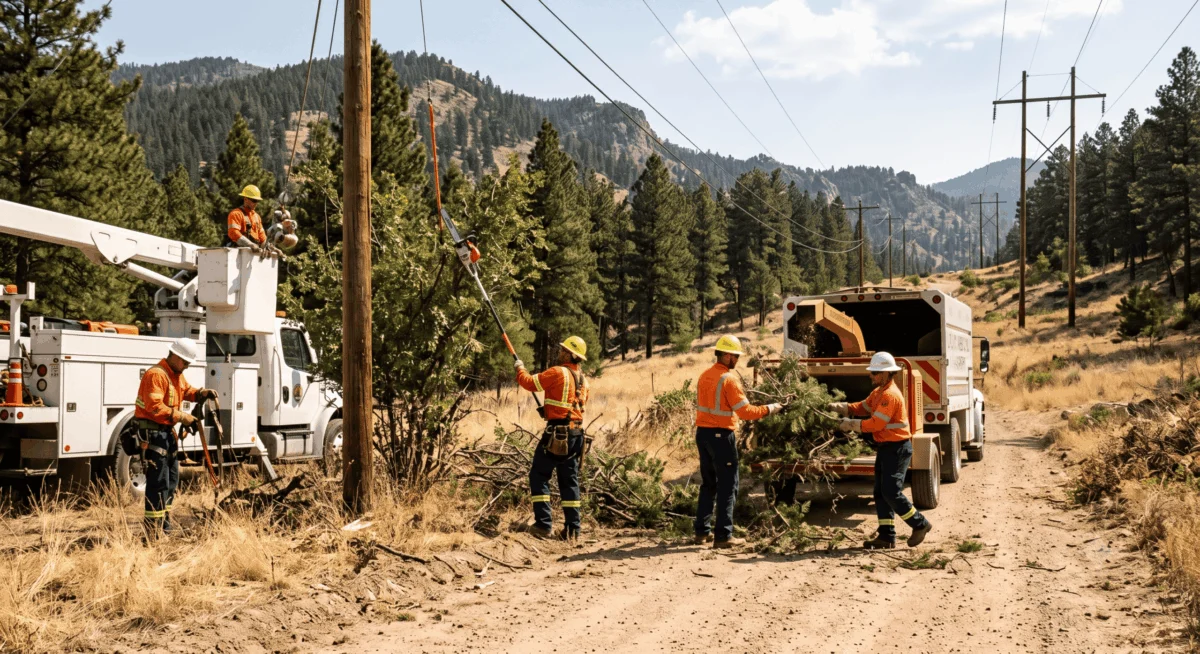
The global utility sector is currently undergoing a fundamental transformation in its approach to infrastructure management, transitioning from a century-old model of reactive maintenance to a sophisticated paradigm of proactive risk mitigation. This shift is being catalyzed by the increasing frequency and severity of extreme weather events, which have exposed deep-seated vulnerabilities in aging power grids. As wildfires, hurricanes, and heatwaves become more prevalent in regions previously considered low-risk, utilities are being forced to rethink the very definition of reliability. The upcoming Wildfire & Weather Emergency Response Summit, scheduled for August 25th in Chicago, IL, as part of the DTECH Reliability & Resiliency event, aims to address these critical challenges by showcasing how artificial intelligence (AI) and asset intelligence are reshaping the future of the grid.
The Evolution of Grid Reliability in an Era of Extremes
For decades, the standard for utility reliability was measured through relatively simple metrics such as the System Average Interruption Duration Index (SAIDI) and the System Average Interruption Frequency Index (SAIFI). These figures focused on "blue-sky" performance—maintaining power during typical operating conditions. However, industry experts, including Donald McPhail, Vice President of Market Development at eSmart Systems, argue that these averages are no longer sufficient. Modern reliability must be viewed through the lens of resilience: the ability of a grid to withstand, adapt to, and recover from low-frequency but high-severity events.
The historical "break-fix" model, where components were replaced only after failure or according to rigid, time-based schedules, is proving inadequate against the backdrop of a changing climate. In the United States, a significant portion of the electrical transmission and distribution infrastructure was installed in the mid-20th century. According to data from the Department of Energy, approximately 70% of transmission lines and power transformers are over 25 years old. This aging hardware is increasingly susceptible to "low-probability, high-consequence" events, such as catastrophic wildfires ignited by equipment failure during high-wind scenarios.
McPhail emphasizes that modern reliability is as much about community protection as it is about engineering. When a grid fails during an extreme weather event, the consequences extend far beyond a simple loss of light; they encompass threats to public safety, economic stability, and the integrity of essential services. Consequently, the industry is moving toward a component-level understanding of risk, where utilities must know exactly which assets are likely to fail on their "worst day."
Technological Catalysts: AI-Powered Inspections and Image Analytics
The primary driver of this proactive shift is the integration of advanced technology, specifically AI-powered inspections and high-resolution image analytics. Traditionally, inspecting hundreds of thousands of miles of power lines was a labor-intensive process involving manual ground patrols or helicopter flyovers with binoculars. These methods were not only slow and expensive but often failed to capture the minute details of hardware degradation that lead to failure.
The emergence of "Asset Intelligence" platforms allows utilities to ingest massive volumes of data from drones, satellites, and manned aircraft. These systems use machine learning algorithms to identify specific defects—such as rusted cotter pins, cracked insulators, or woodpecker holes in poles—across vast networks. Unlike conventional AI, which often struggles with the "noisy" and varied environments of utility corridors, new architectural approaches to AI are designed to provide "decision-grade" intelligence.
By creating a digital record of every component, utilities can move away from subjective assessments. This technology provides an evidentiary trail that is becoming increasingly important for regulatory compliance and insurance purposes. When a utility can prove it has inspected and prioritized a specific high-risk component based on empirical data, it strengthens its legal and financial standing in the event of an incident.
Addressing the "Fix-Everything" Backlog: Data-Driven Prioritization
One of the most significant hurdles facing modern utilities is the sheer volume of data. Many organizations find themselves "data rich but insight poor," sitting on terabytes of inspection imagery without a clear path to action. This often results in a "fix-everything" backlog that is financially and operationally impossible to clear.
To bridge this gap, utilities are working with technology partners to implement tiered prioritization strategies. For instance, companies like Xcel Energy and Evergy have begun utilizing AI to rank findings based on a combination of component condition and environmental hazard. A degraded insulator in a high-wind, high-fire-threat district (HFTD) is prioritized over a similar defect in a low-risk urban area.

This methodology allows utilities to transition from a "longer to-do list" to a "focused work plan." By directing capital and labor toward the areas where degraded hardware and real-world hazards overlap, utilities can achieve a greater reduction in risk per dollar spent. This is particularly crucial as utilities face mounting pressure from regulators to prove that their investments are both prudent and effective in preventing catastrophes.
The Regulatory and Financial Imperative
The shift toward proactive maintenance is not solely driven by a desire for operational excellence; it is also a response to intense financial and legal pressures. In recent years, utility-caused wildfires have led to tens of billions of dollars in liabilities, bankruptcies, and credit downgrades. Credit rating agencies and insurers are now scrutinizing utility wildfire mitigation plans (WMPs) with unprecedented rigor.
Regulators are increasingly demanding that utilities provide a "defensible record" of their decision-making processes. If a utility chooses not to replace a certain segment of a line, it must be able to demonstrate, through data, why that decision was made and how the risk was managed. This level of transparency is becoming the new standard for rate-case approvals.
Furthermore, the concept of "inverse condemnation" in states like California—where a utility can be held liable for damages caused by its equipment regardless of fault—has made the cost of failure astronomical. In this environment, proactive risk mitigation is not just a best practice; it is a requirement for financial survival.
A Triple Line of Defense: Prevention, Containment, and Recovery
At the upcoming Wildfire & Weather Emergency Response Summit, the discussion will center on a "triple line of defense" approach to grid resilience. This framework breaks down the utility’s response into three distinct phases:
- Prevention: Using AI and asset intelligence to identify and replace failing components before they can spark an ignition. This includes rigorous vegetation management and hardware hardening.
- Containment: Implementing technologies and operational protocols, such as Public Safety Power Shutoffs (PSPS) or fast-trip settings, to ensure that if a fault does occur, it does not result in a catastrophic fire.
- Rapid Recovery: Leveraging digital inspection data to quickly assess damage following a storm or fire, allowing for faster restoration of services and more efficient deployment of mutual aid crews.
Asset intelligence plays a critical role in each of these phases. By knowing the exact state of the grid before an event, utilities can predict where failures are likely to occur and have the necessary materials and personnel positioned for a rapid response.
Chronology of the Shift Toward Proactive Mitigation
The transition to the current state of utility wildfire defense has evolved through several key stages:
- Pre-2017: Most utilities relied on traditional cycles (e.g., 5-year inspection cycles) and reactive "run-to-failure" models for many distribution assets.
- 2017–2019: A series of devastating wildfires in the Western United States served as a wake-up call, leading to the first large-scale implementations of Wildfire Mitigation Plans and the increased use of aerial inspections.
- 2020–2022: The "Data Explosion" occurred as utilities began collecting millions of images via drones but struggled to process them manually, leading to the rise of specialized AI for the energy sector.
- 2023–Present: The industry has entered the "Intelligence Era," where the focus has shifted from merely collecting data to integrating AI-driven insights into core business processes, from long-term capital planning to daily work orders.
Implications for the Future of Energy Infrastructure
The implications of this evolution are profound. As utilities become more adept at using AI to manage physical risks, the "digital twin" of the grid will become as important as the physical assets themselves. This digital representation allows for predictive modeling that can simulate how a grid will perform under various climate scenarios, enabling more resilient urban planning and energy policy.
Moreover, the move toward proactive mitigation supports the broader energy transition. As the grid becomes more reliant on intermittent renewable energy sources, the need for a stable and resilient distribution network becomes even more acute. A grid that is prone to frequent failures or requires constant emergency shutoffs cannot effectively support the integration of electric vehicles (EVs) and distributed energy resources (DERs).
The Wildfire & Weather Emergency Response Summit in Chicago will serve as a critical forum for utility leaders to share these insights and collaborate on the next generation of resilience strategies. By focusing on the "smallest, least glamorous pieces of hardware," as McPhail notes, utilities can build a foundation of reliability that protects both the lights and the lives of the communities they serve. As the industry gathers this August, the focus will remain squarely on turning vast amounts of raw data into the actionable intelligence required to navigate an increasingly volatile climate.
