

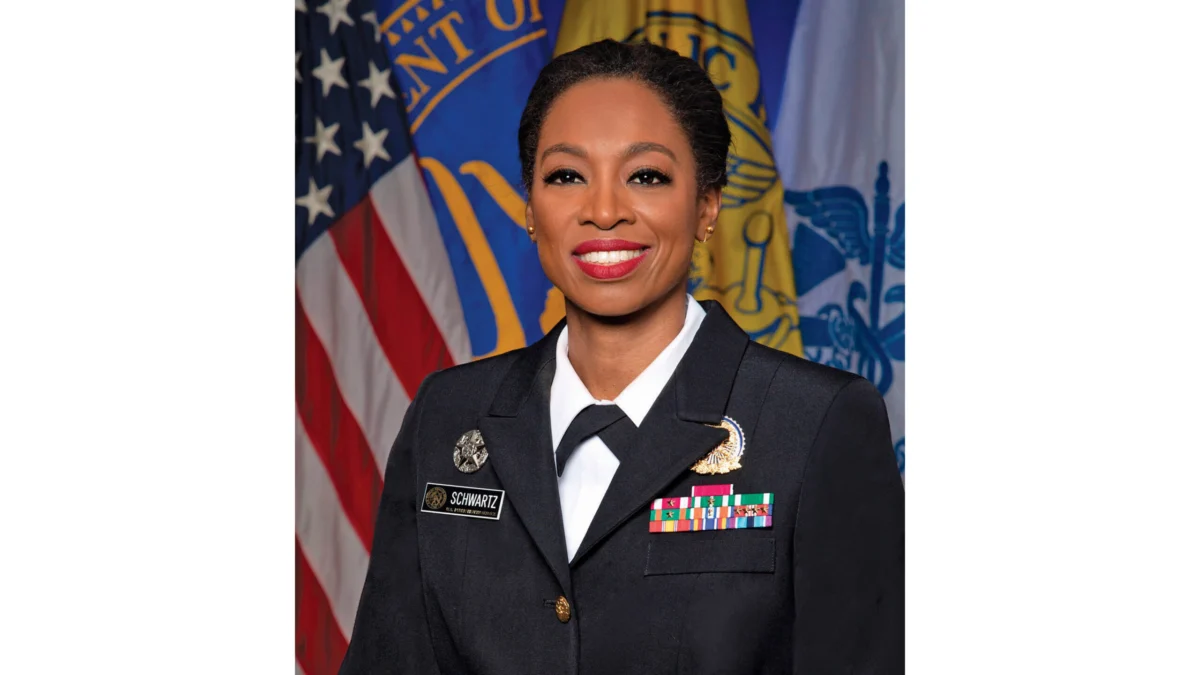
President Donald Trump on Thursday announced his nomination of Rear Admiral Erica G. Schwartz to serve as the next director of the Centers for Disease Control and Prevention (CDC), bringing a tentative conclusion to a protracted, months-long search for a permanent leader for the nation’s premier public health agency. The nomination comes at a particularly fraught period for the CDC, an institution grappling with unprecedented leadership upheaval, significant staff disaffection, and a series of controversial health policy directives emanating from the Department of Health and Human Services (HHS) under Secretary Robert F. Kennedy Jr.
Schwartz, a distinguished public health official with over two decades of military service, including a tenure as deputy surgeon general during the first Trump administration, will require confirmation by the Senate. Her potential leadership arrives as the CDC navigates a turbulent landscape marked by plummeting public trust and fundamental debates over the agency’s scientific independence and core mission, particularly concerning childhood immunization guidelines.
A Period of Profound Instability at the CDC
The nomination of Schwartz signals an attempt to stabilize an agency that has been without a Senate-confirmed director for an extended period, following a rapid succession of interim and short-lived appointments. The immediate predecessor in a confirmed capacity was Dr. Susan Monarez, whose tenure lasted less than a month last summer. Dr. Monarez, according to her congressional testimony in September, was summarily dismissed after she reportedly refused to approve vaccine recommendations from Secretary Kennedy that she believed lacked robust scientific underpinning. This swift departure, occurring in late August 2025, underscored the intense political pressures being exerted on the agency’s scientific integrity.
Following Dr. Monarez’s firing, Dr. Jay Bhattacharya assumed the role of acting director. However, his authority under federal law, specifically the Vacancies Act, expired last month. This act limits the duration an acting officer can serve in a position requiring Senate confirmation to 210 days. The lapse of Dr. Bhattacharya’s title, occurring precisely 210 days after Dr. Monarez’s removal, further exacerbated the leadership vacuum and highlighted the administrative challenges facing the administration in securing a permanent head.
The Vacancies Act (5 U.S.C. § 3345 et seq.), designed to prevent prolonged periods of unconfirmed leadership in critical government roles, stipulates strict timelines, often necessitating presidential action within a limited window. Its application in this instance left the CDC without even an acting director, intensifying calls for a decisive nomination.
Rear Admiral Schwartz’s Distinguished Background
Erica G. Schwartz brings a substantial and diverse professional background to the table. During the first Trump administration, she served as deputy surgeon general, a role in which she played a significant part in the U.S. response to the nascent stages of the Covid-19 pandemic. Her experience during this global health crisis, which tested the limits of public health infrastructure and required rapid policy formulation, will undoubtedly be scrutinized during her confirmation hearings.
Prior to her service as deputy surgeon general, Schwartz accumulated more than 20 years in uniform, culminating in her rank as rear admiral. Notably, she also held the critical position of chief medical officer of the Coast Guard, where she was responsible for the health and medical readiness of thousands of service members and their families. This extensive military and public health experience suggests a leader accustomed to high-stakes environments, complex logistical challenges, and the demands of national service. Her career trajectory positions her as a candidate with a strong foundation in operational medicine and emergency response, skills that are paramount for the head of an agency tasked with protecting the nation’s health.
Broader Leadership Changes at the CDC
Alongside Schwartz’s nomination, President Trump also announced additional key appointments aimed at shoring up the CDC’s leadership structure. Sean Slovenski was named deputy CDC director and chief operating officer, a role focused on the agency’s vast administrative and operational functions. Furthermore, Jennifer Shuford was selected as deputy CDC director and chief medical officer. Shuford’s professional background includes leading the Texas Department of State Health Services, where she notably spearheaded the state’s response to a significant measles outbreak last year. Her public statements crediting widespread vaccination and robust testing for containing that outbreak offer an initial glimpse into her public health philosophy, which could prove relevant in the agency’s ongoing policy debates.
These appointments collectively signal an effort to establish a comprehensive leadership team at the CDC, though the immediate challenge for Schwartz and her deputies will be to restore stability and confidence both internally and externally.
Controversial Health Policy Shifts Under HHS Secretary Kennedy
The leadership transitions at the CDC are inextricably linked to a series of controversial health policy changes championed by HHS Secretary Robert F. Kennedy Jr. Since his appointment, Secretary Kennedy has overseen efforts to significantly alter long-standing public health recommendations, most notably a proposed overhaul of childhood vaccine schedules. This initiative aims to reduce the number of recommended childhood immunizations from 17 to 11, a move that has drawn sharp criticism from a broad spectrum of public health organizations, medical professionals, and infectious disease experts.
These proposed changes are based on theories that diverge from the scientific consensus of leading medical bodies worldwide, which advocate for comprehensive immunization schedules to protect against a wide array of preventable diseases. The scientific community largely supports the current, evidence-based schedule, citing decades of research demonstrating its safety and efficacy in preventing outbreaks of diseases like measles, polio, and pertussis.
Adding to the complexity, a federal judge last month issued an injunction blocking a critical vaccine panel’s efforts to implement these revised immunization policies. The judicial intervention underscores the legal and scientific challenges facing the administration’s health agenda and highlights the potential for further protracted battles over the scientific autonomy of federal health agencies. The ruling was seen by many public health advocates as a temporary reprieve for evidence-based medicine and a check on political interference in scientific recommendations.
Eroding Public Trust and Internal Disarray
The continuous leadership churn and the controversial policy changes have taken a significant toll on public trust in federal health agencies, including the CDC. A February 2026 poll conducted by the reputable health policy research group KFF revealed a dramatic decline in confidence in institutions like the CDC, with this erosion spanning across the political spectrum. The KFF report indicated that public confidence in the CDC’s guidance and scientific integrity had reached historic lows, a concerning trend for an agency whose effectiveness relies heavily on public adherence to its recommendations.
Internally, the CDC has also been reeling. Reports of plummeting staff morale and significant employee turnover have become widespread. Many long-serving public health professionals and scientists within the agency have reportedly expressed frustration over perceived political interference in scientific processes, the sidelining of expert advice, and the rapid succession of leadership. This internal strife poses a formidable challenge for any new director, who will need to prioritize rebuilding trust, fostering a culture of scientific integrity, and ensuring that the agency can retain and attract top talent.
Further compounding the agency’s difficulties was a tragic and unsettling incident in August 2025, when a gunman attacked the CDC’s Atlanta headquarters. While the immediate details of the attack and its motivations were complex, the event sent shockwaves through the agency, adding another layer of trauma and insecurity for its dedicated staff members already grappling with an uncertain future.
Challenges and Implications for Schwartz’s Confirmation
The confirmation process for Rear Admiral Schwartz is expected to be rigorous and politically charged. Senators will likely scrutinize her past statements, her views on vaccine policy, and her approach to navigating the delicate balance between political directives and scientific independence. Given the contentious tenure of Secretary Kennedy and the previous director’s stated reasons for dismissal, Schwartz’s stance on the autonomy of the CDC’s scientific recommendations will be a focal point. It remains unclear how her personal views on vaccines and other critical public health policies align with those of Secretary Kennedy, a question that will undoubtedly be explored during congressional hearings.
Public health experts and advocacy groups will be closely watching the confirmation process, emphasizing the critical need for a CDC director who is committed to evidence-based public health practices, transparency, and the restoration of the agency’s scientific credibility. Organizations such as the American Public Health Association and the Infectious Diseases Society of America are expected to issue statements advocating for a director who can safeguard the CDC’s mission against political pressures.
The future director of the CDC faces a monumental task: to re-establish the agency as an authoritative, trusted source of public health information, to rebuild internal morale and stabilize its workforce, and to navigate a deeply polarized political landscape where public health has become a battleground. Rear Admiral Schwartz’s nomination marks a pivotal moment for the CDC and, by extension, for the future of public health in the United States. Her success, or lack thereof, in these endeavors will have profound implications for the nation’s ability to respond to future health crises and maintain the public’s confidence in its most vital health protection agency.
