

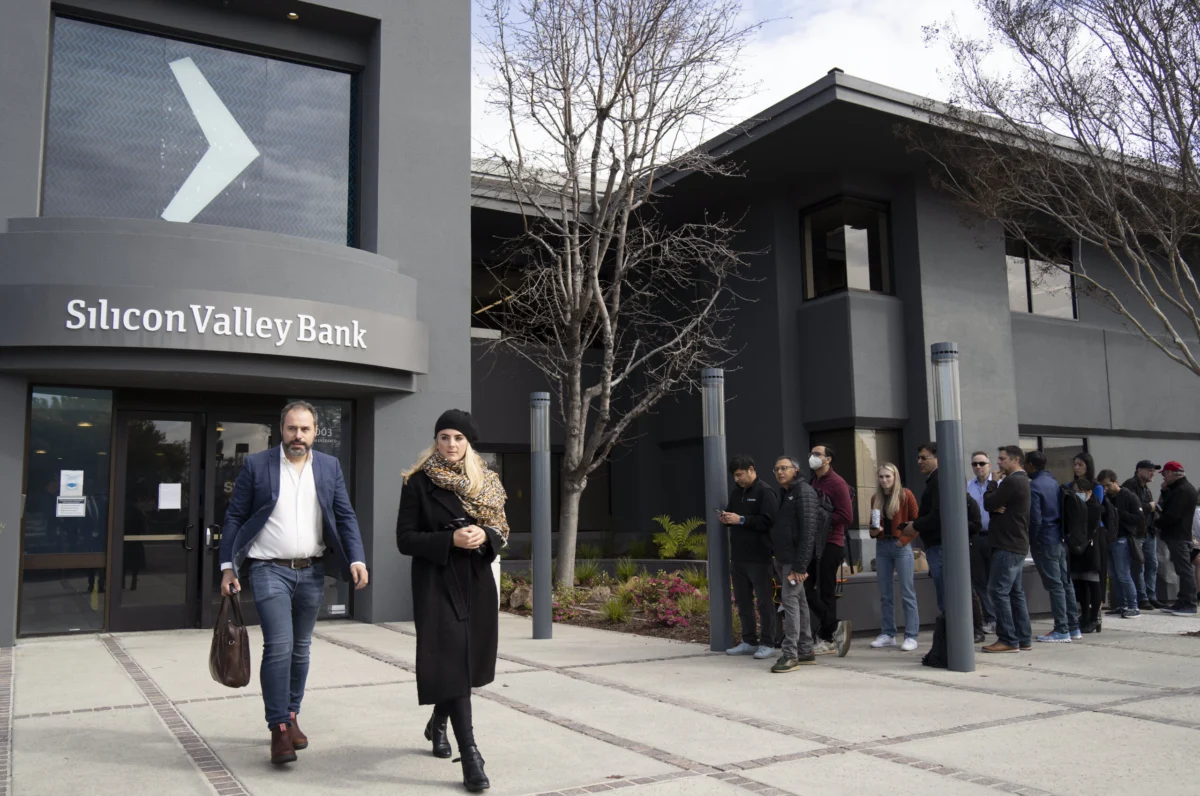
Three years ago, on the precipice of a seismic shift in the financial landscape, a seemingly ordinary retirement party in New York City became the unexpected nexus for a pivotal strategic decision for JPMorgan Chase. It was March 9, 2023, and Doug Petno, a seasoned executive within the banking giant, was called aside by his formidable boss, CEO Jamie Dimon. The tech world’s favored lender, Silicon Valley Bank (SVB), was in freefall, grappling with an unprecedented exodus of deposits. The urgent question from regulators on the line was stark: Was JPMorgan Chase interested in acquiring the rapidly crumbling institution?
The Precipitous Fall of Silicon Valley Bank
The unraveling of Silicon Valley Bank, a cornerstone of the American startup ecosystem for decades, was swift and brutal. For years, SVB had carved out a lucrative niche, serving a concentrated client base of technology startups, venture capital firms, and their high-net-worth founders. Its business model thrived on a symbiotic relationship: offering tailored banking services to nascent companies and holding their substantial, often uninsured, deposits. These deposits were then largely invested in long-dated, low-yield government bonds.
The fatal flaw in this strategy became glaringly apparent as the Federal Reserve embarked on an aggressive campaign of interest rate hikes in 2022 to combat surging inflation. As interest rates climbed, the market value of SVB’s bond portfolio plummeted. Simultaneously, rising rates and a tightening venture capital market meant startups were burning through cash faster, necessitating withdrawals from their SVB accounts. To meet these demands, SVB was forced to sell some of its underwater bonds at a significant loss, revealing the extent of its balance sheet vulnerabilities.
On March 8, 2023, SVB announced a massive equity raise to shore up its finances, a move that instead triggered widespread panic. Venture capital firms, sensing trouble, advised their portfolio companies to withdraw their funds. The ensuing digital bank run, exacerbated by social media, saw $42 billion vanish from SVB’s coffers in a single day. The California Department of Financial Protection and Innovation moved swiftly, seizing the bank on March 10, 2023, marking the largest bank failure since the 2008 financial crisis and sending shockwaves across the global financial system.
JPMorgan’s Weekend of Decision and a Flood of New Clients
As SVB collapsed, regulators, acutely aware of the systemic risks posed by its failure, turned to the nation’s largest banks for potential solutions. Jamie Dimon’s call to Doug Petno was a direct appeal, gauging JPMorgan’s appetite for an emergency acquisition. Over that tumultuous weekend, Dimon, Petno, and other senior JPMorgan leaders meticulously evaluated the prospect of integrating SVB’s operations and its troubled balance sheet.
Despite the initial interest, JPMorgan ultimately decided against acquiring SVB. The sheer scale of deposit flight and the unique concentration of SVB’s client base presented complex integration challenges and potential liabilities. However, as the crisis unfolded, an unforeseen opportunity presented itself. Thousands of panicked SVB clients, seeking stability and security, began migrating their accounts to larger, systemically important institutions. JPMorgan Chase, with its robust balance sheet and reputation for stability, became a primary beneficiary of this "flight to safety."
"We had three years’ worth of incoming clients in a weekend," Petno, who serves as co-head of JPMorgan’s commercial and investment bank, recounted in an exclusive interview. "Onboarding teams were opening up accounts around the clock." The operational challenge was immense, but the strategic implications were undeniable. A significant void had opened in the specialized startup banking market, and clients were actively seeking a new trusted partner.
Identifying a Market Vacuum and Forging a New Strategy
Emboldened by the unprecedented influx of clients and recognizing the immediate market gap, Petno saw a profound opportunity. JPMorgan, already a colossus in traditional banking, had the potential to become a formidable competitor to the niche players that had previously dominated the startup space, including the now-shuttered SVB, as well as emerging fintechs like Brex, Ramp, and Mercury. These companies had successfully cultivated a profitable segment by catering specifically to the distinct needs of founders and venture capital investors.
"We went to our board and said, ‘there’s a vacuum in the market,’" Petno explained. "At that very moment, everybody saw the opportunity." The crisis, rather than being a deterrent, became a catalyst for an accelerated strategic pivot. The goal was no longer merely to absorb displaced clients but to intentionally build a comprehensive, leading-edge startup banking platform.
This strategic ambition for JPMorgan Chase extends far beyond simply accumulating deposits. As a financial behemoth with over $180 billion in revenue in the previous year, expanding into the specialized niche of startup banking aligns perfectly with its overarching growth strategy. Furthermore, it serves as a critical conduit for the New York-based institution to remain intimately connected with the pulse of technological innovation. JPMorgan, which allocates nearly $20 billion to its technology budget annually, aims not only to serve its startup clients and VC investors but also to learn from them. The firm diligently monitors Silicon Valley startups for solutions to its own complex challenges, spanning cybersecurity, artificial intelligence, and quantum computing. For instance, Petno noted that when a JPMorgan client announces AI-driven operational shifts or workforce adjustments, the bank often dispatches teams to understand the underlying methodologies and impacts, leveraging these insights for its own internal efficiencies and strategic planning.
A History of Engagement and Accelerated Evolution
JPMorgan’s foray into startup banking wasn’t entirely new. The bank initiated its dedicated startup banking business in 2016, recognizing the growing influence of its tech-focused rivals and the westward migration of innovation. In its initial phase, the bank primarily focused on larger, more established startups. This cautious approach was partly due to the absence of a fully digitized banking solution, a feature highly coveted by younger founders. Additionally, JPMorgan lacked the extensive network of specialized investment bankers required to effectively target smaller, riskier early-stage companies.
For many years, the perception within the venture capital community was that JPMorgan’s processes were cumbersome. Opening an account could be a protracted affair, and resolving payment issues often necessitated time-consuming branch visits—a stark contrast to the agile, digitally native experiences offered by its specialized competitors. "They want to go to the website to open an account, and if it’s more than 15 minutes, they’re done," Petno acknowledged, highlighting the need for a radical transformation in customer experience.
The weeks following the SVB collapse provided the impetus for this transformation. Petno and his team moved with unprecedented speed, strategically hiring key talent from SVB, including John China, then-SVB Capital President. China now co-leads JPMorgan’s innovation economy business alongside Andrew Kresse, bringing invaluable domain expertise and client relationships. This influx of specialized talent was crucial in bridging the experiential gap and accelerating the development of tailored services.
The Acquisition of First Republic and Doubling Down on the Tech Sector
The banking crisis of early 2023 was not confined to SVB. Another prominent regional bank catering to the affluent and tech communities, First Republic Bank, also faced a significant deposit drain and liquidity crisis. By late April 2023, JPMorgan Chase found itself once again in a position to acquire a wounded California-based institution. This time, after learning crucial lessons from its assessment of SVB, JPMorgan made the winning bid for First Republic, a move that further cemented its commitment to the tech and innovation sectors.
The acquisition of First Republic brought with it not only a valuable client base but also additional operational capabilities and a deeper understanding of the specialized needs of venture capital and high-net-worth tech individuals. Leveraging the insights gained from the SVB crisis and integrating First Republic’s banking operations, JPMorgan dramatically scaled its startup banking business. The company reported a doubling of its revenue from this segment in 2023, a clear indicator of the strategic move’s success.
Despite the pronounced emphasis on digital banking solutions, the human element remains a critical component. Petno noted instances where startup founders, accustomed to traditional banking, might still walk into a Chase branch to deposit a substantial funding check into a regular account. In such scenarios, JPMorgan’s enhanced internal systems are now designed to immediately identify these clients and seamlessly transition them to the specialized startup team, ensuring they receive the bespoke services required for their unique business models.
Building a Comprehensive, One-Stop Shop for Innovation
Today, JPMorgan has quadrupled its total client base in the innovation economy business, now serving nearly 12,000 clients through a dedicated team of 550 bankers strategically located on both the East and West Coasts. This specialized team draws upon the vast resources of the broader JPMorgan Chase enterprise. The structure is meticulously designed to cater to the diverse needs of the ecosystem: founders and venture capital investors are managed by the private bank, startups fall under the commercial bank, and venture capital funds are treated as distinct clients within a business segment largely integrated from the First Republic acquisition. This holistic approach ensures that every facet of the innovation economy receives specialized attention and tailored financial solutions.
While JPMorgan has refrained from disclosing specific revenue figures for this segment, Petno confirmed that the startup business exhibits a "dramatically higher" growth rate compared to the bank’s more established, main business lines. This rapid expansion underscores the success of their targeted strategy and the enduring demand for reliable, comprehensive banking services within the tech community.
Despite these impressive gains, Petno remains focused on continuous improvement, particularly concerning the firm’s digital banking offerings for startups. He hinted at an ongoing project poised to help JPMorgan "leapfrog competitors," signaling a commitment to innovation that extends beyond merely matching existing services. The competitive landscape for startup banking remains dynamic, with players like SVB (now under First Citizens Bank), Mercury, Ramp, Stifel, and Customers Bank vying for market share. The recent acquisition of Brex by Capital One for $5.15 billion in January further illustrates the intense consolidation and strategic repositioning occurring within this lucrative sector.
JPMorgan’s long-term vision is to identify and cultivate relationships with promising startups earlier in their lifecycle, much like SVB did, but with the added stability and resources of a global financial institution. By doing so, the bank aims to provide not only essential core banking services but also lucrative investment banking advice as these companies mature. The ultimate goal is to establish JPMorgan as the definitive "one-stop shop" for founders, capable of addressing all their financial needs, from seed funding and international expansion to initial public offerings and beyond. "Once you’re onboarded, you can never outgrow JPMorgan, from unicorn all the way to a Magnificent 7," Petno declared, encapsulating the bank’s ambitious trajectory in the ever-evolving world of technology and finance. The seismic events of March 2023, though born of crisis, ultimately catalyzed JPMorgan Chase’s accelerated transformation into a formidable force in the innovation economy.
