

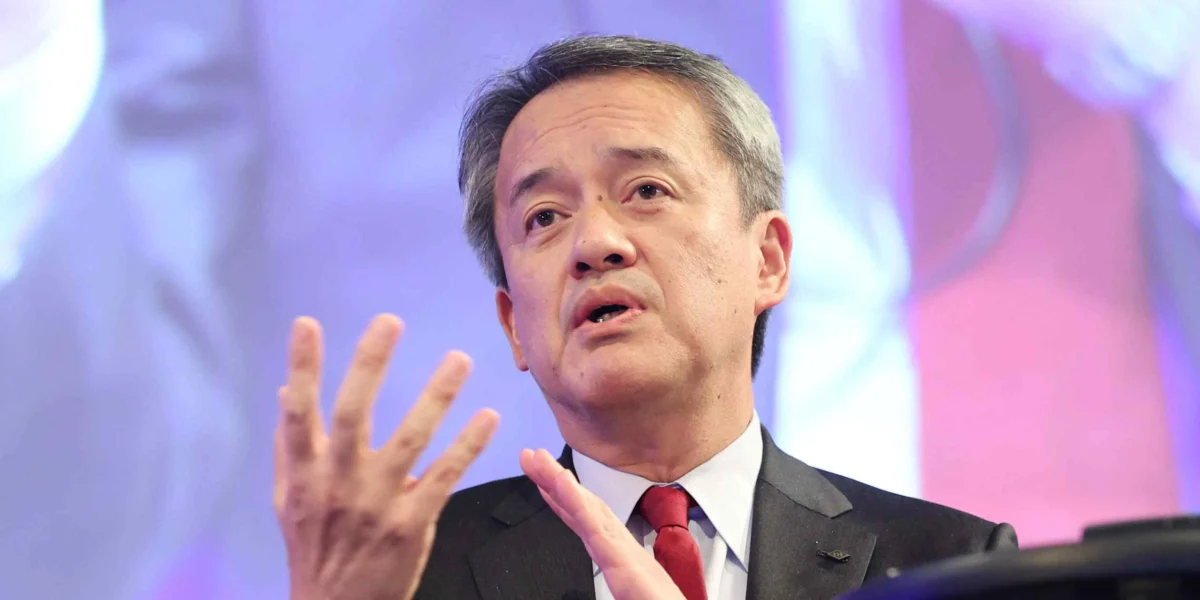
Marubeni President Omoto Charts Southward Growth Trajectory, Drawing Inspiration from Berkshire Hathaway’s Decentralized Model
Tokyo – The global economic landscape is poised for a significant geographical recalibration, with the center of gravity for growth expected to increasingly orient towards the southern hemisphere, according to Masayuki Omoto, President and CEO of Marubeni Corporation. Speaking at the prestigious Nikkei Forum Global Management Dialogue 2026 held in Tokyo on November 11, 2026, Omoto articulated Marubeni’s strategic vision, emphasizing a sharpened focus on cultivating local demand within individual markets and a deliberate shift towards a more decentralized operational framework. This strategic pivot, he revealed, is heavily influenced by the enduring success and operational philosophy of Warren Buffett’s iconic investment conglomerate, Berkshire Hathaway.

The annual Global Management Dialogue, a cornerstone event for business leaders and policymakers, convenes to dissect emerging trends and chart future economic pathways. This year’s forum, held at a pivotal moment in the global economic cycle, saw Marubeni’s leadership outline a bold vision for navigating a complex and evolving world. Omoto’s address, delivered with a measured yet resolute tone, signaled Marubeni’s commitment to adapting its global business strategy to harness the dynamism of emerging economies, particularly those located in the southern latitudes, and to foster a more agile and responsive organizational structure.
Embracing the Southern Shift: A Strategic Imperative
Omoto’s assertion regarding the southward shift in global economic growth is not merely a rhetorical flourish but a reflection of observable demographic and economic trends. Data from various international organizations, including the International Monetary Fund (IMF) and the World Bank, consistently point towards faster GDP growth rates in many developing economies across Africa, South America, and parts of Oceania compared to more established markets in North America and Europe. Projections from the IMF for 2027, for instance, anticipate average growth rates in Sub-Saharan Africa to exceed 4%, while Latin America and the Caribbean are projected to grow at a similar pace, outpacing the anticipated growth in advanced economies, which is forecast to remain below 2%.
Marubeni, as a diversified trading and investment conglomerate with a sprawling global footprint, is strategically positioning itself to capitalize on this demographic and economic dividend. The company’s ambition is to move beyond a purely export-driven model in these regions and instead delve deeper into understanding and serving the nascent and growing local consumption patterns. This involves not just the sale of goods and services but also strategic investments in local infrastructure, manufacturing capabilities, and the development of domestic value chains. The rationale is clear: sustained growth in these regions will be increasingly fueled by internal demand, creating opportunities for companies that are deeply integrated into their local economies.

Lessons from Berkshire Hathaway: Decentralization and Autonomy
A significant portion of Omoto’s discourse was dedicated to the influence of Berkshire Hathaway on Marubeni’s evolving management philosophy. Berkshire Hathaway’s remarkable and sustained success over decades can be largely attributed to its unique decentralized structure, which grants significant autonomy to its subsidiary companies and their management teams. This model allows for nimble decision-making, fosters a strong sense of ownership, and enables each business unit to respond effectively to its specific market conditions and opportunities, free from the stifling bureaucracy that can often plague larger organizations.
Omoto highlighted several key takeaways from Berkshire Hathaway’s approach that Marubeni intends to emulate. Firstly, the principle of empowering local leadership. By entrusting decision-making power to those on the ground who possess intimate knowledge of local markets, Marubeni aims to accelerate its response times and enhance its ability to identify and seize opportunities. This contrasts with traditional centralized models where strategic decisions are often made at a distant headquarters, potentially leading to a disconnect with local realities.
Secondly, Omoto spoke about the importance of fostering a culture of accountability and long-term value creation. Berkshire Hathaway is renowned for its patient capital approach, focusing on sustainable growth and profitability rather than short-term gains. Marubeni, under Omoto’s leadership, is signaling a similar commitment, seeking to build businesses that are resilient and contribute meaningfully to the economic development of the regions in which they operate. This involves a rigorous due diligence process for investments and a clear understanding of the long-term societal and economic impact of Marubeni’s operations.

Thirdly, the concept of "run your own show" was emphasized. Berkshire Hathaway famously allows its acquired companies to operate with a high degree of independence, maintaining their established brands and operational styles. Marubeni is exploring how to apply this to its own diverse portfolio, encouraging its various business units and subsidiaries to leverage their unique strengths and adapt their strategies to their specific operating environments, while still aligning with Marubeni’s overarching strategic goals.
Background to the Global Management Dialogue 2026
The Nikkei Forum Global Management Dialogue is an annual event organized by Nikkei Inc., Japan’s leading business and economic media group. Established to foster international dialogue on critical business and economic issues, the forum brings together chief executives, senior executives, academics, and government officials from around the world. The event typically features keynote speeches, panel discussions, and networking opportunities, providing a platform for sharing insights, debating challenges, and forging collaborations.
This year’s edition, held on November 11, 2026, in Tokyo, convened against a backdrop of significant global economic shifts. The aftermath of recent geopolitical tensions, ongoing supply chain realignments, and the accelerating pace of technological innovation have created a dynamic and often unpredictable business environment. Discussions at the forum are expected to have revolved around themes of sustainable growth, digital transformation, geopolitical risk management, and the evolving role of multinational corporations in a multipolar world. Marubeni’s participation and Omoto’s address were particularly noteworthy, given the company’s status as a major global player and its proactive approach to adapting to these macro-economic forces.

Marubeni’s Strategic Framework: A Deeper Dive
Marubeni’s strategic reorientation, as articulated by President Omoto, is likely to manifest in several key areas:
1. Targeted Investment in Emerging Markets: The company is expected to increase its direct investments in sectors that are critical for the growth and development of southern hemisphere economies. This could include infrastructure projects (energy, transportation, telecommunications), agribusiness, renewable energy, and healthcare. The focus will be on projects that not only generate financial returns but also contribute to local job creation and economic diversification. For example, investments in expanding cold chain logistics in Southeast Asia or developing sustainable agricultural practices in Africa could be prioritized.
2. Enhanced Localized Operations and Talent Development: To truly tap into local demand, Marubeni will need to deepen its presence within these markets. This means not just establishing offices but building robust operational capabilities, including local manufacturing, R&D centers, and distribution networks. Crucially, this will involve investing in the development of local talent, empowering them to take on leadership roles and drive innovation from within. This approach mirrors Berkshire Hathaway’s philosophy of retaining and nurturing existing management teams within its acquired businesses.

3. Diversification of Revenue Streams: By focusing on local demand, Marubeni aims to reduce its reliance on traditional commodity trading and exports, creating more stable and predictable revenue streams. This diversification will also extend to its business lines, seeking to integrate its various divisions to offer more comprehensive solutions to its clients in emerging markets.
4. Risk Management and Resilience: The shift towards more decentralized operations, inspired by Berkshire Hathaway, is also a strategic move towards enhancing risk management. By distributing decision-making authority, Marubeni can potentially mitigate the impact of localized disruptions. Furthermore, a stronger presence in diverse markets can help buffer the company against downturns in any single region.
Broader Implications and Expert Analysis
The strategic direction outlined by Marubeni’s President Omoto carries significant implications not only for the company itself but also for the broader global economic landscape.

For Emerging Economies: Marubeni’s commitment to tapping into local demand and investing in localized operations could be a catalyst for economic development. Increased foreign direct investment, coupled with a focus on job creation and skills development, can contribute to poverty reduction and improved living standards. The emphasis on sustainable practices also aligns with the growing global imperative for environmentally responsible economic growth.
For Global Trade and Investment: The shift advocated by Omoto suggests a potential recalibration of global trade flows and investment patterns. As emerging economies become more self-sufficient and their domestic markets grow in importance, the traditional dominance of established economic powers might gradually wane. This could lead to a more balanced and multipolar global economic system.
For Corporate Strategy: Marubeni’s embrace of a decentralized, Berkshire Hathaway-inspired model offers a compelling case study for other multinational corporations grappling with the challenges of global expansion and market responsiveness. The success of this approach will be closely watched by competitors and business strategists alike.

Dr. Kenji Tanaka, a professor of International Business at Hitotsubashi University, commented on the announcement, stating, "Marubeni’s strategic pivot is a forward-thinking response to the evolving global economic order. The emphasis on localized demand and decentralized management, drawing from the success of Berkshire Hathaway, is particularly insightful. It acknowledges that sustained growth in the 21st century will increasingly come from understanding and serving the needs of diverse local populations, rather than solely relying on a top-down, export-oriented approach."
He further added, "The challenge for Marubeni will lie in effectively implementing this decentralized model across its vast and varied operations, ensuring that autonomy does not lead to fragmentation and that the core values of the corporation are maintained. However, if successful, this strategy could position Marubeni as a leader in navigating the complexities of emerging markets and fostering truly sustainable global growth."
The coming years will undoubtedly reveal the extent to which Marubeni can translate President Omoto’s vision into tangible outcomes. However, the company’s strategic pronouncements at the Nikkei Forum Global Management Dialogue 2026 signal a significant and potentially transformative evolution in its approach to global business. The southward shift is not just a geographical observation; for Marubeni, it represents a fundamental strategic imperative, guided by the wisdom of enduring business principles.
