

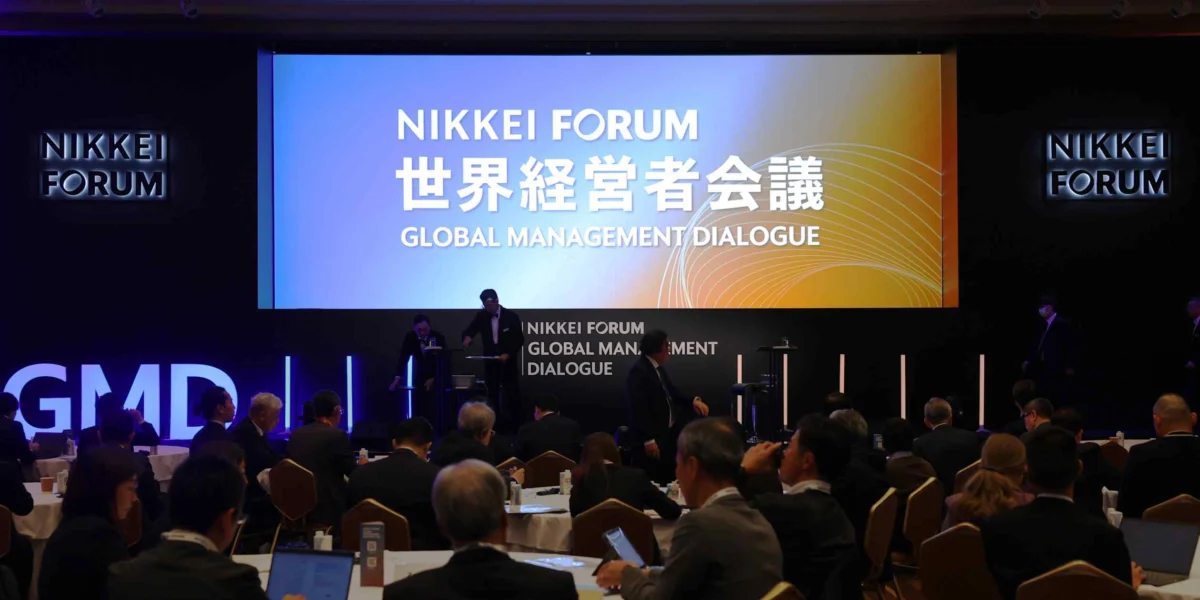
TOKYO – Nikkei’s 2026 Global Management Dialogue commenced its second day on Wednesday, November 11, 2026, with a prominent presence from Taiwan Semiconductor Manufacturing Co. (TSMC), the undisputed global leader in contract chip manufacturing. The forum, held in Tokyo, continued to place artificial intelligence (AI) firmly at the forefront of its discussions, reflecting its pervasive influence on the global economic and technological landscape. The participation of senior executives from TSMC, a critical linchpin in the semiconductor supply chain, alongside tech behemoth Microsoft, underscores the critical nexus between advanced manufacturing capabilities and the rapid evolution of AI.
A Deep Dive into the Semiconductor Ecosystem and the AI Revolution
The presence of a senior TSMC representative at the Global Management Dialogue is particularly significant given the company’s pivotal role in enabling the development and deployment of cutting-edge AI technologies. TSMC’s advanced fabrication processes are essential for producing the high-performance chips that power everything from sophisticated AI training models to the complex algorithms driving autonomous systems and advanced data analytics. The company’s exclusive ability to manufacture chips using process nodes as small as 3 nanometers, and its ongoing advancements towards even smaller nodes, places it at the very vanguard of technological innovation. This capability directly translates into the power and efficiency of the AI hardware that underpins the current technological boom.
Microsoft, a major consumer of advanced semiconductor technology and a leading developer of AI platforms and services, further amplifies the importance of TSMC’s participation. The tech giant’s vast investments in AI research and development, including its significant contributions to large language models and cloud-based AI infrastructure, are intrinsically reliant on the availability of state-of-the-art chips. The dialogue, therefore, provides a crucial platform for these two titans of industry to engage in strategic discussions about the future of semiconductor innovation, supply chain resilience, and the evolving demands of the AI era.
Historical Context: The Nikkei Global Management Dialogue
The Nikkei Global Management Dialogue, an annual fixture on the international business calendar, has consistently served as a high-level platform for business leaders, policymakers, and academics to convene and deliberate on the most pressing global economic and management challenges. Established with the aim of fostering cross-border collaboration and identifying pathways for sustainable growth, the dialogue typically convenes influential figures from diverse sectors and regions. Over the years, it has provided critical insights into trends shaping industries such as finance, technology, automotive, and energy.
The 2026 edition, held against a backdrop of accelerated digital transformation and escalating geopolitical complexities, has placed a particular emphasis on the disruptive potential of artificial intelligence. Previous sessions have likely touched upon the foundational elements of AI, such as data infrastructure and algorithmic development, but this year’s iteration highlights the crucial hardware underpinnings and the strategic imperatives for global collaboration in the face of increasing technological competition.
Chronology of AI’s Ascendancy and its Impact on Industry
The current AI revolution is not an overnight phenomenon but rather a culmination of decades of research and development, with recent advancements accelerating its integration into mainstream applications. The early 2010s saw a significant leap forward with the advent of deep learning techniques, which leveraged the increasing availability of computational power and vast datasets. This period marked a transition from theoretical possibilities to practical applications, particularly in areas like image recognition and natural language processing.
By the mid-2010s, major technology companies began heavily investing in AI, leading to the development of more sophisticated AI models and the creation of specialized AI hardware. This era witnessed the rise of AI-powered virtual assistants, recommendation engines, and early forms of autonomous systems. The late 2010s and early 2020s have been characterized by the explosive growth of generative AI, exemplified by the widespread adoption of large language models capable of producing human-like text, code, and even creative content.
This rapid evolution has placed unprecedented demands on the semiconductor industry. The computational intensity of training and deploying these advanced AI models requires processors with massive parallel processing capabilities, significant memory bandwidth, and energy efficiency. This is where companies like TSMC, with their cutting-edge fabrication technologies, become indispensable. Their ability to shrink transistor sizes and optimize chip architectures directly translates into more powerful and efficient AI hardware.
For instance, the development of specialized AI accelerators, such as Graphics Processing Units (GPUs) and Tensor Processing Units (TPUs), has been a direct response to the computational needs of AI. TSMC’s role as the primary manufacturer for many of these leading chip designers means that their production capacity and technological roadmap are intrinsically linked to the pace of AI innovation. Recent reports indicate that TSMC’s capacity utilization for its most advanced nodes has been consistently high, often exceeding 90%, reflecting the surging demand from AI-focused customers. The company has also been making substantial investments in expanding its manufacturing facilities globally, including in the United States and Japan, to address concerns about supply chain diversification and resilience.
Strategic Implications for Global Technology Supply Chains
The discussions at the Nikkei forum are occurring at a time when global technology supply chains are under intense scrutiny. The COVID-19 pandemic exposed vulnerabilities in the highly concentrated nature of semiconductor manufacturing, particularly in East Asia. This has prompted governments and corporations worldwide to prioritize supply chain resilience, leading to initiatives aimed at diversifying manufacturing bases and fostering domestic production capabilities.
TSMC’s decision to expand its manufacturing footprint beyond Taiwan, while still maintaining its core operations on the island, is a strategic move to cater to these evolving geopolitical and economic realities. The company’s investments in facilities in Arizona, USA, and Kumamoto, Japan, are aimed at meeting the demand for advanced chips in key markets and mitigating potential disruptions. These investments also signify a recognition of the growing importance of regionalizing critical technology production.
For Microsoft and other AI developers, this diversification is crucial. A more robust and geographically distributed semiconductor supply chain ensures a more stable and predictable supply of the essential components needed to fuel their AI ambitions. The dialogue likely explored the complexities of these global supply chain dynamics, including the balance between cost-efficiency, technological leadership, and geopolitical considerations.
The Interplay Between Hardware and Software in AI Advancement
The dialogue also implicitly highlights the symbiotic relationship between hardware and software in the advancement of AI. While TSMC focuses on the physical realization of computational power, companies like Microsoft are at the forefront of developing the software, algorithms, and platforms that leverage this power. The progress in AI is a testament to the continuous innovation on both fronts.
Advances in chip architecture, such as the integration of specialized AI cores and improved interconnectivity between processors, directly enable the development of more complex and efficient AI models. Conversely, breakthroughs in AI algorithms, such as novel neural network designs or more efficient training methods, create new demands on hardware, pushing the boundaries of what semiconductor manufacturers can achieve.
The presence of these two industry giants suggests that discussions likely revolved around future roadmaps, anticipating the evolving computational needs of AI. This could include the development of specialized chips for specific AI tasks, the integration of AI capabilities directly into edge devices, and the pursuit of quantum computing as a potential future enabler of even more powerful AI.
Potential Reactions and Future Outlook
While direct quotes from specific attendees were not available at the time of reporting, the composition of the dialogue strongly suggests an underlying consensus on the paramount importance of AI. The participation of TSMC and Microsoft signals a shared recognition of the challenges and opportunities presented by the ongoing AI revolution.
Industry analysts have widely commented on the critical need for collaboration and strategic foresight in the semiconductor and AI sectors. The ongoing investments by both companies in research and development, manufacturing capacity, and talent acquisition underscore their commitment to leading in this rapidly evolving field.
The implications of these discussions extend beyond the immediate technological advancements. A stable and robust AI ecosystem, underpinned by advanced semiconductor manufacturing, has the potential to drive significant economic growth, create new industries, and address some of the world’s most pressing challenges, from climate change to healthcare. However, it also raises important questions about ethical considerations, data privacy, and the equitable distribution of AI’s benefits, which are likely to be addressed in subsequent sessions of the Nikkei Global Management Dialogue. The continued engagement of key industry players in such forums is vital for navigating the complex future of technology and its impact on global society.
