

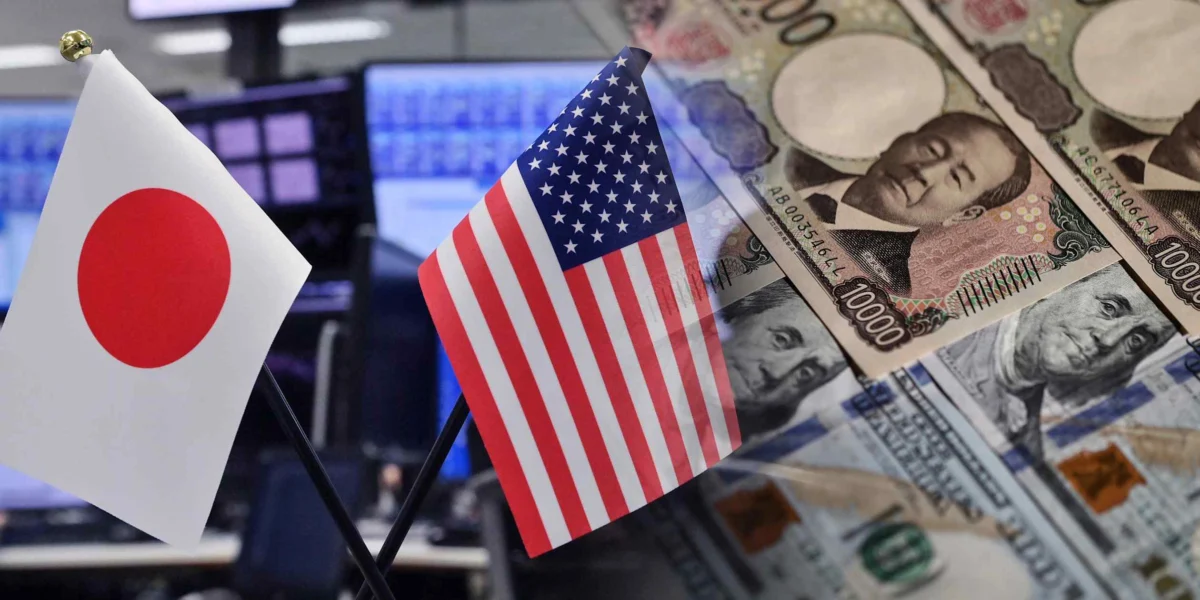
Japanese investors remain divided on investing in overseas bonds and equities following the historic joint intervention by Japanese and U.S. currency authorities late last month. This coordinated effort aimed to strengthen the yen and bolster both Japanese and American government bond markets. Portfolio flow data released on Thursday offered a granular view of this investor sentiment, revealing a complex landscape of cautious optimism and lingering apprehension.
The intervention, the first of its kind since 1998, marked a significant escalation in the authorities’ commitment to stabilizing currency markets. For months, the yen had been on a steep depreciation trajectory against the U.S. dollar, reaching multi-decade lows and raising concerns about imported inflation and the erosion of purchasing power for Japanese consumers and businesses. The Bank of Japan (BoJ) had been navigating a delicate balancing act, attempting to stimulate the economy through ultra-loose monetary policy while simultaneously grappling with the adverse effects of a weakening currency.
Background to the Joint Intervention
The yen’s persistent slide was a multifaceted issue, driven by a widening interest rate differential between Japan and other major economies, particularly the United States. While the U.S. Federal Reserve had been aggressively raising interest rates to combat soaring inflation, the BoJ maintained its accommodative stance, citing the need to achieve sustainable 2% inflation. This divergence in monetary policy created a strong incentive for capital to flow out of Japan and into higher-yielding U.S. assets, further pressuring the yen.
Beyond the interest rate differential, several other factors contributed to the yen’s weakness. Geopolitical uncertainties, global supply chain disruptions, and a general risk-off sentiment in financial markets often led investors to seek the perceived safety of the U.S. dollar. Furthermore, Japan’s persistent trade deficits in recent years, driven by rising energy import costs, also played a role in weakening its currency.
The potential for unchecked yen depreciation carried significant implications for Japan’s economy. A weaker yen makes imports more expensive, directly contributing to inflation. This was particularly concerning for a nation heavily reliant on imported energy and raw materials. Moreover, it could erode the real value of savings and pensions for Japanese households and potentially dampen domestic consumption. For Japanese companies, while a weaker yen could boost export competitiveness, it also increased the cost of imported components and raw materials, creating a double-edged sword.
Chronology of Escalating Concerns and Action
The period leading up to the joint intervention was characterized by escalating concerns among policymakers and market participants. Throughout early and mid-July, the yen continued its downward trend, prompting increasingly vocal warnings from Japanese financial authorities. Statements from the Ministry of Finance and the Bank of Japan suggested a growing readiness to intervene in the currency markets if necessary to curb excessive volatility.
On July 25th, the yen briefly touched ¥139.50 against the dollar, a level not seen since the late 1990s. This critical juncture appeared to be the trigger for decisive action. Following market close on July 31st, Tokyo and Washington jointly announced their intervention. While the exact amount of yen purchased and dollars sold was not disclosed, the sheer fact of a coordinated move between the world’s largest and third-largest economies sent a powerful signal to the markets.
The intervention was not merely a unilateral action by Japan. The inclusion of the U.S. Treasury department indicated a shared concern about the potential for excessive currency fluctuations to disrupt global financial stability and economic recovery. For the U.S., a rapidly depreciating yen could indirectly impact its own economic objectives by altering trade balances and potentially influencing global inflation dynamics.
Investor Reactions and Portfolio Flows
The immediate aftermath of the intervention saw a temporary strengthening of the yen, with it appreciating against the dollar. However, the longer-term impact on investor sentiment, particularly concerning overseas investments, remained a key question. The portfolio flow data released on Thursday aimed to shed light on this.
The data indicated a mixed picture. On one hand, some Japanese institutional investors, such as pension funds and asset managers, appeared to be adopting a more cautious approach to increasing their exposure to foreign assets, especially those denominated in currencies perceived as volatile. The memory of past currency shocks and the recent intervention likely instilled a heightened sense of risk aversion. This could manifest as a preference for hedging currency risk more aggressively or a temporary pullback from new, unhedged foreign currency investments.
On the other hand, the data also suggested that a segment of Japanese investors remained committed to their overseas investment strategies. For many, the fundamental drivers of international diversification – seeking higher yields, accessing growth opportunities unavailable domestically, and spreading investment risk – had not fundamentally changed. These investors might be viewing the intervention as a temporary corrective measure, rather than a fundamental shift in the long-term dollar-yen trajectory. They may also be assessing the intervention as an opportunity to invest in foreign assets at potentially more favorable exchange rates if the yen’s appreciation proves sustainable.
The data highlighted a particular divergence in behavior between different investor types. Retail investors, often more sensitive to short-term market movements and currency fluctuations, appeared to be more hesitant to increase their foreign bond and equity holdings. In contrast, some larger institutional investors, with longer investment horizons and more sophisticated risk management tools, may have viewed the intervention as a signal to re-evaluate, rather than abandon, their international investment strategies. Some might be looking for opportunities to invest in countries with strong economic fundamentals that are less susceptible to currency volatility.
Official Statements and Reinforcing Confidence
Following the joint intervention, officials from both Japan and the United States made statements aimed at reinforcing the message of coordinated action and commitment to market stability.
The Japanese Ministry of Finance reiterated its stance that it would take "appropriate action" against excessive yen movements. This communication strategy is designed to keep market participants on alert and discourage speculative attacks on the currency. The BoJ, while maintaining its accommodative monetary policy, also emphasized its vigilance regarding the yen’s impact on inflation and the broader economy. Governor Haruhiko Kuroda stated that the central bank was closely monitoring currency movements and their implications for its inflation targets.
U.S. Treasury officials, in their public remarks, underscored the importance of stable and orderly foreign exchange markets for global economic growth. They highlighted that excessive volatility in currency markets can create headwinds for trade and investment, and that the U.S. was committed to working with its international partners to address such challenges. The joint nature of the intervention was presented as a testament to the strong bilateral economic relationship and shared commitment to global financial stability.
Broader Implications and Future Outlook
The joint intervention has several significant implications for the global financial landscape and Japan’s economic future.
Firstly, it signals a potential shift in the playbook for currency intervention. The era of allowing currencies to freely float without significant official intervention may be giving way to a more active management approach, especially in the face of synchronized global economic challenges. This could lead to increased market volatility in the short term as traders try to anticipate future actions, but in the long term, it might contribute to more stable exchange rates.
Secondly, the intervention has put a spotlight on the effectiveness of monetary policy divergence. The widening gap between interest rates in major economies has been a significant driver of currency movements. While the intervention can provide temporary relief, addressing the root cause of this divergence will be crucial for sustained currency stability. This puts pressure on both the BoJ to consider a gradual normalization of its monetary policy and the Fed to manage its rate hikes in a way that minimizes excessive currency appreciation for the dollar.
Thirdly, for Japanese investors, the intervention underscores the importance of currency risk management in their international investment strategies. While diversification remains a cornerstone of prudent investing, the recent events highlight the need for robust hedging strategies and a thorough understanding of the macroeconomic factors influencing currency markets. Investors may increasingly favor assets in countries with stable economic policies and less volatile currencies, or they might increase their allocation to actively managed funds that can navigate currency fluctuations.
The long-term success of this intervention will depend on a variety of factors, including the continued coordinated efforts of monetary authorities, the evolution of global economic conditions, and the underlying economic fundamentals of Japan and its trading partners. The data on portfolio flows will continue to be a critical indicator of how investors are adapting to this new environment, and whether the joint intervention has indeed succeeded in reinforcing confidence and arresting the yen’s prolonged weakness. The markets will be watching closely for any signs of renewed pressure on the yen and the potential for further official action.
