

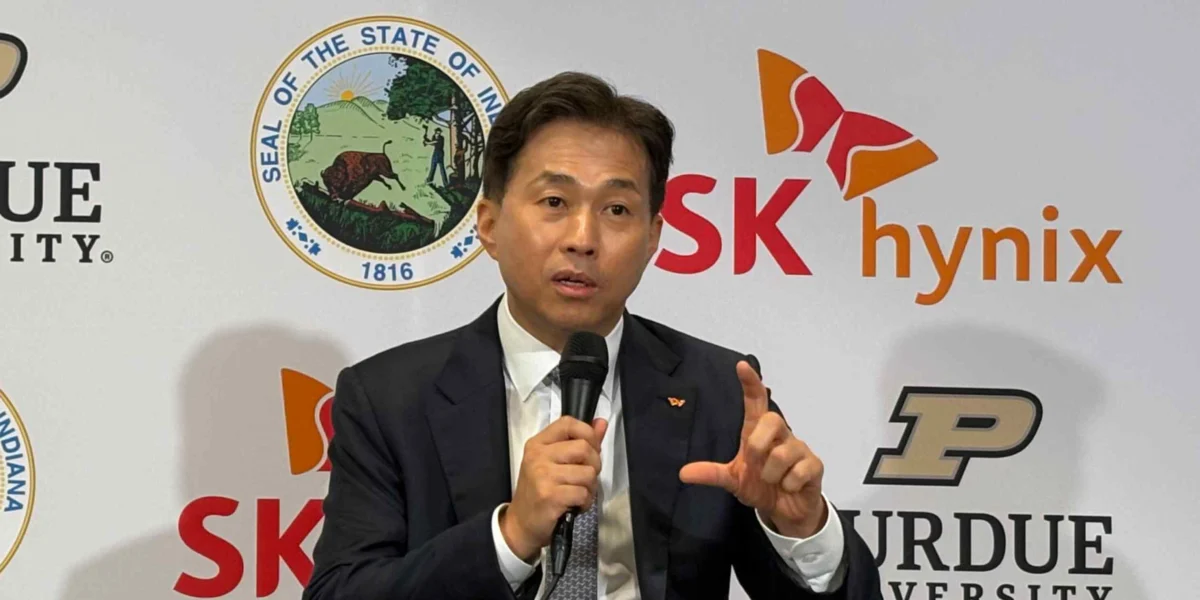
WEST LAFAYETTE, Indiana – The global memory chip market, a critical component underpinning the burgeoning artificial intelligence revolution, is projected to experience a sustained period of demand exceeding supply, with the current shortage expected to persist until the end of 2030. This outlook, articulated by SK Hynix CEO Kwak Noh-Jung, challenges conventional cyclical perceptions of the semiconductor industry, suggesting that the unique demands of AI are fundamentally altering the landscape for memory solutions. According to Kwak, there are currently "no signals" indicating an impending oversupply or a potential downturn, a sentiment rooted in the robust and ongoing demand from AI customers.
This assertion comes at a time when the semiconductor industry, particularly the memory segment, has historically been characterized by pronounced boom-and-bust cycles. These cycles are typically driven by shifts in consumer electronics demand, inventory adjustments, and the lead times involved in semiconductor manufacturing. However, the pervasive and rapidly expanding influence of artificial intelligence, from large language models and generative AI to advanced data analytics and machine learning applications, has introduced a new, powerful, and seemingly insatiable driver of demand.
SK Hynix, as one of the world’s leading manufacturers of DRAM (Dynamic Random-Access Memory) and NAND flash memory, is at the forefront of this technological shift. The company’s strategic focus on high-bandwidth memory (HBM), a specialized type of DRAM designed for AI accelerators like GPUs (Graphics Processing Units), has positioned it favorably in this evolving market. HBM’s ability to deliver significantly higher memory bandwidth and capacity compared to traditional DRAM is essential for the computationally intensive tasks required by AI workloads.
The AI Imperative: Reshaping Memory Demand Dynamics
The foundational principle driving Kwak’s optimistic forecast lies in the transformative nature of AI. Unlike previous technological waves that might have seen demand peak and then plateau or decline, AI is an ongoing, exponential expansion. Training and deploying complex AI models require vast amounts of data to be processed at unprecedented speeds. This directly translates into a continuous and escalating need for high-performance memory.
Consider the sheer scale of data involved. A single large language model can be trained on petabytes of data. Each interaction with such a model, whether it’s generating text, analyzing an image, or making a prediction, involves fetching and processing substantial memory. As AI applications become more sophisticated and integrated into various industries – from healthcare and finance to autonomous vehicles and scientific research – the aggregate demand for memory escalates dramatically.
Supporting data from industry analysis firms underscore this trend. Projections for the AI chip market, which is heavily reliant on advanced memory components, have consistently been revised upwards. For instance, market research firm TrendForce has repeatedly highlighted the critical role of HBM in the AI semiconductor ecosystem, noting that its adoption is crucial for enabling the performance gains sought by AI developers. Reports from late 2023 and early 2024 indicated that the demand for HBM, particularly HBM3 and its successors, was already outstripping available supply, leading to extended lead times and strategic allocation by manufacturers.
This sustained demand is not merely a short-term surge. The development roadmap for AI suggests an ongoing progression towards even more complex and data-intensive models, requiring continuous innovation and scaling of memory technologies. This creates a virtuous cycle where advancements in AI necessitate advancements in memory, and vice-versa, fostering a dynamic that is inherently different from the more volatile demand patterns of consumer electronics.
A Shift from Commodities to Critical Infrastructure
Kwak’s statement that memory chips are no longer "just commodities" is a pivotal observation. Historically, memory chips, especially standard DRAM, were often viewed as interchangeable components with pricing heavily influenced by supply-demand imbalances and manufacturing efficiencies. However, the advent of AI has elevated certain types of memory to the status of critical infrastructure.
HBM, for example, is not a plug-and-play component. Its integration into AI accelerators requires close collaboration between chip designers, memory manufacturers, and system integrators. The manufacturing process for HBM is also more complex, involving the stacking of multiple DRAM dies and advanced packaging techniques. This increased complexity and specialization contribute to longer production cycles and higher barriers to entry, further influencing supply dynamics.
The implication of this shift is that the traditional cyclicality, driven by easy entry and rapid scaling of commodity production, may be less pronounced in the high-end memory segment serving AI. Companies that can innovate and scale production of these specialized memory solutions, like SK Hynix with its HBM offerings, are likely to experience more stable and predictable demand, albeit with the constant pressure to innovate and expand capacity.
Chronology of a Shifting Market Landscape
The current market sentiment is the culmination of several years of evolving trends. The initial AI boom, driven by the rise of deep learning and neural networks, began to gain significant traction in the mid-2010s. However, it was the widespread public introduction and rapid adoption of generative AI technologies in late 2022 and 2023 that truly ignited the current surge in demand for AI-specific hardware, including advanced memory.
- Mid-2010s: Initial advancements in deep learning and AI research begin to necessitate more powerful computing, including specialized memory.
- Late 2010s – Early 2020s: The semiconductor industry experiences its usual cycles of supply and demand for standard memory products. However, early adopters of AI begin to highlight the limitations of traditional memory for their workloads.
- 2020-2022: The COVID-19 pandemic leads to disruptions in supply chains and a surge in demand for consumer electronics, exacerbating existing semiconductor shortages and creating a complex market environment. AI development continues, with a growing awareness of the need for specialized memory.
- Late 2022 – 2023: The public release and explosive growth of generative AI models (e.g., ChatGPT) create an unprecedented demand for AI computing power. This directly translates into a massive increase in demand for HBM and other high-performance memory solutions.
- 2023 – Present: Memory manufacturers, including SK Hynix, ramp up production of HBM. However, the pace of AI development and adoption outstrips the ability to immediately scale specialized memory production, leading to persistent shortages. Industry analysts begin to forecast extended periods of high demand.
- August 2026: SK Hynix CEO Kwak Noh-Jung publicly states that the memory chip shortage is expected to last until the end of 2030, citing strong and sustained AI demand and low oversupply risk.
This timeline illustrates a gradual but accelerating shift. The initial demand for AI was a trickle that has now become a flood, fundamentally altering the economics and dynamics of the memory chip market.
Supporting Data and Market Projections
The confidence in an extended period of demand is supported by various market indicators and analyst reports.
- HBM Market Growth: According to Yole Group, the HBM market was valued at approximately $2.5 billion in 2023 and is projected to grow at a CAGR of over 30% through 2028, reaching over $10 billion. This explosive growth directly reflects the critical role of HBM in AI.
- AI Chip Demand: The overall AI chip market, which includes CPUs, GPUs, and ASICs designed for AI workloads, is experiencing similar rapid expansion. Reports from Mordor Intelligence estimate this market to reach over $200 billion by 2029. The memory component of these systems is a significant cost factor and a critical performance determinant.
- GPU Shipment Growth: Leading GPU manufacturers, such as Nvidia, have reported record revenues driven by their AI-focused product lines. These GPUs are the primary consumers of HBM, indicating a direct correlation between GPU demand and HBM requirements. For example, Nvidia’s fiscal year 2024 revenues saw a substantial increase, largely attributed to its data center segment, which is powered by AI.
- Capacity Expansion Timelines: Building new semiconductor fabrication plants, or "fabs," is a multi-year, multi-billion dollar endeavor. Even with accelerated investment, the lead times for increasing advanced memory production capacity are substantial, meaning that even if demand were to stabilize, supply would take time to catch up.
These data points collectively suggest that the current demand is not a fleeting trend but a fundamental shift in the technological landscape, necessitating sustained high-volume production of advanced memory solutions.
Reactions and Broader Implications
Kwak’s statement is likely to be met with a mixture of anticipation and strategic adjustments from various stakeholders within the tech ecosystem.
- AI Developers and Cloud Providers: Companies heavily invested in AI, such as major cloud service providers (e.g., Amazon Web Services, Microsoft Azure, Google Cloud) and AI research firms, will see this as confirmation of their strategic need to secure long-term memory supply. This could lead to increased direct partnerships and long-term supply agreements with memory manufacturers like SK Hynix. The extended shortage implies continued high capital expenditure for these entities to build out their AI infrastructure.
- Competitors: Rival memory manufacturers, including Samsung Electronics and Micron Technology, will likely interpret this as a signal to further accelerate their investments in HBM and other AI-optimized memory technologies. The race to capture market share in this high-demand segment is intense, and Kwak’s assessment underscores the need for aggressive capacity expansion and technological advancement.
- Investors: Investors in the semiconductor industry will likely view SK Hynix’s outlook positively, as it suggests a period of sustained revenue growth and profitability for companies positioned to meet AI demand. However, they will also be closely watching for any signs of potential shifts in technology or market dynamics that could alter this long-term forecast.
- Broader Technology Ecosystem: The sustained shortage and high demand for memory will have ripple effects across the entire technology supply chain. It could lead to higher component costs for AI-powered devices and services, potentially influencing pricing strategies for end-users. It also emphasizes the strategic importance of securing critical semiconductor components, prompting governments and industries to reassess their supply chain resilience and invest in domestic manufacturing capabilities.
The implications of Kwak’s forecast extend beyond mere supply and demand. It signals a maturing of the AI industry, where the fundamental hardware requirements are becoming clearer and more predictable, albeit at a very high level of demand. This predictability, paradoxically, is what creates the perceived "shortage" – not a lack of production capacity in absolute terms for all memory, but a significant gap in the specialized, high-performance memory needed for AI’s insatiable appetite.
The semiconductor industry has always been about innovation and adaptation. The current AI-driven demand cycle appears to be a paradigm shift, moving away from the historical volatility towards a more sustained, high-growth trajectory for specialized memory. SK Hynix’s CEO’s assertion provides a clear, albeit potentially challenging, vision for the next several years, highlighting the critical role of memory in the ongoing AI revolution. The industry’s ability to meet this demand will be a key determinant of the pace and accessibility of AI advancements globally.
