

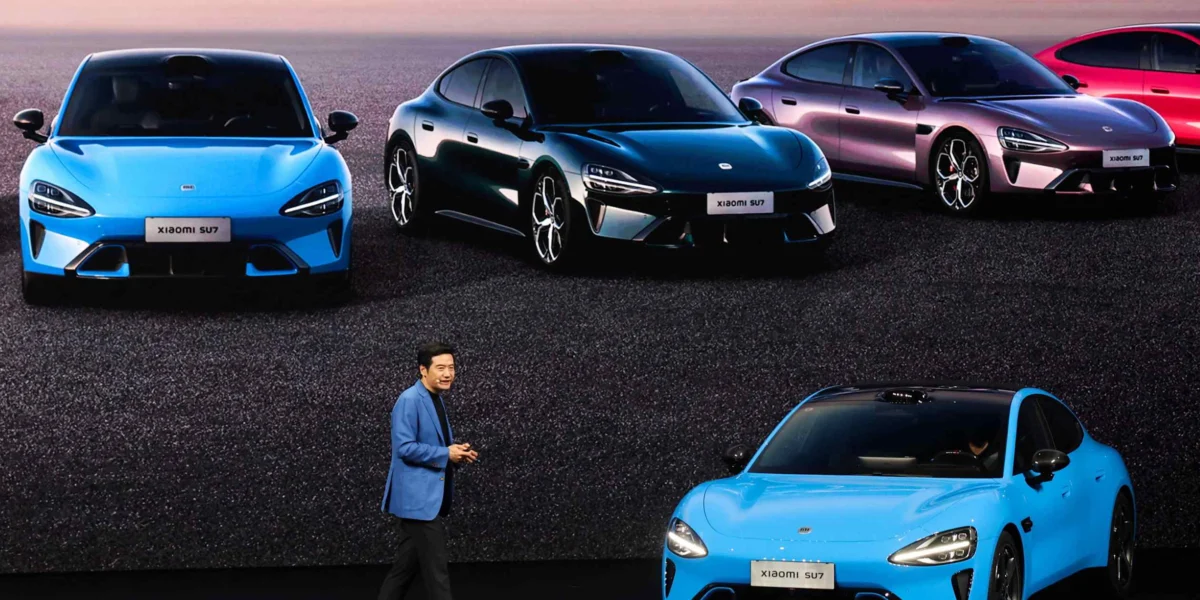
Xiaomi recorded a surprise 24% drop in net profit for the fourth quarter of 2025, as the smartphone vendor-turned-electric vehicle maker hit roadblocks amid sluggish sales and intense competition. The Chinese tech giant, which recently made a high-profile entry into the burgeoning electric vehicle (EV) market with its SU7 sedan, is now signaling a significant pivot towards research and development to navigate these challenging headwinds. This strategic recalibration comes at a critical juncture, as the company faces not only intensified competition from established players and emerging startups but also the persistent weight of regulatory scrutiny in key global markets.
The Unexpected Profit Decline
The financial results for the final quarter of 2025 presented a stark contrast to earlier optimistic projections. Xiaomi’s net profit plummeted by 24%, a figure that surprised analysts who had anticipated more resilient performance, especially given the company’s aggressive expansion into new sectors. This downturn is attributed to a confluence of factors, including a slowdown in consumer electronics demand, particularly in its core smartphone business, and the substantial initial investment required to establish its presence in the highly competitive automotive industry. While the SU7 launch was met with significant fanfare and generated considerable initial interest, the associated production costs, marketing expenditure, and the inherent complexities of automotive manufacturing have clearly begun to weigh on the company’s bottom line.
A Strategic Pivot: Doubling Down on Research and Development
In response to this financial setback and the evolving market landscape, Xiaomi’s leadership has indicated plans for a substantial increase in its research and development (R&D) investment. This strategic decision underscores a commitment to innovation as the primary engine for future growth and competitiveness. The company aims to bolster its technological capabilities across its diverse product portfolio, from next-generation smartphones and smart home devices to its nascent but ambitious EV division.
The emphasis on R&D is expected to target several key areas. In the smartphone segment, this means accelerating the development of advanced AI integration, improved camera technologies, and more efficient battery solutions to counter the rapid innovation cycles of rivals like Apple, Samsung, and a host of domestic Chinese competitors. For its smart home ecosystem, the focus will likely be on enhancing interoperability, developing more intuitive user experiences, and integrating advanced IoT capabilities.
However, the most significant allocation of R&D resources is anticipated for its electric vehicle arm. The launch of the SU7, while a significant milestone, is merely the first step in a long and arduous journey. Xiaomi aims to leverage its expertise in software, artificial intelligence, and consumer electronics to differentiate its vehicles in a crowded market. This could translate into breakthroughs in autonomous driving technology, advanced in-car infotainment systems, and innovative battery management systems. The company is reportedly exploring partnerships and collaborations to accelerate its R&D efforts in these cutting-edge areas, potentially tapping into specialized expertise that it does not currently possess in-house.
The Broader Context: Intense Competition and Regulatory Hurdles
Xiaomi’s current challenges are deeply intertwined with the broader dynamics of the global technology and automotive industries. In the smartphone market, the company faces relentless competition. While it has carved out a significant market share, especially in emerging markets, it is constantly under pressure from established giants and agile local players. The premium segment, in particular, remains dominated by a few key players, and capturing a larger slice of this lucrative market requires continuous innovation and effective brand positioning.
The automotive sector presents an even more formidable challenge. The global EV market is experiencing exponential growth, attracting a wave of new entrants alongside established automotive manufacturers. Xiaomi’s decision to enter this space was bold, leveraging its brand recognition and customer base from consumer electronics. However, the automotive industry is characterized by incredibly high capital expenditure, stringent safety regulations, complex supply chains, and long product development cycles. The company is competing against not only domestic rivals like BYD and NIO but also global automotive titans like Tesla and Volkswagen, all of whom possess decades of experience in vehicle manufacturing and deep-rooted supply networks.
Furthermore, Xiaomi, like many other Chinese tech companies, operates under the shadow of increasing regulatory scrutiny in key international markets, particularly in the United States and Europe. Concerns over data security, intellectual property, and geopolitical tensions have led to trade restrictions and market access challenges. This regulatory environment adds another layer of complexity to Xiaomi’s global expansion ambitions and necessitates a careful, compliance-focused approach to its international operations and R&D endeavors.
The SU7 Launch: A High-Stakes Debut
The launch event for the Xiaomi SU7 electric sedan on March 19, 2026, in Beijing, served as a potent symbol of the company’s diversification strategy. Founder and CEO Lei Jun presented the new generation of the SU7 with considerable fanfare, highlighting its performance, design, and technological features. The vehicle is positioned as a premium offering, aiming to compete with established players in the luxury EV segment.
Initial market reception to the SU7 has been mixed, with a surge of pre-orders indicating strong consumer interest, partly driven by Xiaomi’s existing brand loyalty and effective marketing. However, the actual production and delivery timelines, alongside long-term customer satisfaction and the vehicle’s performance in real-world conditions, will be crucial determinants of its success. The company has acknowledged the significant challenges in scaling up automotive production and ensuring consistent quality, which will require substantial investment in manufacturing infrastructure and supply chain management.
The financial strain of this automotive venture is evident in the Q4 2025 results. The cost of developing and launching a new vehicle platform is astronomical, encompassing everything from R&D and engineering to setting up manufacturing facilities and establishing a sales and service network. While the SU7 represents a significant strategic bet, its financial implications are immediate and substantial, contributing to the reported profit decline.
Analyzing the Implications: A Long-Term Vision
Xiaomi’s decision to significantly increase R&D spending, particularly in the context of a profit dip, suggests a long-term strategic vision. The company appears to be prioritizing foundational technological advancements and product innovation over short-term financial gains. This approach is characteristic of tech giants aiming to secure a sustainable competitive advantage in rapidly evolving industries.
For the Smartphone Market: Increased R&D could lead to more differentiated products, potentially helping Xiaomi to move further up the value chain and compete more effectively in the premium segment. AI integration in smartphones, for example, is becoming a key battleground, and substantial R&D investment could position Xiaomi as a leader in this space.
For the Electric Vehicle Market: The focus on R&D is critical for Xiaomi’s success in the automotive sector. The company needs to develop not just a compelling product but also advanced technologies that can set it apart. This includes investing heavily in areas like battery technology, charging infrastructure, autonomous driving, and intelligent vehicle software. A robust R&D pipeline will be essential to stay ahead of competitors and adapt to evolving consumer preferences and regulatory requirements.
For Regulatory Environments: A strong emphasis on R&D, particularly in areas like AI and data security, could also be a strategic move to address regulatory concerns. By demonstrating a commitment to developing secure and ethical technologies, Xiaomi might be able to mitigate some of the risks associated with geopolitical tensions and trade restrictions. Transparency and proactive engagement with regulators regarding its R&D practices will be crucial.
Financial Repercussions: While the immediate impact of increased R&D spending will likely be a further strain on profitability in the short to medium term, it is a necessary investment for long-term survival and growth. Investors will be closely watching Xiaomi’s ability to translate its R&D investments into tangible product improvements and market share gains. The company will need to strike a delicate balance between aggressive innovation and fiscal prudence to maintain investor confidence.
Official Statements and Industry Reactions (Inferred)
While specific official statements beyond the financial results are not detailed in the provided text, the strategic shift towards R&D can be interpreted as a clear signal from Xiaomi’s leadership. CEO Lei Jun’s public pronouncements at the SU7 launch event, emphasizing technological prowess and a forward-looking vision, likely foreshadowed this increased investment.
Industry analysts, while acknowledging the short-term pain of the profit decline, are likely to view the increased R&D focus as a prudent, albeit ambitious, move. "Xiaomi is making a calculated bet on its future," commented one market observer, speaking on condition of anonymity due to ongoing industry analysis. "They understand that in both consumer electronics and the automotive sector, sustained innovation is the only path to long-term success. The question now is the execution and the pace at which they can deliver on their ambitious R&D roadmap."
Competitors will undoubtedly be monitoring Xiaomi’s R&D advancements closely. The threat of disruptive innovation from a company with Xiaomi’s scale and resources is a constant concern across the tech and automotive landscape. This move could spur further investment in R&D from other players, intensifying the innovation race.
Looking Ahead: A Period of Transformation
Xiaomi’s announcement of increased R&D investment amidst a profit downturn marks a pivotal moment for the Chinese tech giant. It signifies a strategic shift from rapid expansion to a more focused, innovation-driven approach. The success of this strategy will depend on Xiaomi’s ability to effectively allocate its resources, foster a culture of groundbreaking innovation, and navigate the complex global economic and regulatory landscape. The coming years will be critical in determining whether this ambitious R&D push can transform Xiaomi into a dominant force not only in its traditional consumer electronics markets but also in the highly competitive and rapidly evolving electric vehicle industry. The company’s journey is now firmly set on a path of deep technological investment, a testament to its long-term vision in a world that demands constant reinvention.
