

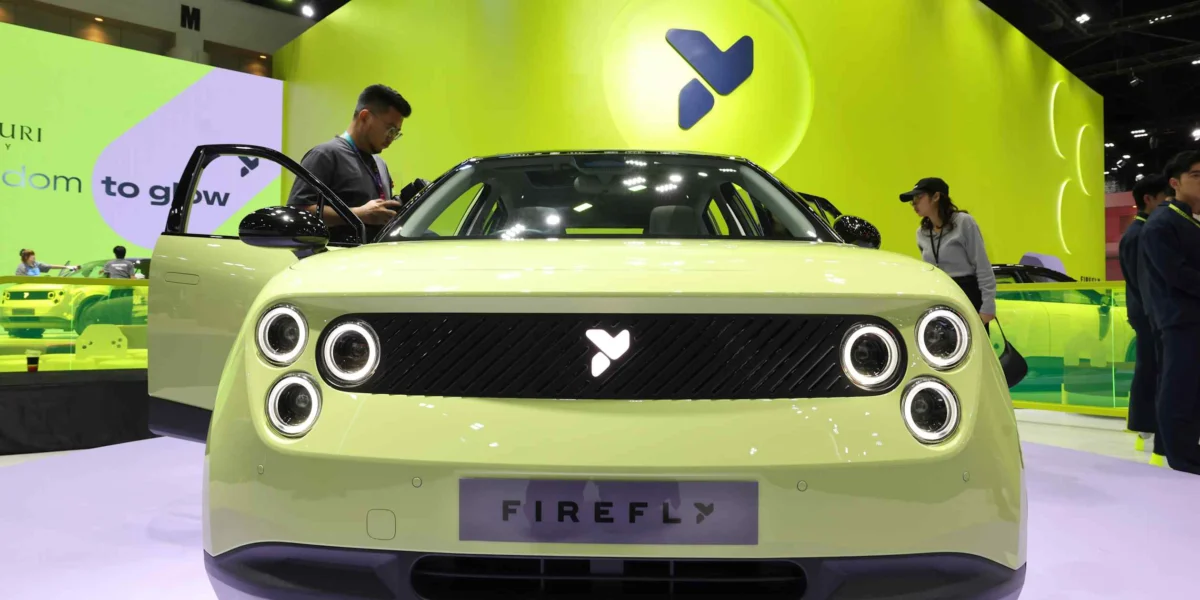
Chinese electric vehicle manufacturer Nio is embarking on an aggressive international expansion strategy, aiming to double its overseas presence this year. The company is placing significant emphasis on its new premium hatchback, the Firefly, positioning it as a direct competitor to established players like BMW’s Mini in the lucrative European market, while also targeting expansion across Asia and Latin America. This strategic move signifies Nio’s ambition to move beyond its current markets and establish itself as a global automotive force.

The Firefly, which made its debut at the Bangkok International Motor Show on March 23rd, represents Nio’s calculated entry into a segment that has historically been dominated by legacy automakers. The hatchback segment, particularly in Europe, is characterized by strong brand loyalty and a discerning customer base that values design, performance, and increasingly, sustainable mobility solutions. Nio’s decision to challenge a segment where Mini has carved out a distinct identity underscores the company’s confidence in its technological capabilities and product development.
Nio’s Global Ambitions and the Firefly’s Role
Nio’s stated goal of doubling its international footprint in 2026 is a bold undertaking. Currently, Nio has a presence in Norway and Germany, and the expansion plans suggest a rapid rollout into additional European countries, alongside significant forays into Asian and Latin American markets. The Firefly is envisioned as the vanguard of this expansion, designed to appeal to urban consumers who seek a stylish, compact, and technologically advanced electric vehicle.

The premium hatchback segment is not merely about volume; it is often about brand perception and market penetration. By targeting this segment, Nio aims to build its brand image as a provider of sophisticated and desirable electric vehicles, a crucial step in challenging the established order. The Firefly’s design, which prioritizes a sleek aesthetic and modern interior, is intended to resonate with younger demographics and early adopters of EV technology. Its introduction at a prominent regional auto show like the one in Bangkok indicates a deliberate strategy to build momentum and generate early interest in key Asian markets.
The Competitive Landscape: Challenging Established Giants
The automotive industry is witnessing a profound shift towards electrification, with Chinese EV manufacturers emerging as significant global players. However, the European market, in particular, presents a formidable challenge. Established German automakers like BMW, Mercedes-Benz, and Volkswagen have a deep-rooted history, extensive dealer networks, and strong brand recognition. BMW’s Mini, a long-standing icon of compact luxury, has a well-established customer base and a reputation for combining sporty driving dynamics with premium appeal.

Nio’s Firefly faces the task of not only matching but exceeding the perceived value proposition of vehicles like the Mini Electric. This will require Nio to excel in several key areas:
- Performance and Driving Dynamics: European consumers, especially in the premium segment, have high expectations for how their cars handle and perform. Nio will need to demonstrate that the Firefly offers a compelling driving experience that rivals its internal combustion engine predecessors and established EV competitors.
- Battery Technology and Range: While urban driving often requires less range, consumers still value the assurance of sufficient battery capacity for longer journeys. Nio’s battery technology, including its battery-swapping capabilities, will be a key differentiator, but the Firefly’s standalone range will also be critical.
- Charging Infrastructure and Support: A robust charging network and accessible after-sales service are paramount for EV adoption. Nio’s strategy for building out its charging infrastructure and providing reliable customer support in new markets will be crucial for consumer confidence.
- Brand Perception and Trust: Overcoming ingrained brand loyalty to European manufacturers will require Nio to build trust and establish a reputation for quality, reliability, and customer satisfaction.
Background: Nio’s Journey and Strategic Evolution
Founded in 2014, Nio has rapidly ascended to become one of China’s leading premium EV manufacturers. The company has been known for its innovative approach, particularly its pioneering battery-swapping technology, which allows users to exchange a depleted battery for a fully charged one in minutes. This technology has been a cornerstone of Nio’s strategy to address range anxiety and charging times, a common barrier to EV adoption.

Nio’s initial focus was on the domestic Chinese market, where it has built a loyal following among affluent consumers. The company’s vehicles, such as the ES8 SUV and the ET7 sedan, have been positioned as premium offerings with advanced technology and a strong emphasis on user experience. However, to achieve sustainable growth and global recognition, international expansion has become an imperative.
The decision to launch the Firefly as its primary international offering suggests a strategic shift. While Nio’s larger SUVs and sedans cater to a specific segment, a compact hatchback has broader market appeal, particularly in densely populated urban areas where smaller vehicles are often preferred. The timing of this expansion also aligns with increasing global regulatory pressure and consumer demand for cleaner transportation solutions.

Supporting Data and Market Trends
The global electric vehicle market has experienced exponential growth in recent years. According to the International Energy Agency (IEA), electric car sales surpassed 10 million in 2022 and continued to grow strongly in 2023, driven by government incentives, improving battery technology, and a wider range of available models.
- European EV Market: Europe is a key battleground for EV manufacturers. In 2023, battery electric vehicles (BEVs) accounted for a significant portion of new car sales in many European countries. For instance, Norway consistently leads in EV adoption, with BEVs making up over 80% of new car registrations. Germany, the largest automotive market in Europe, also saw substantial growth in EV sales, although competition is fierce.
- Chinese EV Dominance: China remains the world’s largest EV market, both in terms of production and sales. Chinese brands are increasingly competitive not only domestically but also on the global stage. Companies like BYD have already made significant inroads into international markets, challenging established players.
- Premium Hatchback Segment: The premium compact car segment, often referred to as the "hot hatch" segment, has a dedicated following. Historically, models like the Volkswagen Golf GTI, Ford Focus ST, and indeed, BMW’s Mini, have defined this space. Nio’s entry with the Firefly indicates an attempt to electrify and elevate this segment with Chinese innovation.
Inferred Reactions and Analysis
While official statements from competing automakers are unlikely to be made public regarding Nio’s expansion, the move is undoubtedly being closely monitored within the industry. Legacy automakers are likely to view Nio’s aggressive international strategy with a mixture of concern and strategic assessment.

- BMW: As the primary target with the Mini brand, BMW will be keenly observing the Firefly’s reception. They will likely focus on reinforcing Mini’s brand strengths, such as its driving dynamics, iconic design, and established dealer network, while also accelerating their own EV product development.
- Other European Manufacturers: Companies like Volkswagen, Mercedes-Benz, and Stellantis will also be paying attention. Nio’s success could signal a broader trend of Chinese brands capturing market share in segments previously considered unassailable. This may prompt them to accelerate their own electrification plans and potentially explore more competitive pricing strategies.
- Automotive Suppliers: The expansion of a major EV player like Nio will also create opportunities and challenges for automotive suppliers. Companies that can meet Nio’s technological and production requirements will benefit, while those tied to traditional internal combustion engine components may face declining demand.
The implications of Nio’s expansion are multifaceted:
- Increased Competition: The entry of a strong contender like Nio will intensify competition in the global EV market, potentially leading to greater innovation and more competitive pricing for consumers.
- Shift in Market Dynamics: If Nio is successful, it could mark a significant shift in global automotive market dynamics, with Chinese brands playing a more prominent role in developed markets.
- Technological Advancement: The push for international success will likely drive Nio to further refine its technology, particularly in areas like battery management, autonomous driving, and user interface design, benefiting the entire industry.
Chronology of Nio’s Internationalization
Nio’s journey into international markets has been gradual, building upon its domestic success:

- 2014: Nio is founded in Shanghai.
- 2017: Nio unveils its first production vehicle, the ES8, in China.
- 2019: Nio begins its initial international steps with a focus on building brand awareness and community in select overseas markets.
- 2021: Nio officially launches in Norway, marking its first major expansion into a European market. This launch was accompanied by the establishment of Nio House, a unique customer experience center.
- 2022: Nio expands its European presence by entering Germany, followed by the Netherlands, Sweden, and Denmark. These launches primarily focused on its flagship models like the ET7 and ET5, and the ES8 SUV.
- March 2026: Nio showcases its new premium hatchback, the Firefly, at the Bangkok International Motor Show, signaling a strategic pivot towards a more globally accessible vehicle segment and broader market reach across Asia and Latin America.
- 2026 (Projected): Nio aims to double its overseas presence, indicating a significant acceleration of its international rollout plans, with the Firefly expected to be a key driver of this expansion.
Future Outlook and Challenges
Nio’s ambitious expansion plan hinges on several critical factors:
- Product-Market Fit: The Firefly must resonate with the specific demands and preferences of consumers in Europe, Asia, and Latin America. This requires not only a well-engineered vehicle but also effective marketing and localization strategies.
- Scalability of Production and Supply Chain: Doubling overseas presence requires a robust and scalable production capacity and a resilient global supply chain. Any disruptions could significantly hinder Nio’s expansion timeline.
- Regulatory Compliance: Navigating the diverse regulatory landscapes of different countries, from safety standards to environmental regulations and charging infrastructure requirements, will be a complex undertaking.
- Brand Building and Customer Loyalty: In markets with strong existing automotive brands, Nio will need to invest heavily in building brand awareness, trust, and long-term customer loyalty. This includes not only product quality but also exceptional after-sales service and customer support.
Nio’s strategic deployment of the Firefly hatchback signifies a maturing phase for the company, moving beyond its initial niche to compete in broader, more competitive global automotive segments. Its success will be a key indicator of the growing influence of Chinese automakers on the world stage and the evolving landscape of the global electric vehicle industry. The coming years will be crucial in determining whether Nio can translate its domestic success into a lasting international presence.
