

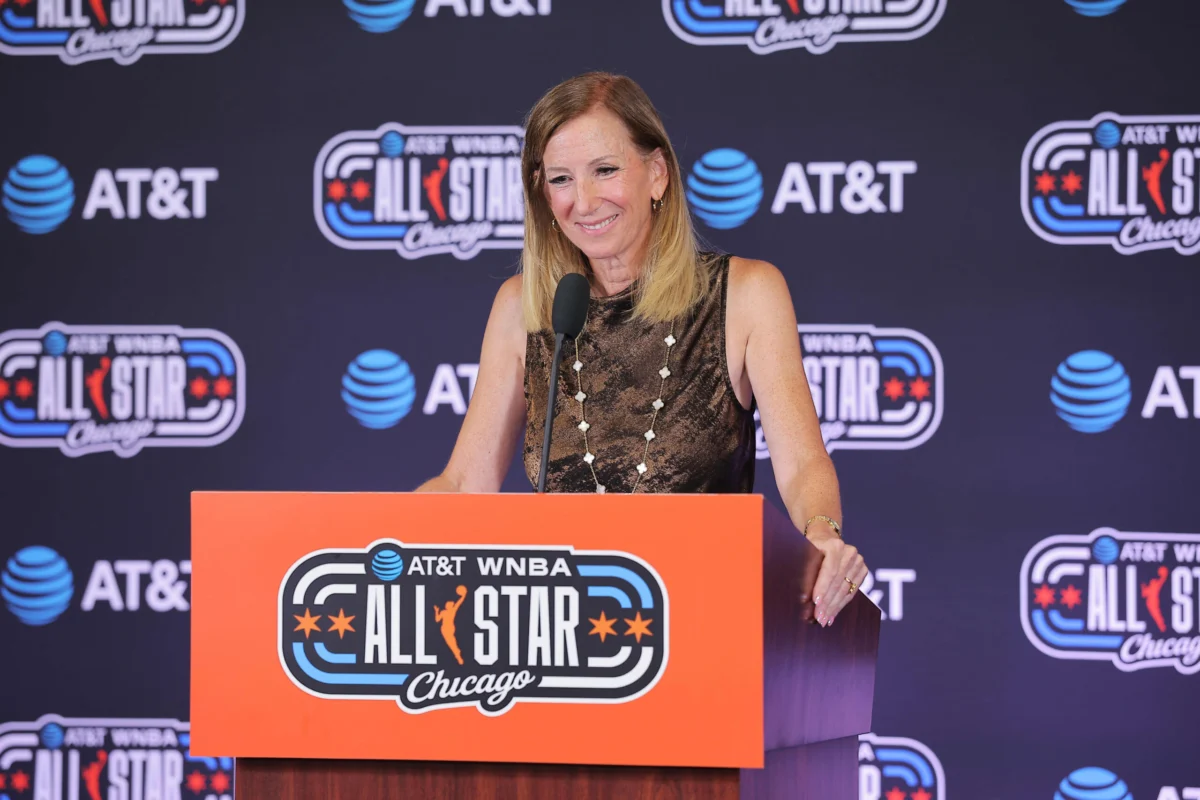
WNBA Commissioner Cathy Engelbert will step down from her role at the conclusion of 2026, the league officially announced on Friday, marking the end of a transformative yet often contentious seven-year tenure. Her departure comes as the Women’s National Basketball Association has experienced an unparalleled surge in popularity, viewership, and financial valuation, solidifying its position within the global sports landscape. However, Engelbert’s leadership has simultaneously drawn sharp criticism from a segment of the league’s star players, who have voiced concerns over issues ranging from compensation and officiating to the league’s response to social and political challenges. A successor to guide the WNBA through its next phase of growth has not yet been named, setting the stage for a critical leadership transition.
In a statement released by the league, Commissioner Engelbert reflected on her time at the helm, expressing profound gratitude for the opportunity to lead a league she believed held immense untapped potential. "In 2019, I had the privilege of being appointed the league’s first commissioner and to lead a league with enormous potential yet untapped awareness and significant undervaluation," Engelbert stated. "Over the years, it has been amazing to watch WNBA players thrive and lead the massive cultural surge around women’s sports." Her remarks underscored the dramatic shift in public perception and economic standing the WNBA has undergone during her leadership, a period characterized by a strategic push for greater visibility and investment.
NBA Commissioner Adam Silver, under whose umbrella the WNBA operates, lauded Engelbert’s contributions. "Cathy has presided over the WNBA through the most significant period of growth in the league’s 30-year history," Silver commented, acknowledging the substantial advancements made during her tenure. "We are grateful for Cathy’s leadership and unwavering commitment to the advancement of women’s basketball." This endorsement highlights the broad recognition of the league’s commercial success and increased prominence under her watch.
A Period of Unprecedented Commercial and Cultural Expansion
Engelbert’s time as commissioner, which began in July 2019, has been undeniably marked by a remarkable upward trajectory across key performance indicators. The WNBA, once a niche league struggling for mainstream attention, has blossomed into a formidable entity in the professional sports arena. According to official WNBA data, television viewership has skyrocketed by approximately 454% since 2019, a staggering increase that reflects expanded media partnerships, strategic scheduling, and the growing star power of its athletes. This surge has been propelled by a confluence of factors, including increased national broadcasts, the burgeoning interest in women’s sports generally, and the emergence of captivating personalities and rivalries within the league. Game attendance has also seen robust growth, climbing by about 70% over the same period, signaling a burgeoning fan base eager to experience live WNBA action.
Beyond viewership and attendance, corporate sponsorship has become a significant driver of the league’s newfound financial health. Engelbert’s administration prioritized attracting major brands, resulting in multi-year deals that injected crucial capital into the league and its franchises. These partnerships not only provided financial stability but also elevated the WNBA’s market presence and legitimacy.
Perhaps the most striking evidence of the league’s economic transformation lies in its franchise valuations. The average WNBA team is now valued at a remarkable $460 million, according to CNBC’s Official WNBA Team valuations for 2026, a testament to the league’s increasing asset value and future potential. This figure represents a monumental leap from the valuations prior to Engelbert’s arrival. A landmark achievement within this expansion narrative is the Golden State Valkyries, a new expansion team that joined the league in 2025, which has already shattered records by becoming the first women’s team in any sport to be valued at an astounding $1 billion. This valuation not only underscores the WNBA’s growth but also sets a new benchmark for investment in women’s professional sports globally.
Under Engelbert’s strategic vision, the league embarked on an ambitious expansion plan, aiming to grow from its historical 12 teams to 18 by 2030. This expansion strategy sought to tap into new markets with enthusiastic fan bases and corporate interest, further broadening the league’s geographic footprint and talent pool. The addition of new franchises, such as the Valkyries, has injected fresh energy and competition, contributing to the overall excitement surrounding the league.
Crucially, Engelbert also played a pivotal role in negotiating a landmark collective bargaining agreement (CBA) earlier this year (2026). This historic deal led to the biggest pay increases in the WNBA’s history, a significant victory for the players who have long advocated for better compensation commensurate with their talent and the league’s growing revenue. The CBA addressed not only base salaries but also improved benefits, travel conditions, and maternal leave policies, aiming to professionalize the player experience to a greater degree than ever before. WNBPA President Nneka Ogwumike lauded the agreement, telling CNBC Sport in an interview, "Being able to have your worth tied mostly in your salary is all that we’ve been fighting for, and it’s what we were able to achieve." This sentiment highlighted the tangible impact of the CBA on the lives and careers of WNBA athletes, addressing a long-standing point of contention.
Navigating a Complex Landscape: Player Criticism and Controversies
Despite the undeniable commercial successes, Commissioner Engelbert’s tenure was frequently overshadowed by a challenging relationship with a significant portion of the WNBA’s player base. This friction often stemmed from concerns that the league’s growth, while impressive, had not translated proportionally into improved player conditions and protections.
One of the most persistent criticisms revolved around compensation and benefits. While the recent CBA made significant strides, players had consistently argued that their salaries, travel accommodations, and overall support systems lagged behind the league’s escalating profile and profitability. Many WNBA players famously played overseas during the offseason to supplement their incomes, a practice that, while decreasing with the new CBA, highlighted the financial disparity within the sport. Officiating issues also remained a recurring point of contention, with players frequently expressing frustration over inconsistent calls and the perceived quality of refereeing.
More profoundly, Engelbert faced criticism for her perceived inadequate responses to instances of racism and online harassment directed at players. In an era where athletes are increasingly vocal about social justice issues and face intense scrutiny and abuse on social media, players felt the league’s leadership was not always sufficiently proactive or protective. This led to a sense among some athletes that their well-being and security were not adequately prioritized, especially as the league’s visibility grew.
The sentiment of dissatisfaction among players occasionally erupted into public statements, underscoring the depth of the frustration. Minnesota Lynx player Napheesa Collier famously articulated this sentiment last year, stating, "We have the best players in the world. We have the best fans in the world. But, right now, we have the worst leadership in the world," a direct and stinging critique aimed at Engelbert’s administration. Such comments, from prominent figures within the league, signaled a significant disconnect between the players and the commissioner’s office.
Most recently, Engelbert’s leadership faced renewed scrutiny over her response to political protests concerning transgender women participating in sports. These debates, which have become increasingly prominent in the broader sports world, began to overshadow the WNBA’s season in recent weeks (2026). Despite there being no known transgender players currently in the WNBA, the commissioner’s perceived silence or hesitant stance on the issue drew criticism from those who felt a strong, clear position was necessary to protect all athletes and prevent the league from being co-opted by political agendas. This controversy underscored the complex intersection of sports, social issues, and leadership in the modern era, and the challenge for commissioners to navigate these sensitive terrains while maintaining unity within their leagues.
A Chronology of Key Events During Engelbert’s Tenure (2019-2026)
- July 2019: Cathy Engelbert is appointed as the first Commissioner of the WNBA, signaling a new era of independent leadership for the league.
- 2020: Engelbert successfully navigates the unprecedented challenges of the COVID-19 pandemic, overseeing the highly successful "Wubble" season in Bradenton, Florida. This isolated environment allowed the league to complete its season, gaining significant positive media attention and demonstrating resilience.
- 2021-2023: The WNBA experiences steady growth in viewership and sponsorship, benefiting from increased media rights deals and the rising profile of its star players. Discussions around league expansion begin to gain serious momentum.
- Late 2023: Preliminary discussions commence for a new collective bargaining agreement, with player advocacy for increased compensation and improved conditions becoming a central theme.
- 2024: The league officially announces plans for significant expansion, targeting an increase from 12 to 18 teams by 2030, with specific new markets being identified.
- 2025: The Golden State Valkyries are introduced as an expansion franchise, quickly achieving a landmark $1 billion valuation, highlighting the league’s immense market potential.
- Early 2026: A new, landmark collective bargaining agreement is ratified, featuring the largest pay increases in WNBA history and significant improvements to player benefits and travel.
- Mid-2026: Concerns grow regarding Engelbert’s response to political protests over transgender women in sports, leading to increased player and public scrutiny.
- July 2026: The WNBA announces Cathy Engelbert’s decision to retire at the end of the year, effective December 31, 2026.
The Search for a Successor and Future Implications
The search for the next WNBA Commissioner will undoubtedly be one of the most critical decisions in the league’s history. The individual chosen will inherit a league that is financially robust and culturally resonant but also one with a highly vocal and empowered player base. The ideal candidate will need a unique blend of business acumen, media savvy, and a deep understanding of the unique dynamics of women’s professional sports. They will be tasked with continuing the growth trajectory while simultaneously addressing the lingering player concerns that characterized much of Engelbert’s tenure.
The next commissioner will face the challenge of further professionalizing the league, ensuring that player compensation, travel, and support systems continue to evolve in tandem with the league’s burgeoning revenues and public profile. Navigating the complex interplay of social issues, political pressures, and athletic competition will also be paramount. The ability to foster a more unified relationship between the league office and its players will be essential for sustained success and to fully capitalize on the WNBA’s momentum.
Engelbert’s legacy is complex, defined by both monumental achievements in league growth and persistent challenges in player relations. Her tenure irrevocably changed the WNBA’s financial standing and public perception, laying a robust foundation for future expansion and mainstream relevance. The league is now a powerful symbol of the broader "cultural surge around women’s sports," inspiring other leagues and demonstrating the immense commercial viability of female athleticism. Her retirement marks a pivotal moment, offering an opportunity for new leadership to build upon this foundation, address its remaining fault lines, and steer the WNBA toward an even brighter, more equitable future.
In her concluding remarks, Engelbert expressed profound optimism for the WNBA’s trajectory. "I retire knowing we have built something bigger, stronger and more enduring than we could have imagined," she said. "I retire with immense gratitude and tremendous optimism for the future of the WNBA, with the best yet to come." Her words encapsulate the prevailing sentiment that despite the challenges, the WNBA is poised for continued ascendancy, a testament to the collective efforts of players, staff, owners, and fans who have championed its journey. The next commissioner will be entrusted with the monumental task of guiding this dynamic league into its next chapter of unprecedented potential.
