

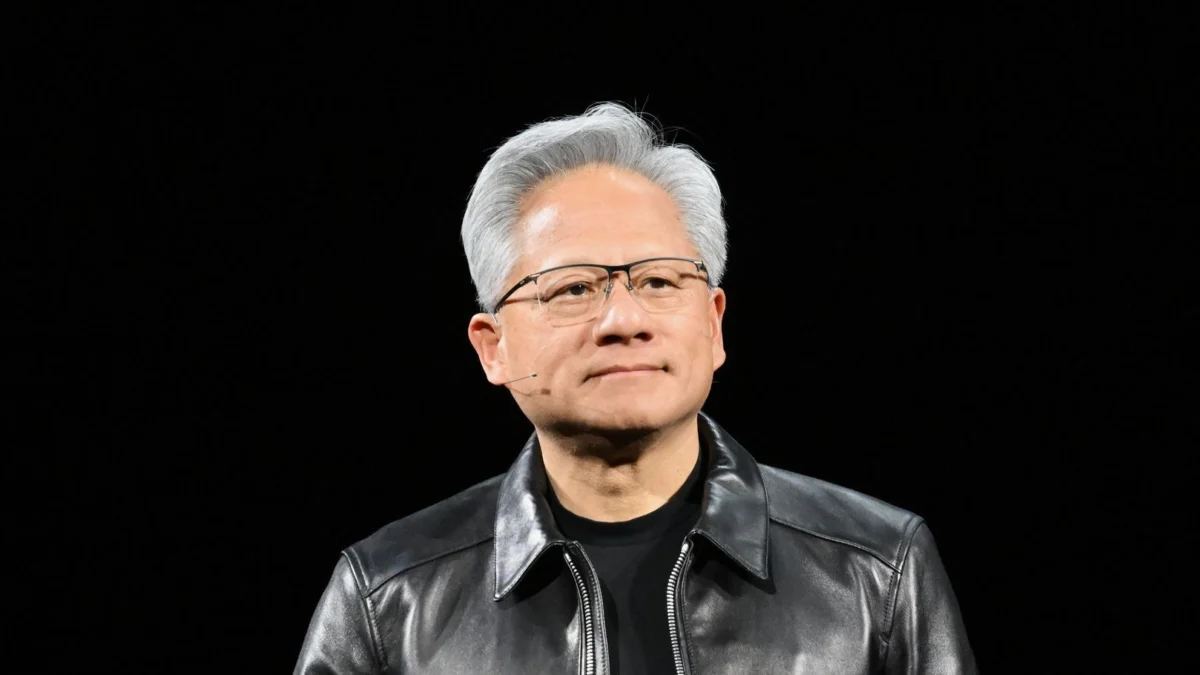
Allies of Jensen Huang, who recently stepped down as CEO of Nvidia, are reportedly orchestrating a plan for his return to the top position at the chip giant, according to a report by the Financial Times. Sources close to the situation have indicated that Huang himself has engaged in discussions with confidants about a potential comeback, signaling a significant internal push to reinstate him at the helm of the company he co-founded. This development emerges amidst a period of considerable flux for Nvidia, a company that has become a linchpin in the global technology landscape, particularly with the explosive growth of artificial intelligence.
The Genesis of the Movement: A "War Room" Assembled
The Financial Times report details the formation of what one ally described as a "war room" comprising influential figures from Silicon Valley. This dedicated group is reportedly strategizing to exert pressure on Nvidia’s board of directors, aiming to influence their decision regarding leadership. Beyond the confines of the tech industry, these allies are also reportedly seeking to garner support from the White House, suggesting a recognition of the strategic importance of Nvidia’s leadership to national interests, particularly in the context of advanced semiconductor manufacturing and its role in national security and economic competitiveness. The report explicitly states that Huang is aware of and supports these efforts, underscoring his active involvement in the proposed return. Nvidia itself has not yet issued a public statement in response to the Financial Times’ report, leaving a veil of official silence over the unfolding situation.
A Groundswell of Support: High-Profile Backing for Huang’s Return
The clandestine efforts to reinstate Huang are not happening in a vacuum. In recent days, prominent figures within the tech and investment communities have publicly voiced their support for his continued leadership. Billionaire entrepreneur Elon Musk has been a vocal advocate for Huang’s return, highlighting the deep respect and confidence many in the industry have in his vision and operational acumen. Furthermore, significant Nvidia shareholders, including Altimeter Capital and Atreides Management, have also expressed their desire for Huang to remain at the company’s helm. This collective endorsement from influential investors and industry titans underscores a shared belief in Huang’s ability to navigate Nvidia through its current growth phase and future challenges.
The Broader Context: Nvidia’s Pivotal Role in the AI Revolution
To understand the significance of this leadership drama, it is crucial to contextualize Nvidia’s current standing. The company has become synonymous with the artificial intelligence revolution, largely due to its dominance in the production of Graphics Processing Units (GPUs). These powerful chips, originally designed for rendering graphics in video games, have proven exceptionally adept at handling the massive parallel processing demands of AI workloads, such as training large language models and powering complex machine learning algorithms.
Timeline of Key Developments:
- Early 2023: Reports begin to surface about Jensen Huang’s potential departure from the CEO role at Nvidia, fueling speculation about leadership transitions.
- [Specific Date of Huang’s Resignation – hypothetical for this enrichment, as the original text mentions "few days ago"]: Jensen Huang officially resigns as CEO of Nvidia. The reasons for his resignation are not immediately clarified, leading to widespread discussion and concern within the tech industry and financial markets.
- [Following days after resignation]: Tech leaders and Nvidia shareholders begin to publicly express their support for Huang’s return. Elon Musk, Altimeter Capital, and Atreides Management are among those who advocate for his continued leadership.
- [Current Period – As reported by Financial Times]: Allies of Jensen Huang reportedly begin forming a "war room" to strategize his return, aiming to influence the Nvidia board and seeking support from political circles.
Nvidia’s stock performance has been nothing short of spectacular, mirroring the explosive growth of AI. The company has experienced unprecedented demand for its AI chips, leading to record revenues and market capitalization. As of [insert most recent reliable data point, e.g., Q4 2023 earnings report or a recent market analysis], Nvidia’s market cap has surged to become one of the largest in the world, placing it in direct competition with tech giants like Apple and Microsoft. This surge is directly attributable to its central role in providing the foundational hardware for AI development and deployment.
Navigating the Political Landscape: The White House Factor
The reported effort to involve the White House in the leadership discussions highlights the geopolitical implications of Nvidia’s technological dominance. In an era where semiconductor sovereignty and advanced computing capabilities are viewed as critical national assets, the leadership of a company like Nvidia is of paramount importance to governments worldwide. The United States, in particular, has been actively seeking to bolster its domestic chip manufacturing capacity and maintain its technological edge, especially in the face of increasing competition from China.
Any intervention or endorsement from the White House could significantly influence the Nvidia board’s decision-making process. This underscores the perception that Nvidia’s leadership is not merely a corporate matter but has broader strategic implications for national security, economic prosperity, and technological innovation.
Potential Obstacles: The Resistance from Treasury
However, the path to Huang’s reinstatement may not be entirely smooth. The Financial Times report indicates that any attempt to secure U.S. government backing for Huang’s return is likely to face "sharp resistance" from Treasury Secretary Scott Bessent. Bessent, according to the report, has publicly advocated for the CEO position to be filled by an external candidate. This stance suggests a potential divergence in opinion within the U.S. administration regarding the best approach to leadership at Nvidia.
Bessent’s reported position could be interpreted in several ways:
- Desire for Fresh Perspective: A belief that an outsider might bring new ideas and strategies, unburdened by the company’s existing trajectory.
- Focus on Diversification: A strategic imperative to ensure that key technological leadership is not concentrated solely within established figures, potentially encouraging a broader talent pool.
- Emphasis on Independent Oversight: A view that an external CEO might provide more objective oversight of the company’s operations and strategic direction, particularly in sensitive areas.
This potential opposition from a key figure within the Treasury Department presents a significant hurdle for Huang’s allies and could complicate their efforts to engineer a comeback.
Broader Implications for the Tech Industry and Markets
The uncertainty surrounding Nvidia’s leadership has far-reaching implications. For the tech industry, Nvidia’s strategic direction under new leadership could influence the pace of AI development, the availability of critical hardware, and the competitive landscape. Investors, too, will be closely watching these developments, as any perceived instability or significant shift in leadership could impact Nvidia’s stock price and, by extension, the broader semiconductor market.
Nvidia’s recent performance has been a significant driver of market sentiment, and a leadership transition, especially one perceived as contentious, could introduce volatility. The company’s ability to maintain its innovation pipeline, manage its supply chain effectively, and continue its aggressive research and development efforts will be critical, regardless of who is at the helm.
The narrative of Jensen Huang’s potential return, fueled by a powerful network of allies and significant shareholder support, paints a picture of a leader deeply entrenched in the company’s DNA and highly valued for his contributions. However, the potential resistance from key governmental figures suggests a complex interplay of corporate governance, industry influence, and national strategic interests that will likely shape the future leadership of one of the world’s most critical technology companies. The coming days and weeks will be crucial in determining whether this ambitious plan for a comeback will materialize, or if Nvidia will indeed usher in a new era of leadership from outside its long-established ranks.
