

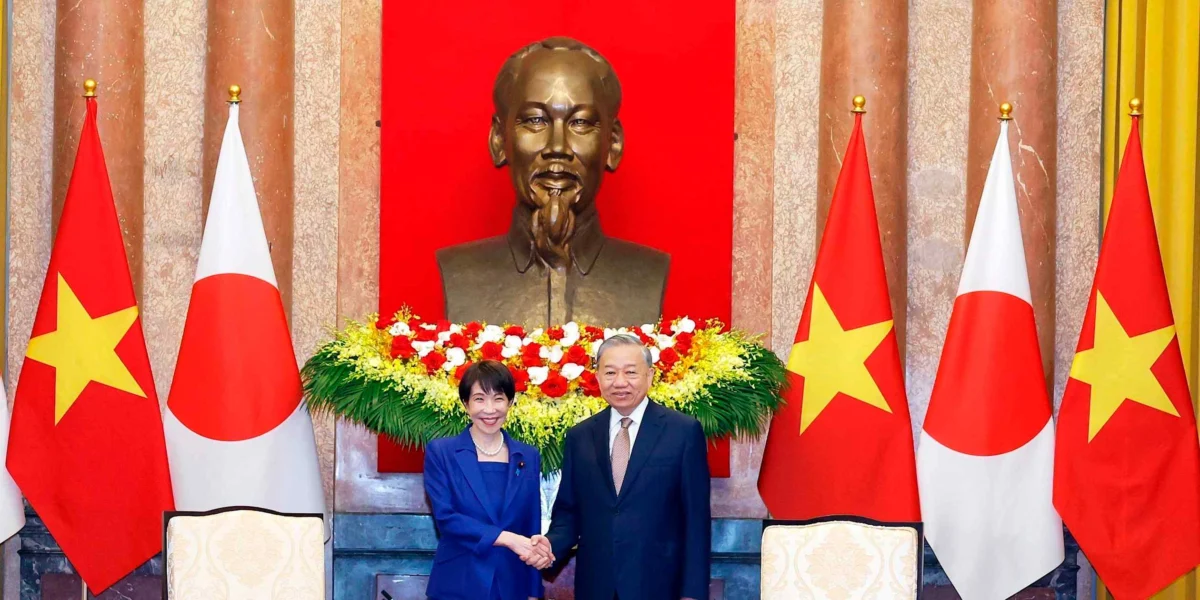
Vietnam’s Communist Party chief To Lam’s arrival in Japan on Sunday marks a pivotal moment in the evolving strategic partnership between Hanoi and Tokyo, signaling a significant recalibration of their decades-old relationship. The visit, commencing on November 8, 2026, occurs against a backdrop of profound shifts in trade, investment, official development assistance (ODA), and people-to-people exchanges, underscoring a deepening strategic alignment driven by regional dynamics and shared economic imperatives.
A New Era in Japan-Vietnam Relations
The traditional narrative of Japan-Vietnam relations, heavily influenced by Japan’s substantial ODA contributions and its role as a manufacturing hub for Vietnamese exports, is undergoing a noticeable transformation. While economic ties remain robust, the emphasis is increasingly shifting towards a more multifaceted strategic collaboration. This includes enhanced security cooperation, diversification of supply chains, and a shared approach to navigating the complex geopolitical landscape of the Indo-Pacific.
To Lam’s visit to Tokyo, his first in his capacity as General Secretary of the Communist Party of Vietnam, is expected to be a critical forum for discussing these evolving dimensions. The Vietnamese leader’s itinerary includes high-level meetings with Prime Minister Sanae Takaichi, Emperor Naruhito, and other key government and business leaders. The discussions are anticipated to cover a wide spectrum of bilateral issues, from economic cooperation and defense to climate change and regional security architecture.
Historical Context: From Post-War Reconstruction to Strategic Partnership
The foundation of the modern Japan-Vietnam relationship was laid in the aftermath of the Vietnam War and subsequent normalization of diplomatic ties in 1973. Initially, Japan’s engagement was primarily focused on humanitarian aid and economic reconstruction. However, this gradually evolved into a more substantial partnership, particularly after Vietnam’s "Doi Moi" (Renovation) economic reforms in 1986, which opened the country to foreign investment and trade.
By the early 2000s, Japan had emerged as one of Vietnam’s largest foreign investors and a significant source of ODA. Japanese companies, attracted by Vietnam’s low labor costs and growing domestic market, established a strong manufacturing presence, particularly in sectors like electronics, textiles, and automotive components. The annual flow of Japanese ODA played a crucial role in developing Vietnam’s infrastructure, including ports, roads, and power plants, facilitating its economic growth and integration into global supply chains.
A significant milestone in the relationship was the elevation of bilateral ties to a "Strategic Partnership for Peace and Prosperity in Asia" in 2006. This declaration marked a commitment to deeper cooperation across a broader range of areas, including political dialogue, security, and cultural exchange. Over the ensuing years, this partnership has been progressively strengthened through regular high-level visits, joint military exercises, and an increasing convergence of strategic interests, particularly concerning regional stability and maritime security.
The Shifting Sands of the Indo-Pacific
The current impetus for a recalibration of Japan-Vietnam relations is undeniably shaped by the evolving geopolitical landscape of the Indo-Pacific. The rise of China and its assertive actions in the South China Sea have created a shared concern for both nations. Japan, under its post-war pacifist constitution, has been gradually strengthening its defense capabilities and forging closer security ties with like-minded countries in the region. Vietnam, as a claimant state in the South China Sea, views Japan’s increased regional engagement as a vital counterbalance.
For Japan, Vietnam represents a crucial partner in its vision of a "Free and Open Indo-Pacific." Hanoi’s strategic location, its growing economic clout, and its principled stance on international law, including the UN Convention on the Law of the Sea (UNCLOS), make it an indispensable ally. Japan’s foreign policy has increasingly emphasized strengthening partnerships with Southeast Asian nations to promote a rules-based international order and deter unilateral challenges to regional stability.
Economic Interdependence and Diversification
Economically, the Japan-Vietnam relationship has matured beyond a simple investor-host dynamic. While Japan remains a vital source of foreign direct investment (FDI), the nature of this investment is evolving. Japanese companies are increasingly looking to Vietnam not just as a low-cost manufacturing base but also as a strategic hub for diversifying their global supply chains. This trend has been accelerated by the disruptions caused by the COVID-19 pandemic and the ongoing trade tensions between major global powers.
Supporting Data:
- Trade Volume: In 2025, bilateral trade between Japan and Vietnam reached an estimated $70 billion, with Japan maintaining a significant trade surplus. Key Vietnamese exports to Japan include garments, seafood, and electronic components, while Japan primarily exports machinery, vehicles, and high-tech equipment.
- Foreign Direct Investment (FDI): As of the end of 2025, Japan was consistently among the top three foreign investors in Vietnam. Japanese FDI projects in Vietnam have historically focused on manufacturing, but there is a growing trend towards investment in services, technology, and renewable energy.
- Official Development Assistance (ODA): Japan has been the largest ODA provider to Vietnam for decades. While the scale of ODA might be gradually shifting in proportion to other forms of cooperation, it remains a critical component of the bilateral relationship, supporting major infrastructure projects and human resource development.
- Tourism: People-to-people exchanges have seen a significant surge. Pre-pandemic figures showed a steady increase in Japanese tourists visiting Vietnam and vice-versa. Post-pandemic recovery has been robust, with both governments actively promoting tourism and cultural exchange programs. In 2025, Vietnamese tourist arrivals in Japan were projected to exceed 1 million.
The diversification of supply chains is a particularly salient topic. Japanese conglomerates are actively exploring opportunities to establish manufacturing facilities in Vietnam that can serve as alternative production sites to China. This strategy aims to mitigate risks associated with geopolitical tensions and trade disruptions, ensuring business continuity and resilience. Vietnam, in turn, benefits from this influx of higher-value manufacturing and technological transfer.
Security and Defense Cooperation: A Growing Frontier
The security dimension of the Japan-Vietnam relationship has witnessed a marked increase in depth and scope. While overt military alliances are not characteristic of either nation’s foreign policy, the shared commitment to regional stability has led to a significant expansion of defense and security cooperation. This includes:
- Maritime Security: Both countries share concerns over freedom of navigation and the rule of law in the South China Sea. Japan has provided Vietnam with patrol vessels and coast guard training, enhancing Vietnam’s capacity to monitor its maritime domain and respond to illegal activities. Joint exercises between the Japan Maritime Self-Defense Force (JMSDF) and the Vietnam People’s Navy, though infrequent, are becoming more sophisticated.
- Capacity Building: Japan has been actively involved in building Vietnam’s defense capabilities through the provision of equipment and training, particularly in areas such as maritime surveillance, disaster relief, and peacekeeping operations.
- Intelligence Sharing: While not publicly detailed, it is widely understood that there is increasing informal and formal intelligence sharing between the two nations on issues of mutual concern, particularly concerning regional security threats.
To Lam’s visit is expected to address further avenues for enhancing defense cooperation, potentially including joint training exercises, the exchange of defense technologies, and coordinated approaches to maritime domain awareness.
People-to-People Ties: Building Deeper Understanding
Beyond government-to-government and business-to-business interactions, the deepening of people-to-people ties is crucial for the long-term health of the Japan-Vietnam relationship. This encompasses educational exchanges, cultural programs, and tourism. The growing number of Vietnamese students pursuing higher education in Japan, and Japanese individuals working and living in Vietnam, fosters mutual understanding and strengthens the human connections that underpin the bilateral partnership.
Timeline of Key Developments:
- 1973: Normalization of diplomatic relations between Japan and Vietnam.
- 1990s: Japan becomes a major ODA provider and investor in Vietnam, supporting its economic reforms.
- 2006: Elevation of bilateral relations to a "Strategic Partnership for Peace and Prosperity in Asia."
- 2010s: Increased focus on security cooperation, including maritime security and defense exchanges.
- Late 2010s – Early 2020s: Acceleration of supply chain diversification strategies by Japanese companies in Vietnam, driven by global trade dynamics.
- 2023: Prime Minister Fumio Kishida’s visit to Vietnam, reinforcing the strategic partnership and exploring new areas of cooperation.
- November 8, 2026: General Secretary To Lam’s visit to Japan, signifying a new phase of strategic realignment.
Official Reactions and Inferred Expectations
While official statements from both sides prior to To Lam’s visit have been carefully worded, they consistently emphasize the strong and deepening ties between Japan and Vietnam. Prime Minister Takaichi’s office has indicated that the visit will be an opportunity to "further strengthen the robust strategic partnership and discuss future cooperation in various fields." Similarly, Vietnamese officials have expressed optimism about the visit’s potential to "enhance mutual understanding and promote practical cooperation for the benefit of both peoples."
Inferred expectations from the visit include:
- Reinforcement of Security Commitments: A clear signal from both sides regarding their shared commitment to regional stability and the rule of law in the Indo-Pacific.
- Economic Cooperation Enhancements: Discussions on further facilitating Japanese investment, particularly in high-tech manufacturing, renewable energy, and digital economy sectors. Potential agreements on streamlining investment procedures and addressing trade barriers.
- Defense Modernization Support: Exploration of Japan’s continued support for Vietnam’s defense modernization efforts, with a focus on maritime security and capacity building.
- Cultural and Educational Exchange Programs: Renewed commitment to fostering deeper people-to-people connections through enhanced educational scholarships and cultural initiatives.
Broader Impact and Implications
The deepening strategic alignment between Japan and Vietnam carries significant implications for the broader Indo-Pacific region.
- Regional Stability: A stronger Japan-Vietnam partnership contributes to a more balanced regional security architecture, providing a counterweight to assertive powers and reinforcing the principles of international law.
- Economic Resilience: The diversification of supply chains involving Vietnam enhances the resilience of global manufacturing networks, making them less susceptible to shocks and disruptions.
- Multilateralism: The close cooperation between Tokyo and Hanoi underscores the importance of multilateral frameworks and rules-based governance in addressing regional challenges.
- ASEAN Centrality: Vietnam, as a key member of the Association of Southeast Asian Nations (ASEAN), plays a crucial role in the bloc’s efforts to maintain regional peace and prosperity. The strengthened ties with Japan can further bolster ASEAN’s influence and its ability to navigate complex geopolitical dynamics.
In conclusion, To Lam’s visit to Japan is not merely a diplomatic courtesy but a strategic imperative for both nations. It signifies a conscious effort to adapt their long-standing relationship to the evolving realities of the 21st century, moving beyond traditional economic ties to embrace a more comprehensive and robust strategic partnership. The outcomes of this visit will undoubtedly shape the future trajectory of Japan-Vietnam relations and contribute significantly to the broader landscape of the Indo-Pacific.
