

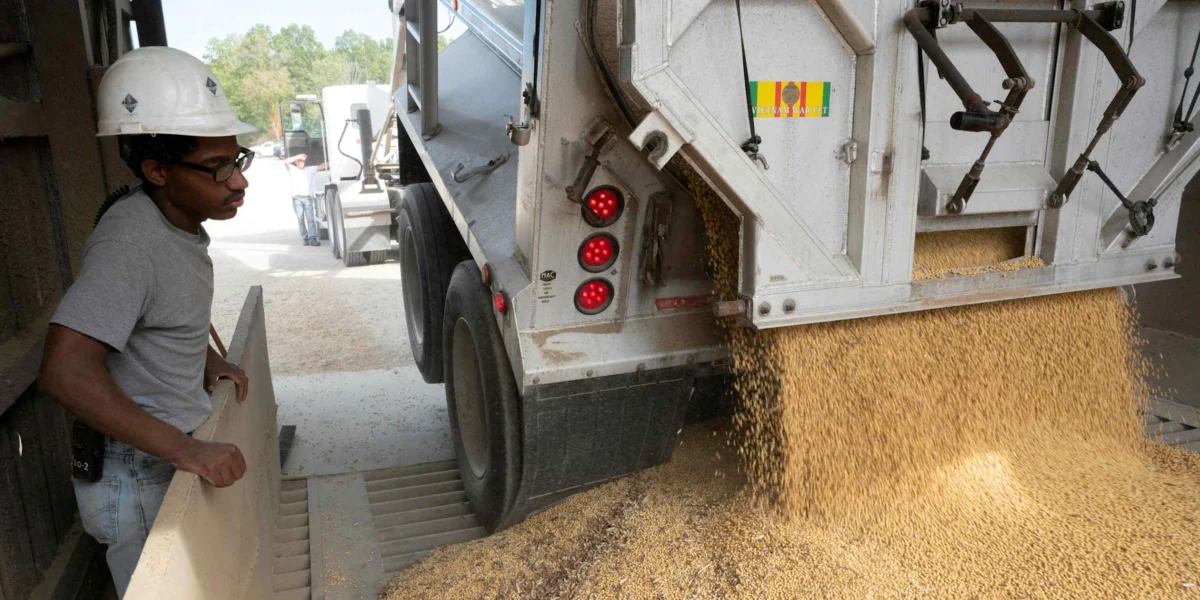
TOKYO — Soybean prices experienced a notable decline, reaching a one-month low this week, following the unexpected omission of the key U.S. agricultural commodity from a list of products slated for tariff reduction discussions between the United States and China. While soybeans were not explicitly excluded from future negotiations, their absence from the initial communiqué has injected a degree of uncertainty into the market, prompting concerns among farmers, traders, and agricultural analysts about the potential impact on future demand and pricing.

Background to the Trade Discussions
The recent trade talks between the U.S. and China represent a critical juncture in the ongoing, often volatile, relationship between the world’s two largest economies. For years, agricultural products, particularly soybeans, have been at the forefront of trade disputes. China, a voracious consumer of soybeans for its massive livestock industry, was historically the largest buyer of U.S. soybeans. However, retaliatory tariffs imposed by Beijing in response to U.S. trade actions significantly disrupted this flow, forcing Chinese importers to seek alternative sources, primarily from South America, and leading to substantial financial strain for American soybean farmers.
The U.S. Department of Agriculture (USDA) has been diligently tracking these shifts. Prior to the trade tensions, the U.S. consistently exported over 30 million metric tons of soybeans to China annually. By 2018, following the imposition of tariffs, these exports plummeted by more than 60 percent. While subsequent trade agreements, such as the Phase One deal, saw some recovery in U.S. soybean sales to China, the market remains sensitive to any signs of renewed friction or preferential treatment for other suppliers.

The latest round of high-level discussions, held in late September 2026, aimed to de-escalate trade tensions and identify areas of mutual economic interest. The U.S. delegation, led by senior trade officials, had expressed optimism about fostering a more stable and predictable trade environment. China, in turn, signaled a willingness to address certain trade imbalances and explore avenues for increased imports of American goods.
The Omission and Its Immediate Market Impact
The official statement released after the summit detailed a series of planned tariff reductions on various goods, including manufactured products, certain raw materials, and some consumer goods. However, agricultural products that had been central to previous trade disputes, such as soybeans, were conspicuously absent from this initial list. This omission, while not an outright declaration of exclusion, sent ripples through the commodity markets.

The Chicago Board of Trade (CBOT), a key benchmark for global soybean prices, saw immediate downward pressure. Futures contracts for November delivery, which typically reflect the sentiment around the fall harvest, shed value throughout the trading week. Analysts pointed to the reduced certainty of significant tariff relief on soybeans as a primary driver of this decline. Traders, factoring in the possibility of continued or even intensified competition from Brazilian and Argentine suppliers, adjusted their positions accordingly.
"The market was anticipating some positive news for agriculture, especially given the historical significance of soybeans in the U.S.-China trade narrative," commented a senior analyst at a major agricultural trading firm, who requested anonymity due to market sensitivity. "While this doesn’t mean soybeans are off the table entirely for future discussions, their exclusion from this initial list of tariff cuts suggests that either the negotiations around agricultural products are more complex, or there’s a strategic decision to address other sectors first. Either way, it creates a vacuum of clear, positive signals for soybean producers."

The price slide was exacerbated by the timing. The U.S. soybean harvest season, which generally runs from September through November, is characterized by increased supply as farmers bring their crops to market. Typically, this seasonal increase in supply can put downward pressure on prices. The lack of a supportive trade development from the U.S.-China talks meant that this seasonal bearish factor was not counterbalanced by any optimistic outlook on export demand, leading to a more pronounced price correction.
Examining the Subtext: Why the Omission?
Several potential explanations exist for the exclusion of soybeans from the initial tariff reduction list.

- Complexity of Agricultural Negotiations: Agricultural trade is often fraught with complex subsidy structures, phytosanitary regulations, and deeply entrenched domestic support policies. Reaching agreements on these issues can be protracted and may require separate, more detailed negotiations. It is possible that U.S. and Chinese negotiators decided to compartmentalize these discussions to achieve quicker wins in other sectors.
- Strategic Prioritization: The U.S. administration may have prioritized other trade areas deemed more critical for immediate economic impact or political leverage. For instance, focusing on high-tech goods, intellectual property rights, or market access for manufactured products might have been seen as having a broader and more immediate effect on bilateral trade balances and employment.
- Shifting Supply Chains: China has made concerted efforts to diversify its soybean supply chain since the onset of trade disputes. Large volumes of soybeans are now sourced from Brazil and Argentina, which have expanded their production capacity. Re-establishing the U.S. as a dominant supplier would likely require more than just tariff reductions; it might involve long-term supply agreements and assurances of market access, which are complex to negotiate.
- Domestic Political Considerations: Within the U.S., the soybean lobby is influential, particularly in key agricultural states. The administration may be carefully calibrating its approach to ensure that any concessions or outcomes are perceived as beneficial to American farmers, avoiding a perception of being rushed into unfavorable deals. The current omission could be a tactic to gauge market reaction or to build a stronger negotiating position for later.
Broader Implications for the Agricultural Sector
The implications of this development extend beyond the immediate price fluctuations for soybeans.
For U.S. Farmers:
American soybean farmers, many of whom have been grappling with reduced profitability and increased debt since the trade war began, will be closely watching for any further clarity. The current uncertainty could lead to a more cautious approach to planting decisions in the next cycle, with some farmers potentially shifting to other crops if the outlook for soybeans remains dim. Government support programs, such as those administered by the USDA, may continue to play a crucial role in stabilizing farm incomes.

Data from the USDA consistently shows that soybean production costs can fluctuate significantly based on input prices (fertilizer, seed, fuel) and market prices. A sustained period of lower soybean prices, without corresponding reductions in input costs or increased government aid, could put significant financial pressure on farm operations.
For Chinese Importers:
Chinese soybean importers, while accustomed to navigating a complex global market, may also face increased planning challenges. The lack of clear signals from the U.S. could lead them to further solidify relationships with South American suppliers, potentially entrenching these alternative supply routes. However, China’s sheer demand for soybeans means that U.S. supply, if competitively priced and reliably accessible, would remain a significant factor in global markets.

For Global Commodity Markets:
The U.S. remains a powerhouse in global agricultural production. Any significant disruption to its export capacity, particularly for key commodities like soybeans, has a ripple effect on international prices and trade flows. While Brazil and Argentina have stepped up production, the global market is not infinitely elastic. A sustained reduction in U.S. exports could eventually lead to higher global prices for soybean-derived products, such as animal feed and vegetable oils, impacting consumers worldwide.
Looking Ahead: Not Yet Off the Table
Despite the immediate market reaction, officials from both the U.S. and China have indicated that the discussions are ongoing and that the initial list of tariff reductions is not exhaustive. White House trade representatives have reiterated their commitment to addressing a wide range of trade issues with Beijing, including those affecting the agricultural sector. Similarly, Chinese commerce ministry spokespeople have emphasized the importance of a stable and predictable trade relationship.

The upcoming months will be crucial. Further rounds of negotiations, scheduled to address other specific sectors, may offer more clarity on the future of U.S. soybean trade with China. The willingness of both sides to engage in detailed discussions on agricultural protocols, market access, and potential tariff adjustments will be key indicators of the direction of this vital trade relationship.
In the interim, market participants will be closely scrutinizing data from the USDA, monitoring weather patterns affecting harvests in the U.S. and South America, and observing any public statements from trade officials that might provide further insight into the U.S.-China agricultural trade landscape. The absence of soybeans from the initial tariff cut announcement is a significant development, but it is likely just one chapter in a much larger and evolving trade narrative. The ultimate impact will depend on the willingness of both nations to find common ground and address the complex dynamics of global agricultural trade.
