

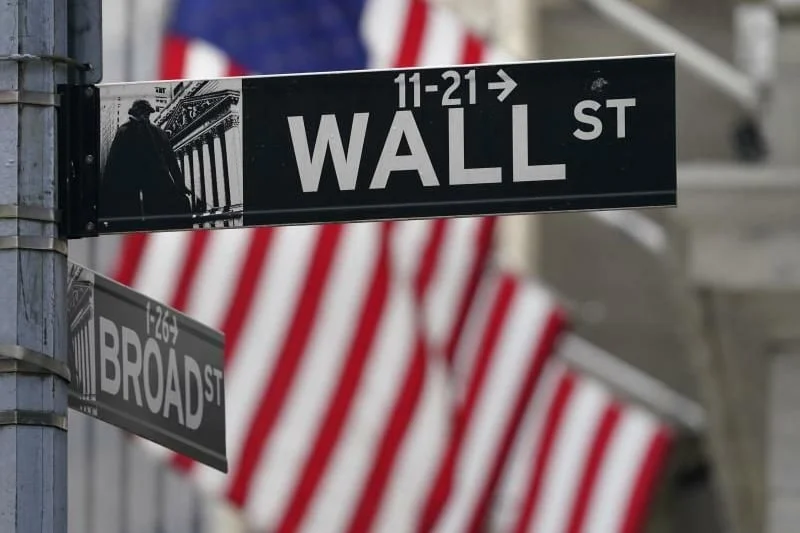
The week on Wall Street began with mixed signals, as investors navigated a landscape shaped by ongoing geopolitical tensions in the Middle East and an anticipated calendar of significant economic events. While the Dow Jones Industrial Average showed modest gains, the tech-heavy Nasdaq and broader S&P 500 indices experienced pullbacks, reflecting a cautious market sentiment. The oil price, however, defied the broader market trend, surging to over $106 per barrel for Brent crude, driven by renewed concerns over supply disruptions.

Market Snapshot: A Divergent Opening to the Week
On Monday, the opening bell signaled a day of divergence across major U.S. stock indices. The Dow Jones Industrial Average, a barometer of 30 large, publicly owned companies, edged slightly higher, indicating a degree of resilience in more established sectors. This stability was attributed, in part, to the performance of companies less sensitive to the immediate fluctuations of the technology sector. However, this positive momentum was not broad-based. The Nasdaq Composite, heavily weighted towards technology and growth stocks, faced downward pressure. Similarly, the S&P 500, which tracks 500 of the largest U.S. companies, also saw a decline, suggesting that investor appetite for risk was tempered by prevailing uncertainties.
The mixed performance underscores a market grappling with multiple macroeconomic and geopolitical forces. The ongoing conflict in the Middle East has injected a layer of geopolitical risk into global markets, prompting a reassessments of investment strategies. Investors are closely monitoring developments for any potential impact on energy supplies and global trade routes. Simultaneously, the upcoming week is marked by a series of key economic indicators and central bank communications that could shape the future direction of monetary policy and economic growth. This anticipation has led to a more cautious approach, with investors prioritizing defensive assets and hedging against potential volatility.
The Impact of Geopolitical Tensions and Oil Prices
The resurgence in oil prices was a significant feature of the trading day. Brent crude, a global benchmark, saw its price climb by as much as 1.9 percent, surpassing the $106 mark per barrel for December deliveries. West Texas Intermediate (WTI) crude experienced a similar upward trend. This price appreciation is directly linked to the escalating tensions in the Middle East. Any perceived threat to oil-producing regions or transit routes can trigger immediate market reactions, as concerns about supply disruptions take hold. Historically, periods of heightened geopolitical instability in the Middle East have led to significant spikes in crude oil prices, impacting inflation, transportation costs, and consumer spending worldwide.
The renewed surge in oil prices carries several implications for the broader economy. For consumers, higher energy costs translate into increased expenses at the pump and for heating, potentially dampening discretionary spending. Businesses, particularly those reliant on transportation and energy-intensive operations, face higher input costs, which could squeeze profit margins or lead to price increases for their goods and services. This, in turn, can contribute to inflationary pressures, a key concern for central banks like the U.S. Federal Reserve. The Fed has been actively working to bring inflation under control, and a sustained rise in energy prices could complicate these efforts, potentially leading to a more hawkish stance on interest rates.
U.S. Bond Market Closed for Holiday, Equity Trading Continues
In a notable aspect of Monday’s trading, the U.S. bond market observed a holiday closure. This meant that trading in U.S. Treasury securities, typically a key indicator of market sentiment and risk appetite, was suspended. However, equity markets operated under their normal trading schedules, allowing for the observed divergence in stock indices. The closure of the bond market meant that a significant portion of the fixed-income landscape was unavailable for trading, potentially leading to a more concentrated focus on equity markets for price discovery and risk assessment.
The absence of bond market activity can sometimes amplify the volatility seen in equities, as investors reallocate capital and adjust positions within the available markets. While the bond market’s closure did not appear to trigger widespread panic, it did remove a significant avenue for hedging and portfolio diversification on that particular day.

Microsoft Stock Reaches New Heights Amidst Market Flux
Amidst the broader market fluctuations, a notable individual stock performance stood out: Microsoft. The technology giant’s shares surged, marking a significant milestone as they surpassed a key technical level for the first time in approximately a year. This achievement for Microsoft, a constituent of the Dow Jones Industrial Average and a major player in the Nasdaq, highlights the ongoing strength and investor confidence in certain segments of the technology sector, particularly those focused on artificial intelligence and cloud computing.
Microsoft’s impressive performance is often seen as a bellwether for the broader technology industry. The company’s strategic investments in areas like AI, cloud infrastructure (Azure), and its dominant position in enterprise software have resonated with investors. This sustained growth, even as other tech stocks faltered, points to a bifurcated market where specific technological advancements and strong corporate fundamentals are driving value, even in a generally cautious environment. The surpassing of this important technical mark can also signal further upward momentum, as it may attract additional investment from technical traders and momentum investors.

Broader Market Context and Investor Sentiment
The opening of the week set the stage for a potentially volatile period. Several significant economic data releases are anticipated, including inflation reports, employment figures, and central bank policy statements. These events are crucial for understanding the trajectory of the global economy and the future path of interest rates. Investors are keenly awaiting any signals that might indicate whether inflation is continuing to cool or if further tightening of monetary policy will be necessary.
The prevailing sentiment among many market participants is one of cautious optimism, tempered by a healthy respect for the potential risks. The ongoing geopolitical events, particularly in the Middle East, add an unpredictable element that can quickly shift market sentiment. The resilience of oil prices underscores this, as energy security remains a paramount concern for economies worldwide. As the week progresses, the focus will remain on how these various factors interact to influence investor behavior and shape market movements. The performance of major indices like the Dow Jones, S&P 500, and Nasdaq will be closely watched for indications of sustained trends or shifts in market leadership.

Analysis of Implications: A Complex Economic Landscape
The mixed performance of U.S. stock markets, coupled with the rise in oil prices, paints a complex picture of the current economic landscape. The divergence between the Dow Jones and the tech-heavy Nasdaq suggests that investors are adopting a more selective approach, favoring companies with strong underlying fundamentals and those less exposed to global economic headwinds. The resilience of Microsoft, in particular, points to the enduring appeal of companies at the forefront of technological innovation, especially in the rapidly evolving field of artificial intelligence.
However, the increase in oil prices poses a significant challenge. If sustained, it could reignite inflationary pressures, forcing central banks to consider more aggressive monetary policy measures. This, in turn, could dampen economic growth and negatively impact corporate earnings across a wider range of sectors. The Federal Reserve’s upcoming decisions on interest rates will be heavily influenced by the inflation data, making upcoming economic reports critical for market direction.

Furthermore, the geopolitical tensions in the Middle East add a layer of uncertainty that is difficult to quantify. Any escalation of conflict could lead to further supply chain disruptions and energy price spikes, creating a ripple effect across global markets. Investors will be closely monitoring diplomatic efforts and on-the-ground developments to gauge the potential impact on economic stability.
The U.S. bond market’s holiday closure on Monday removed a key benchmark for assessing risk appetite. In its absence, equity market movements took center stage, highlighting the ongoing importance of stock indices as barometers of investor sentiment. The varied performance across different sectors and individual stocks suggests that the market is not moving in lockstep, but rather reflecting a nuanced response to a multifaceted economic environment. As the week unfolds, the interplay of economic data, geopolitical events, and corporate performance will undoubtedly continue to shape the narrative on Wall Street.
