

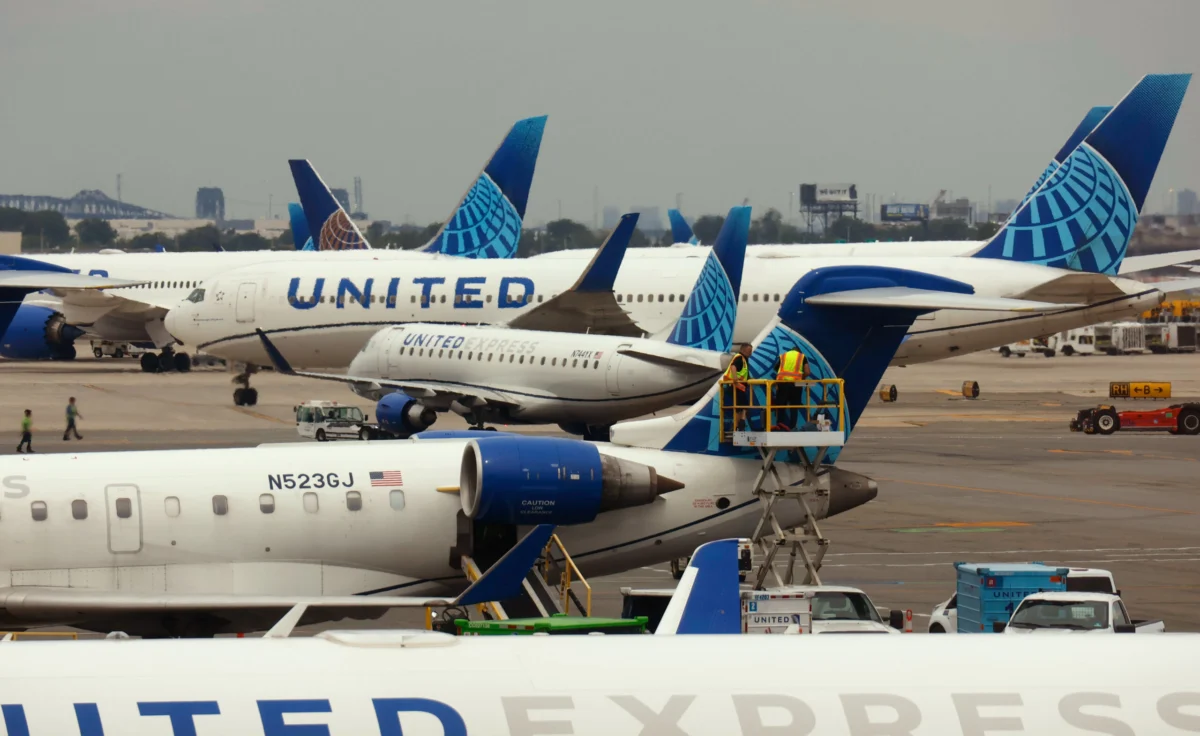
Newark, New Jersey – August 8, 2026 – United Airlines, the Chicago-based carrier, has announced a significant overhaul of its MileagePlus elite status program for the 2027 qualification year, fundamentally altering how its most loyal customers achieve coveted Premier status. The sweeping changes, communicated to MileagePlus members via email and detailed on the airline’s official website on Tuesday, will eliminate flight segments as a qualifying metric and elevate the spending threshold required to reach the program’s highest tier, Premier 1K. This strategic shift underscores an accelerating industry-wide trend towards revenue-based loyalty models, prioritizing customer spending over mere flight frequency.
Effective January 1, 2027, MileagePlus members will no longer have the option to qualify for elite status based partially on the number of flight segments flown within a calendar year. Instead, Premier status will exclusively be determined by the accumulation of Premier Qualifying Points (PQPs). These points are earned through eligible flight spending, redemptions on award travel, and expenditures made using eligible United co-branded credit cards. While the new system aims to simplify the qualification process with a single, consistent metric, it also represents a distinct pivot that will necessitate a reevaluation of travel strategies for many frequent flyers.
A Deep Dive into the New Qualification Structure
Under the previous system, members could achieve Premier Silver, the lowest elite tier, through a combination of 15 flight segments and 5,000 PQPs, or by accumulating 6,000 PQPs alone. For 2027, the segment-based option for Premier Silver is entirely removed, leaving the 6,000 PQP threshold as the sole path to this entry-level status. This change particularly impacts flyers who frequently travel short distances on less expensive fares, as their flight count previously offered a viable alternative to higher spending.
The PQP thresholds for Premier Gold and Premier Platinum tiers will remain consistent with their previous points-only requirements. However, the most significant adjustment targets the pinnacle of United’s loyalty program: Premier 1K. To attain this elite status, members will now be required to accrue a formidable 32,000 qualifying points, a substantial increase from the 28,000 PQP requirement for 2026. This elevation of the top-tier threshold signals United’s intent to reserve its most exclusive benefits for its absolute highest-spending customers.
Premier Qualifying Points are earned at a rate of one PQP for every dollar spent on United base fares and upgrades. Additionally, members can accrue PQPs by redeeming miles for travel on United flights, earning one PQP for every 100 miles redeemed. A crucial component of the new model heavily emphasizes the airline’s financial partnerships: United Chase cardholders will continue to earn PQPs based on their spending with these co-branded credit cards, making these financial products an even more integral part of the elite status journey. Despite the shift to a PQP-centric model, a foundational requirement persists: MileagePlus members must still complete a minimum of four flights on United or United Express jets within a calendar year to be eligible for any Premier status. This ensures that even high-spending credit card users maintain a direct flying relationship with the airline.
Background and Context: An Evolving Landscape of Airline Loyalty
This latest announcement by United Airlines is not an isolated event but rather the latest development in a sustained, industry-wide evolution of airline loyalty programs. For over a decade, major U.S. carriers have been progressively moving away from traditional mileage-based and segment-based systems towards models that directly correlate elite status with customer spending. This shift is driven by a desire to reward the most profitable customers – those who purchase higher-fare tickets, pay for upgrades, and utilize co-branded credit cards – while simplifying the often complex and opaque rules of loyalty programs.
American Airlines and Delta Air Lines have been at the forefront of this transformation, having implemented similar revenue-based models for their AAdvantage and SkyMiles programs, respectively, several years ago. These pioneering moves set a precedent, demonstrating that airlines could successfully transition to a spend-centric model without significant backlash from their most valued customers. The competitive landscape among the "Big Three" U.S. carriers often sees one airline’s strategic move quickly followed by others, as each seeks to optimize revenue and maintain a competitive edge in attracting and retaining high-value travelers.
United’s own trajectory towards this model has been incremental yet deliberate. In October 2024, the airline had already announced increased thresholds for earning Premier status for the 2025 qualification year, signaling an earlier intent to raise the bar. Further solidifying its focus on revenue and credit card partnerships, United earlier in 2026 overhauled the way travelers earn miles, explicitly designed to reward customers holding its co-branded credit cards. Simultaneously, the carrier drastically slashed mileage earnings for basic economy flights, mirroring similar actions taken by American and Delta. These prior adjustments collectively paved the way for the comprehensive changes unveiled this week, demonstrating a clear strategic direction by United’s leadership.
Chronology of Recent United MileagePlus Adjustments
- October 2024: United announces increased Premier status qualification thresholds for the 2025 program year, requiring higher PQPs or a combination of PQPs and segments. This marked an initial tightening of requirements.
- Early 2026 (Specific date varies by program component): United implements significant changes to its mileage earning structure. This included a greater emphasis on earning miles through United co-branded credit card spending and a substantial reduction in miles earned for basic economy fares. These changes were positioned to reward high-value customers and credit card holders more generously.
- August 6, 2026 (Announcement Date): United Airlines formally notifies MileagePlus members and the public of the elimination of flight segments as a qualification metric for Premier status, effective for the 2027 program year. The announcement also detailed the increased PQP requirement for Premier 1K and the new 5% PQP head start for eligible credit card holders.
Official Rationale and Airline Perspective
In an interview with the prominent travel website The Points Guy, Jarad Fisher, President of MileagePlus at United, articulated the airline’s rationale behind the sweeping changes. Fisher candidly referred to the flight segments metric as an "old relic," suggesting it no longer aligned with the airline’s contemporary objectives or the evolving preferences of its most valuable customers. He emphasized the airline’s desire for "one consistent metric" that members could focus on "across the board between their flight activity, their engagement in the airline." This statement underscores the strategic imperative to simplify the program while simultaneously linking loyalty directly to the financial value a customer brings to United, whether through flight purchases, award travel redemptions, or credit card spending.
The email communication obtained by CNBC and sent to MileagePlus members further echoed this sentiment, stating that the change "aims to simplify how customers earn Premier status." While simplification is a stated goal, the underlying objective for any airline is to maximize revenue and profitability from its loyalty program. By consolidating qualification around PQPs, United can more precisely identify and reward its most lucrative customers, encouraging them to concentrate their spending within the United ecosystem. This strategy also subtly encourages greater engagement with United’s lucrative credit card partnerships, which provide substantial recurring revenue streams to the airline.
Implications for Diverse Flyer Segments
The revised MileagePlus program will undoubtedly have varied implications across different segments of United’s vast customer base:
-
The "Road Warrior" (Segment-Focused Flyer): This group, traditionally comprising consultants, regional sales representatives, or commuters who frequently take multiple short, often inexpensive, flights, will be the most directly impacted. Previously, these individuals could leverage a high number of flight segments to achieve status, even if their total spending was moderate. With the segment option removed, many will find it significantly harder, if not impossible, to maintain their current elite status levels without a substantial increase in their annual flight expenditures or credit card spending. This could lead to frustration and potentially a shift in allegiance to other carriers whose programs might still offer more favorable terms for high-frequency, lower-fare travelers, if such options continue to exist.
-
The Business Traveler (High-Fare Payer): Business travelers whose companies fund higher-fare tickets (e.g., full-fare economy, premium economy, business class) are likely to be less affected, and in some cases, might even find the new system more straightforward. Their naturally higher spending on base fares and upgrades directly translates to more PQPs, aligning well with the new model. The increased PQP requirement for Premier 1K, however, means that even top-tier business travelers will need to ensure their travel patterns meet the elevated spending threshold to retain the most exclusive benefits.
-
The Leisure Traveler / Budget-Conscious Flyer: For leisure travelers who primarily seek value and fly less frequently or on basic economy fares, achieving any elite status will become an even more distant prospect. Their lower spending naturally generates fewer PQPs, and without the segment option, the path to Premier Silver will be solely contingent on meeting the 6,000 PQP mark, which requires a minimum of $6,000 in eligible spending (or equivalent through credit cards/award redemptions). This reinforces the program’s shift away from rewarding mere loyalty through presence to loyalty through wallet share.
-
United Chase Credit Card Holders: This segment stands to benefit significantly from the increased emphasis on credit card spending for PQP accumulation. The new incentive, offering eligible United cardholders with Premier status a 5% "head start" on PQPs needed to reach their previous year’s status level at the beginning of a new year, provides a tangible advantage. This further incentivizes card usage and reinforces the value of these co-branded financial products, which are crucial revenue generators for United. The airline is actively steering customers towards its financial ecosystem.
Broader Industry Impact and Strategic Implications
United’s latest move reinforces the "premiumization" trend sweeping the airline industry. By making elite status harder to achieve and more directly tied to spending, airlines are effectively focusing their resources and benefits on a smaller, more profitable cohort of customers. This strategy allows them to differentiate their service offerings and maintain a perception of exclusivity for their highest-value passengers, while potentially reducing the cost of delivering benefits to a broader base of lower-spending elite members.
From a competitive standpoint, this action by United puts pressure on any remaining airlines that still offer more lenient qualification paths. While American and Delta have largely aligned with a spend-based model, any carrier attempting to differentiate by retaining segment-based options might find itself either attracting a different type of loyal customer or eventually succumbing to the same economic pressures that have driven the "Big Three" towards revenue-centric programs.
Loyalty programs themselves are incredibly valuable assets for airlines, often contributing billions to their enterprise value. Many loyalty programs, including MileagePlus, operate as separate profit centers within the airline’s corporate structure, and their financial performance is often a key driver of investor confidence. By optimizing qualification around spending, United is not only simplifying the program but also strengthening the financial underpinnings of MileagePlus, ensuring that the benefits it confers are directly aligned with the economic value each member brings. This move is a clear signal that airlines are prioritizing yield management and profitability in a post-pandemic world, where maximizing revenue from every customer interaction is paramount.
Industry analysts are likely to view this as a logical, albeit sometimes unpopular, step for United. While there may be some initial discontent among those who relied on segment qualification, the long-term trend supports such moves. The ability of airlines to successfully implement these changes hinges on the perceived value of the elite benefits and the stickiness of their overall network and service. If United’s network remains strong and its core elite benefits (upgrades, lounge access, priority services) continue to be highly desired, most high-spending customers will likely adapt to the new requirements rather than switch carriers.
In conclusion, United Airlines’ decision to eliminate flight segments and elevate the Premier 1K threshold for 2027 marks a definitive stride towards a fully spend-centric loyalty program. This strategic realignment, while aimed at simplification and rewarding high-value customers, will necessitate significant adjustments for many MileagePlus members and further solidifies the industry’s shift towards monetizing loyalty through direct financial contributions. The changes underscore United’s commitment to optimizing its loyalty program for profitability and focusing its most exclusive benefits on those who contribute most substantially to its bottom line.
