

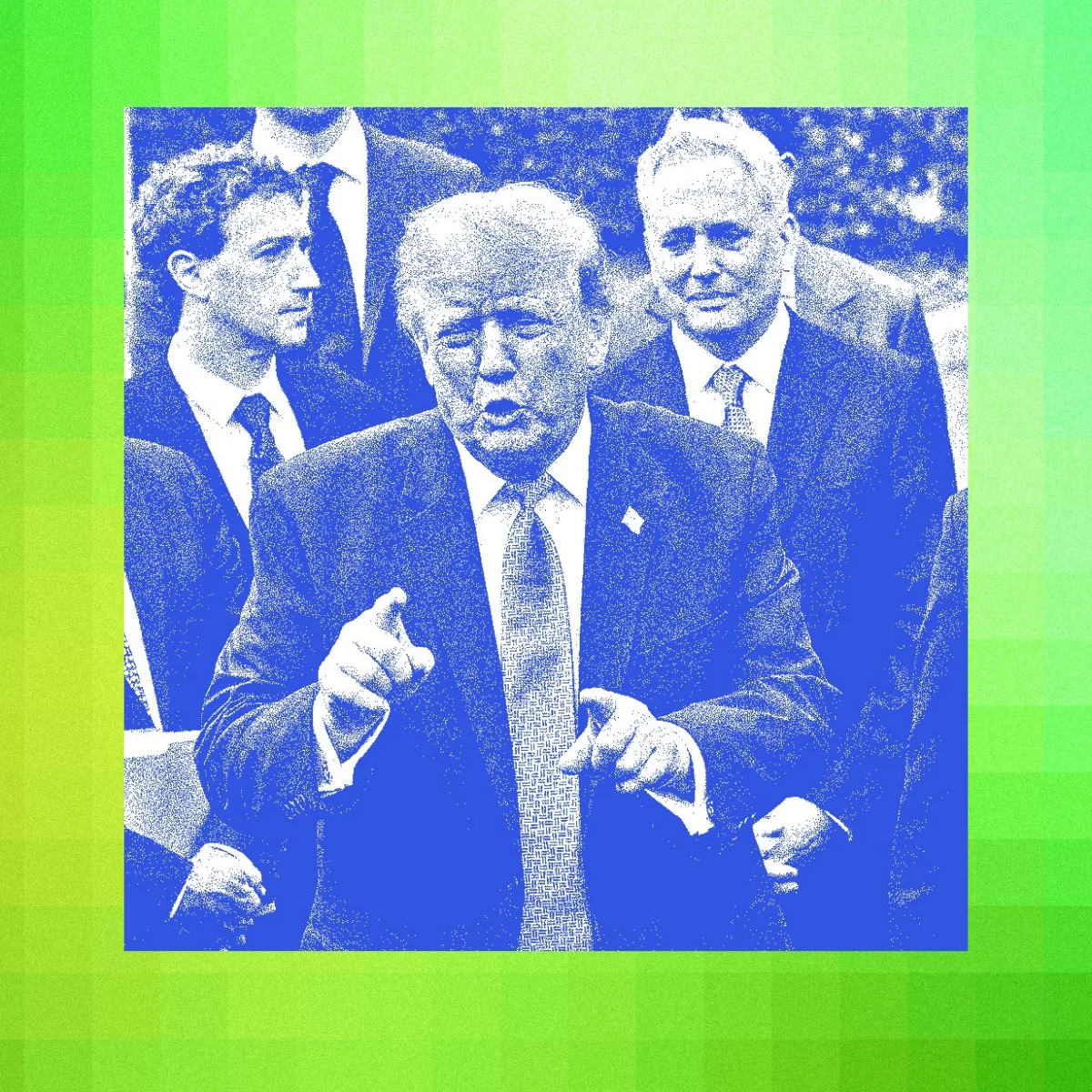
This week’s episode of WIRED’s "Uncanny Valley" podcast, hosted by Brian Barrett, Zoë Schiffer, and Leah Feiger, delved into a multifaceted landscape of technological and political developments. The discussion spanned a "morally binding" AI accord signed by tech executives following a meeting with Donald Trump, OpenAI’s latest foray into consumer AI with its new "Dots" agents, and a concerning trend of extremist candidates emerging in upcoming elections.
AI Self-Regulation Accord: A Voluntary Pact Amidst Growing Scrutiny
A central topic of the episode was the AI accord reached after a meeting between former President Donald Trump and several leading AI executives. The agreement, described by the hosts as a "morally binding" accord, essentially commits AI laboratories to self-regulate their advanced AI development. Executives from major companies, including Meta, OpenAI, Google, Microsoft, and Anthropic, were reportedly present at the White House for the discussions.
The accord outlines a commitment from these companies to implement internal evaluations, allow external audits, and have their boards review audit findings for their AI models. However, the hosts emphasized that the agreement is entirely voluntary, leading to skepticism about its enforceability and ultimate impact.
"The keyword here, when it comes to any sort of proposed regulation at all that we’ve seen thus far in the AI space, when it comes to the White House, voluntary is the word," stated Leah Feiger. This sentiment was echoed by Zoë Schiffer, who noted that the expectation was not for the Trump administration to enact stringent regulations, but rather for AI companies to signal their commitment to responsible development.
The meeting itself drew attention for its participants, which included figures like Sundar Pichai (Google), Elon Musk, Dario Amodei (Anthropic), Mark Zuckerberg (Meta), Jensen Huang (Nvidia), and Greg Brockman (OpenAI), though notably absent was OpenAI CEO Sam Altman. The composition of the group, described as a "motley crew" by Brian Barrett, highlighted the evolving power dynamics within the AI industry.
A particularly noted moment involved Dario Amodei being prompted to speak, with Trump remarking, "Whatever he says is OK." Amodei reiterated his long-held view on the immense benefits of AI. However, the overall impression left by the accord was one of a rushed effort, underscored by a factual error in the document itself, which reportedly misspelled "United States" under Trump’s signature.
The voluntary nature of the accord stands in stark contrast to simultaneous actions by regulatory bodies. The day after the White House meeting, the Federal Trade Commission (FTC) announced an escalation of its probe into AI companies like Anthropic and OpenAI, focusing on the potential risks their technologies pose to consumers. FTC Chair Lina Khan, in an op-ed for The New York Times, asserted that these companies could be subject to existing laws, signaling a more robust regulatory approach from certain government branches.
OpenAI’s Developer Day: The Rise of "Dots" and AI Agents
OpenAI’s recent Developer Day also featured prominently in the podcast’s discussion, with CEO Sam Altman unveiling "Dots," the company’s new generation of AI agents designed for broader consumer use. These agents, accessible through platforms like ChatGPT and Slack, are envisioned as "always-on" assistants capable of performing tasks online on behalf of users.
The introduction of Dots positions OpenAI in direct competition with other AI agents, such as Meta’s "Muse," which has gained traction due to Meta’s extensive distribution channels. The hosts debated the effectiveness and appeal of these agents, with Brian Barrett questioning the need for "adorability" in their design.
"The whole point of I think the fact that they’re making these so cutesy and fluffy and adorable is obviously intentional," Barrett observed. "It is what is going to win over the average consumer and make you forget that you are giving away all of your privacy and all of the information and all of your accounts to this adorable fuzzy-wuzzy little thing instead of a data center."
Zoë Schiffer, who attended the Developer Day, noted the speed at which OpenAI developed Dots, suggesting it was a rapid response to competitors like Instinct and Muse. She highlighted the shift from a "blank text box" where users build prompts to agents that proactively learn about users and suggest actions. However, she also raised concerns about the necessary trade-off between an agent’s usefulness and the personal information it requires access to.
"To make these agents useful, you have to give them a lot of personal information. Otherwise, they just can’t frankly do that much," Schiffer stated. She illustrated this with an example of an agent handling restaurant reservations, a seemingly simple task that requires access to calendars, emails, and potentially financial information.
The discussion also touched upon the potential unintended consequences of widespread AI agent adoption. Brian Barrett cited a warning from a financial institution about the potential collapse of the U.S. financial system if all users’ agents simultaneously optimize by moving funds into higher-interest money market accounts, illustrating a broader systemic risk.
Furthermore, the hosts explored the evolving role of AI in the workplace. WIRED senior writer Kate Taylor’s reporting on AI agents becoming "coworkers" was discussed. The podcast touched on the debate surrounding anthropomorphizing these AI colleagues versus treating them as tools. Zoë Schiffer suggested that the anthropomorphic approach, while potentially engaging, risks users forgetting they are interacting with software, leading to emotional attachments and a lowered guard against errors.
A particularly striking point from Taylor’s research was that managers caught 18% fewer errors when told work came from an AI employee compared to an AI tool. This suggests a psychological impact of humanizing AI, potentially leading to reduced scrutiny of work output.
The Rise of Extremist Candidates and Troubling Trends
Shifting gears to the political arena, the podcast addressed the alarming increase in extremist candidates running for office, particularly in the lead-up to the midterm elections. Leah Feiger highlighted a WIRED report detailing hundreds of Republican candidates espousing ideologies characterized by racism, antisemitism, and ties to white supremacist groups.
"It’s not just political candidates who feel emboldened to say whatever they want. It’s also people who are currently or have been recently working for the government," Feiger remarked. She pointed to the example of a retired army colonel turned Pentagon influencer, Kurt Schlichter, who had posted inflammatory remarks, including calling liberal women a "pestilence."
The discussion focused on specific races where such candidates are prominent. Bo French, a GOP candidate for Texas Railroad Commissioner, was identified as a figure whose extreme views have drawn criticism even from within the Republican party, with strategist Karl Rove reportedly stating he would vote for a Democrat over French. The importance of the Texas Railroad Commissioner role, which oversees the state’s crucial oil and gas industries, was emphasized, especially in the context of the nation’s growing reliance on data centers and AI.
Another concerning candidate highlighted was Brandon Herrera, running for Texas’s 23rd congressional district, the area that includes Uvalde. Herrera, who gained fame as a "gun tuber" on YouTube, has a documented history of sharing virulently sexist, racist, and antisemitic opinions. His candidacy, endorsed by Donald Trump, underscores the normalization of such rhetoric within certain political factions.
The hosts debated the implications of these candidates gaining traction. Zoë Schiffer questioned how the party’s perception might shift if these candidates, despite their views, begin to win elections. Leah Feiger noted that the ease with which problematic statements can be found online suggests a new era where such rhetoric is less of a disqualifier and more of a normalized aspect of political discourse.
The presence of individuals like Kurt Schlichter within government roles was also scrutinized. The hosts suggested that for some, making such controversial statements is not a hindrance but an asset, particularly if they align with the prevailing rhetoric of a particular administration.
WIRED/TIRED Segment: Tech Trends and Cultural Shifts
The episode concluded with the "WIRED/TIRED" segment, where hosts share what they find innovative and what they believe is outdated.
Brian Barrett’s "WIRED" pick was Bose’s re-entry into the wired headphone market, citing a desire among younger generations for non-Bluetooth options and the inherent reliability of wired connections. His "TIRED" pick, however, was the concept of AI bots mimicking individuals, referencing a WIRED article where an AI bot was created of himself, which he found deeply uncomfortable.
Zoë Schiffer’s "TIRED" pick targeted AI leaders engaging in "jokey, lame, sexual stuff" on platforms like X, specifically calling out Meta’s head of AI, Alexander Wang, for his posts about OpenAI’s logo. She argued that such behavior undermines the seriousness of the AI field. Her "WIRED" pick, which also served as her "TIRED" pick, was an article by WIRED’s Elana Klein titled "Why No One Wants to Date Tech Bros," celebrating a cultural shift away from "tech bro" culture.
Leah Feiger echoed Schiffer’s sentiment, highlighting the WIRED article as a significant cultural commentary and her "WIRED/TIRED" pick for the week. The discussion underscored the growing critique of the tech industry’s cultural norms and the evolving public perception of its leaders.
