

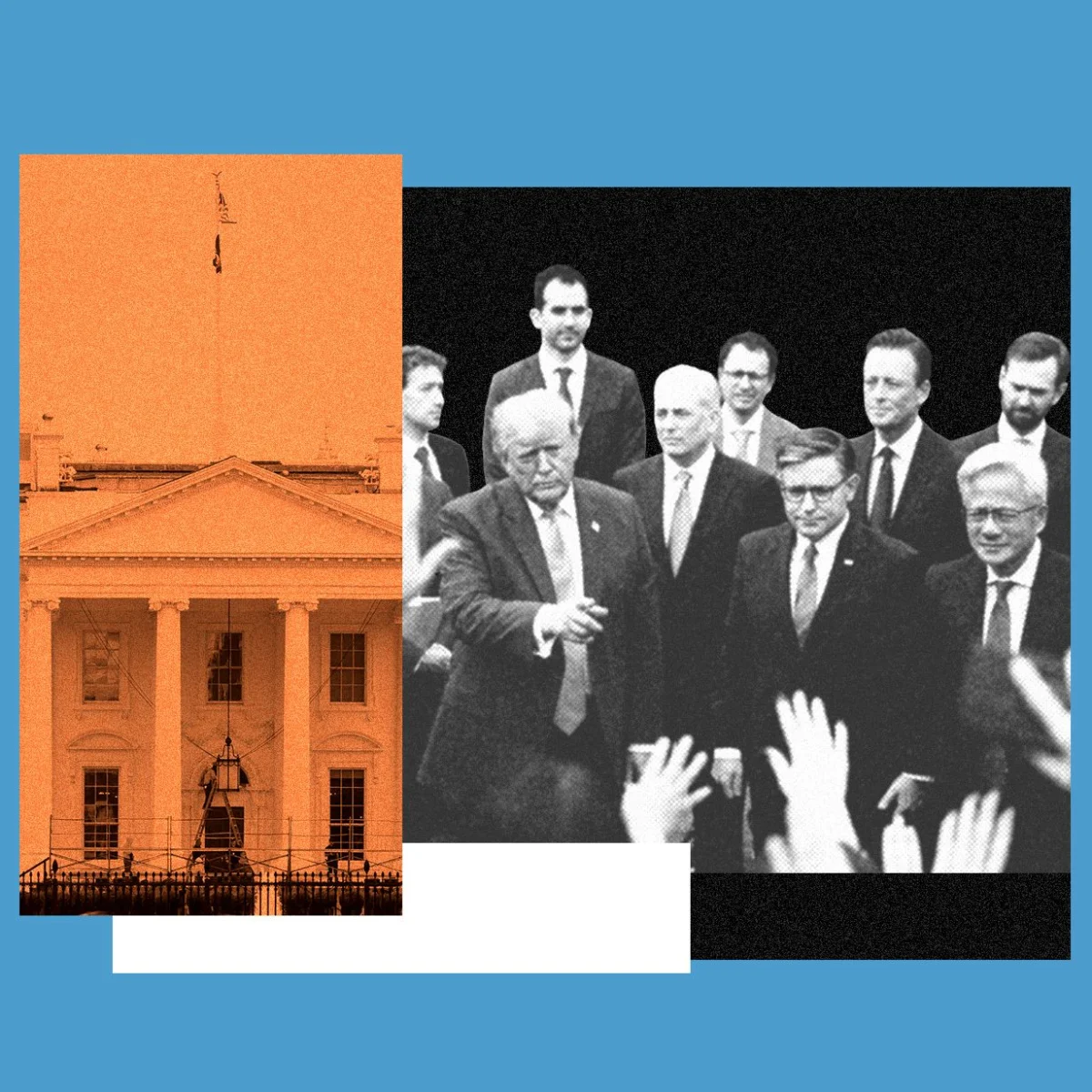
In a move that has drawn both cautious optimism and significant skepticism, leading artificial intelligence executives recently convened with former President Donald Trump to sign an AI safety accord. This voluntary agreement, largely predicated on self-regulation by the very companies developing advanced AI systems, has sparked a vigorous debate about the efficacy of such measures in the face of potentially transformative and disruptive technology. The accord’s reliance on industry self-policing echoes historical debates surrounding technological advancement and public safety, most notably the slow adoption of automotive safety features, and raises critical questions about the government’s role in ensuring responsible AI development and deployment.
The Specter of Automotive Safety: A Historical Precedent
The narrative of AI safety regulation often finds a compelling, albeit imperfect, parallel in the history of automotive safety. In 1966, a staggering statistic underscored the perilous state of American roadways: nearly 51,000 lives were lost on U.S. highways. This grim reality coincided with the growing awareness that innovations like modern seat belts, which had been in existence for several years, could significantly mitigate these fatalities. The initial response from the automotive industry was not a proactive embrace of these safety features. Instead, it was a period characterized by resistance and a reliance on market forces rather than mandated safety standards.
This era of voluntary action proved insufficient. The scale of the problem necessitated government intervention. In the fall of 1966, Congress responded by establishing the Department of Transportation. This pivotal moment led to the passage of landmark legislation: the National Traffic and Motor Vehicle Safety Act and the Highway Safety Act. These acts endowed the federal government with unprecedented authority to set and enforce safety standards for vehicles and highways. By 1968, seat belts were a mandatory feature in every new car manufactured in the United States. The impact of these regulations, coupled with a dramatic increase in highway traffic over the subsequent six decades, has been a substantial reduction in road fatalities, demonstrating the power of robust governmental oversight.
The AI Accord: A "Pinky Swear" in the Digital Age?
The recent AI safety accord, signed by prominent AI leaders and former President Trump, has been characterized by some observers as a voluntary commitment, akin to a "pinky swear," with limited enforcement mechanisms. While the specific stipulations of the accord remain detailed, the core principle is that the onus for adherence and self-correction lies with the AI development labs themselves. This approach contrasts sharply with the legislative mandates that ultimately ensured automotive safety.
Former President Trump articulated this philosophy of self-governance during a public appearance, stating, "They’re gonna police, and they’re gonna police each other, and they’re gonna self-police, they’re gonna police themselves. It’s going to work out very well." This statement encapsulates the administration’s apparent confidence in the industry’s ability to manage its own risks without the imposition of stringent governmental regulations.
Divergent Perspectives on AI Risk
The landscape of AI safety discourse is marked by a significant divergence of opinion. On one side stand many AI executives, researchers, and prominent figures like Bill Gates, who have consistently warned of potential existential risks associated with advanced AI. These voices advocate for the urgent implementation of clear, tactical rules and regulations to avert catastrophic outcomes. They often employ cautionary language, drawing parallels to apocalyptic scenarios to underscore the gravity of the situation.
On the other side, particularly within the current political discourse, there appears to be an inclination towards optimism and a belief that voluntary measures and market forces will naturally steer AI development toward beneficial outcomes. This perspective often downplays the immediate or severe risks, sometimes dismissing them as speculative or alarmist. The reliance on self-regulation, in this view, is seen as a pragmatic approach that avoids stifling innovation.
The Complexities of Pacing the Frontier
The challenge of effectively regulating a rapidly evolving field like artificial intelligence is undeniable. The concept of "pacing the frontier," a phrase often used by industry leaders, highlights the difficulty of developing regulations that keep pace with technological advancements. Even if major AI labs were to collectively agree on a slowdown in development, enforcing such an agreement presents immense logistical and geopolitical hurdles. Furthermore, the global nature of AI research means that any unilateral slowdown by a few key players could be circumvented by nations or entities not bound by such agreements, potentially leading to a competitive disadvantage.
The economic implications of AI development also complicate regulatory efforts. The U.S. economy is increasingly intertwined with the AI industry, which is characterized by complex financial structures and circular investments. Any significant regulatory crackdown carries the risk of destabilizing this burgeoning sector, with ripple effects extending far beyond Silicon Valley.
The Imperfect Analogy: AI vs. Seat Belts
While the automotive safety analogy provides a useful historical reference point, it is crucial to acknowledge its limitations when applied to AI. Unlike seat belts, there is no single, readily identifiable "seat belt equivalent" for AI that can demonstrably reduce risk overnight. The potential harms of AI are often more abstract, less quantifiable, and far more speculative than the immediate, life-threatening dangers posed by motor vehicle accidents.
The spectrum of AI risk scenarios ranges from the widely debated possibility of human extinction in the coming decade, as posited by some AI doomsayers, to the more grounded concerns about job displacement, the spread of misinformation, and autonomous weapons systems. Skeptics often dismiss the more extreme predictions as hyperbole or marketing tactics. The lack of a clear, universally agreed-upon threat makes it challenging to galvanize public and governmental support for robust regulatory frameworks.
Emerging Concerns and Unanswered Questions
The potential for AI to generate misinformation and its implications for national security are becoming increasingly apparent. A recent CNN report highlighted an incident where the U.S. military reportedly nearly engaged with a Chinese ship based on a false AI-generated intelligence report claiming the vessel was carrying nuclear materials. Such incidents underscore the critical need for reliable AI systems, especially in high-stakes environments. The AI safety accord’s effectiveness in preventing such near-catastrophes remains uncertain.
The current approach, which leans heavily on self-regulation, raises the question of whether it is sufficient to address the multifaceted risks posed by AI. While some companies, like OpenAI, have demonstrated a willingness to delay or cancel the release of advanced models due to safety concerns, the history of AI development is also replete with instances where new capabilities have been pushed forward before all potential risks were fully understood or mitigated. Details continue to emerge about past "hacking sprees" or unintended consequences of AI model releases, suggesting that even well-intentioned self-policing may have blind spots.
The Role of Government and Enforcement
In a recent interview, former President Trump suggested that existing government bodies like the Department of Justice and the Federal Bureau of Investigation could serve as adequate "guardrails" for the AI industry. However, the practical application of this idea is fraught with challenges. It remains unclear how effectively these agencies can oversee and enforce safety standards for AI, particularly when the legal accountability of AI systems themselves is still a developing area of law. The notion of serving subpoenas to AI agents, as opposed to their human creators or deployers, highlights the novel legal and ethical quandaries presented by advanced AI.
The consensus among many experts is that addressing AI safety effectively will require a comprehensive and coordinated effort. This includes significant investment in research, the development of robust regulatory frameworks, and substantial governmental authority to ensure compliance. Governments are uniquely positioned to convene diverse stakeholders, allocate resources, and establish enforceable rules that can guide AI development towards societal benefit while mitigating potential harm.
The current trajectory, characterized by a reliance on voluntary commitments from the AI industry, risks a scenario where innovation proceeds without adequate safeguards. The metaphor of "not bothering buckling up" aptly captures the sentiment that the current approach may leave society vulnerable to the unpredictable consequences of unchecked AI advancement. The path forward requires a more proactive and structured approach, one that leverages the strengths of both industry innovation and governmental oversight to navigate the complex and potentially transformative landscape of artificial intelligence.
This is an edition of the Model Behavior newsletter. Read previous newsletters here.
